The Tranquility Grille tremor and window implosion
StrangersThe Tranquility Grille tremor and window implosion is the moment when Dominick Corvaisis’s attempt to recover a missing memory appears to make the past physically recur. On a Saturday night at the Tranquility Grille, a remembered rumble becomes an audible and violent disturbance in the room. The windows burst inward, but the event does not restore the witnesses’ lost account of what followed on July 6. Instead, it gives them a startling fragment of recognition—and gives the government surveillance team evidence that the phenomena surrounding the witnesses may be active again.
The attempt to recover July 6
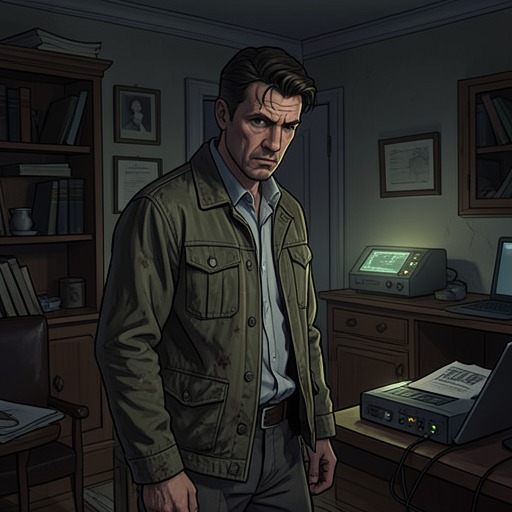
The disturbance begins during a conversation about the summer-before-last incident and the memories the group cannot retrieve. Ned Sarver suggests that Dominick retrace what he did on Friday night, July 6, up to the point where his memory was erased. Dominick remembers more of the evening than the others and had come close to recalling something important earlier that night. But the approach of the memory had frightened him so intensely that he had run for the door. He expects that forcing himself toward it again could provoke the same uncontrollable reaction.
Rather than recount the missing event, Dominick reconstructs the ordinary details around its edge. He describes Ginger Weiss sitting in a corner booth near the window, the sunset making the diner glow orange, and the darkness spreading across the plains. He remembers having a second beer, partly because it let him keep looking at Ginger. Then comes a sound: first distant, then growing louder. His account breaks off at the point where the memory should continue. The scene’s pressure lies in that gap. A small, concrete recollection—the beer, the booth, the approaching night—has brought him to the threshold, but the crucial sequence remains inaccessible.
The sound returns in the present
Ned urges Dominick to concentrate on the sound itself. As Dominick gets up and tries to locate where it came from, the rumble ceases to be merely an image in his recollection. Ned hears it in the diner, not as a series of thunderclaps but as one sustained, hollow roll that swells without stopping. The others hear it too. Its increasing volume becomes physical: Ned can feel the vibrations in his bones, and he understands that this is where the astonishing events they endured began.
The room responds before anyone can explain what is happening. Chairs jitter and bump across the floor; one slides into Dominick, startling him. The rumble rises alongside an oscillating, electronic-sounding shriek until the noise reaches an ear-splitting peak. Then the large front windows implode with a crash like a bomb blast. Faye throws her arms over her face and screams; Ernie stumbles backward; Sandy presses herself against Ned. The closed blinds shield them from the direct rush of flying glass, though the force throws the blinds upward and sends glittering shards into the booths, over Ned, and across the floor. The eruption is followed by an abrupt, profound silence, broken only by small pieces of glass dropping from the frames.
Recognition without recovery
Dominick emerges from the Grille bewildered, and Ned cannot explain what has happened. He recognizes the disturbance as part of what occurred in the summer-before-last, but only as the beginning of it. Neither man can remember what came after the windows blew in. The group has recovered a sensory fragment—the sound and its relation to the first disturbance—without recovering the missing narrative that would make it intelligible. The windows’ destruction is therefore both evidence and limit: something real has returned, but the witnesses still cannot say what happened next.
Ginger later proposes that the shaking and rumble may have been produced when Dominick struggled to remember the moment just before his memory block took effect. On this reading, he unconsciously used a power to recreate the effects of the July disturbance. She connects the suggestion to Dominick’s earlier account of pulling paper moons from the walls of Zebediah Lomack’s house without touching them. The explanation remains a hypothesis, not a settled account of the Grille event; Dominick himself questions whether the strange light associated with the earlier events could also have been manufactured in this way. The episode thus introduces a possible link between memory, psychic power, and physical surroundings while preserving uncertainty about how much the witnesses understand.
Surveillance and the loss of control
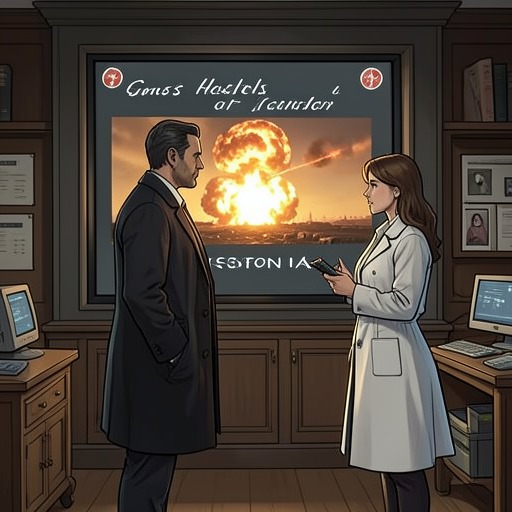
The event is also witnessed from outside the group. Leland Falkirk and his surveillance experts have been monitoring conversations at the Tranquility, and a hidden team south of the interstate, together with an Infinity transmitter tapping the Grille’s payphone, confirms that the shaking, rumble, electronic ululation, and window implosion have actually occurred. What had sounded to the government observers like Dominick’s fantastic account of animated moon photographs now sits beside a new, independently observed phenomenon. The event gives the scientists a reason to take the witnesses’ claims seriously, even as the implications unsettle the people charged with containing them.
Falkirk and the scientists cannot initially explain what they have observed. The disturbance, followed by the discovery of Brendan Cronin’s healing ability, makes the situation seem newly unpredictable. Falkirk recognizes that the government’s apparent command of the earlier July operation may already have been an illusion: the incident at the Grille suggests that the forces involved could have exceeded official control before the witnesses themselves knew what had happened. A private attempt to remember has consequently become a public breach in the cover-up. It shakes the diner, but it also shakes the authorities’ confidence that the past can remain suppressed.