Project Alcatraz nuclear device
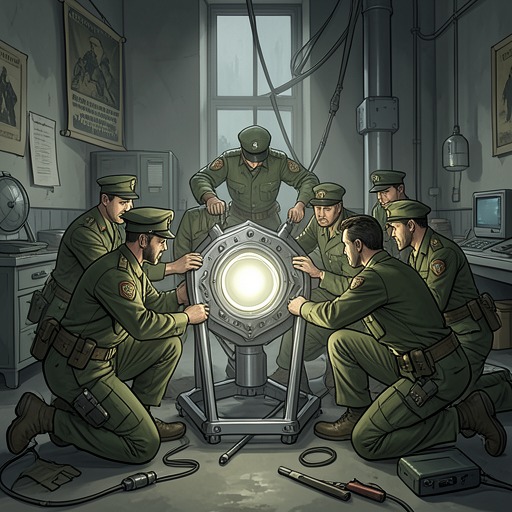
StrikeThe Project Alcatraz nuclear device is a weapon designed not for an aircraft strike but to reproduce the explosion that created the original Bridge. Its intended use—to blast further Bridges from the past into the future—turns a nuclear device into an instrument for reshaping the relation between the two eras. At the depot and later inside a besieged dome, its stark physical form and tightening countdown make that enormous purpose concrete: the future is being placed, armed, and timed.
Design and Intended Use
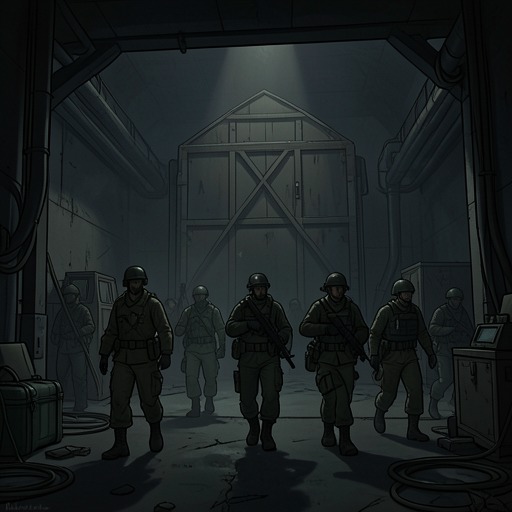
The depot is a huge warehouse beneath a dome five feet thick, built to guard against an “unfortunate accident.” Inside, ten white cylinders stand in two rows of five. Each is six feet tall and three feet in diameter. Their plainness is part of their effect: nothing in their appearance signals the destructive power they contain. They have neither nose cones nor fins, because they were never meant to be dropped from aircraft. This is a weapon whose design points away from a conventional battlefield delivery and toward a fixed, deliberate detonation.
The cylinders were built to the exact specifications of the device exploded in the test on the morning of January 24, 1952. That earlier explosion created the original Bridge; these devices are duplicates, intended to blast more Bridges from the past into the future. The object therefore carries two histories at once. It is modeled on a device associated with a specific past test, yet its planned use is to open further routes between past and future. Its purpose is not merely to destroy: the explosion is meant to generate a passage, making creation and devastation inseparable in its design.
Selection and Deployment
The depot’s stock becomes an active weapon when Pike orders “number 44-044” placed on a pallet. The designation gives one cylinder an immediate operational identity among the ten otherwise identical devices. In the larger plan, the dome at Dodger Stadium is ready, and Pike says it will go active once the eradication is complete. The device is thus connected to a project that depends on both a prepared destination and the completion of a military campaign; the bomb’s function is embedded in a wider effort to establish another Bridge.
Later, the nuclear device is floated to the center of the dome and lowered to the deck. After an alarm, Pike says the bogus orders must have bounced back, then directs Liger to arm it and sets six o’clock as the deadline. The sequence marks a shift from stored duplicate to immediate threat. The device is no longer one of ten cylinders in a warehouse: it has been singled out, moved into position, and placed under an explicit order to arm. The practical actions around it—selection, transport, positioning, arming—give the abstract plan a physical and increasingly urgent form.
Countdown Under Siege
The Air Force eventually stops firing after suffering too many casualties for no gain. The battle outside falls from full-scale mayhem into an eerie quiet, but that pause does not make the dome safe. The Sounders expect heavier weapons to arrive and face the question of whether artillery will reach them before six o’clock. Inside, Liger reports, “Detonation in thirty-five minutes,” while a countdown clock is already moving. The device imposes its own schedule on the conflict: the lull in gunfire is measured against the time remaining, not treated as a resolution.
The clock later shows four minutes to go. Tori asks whether the attackers could break through; the reply argues that if an atomic bomb cannot bring down the walls, one of the cannons likely cannot either—and certainly not in four minutes. The dome’s protection and the device’s deadline therefore pull in opposite directions. The walls may withstand attack, but the countdown remains active. The bomb concentrates the scene’s stakes into a visible interval, narrowing the difference between a defended position and a catastrophic outcome.
The Device as a Contested Future
At the final glance around the dome, the device is described as having “the power to control the future and save the past.” That paired possibility captures the central tension of Project Alcatraz: the same power that could create new passages between eras is also tied to an armed campaign and an imminent detonation. The weapon’s significance lies not only in its destructive capacity but in what its designers intend the explosion to make possible.
The ending image places the countdown device beside the body of Colonel Pike, while the clock reads four minutes. The contrast is stark: the person who ordered the device armed is dead, but the timer has not thereby ceased to matter. The scene gives no basis for treating the threat as resolved at that instant. Instead, the device remains the force shaping the last moments in the dome—a duplicate of an earlier weapon, carrying forward the consequences of the original test and threatening to make the future itself the next thing decided by an explosion.