Retro Camp
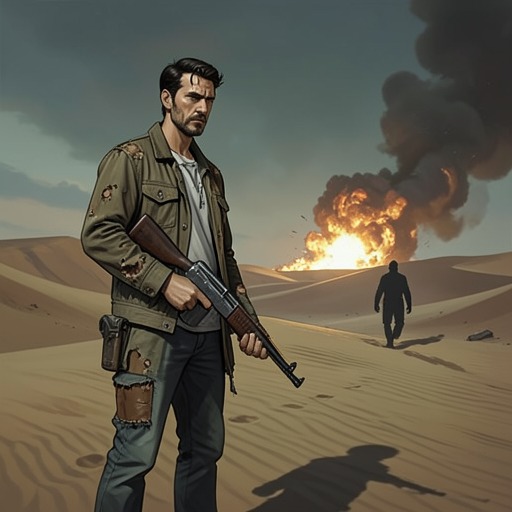
StrikeRetro Camp is a Retros facility in the Mojave Desert where captured enemies are processed into an expanding system of forced labor. The camp’s new barracks stand near a giant steel dome that has survived attacks by SYLO forces; for the captive narrator, the sight of the dome makes the camp a sign that the war—and his freedom—have not ended as he had hoped.
Setting and Construction
The camp is made up of nearly identical wooden barracks that look newly built: their beams are fresh, and the buildings show little grime or wear. Many are empty. After passing a dozen vacant barracks, the narrator reaches a construction site where several more are being built by prisoners. Hammering and sawing mark the shift from empty capacity to active expansion, and the narrator understands that he is likely to join the orange-clad, numbered labor force.
The empty beds suggest that the Retros expect many more people to arrive. That expectation is striking against the camp’s apparent shortage of personnel: the narrator recalls that the Retros possess abundant equipment but relatively few people, and observes little visible population at the camp. The new accommodation and continuing construction imply that this imbalance may change as additional prisoners are brought in.
Prisoner Facility
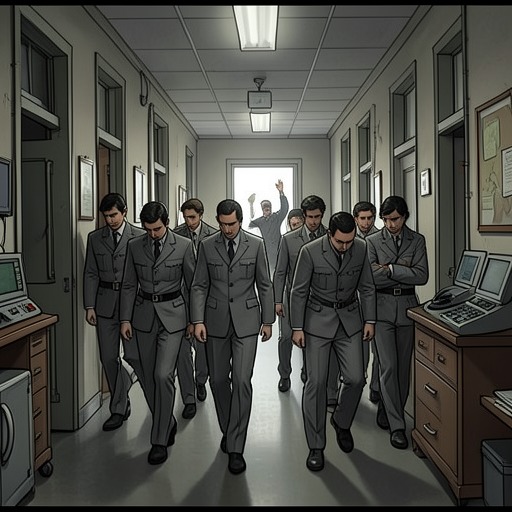
The camp’s routines are enforced by armed guards. After a worksite episode, prisoners are formed into a ragged line and marched away from the dome, past more newly built, empty barracks. They are taken to a windowless building used for showers, where they are ordered to put their belongings in bins and exchange their numbers for clean clothing. The sequence makes clear how the camp reduces prisoners to an assigned number and channels them through controlled spaces.
The facility also includes an infirmary. A later scene identifies it as the building where the narrator first woke after being captured; when a guard brings him back there in a golf cart, he jumps down and presses for an explanation of who is in charge. The infirmary thus marks both his arrival into captivity and a later attempt to understand the authority governing his confinement.
The Dome and the War
The camp’s proximity to the enormous steel dome gives the prison a larger military context. The narrator recognizes the dome as being in the Mojave Desert, not far from the place where a SYLO helicopter was attacked and brought down. Before that attack, a Retro fighter had emerged from inside the structure. Although the Retro aircraft at Area 51 had been destroyed, the sight suggested that the Retros could produce or obtain replacements and continue their campaign.
The dome is surrounded by the wreckage of hundreds of SYLO fighter jets that had tried to destroy it and were shot down by drones and antiaircraft guns. From the narrator’s perspective, this makes the structure effectively untouchable and the Retros still militarily active. Captured at the camp beside it, he concludes that his own part in the war is over and wishes he had remained with his mother and friends, whatever their fate. The camp’s significance lies in this contrast: its orderly expansion promises more captives, while the nearby dome stands as evidence that the force holding them has survived a major assault.