Retro Prison Camp
StrikeRetro Prison Camp is a site of imprisonment and colonization in the Mojave Desert, where Retro forces hold people from the past as “natives” while preparing to replace their population with settlers from the future. The camp’s significance lies not only in its confinement of prisoners but in the larger state project it serves: an invasion presented as a mission, and a population-replacement scheme enforced through military power.
Location and Conditions
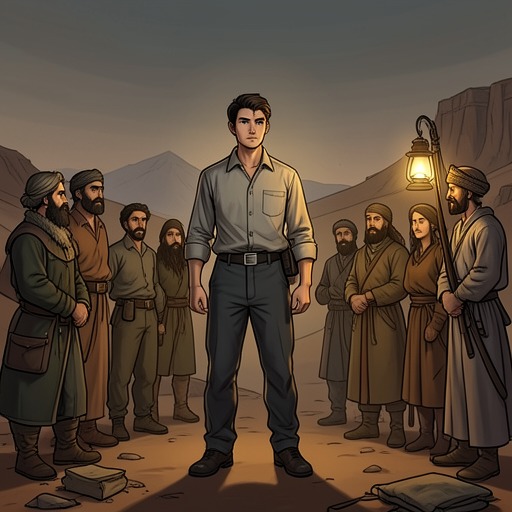
Tucker identifies the group’s location as the Mojave Desert, still within Retro Prison Camp; the portal they feared had transported them had taken them nowhere. The realization fixes the camp as a place in the present landscape of their ordeal, rather than an escape into another destination.
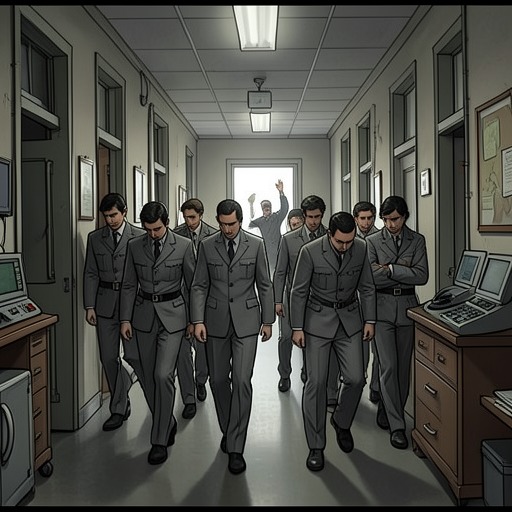
The camp’s authority reaches into prisoners’ everyday behavior. Tucker recalls that, during an earlier short stay in a Nevada prison camp, a wrong look could bring severe punishment or worse. Retro captors classified prisoners as “natives,” a label that reduced people to subjects of occupation and made the threat of punishment part of ordinary life. Moving among Retro soldiers, Tucker stiffens and tries not to draw attention, even as he reminds himself that these people do not know he is a prisoner.
The Colonization Project
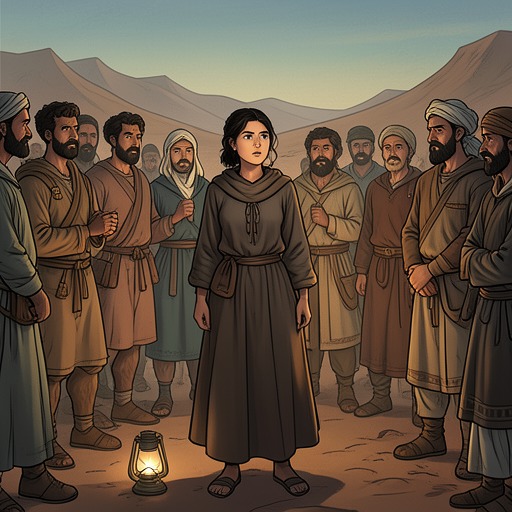
Olivia’s account places the camp within a planned effort extending well beyond the treatment of individual captives. She describes the colonization camp as incomplete and identifies Major Bova’s punitive treatment of native workers as one reason it had not yet been completed. Colonel Feit and Major Bova are among the officers directing the endeavor, which Olivia says had been planned and prepared for years by the military and the United States Government in 2324.
The project’s stated objective is to replace the population of the twenty-first century with the population of the twenty-fourth. Olivia calls that aim a profound crime, making explicit the connection between the camp’s coercive labor order and the invasion’s intended demographic erasure. The camp is therefore both a physical instrument of occupation and a working part of a much larger undertaking.
Prisoners, Spies, and Resistance
The camp’s control of people from the past forms one side of a conflict that also reaches Pemberwick Island. Olivia explains that she joined the United States Air Force to help feed her family, was recruited as an infiltrator, and was sent back through time to learn about SYLO and the bases being built for its defense. She says there were dozens of Retro spies on the island, and that some people shot or arrested there were not innocent islanders attempting to escape but spies operating for the future military. She also acknowledges that not everyone caught up in the violence was a spy: Tori’s father was caught in the crossfire.
That admission complicates any simple division between captors and prisoners, or between combatants and civilians, without softening the camp’s purpose. Olivia describes opposition within the military: some personnel wanted the invasion to end, but believed that public support and the machinery of the operation would survive individual protest. She identifies the Sounders as the resistance born from that impasse. In this context, Retro Prison Camp stands at the meeting point of forced labor, military colonization, covert infiltration, and organized dissent.