Event 1
Adelaida Ivanovna and Fyodor Pavlovitch’s elopement and marriage
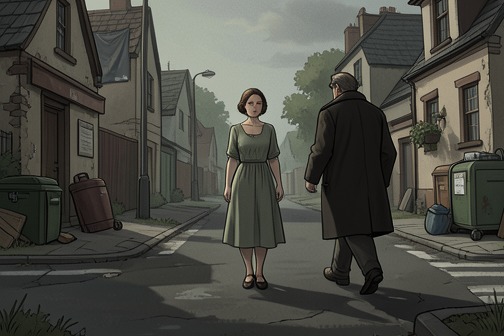
[Adelaida Ivanovna and Fyodor Pavlovitch’s elopement and marriage](entity:event-recall-event-adelaida-ivanovna-and-f-47e2957e8987) is a union formed without mutual love and undone by contempt. Its rapid collapse leaves their young son, Dmitri, in his father’s hands, establishing an early pattern of abandonment in the Karamazov family.
## The Elopement and Its Attractions
The marriage acquired its piquancy from the elopement that preceded it. Adelaida was captivated by the adventure, while Fyodor, eager to make a career for himself, saw a practical advantage in attaching himself to a good family and gaining a dowry. The same event therefore carried sharply different meanings: romantic daring for Adelaida, social and financial opportunity for Fyodor.
## A Union Without Love
Despite Adelaida’s beauty, the account makes clear that neither spouse appears to have loved the other. Fyodor, generally sensual and quick to pursue women, was unusually little attracted to her. The mismatch between the elopement’s excitement and the marriage’s emotional emptiness became apparent almost at once.
## Contempt, Flight, and Abandonment
Immediately after the elopement, Adelaida recognized that she felt contempt for her husband, and the marriage’s true character emerged with extraordinary speed. She eventually left Fyodor and ran away with a destitute divinity student, leaving Dmitri, then three years old, in his father’s care. The episode’s decisive consequence is thus not simply the end of the marriage: it is the separation of mother and child and Dmitri’s early abandonment to a household soon shaped by Fyodor’s conduct.
Event 2
Adelaida Ivanovna’s death in Petersburg
[Adelaida Ivanovna’s death in Petersburg](entity:event-recall-event-adelaida-ivanovna-s-dea-23051974558a) is the abrupt end of her separation from Fyodor Pavlovitch, but the account refuses to settle either the precise cause of her death or the meaning of her husband’s response. News reaches him as he is preparing—amid another bout of drinking—to travel after her; instead, he hears that she has died far away, and his grief appears inseparable from the relief of being released from their marriage.
## Separation and Death
After leaving Fyodor Pavlovitch, Adelaida is traced to [Petersburg](entity:location-recall-location-petersburg-2b56d8d0c312), where she has gone with a divinity student and thrown herself into a life of complete emancipation. Her departure gives the episode a history of flight and independence, although the account offers little about her life there beyond those details. The distance matters: Fyodor has only just found her whereabouts, and the possibility of pursuing her gives way to news of her death before he reaches her.
Adelaida dies suddenly in a garret. The reports disagree about the cause: one attributes her death to typhus, while another says starvation. The narrative does not choose between them, leaving the circumstances uncertain rather than turning her death into a neatly explained consequence of her departure.
## Fyodor’s Response
When the news arrives through Adelaida’s family, Fyodor is drunk. The account places the revelation beside his habitual dissipation: he had decided to set out after his wife, but, feeling entitled to fortify himself for the journey, began drinking recklessly again. Her death interrupts that prospective pursuit and changes what the journey can mean; there is no longer a living wife to find.
The accounts of his immediate response conflict as well. Some say that he invoked the words, “Thy servant depart in peace,” while others report that he wept without restraint, like a child. The narrator allows that both versions may be true: Fyodor could rejoice at his release and grieve for the woman whose death released him. The uncertainty does not excuse his repulsive conduct, but it complicates the impression that he is incapable of feeling.
## Narrative Significance
The episode is mediated through reports rather than a direct scene of Adelaida’s death. Its uncertain causes and divided testimony about Fyodor’s mourning make absence central to the account: Adelaida is described through her departure, the distant news of her death, and the reactions attributed to the people around her. The narrator’s final reflection—that even wicked people may be more naïve and simple-hearted than they seem—frames Fyodor’s tears as evidence of an emotional contradiction, not as proof that his grief was pure or his conduct redeemed.
Event 3
Sofya Ivanovna’s death and her sons’ abandonment
[Sofya Ivanovna’s death and her sons’ abandonment](entity:event-recall-event-sofya-ivanovna-s-death-0358d4604f51) mark the second repetition of a family pattern: after a mother dies, Fyodor Pavlovitch leaves her young children to others. Ivan and Alexey are forgotten by their father, as Mitya had been before them, until the general’s widow arrives and removes them from the town. The event links private bereavement to a wider history of neglect and makes the boys’ survival depend on people beyond their immediate family.
## Family Circumstances
[Sofya Ivanovna](entity:character-recall-character-sofya-ivanovna-9e6b4e32c663) had lived under the strain of a marriage to Fyodor Pavlovitch and, after years of fear, developed a nervous illness. The account describes episodes of hysteria so severe that she sometimes lost her reason. [Grigory](entity:character-recall-character-grigory-180b09518946), the household servant, had championed her against Fyodor’s disorderly conduct, even driving the women from the house during one of its revels. His defense of her did not, however, change the children’s position after her death: the surviving household would again leave the boys without parental care.
Sofya bore Fyodor two sons: Ivan, the elder, in the first year of their marriage, and Alexey three years later. When she died, Alexey was in his fourth year. He would remember his mother throughout his life, but only indistinctly, as though in a dream. This lingering, fragmentary memory contrasts with the concrete rupture of her death: the children remain marked by their mother even as the adult world around them fails to provide a stable home.
## Abandonment and Repetition
At Sofya’s death, Fyodor again forgot and abandoned his children. The narration explicitly compares what happened to Ivan and Alexey with what had already happened to their elder brother, Mitya. Their circumstances repeat rather than resolve the family’s earlier failure: the father’s absence is not a single misfortune attached to one child, but a pattern extending across successive households and maternal losses.
Grigory and his wife took the boys into their cottage, where they were found living in impoverished conditions. Their presence there makes the household servant’s role more than a matter of defending Sofya while she lived: after her death, he and his wife became the children’s immediate caretakers. Yet their shelter remained provisional, and the boys’ future was decided by a visitor with the means to take them elsewhere.
## The Widow’s Intervention
Exactly three months after Sofya’s death, the general’s widow arrived in town and went directly to Fyodor Pavlovitch’s house. She stayed for only half an hour, but acted decisively. Finding the children unwashed and in dirty linen, she also struck Grigory, then announced that she would take both boys. She wrapped them as they were in a rug, put them into her carriage, and drove them to her own town.
Grigory accepted the blow without protest. As he escorted the widow to her carriage, he bowed low and declared that God would repay her for the orphans. The gesture and blessing place the scene’s moral emphasis on the children’s abandonment and the unexpected act that interrupts it: Fyodor has left them to others, while the widow carries them away in a rough, immediate rescue. Her intervention changes their circumstances, but the episode remains a second instance of maternal death followed by paternal neglect, not a reconciliation within the family.
## Narrative Significance
The episode gives the brothers’ childhoods a shared structure of loss and displacement. Ivan and Alexey are not simply younger sons with different fates from Mitya; at their mother’s death they undergo the same abandonment, and Grigory’s cottage becomes the shelter that connects their early histories. Alexey’s dreamlike recollection preserves a personal trace of Sofya, while the widow’s brisk departure supplies the visible consequence of the adults’ failure to care for the boys.
The account also sets sharply opposed responses beside one another: Fyodor’s neglect, Grigory’s enduring service, and the widow’s forceful decision to remove the children. The rescue is neither ceremonious nor gentle—the boys are taken in a rug, and Grigory is struck—but it prevents their abandonment from ending in continued exposure to the household that failed them. In the brothers’ family history, Sofya’s death thus stands both as a bereavement and as the point at which their father’s repeated withdrawal becomes unmistakable.
Event 4
Alyosha’s entry into the monastery
[Alyosha’s entry into the monastery](entity:event-recall-event-alyosha-s-entry-into-th-54c110123001) is a deliberate beginning rather than a flight imposed by family or institution: after visiting his mother’s grave, he asks his father’s consent to become a novice, drawn by the example of Elder [Zossima](entity:character-recall-character-zossima-9b91c014ca58). His early monastic life is marked by service and personal attachment, but not by confinement. He wears the monastic dress voluntarily, lives in Zossima’s cell, and remains free to leave for days at a time. The episode sets up a vocation formed through choice and mentorship, while preserving Alyosha’s connection to the wider world.
## The decision to become a novice
Not long after visiting his mother’s grave, Alyosha announces that he wants to enter the monastery and that the monks are willing to receive him as a novice. He describes the decision as a strong desire and solemnly asks his father’s consent. The request matters: Alyosha does not simply disappear into religious life, but brings his choice before the parent whose permission he seeks. The moment presents the monastery as a destination he actively chooses, not a refuge selected for him by others.
His father understands that Elder Zossima has made a particular impression on his gentle son. That influence gives Alyosha’s decision a human focus: his attraction to the monastery is bound up with the presence of a spiritual guide already living there. The move therefore begins not with a stated doctrine or abstract ambition, but with a relationship that has awakened his desire to enter monastic life.
## Life in Zossima’s cell
Zossima is sixty-five and comes from a family of landowners. In his early youth he served in the army as an officer in the Caucasus. By the time Alyosha enters the monastery, the elder’s character has impressed him through what the narration calls a peculiar quality of soul. The contrast between Zossima’s worldly past and his present spiritual authority gives Alyosha’s apprenticeship a living example of a life shaped by change.
Alyosha lives in the elder’s cell, and Zossima, who is very fond of him, allows him to wait upon him. Service is thus the practical form of the bond: Alyosha’s chosen religious life takes shape in close attendance on a particular person. The account describes no formal obligation binding him to this arrangement; its force comes instead from affection, admiration, and his own willingness to serve.
## Voluntary discipline and freedom
Although Alyosha wears monastic dress, he does so voluntarily, not in order to distinguish himself from others. The clothing signals his chosen way of life, but the narrative explicitly distinguishes that choice from a rigid separation enforced by the monastery. He is bound by no obligation and may go wherever he pleases, even remaining away for whole days.
This freedom qualifies the apparent renunciation involved in becoming a novice. Alyosha has entered a religious community and accepted the habits of its life, yet his early position is not that of a prisoner or a person cut off from ordinary society. His commitment is presented as inward and freely assumed; the ability to leave remains part of the circumstances under which it develops.
## The elder’s influence
The narration allows more than one explanation for the strength of Zossima’s influence. Alyosha may have been stirred by the elder’s youthful imagination of spiritual power and fame; what is certain is the closeness of their daily relationship and the elder’s affection for him. This balance leaves the bond neither reduced to a formal teaching nor explained solely by the elder’s public reputation. Alyosha’s apprenticeship grows out of proximity, service, and the impression Zossima makes on him.
The episode consequently establishes an important pattern for Alyosha’s religious life: he approaches it through personal trust and voluntary discipline, while remaining capable of movement beyond the monastery walls. His entry is a beginning, not a final severance from the world. The combination of chosen devotion and retained freedom will define the significance of this early stage of his path.
Event 5
Dmitri’s engagement to Katerina Ivanovna
[Dmitri’s engagement to Katerina Ivanovna](entity:event-recall-event-dmitri-s-engagement-to-f068697b5577) is a promise of marriage that becomes one of the central knots in the Karamazov family’s emotional conflict. The betrothal links Dmitri to an orphaned young woman of good family, but it does not secure their future: he is also pursuing [Grushenka](entity:character-recall-character-7ec2d155935e), and Katerina must confront what that contradiction means. The engagement therefore matters not simply as a romantic attachment, but as a public commitment whose damage is felt by those caught between obligation, desire, and humiliation.
## Identity and Background
The engagement is described as a promise of marriage between Dmitri and [Katerina Ivanovna](entity:character-recall-character-katerina-ivanovna-ebf3ee32d98b), the daughter of a colonel who had once been Dmitri’s superior officer and had received honors, including the Order of St. Anna. Katerina is said to have become an orphan; the account presents her as a young woman of respectable family and fortune, whose circumstances and social standing sharpen the stakes of Dmitri’s promise. She is not merely a private love interest: her betrothal makes Dmitri’s conduct answerable to an established obligation and to the public expectations surrounding a woman whose family protection has been lost.
The account of the engagement is delivered amid the family’s confrontation at the monastery. There, Dmitri’s father presents the betrothal as evidence against him: Dmitri, he says, compromised a young woman by promising to marry her, yet now courts another woman. The accusation turns the engagement into a matter of reputation as well as feeling, and casts Dmitri’s divided attachments as a breach that can be displayed before others.
## Promise and Competing Attachments
The essential conflict is built into the contrast between the promise and Dmitri’s conduct. Although Katerina is betrothed to him, Dmitri is described as dancing attendance on Grushenka, whom his father calls an enchantress. The engagement thus exists alongside, rather than resolving, his pursuit of another woman. That split makes the promise unstable: Katerina’s formal place as fiancée does not protect her from being made to witness Dmitri’s attention to Grushenka.
The father’s denunciation is openly hostile and cannot be treated as a neutral account of the relationship. He presents Dmitri as a seducer who has compromised a respectable young woman, then uses the disparity between Katerina’s betrothed status and Dmitri’s pursuit of Grushenka to condemn him. Even so, the charge identifies the concrete injury at the center of the engagement’s later importance: a promise of marriage has created expectations that Dmitri’s competing attachment now threatens.
## Dmitri’s Defense and the Family Confrontation
Dmitri answers the scene not with a defense of his behavior but with an anguished description of what he had expected. Speaking softly and with restraint, he says that he thought he was returning to his native place with the angel of his heart, his betrothed, intending to cherish his father’s old age, only to find his father depraved and contemptible. The contrast joins Katerina’s betrothed status to Dmitri’s imagined role as a dutiful son: he had pictured the return as a shared act of care, not merely as a visit by a couple.
His words do not resolve the contradiction between his promise to Katerina and his pursuit of Grushenka. Instead, they expose the emotional and moral confusion surrounding it. Dmitri invokes the betrothal as part of a hopeful picture of his homecoming, while the accusation against him emphasizes the injury his divided conduct may inflict on Katerina. In the confrontation, the engagement is at once an intimate commitment and a weapon in the dispute between father and son.
## Katerina’s Urgent Appeal
Later, Katerina sends for Alyosha through [Lise](entity:character-recall-character-lise-265234fabf09), giving him a brief note that asks him to visit her as soon as possible and insists that he must not fail to come. The note offers no explanation. When Alyosha learns that Katerina wants to see him, he is astonished and immediately anxious; her mother explains that the matter concerns Dmitri and what has happened recently, and that Katerina has made up her mind but must speak with him about it.
Alyosha agrees after quickly reading the enigmatic appeal. Katerina’s decision is not specified in this moment, so the summons should not be mistaken for a disclosed resolution of the engagement. Its urgency does show that the betrothal remains consequential after the monastery confrontation: Katerina is preparing to act or speak about what has happened, and Alyosha is drawn into the consequences as a trusted intermediary. The unanswered note turns the engagement’s future into a question of choice, while making clear that the existing promise alone cannot settle it.
## Narrative Significance
The engagement’s significance lies in the gap between its public certainty and its private instability. The word betrothed fixes Katerina and Dmitri in a recognized relationship, but Dmitri’s attention to Grushenka undermines the security that recognition might imply. His father exploits that gap to shame him; Dmitri, in turn, recalls the betrothal as part of the hopeful homecoming he imagined. Katerina’s later appeal to Alyosha brings the same unresolved bond into a more private register, where she has made up her mind but has not yet revealed what she will do.
The episode therefore establishes no simple romantic resolution. It shows a promise becoming a source of accusation, wounded expectation, and impending decision. By connecting the betrothal to Dmitri’s family conflict and to Katerina’s urgent summons, the narrative makes the engagement one of the human obligations that the wider turmoil cannot erase, even when desire and resentment threaten to overwhelm it.
Event 6
Dmitri’s assault on the captain
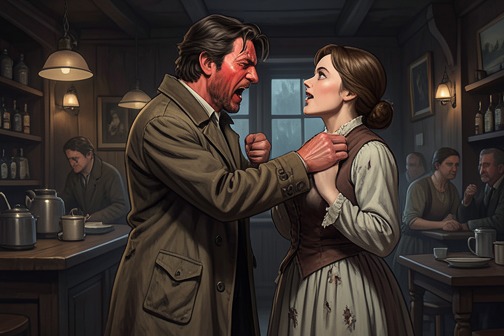
Dmitri’s assault on the retired captain is both an act of public violence and a charge used by his father in their wider dispute. When the episode is brought up, Dmitri does not deny the assault: he acknowledges his brutality and regret, while insisting that the account of what led to it is incomplete.
## Background and Circumstances
In a public confrontation, Dmitri’s father describes the captain as a poor but honourable man with a large family, discharged from the army without a court-martial or disgrace. He says that Dmitri seized the captain by the beard in a tavern, dragged him into the street, and beat him three weeks earlier. According to the father, Dmitri acted because the captain was serving as his agent in a small business.
## Dmitri’s Response
Dmitri calls his father’s account a lie in substance, although outwardly true. He openly confesses that he behaved brutally toward the captain, says he regrets it, and expresses disgust with his own rage. His response distinguishes admission of the act from acceptance of his father’s framing: Dmitri concedes the assault but disputes the explanation attached to it.
## The Family Dispute
Dmitri connects the captain’s role to the conflict over his property and his father’s alleged effort to have him imprisoned if he persisted in demanding an account. He also says that his father had encouraged the woman for whom Dmitri had a weakness to captivate him, and that she told him this herself and laughed at his father. Thus the assault is recalled not as an isolated quarrel but as part of a struggle involving money, jealousy, and the father’s use of the captain as an agent.
## Consequence and Significance
The episode gives Dmitri’s father a concrete example with which to condemn his son publicly, while Dmitri’s confession prevents him from answering by simple denial. The exchange instead turns on the difference between the acknowledged violence and the motives and circumstances Dmitri says his father has concealed. The captain’s assault therefore sharpens the larger family conflict: Dmitri accepts responsibility for his conduct but rejects the account that makes it a self-contained act of brutality.
Event 7
The Karamazov family gathering at Zosima’s cell
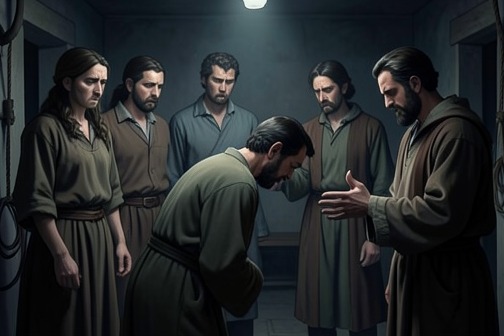
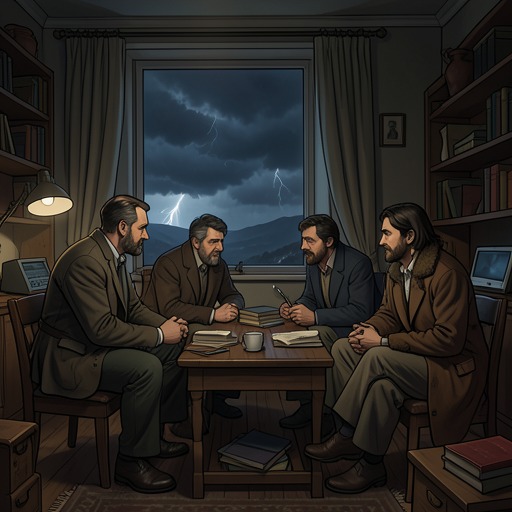
[The Karamazov family gathering at Zosima’s cell](entity:event-recall-event-the-karamazov-family-ga-09d19dc94a33) is a failed attempt at reconciliation that becomes a public eruption of the family’s hostility. Convened under the elder’s influence as Dmitri and his father, Fyodor Pavlovich, reach the height of their estrangement, the meeting ends not in agreement but in Dmitri’s furious question about whether his father should be allowed to go on living, followed by Zosima’s startling bow to him. The gesture gives the gathering a significance beyond its immediate disorder: the elder seems to recognize the gravity of Dmitri’s predicament before the family can face it openly.
## Background and Purpose
The gathering takes place in the cell of Zosima, the elder whose influence on Alyosha is described as extraordinary. The family is already marked by deep discord, and the brothers differ so sharply in personality and character that they could scarcely be more unlike. The immediate crisis, however, is the feud between Dmitri and Fyodor: their relations have become insufferably strained, and the conflict appears to have reached its sharpest point.
Fyodor is apparently the first to suggest that the family meet in Zosima’s cell. He presents the idea as a joke, but the proposed arrangement carries a more serious hope: without asking the elder to intervene directly, the family might reach an understanding under the conciliating influence of his presence. This is the gathering’s stated purpose, though the account calls its pretext false. The scene’s tension lies in the distance between that promise of a more decent settlement and the hostility its participants bring into the cell.
## The Gathering Turns to Conflict
Rather than allowing the elder’s presence to quiet the dispute, the gathering becomes a stage for its escalation. Dmitri’s anger peaks as he looks at his father and asks why such a man is alive and whether he can be allowed to go on defiling the earth. The question is not a considered proposal for action; it is an outburst that makes the extremity of the father–son conflict audible to everyone present. [Kalganov](entity:character-recall-character-a26a62c3f0a2), until then silent, protests Fyodor’s conduct as shameful and disgraceful, while the others’ dismay gives the outburst a collective audience.
The scene is cut short when Zosima suddenly rises. Dmitri’s rage is then met not by a rebuke or a settlement but by an unexpected act of deference: the elder bows down to him. Dmitri stands astonished, unable to understand what the gesture means. He cries out, hides his face in his hands, and rushes from the room. The guests follow in confusion, leaving without saying goodbye or bowing to their host; only the monks approach Zosima again for a blessing.
## The Bow and Its Consequences
Zosima’s bow is the gathering’s decisive reversal. It does not resolve the quarrel or explain itself to Dmitri, who can only respond with astonishment and flight. Instead, it interrupts the family’s spectacle of accusation with a gesture whose meaning remains suspended. Because the conflict has just reached an apparent climax, the bow makes the moment feel less like an ordinary social embarrassment than a solemn recognition of the danger and suffering bound up with Dmitri’s situation.
The meeting’s immediate consequence is dispersal rather than reconciliation. Its participants leave in disorder, and the intended conciliatory influence of the elder has not produced an agreement. Yet the contrast between the guests’ confused departure and the monks’ return for a blessing isolates Zosima’s action from the family’s social turmoil. The gathering closes with its central conflict unresolved and with Dmitri carrying away a gesture he cannot interpret.
## Narrative Significance
The event brings the family’s private antagonism into the open within a setting intended to encourage peace. Fyodor’s suggestion that the elder’s presence might help the family come to an understanding makes the cell a test of whether spiritual authority can contain a conflict that has become almost unmanageable. The gathering fails that test in practical terms: Dmitri’s anger erupts, the guests scatter, and no settlement is reached.
At the same time, the scene’s ending shifts attention from argument to gesture. Dmitri’s words make the destructive intensity of his resentment explicit; Zosima’s bow, arriving just as the scene breaks apart, offers no explanation but gives the conflict a grave, anticipatory weight. The gathering therefore functions both as a failed family negotiation and as a turning point in the reader’s perception of Dmitri: his anger has become alarming, but the elder’s response suggests that the outburst cannot be understood only as a breach of decorum.
Event 8
Zosima’s bow to Dmitri
[Zosima’s bow to Dmitri](entity:event-recall-event-zosima-s-bow-to-dmitri-8ecfdd775181) is a charged, unexplained gesture whose force lies in what it withholds: Alyosha cannot ask why it was made, and leaves believing that its meaning is both mysterious and possibly awful.
## The Gesture and Alyosha’s Response
After blessing Alyosha, Zosima sends him away and tells him to be near both his brothers. Alyosha longs to remain, but cannot protest. The bow to Dmitri weighs on him so heavily that he wants to ask what it means; the question is on the tip of his tongue, yet he does not dare voice it.
Alyosha trusts that Zosima would have explained the gesture without being asked if he had judged an explanation necessary. Since the elder does not do so, Alyosha understands the silence as deliberate, though he cannot know what it signifies. He leaves the question unresolved rather than pressing for certainty.
## Significance and Narrative Effect
The bow becomes important through its effect on Alyosha, not through any explicit explanation of its meaning. Alyosha believes blindly in its mysterious significance, and the narrator qualifies that mystery with the possibility that it may be awful. The gesture thus introduces foreboding without disclosing what is to come: its emotional weight is clear, while its interpretation remains withheld.
The moment also redirects Alyosha. Though he wishes to stay with Zosima, the elder’s blessing and charge send him back toward his brothers. The unexplained bow accompanies that departure as an unresolved sign, binding Alyosha’s obedience to a sense that something consequential lies ahead without naming what it is.
Event 9
Zosima sends Alyosha away from the monastery
[Zossima](entity:character-recall-character-zossima-9b91c014ca58) sends Alyosha away from the monastery by turning his impending death into a charge for life beyond the cloister: Alyosha is to leave when Zossima is gone, endure sorrow, and serve others in the world. The blessing gives the young monk not a refuge from trouble but a vocation within it, with the promise that sorrow may become a place of happiness rather than a reason to withdraw.
## A Charge Beyond the Monastery
Zossima insists that Alyosha is more needed elsewhere, where there is no peace and where he must wait and be of service. He tells him that the monastery is not to be his permanent home: when God calls Zossima, Alyosha must leave for good. The instruction transforms departure from a rejection of monastic life into an act of obedience and service beyond its walls.
## A Foretold Pilgrimage
Zossima blesses Alyosha for great service in the world and predicts that his path will be long. He also tells him that he will have to take a wife and bear much before returning. These forecasts widen the horizon of Alyosha’s future beyond the immediate discipline of the monastery, presenting worldly ties and hardships as part of the life for which he is being prepared.
## Sorrow, Work, and Faith
Zossima does not promise Alyosha an easy passage. He says that great sorrow lies ahead, yet that Alyosha will find happiness in that sorrow. His final counsel joins endurance to action: Alyosha is to work unceasingly, remember the elder’s words, and remain with Christ, trusting that Christ will not abandon him. The blessing thus makes service, labor, and faith the means by which sorrow can be borne rather than escaped.
Event 10
Fyodor Karamazov disrupts the Father Superior’s dinner
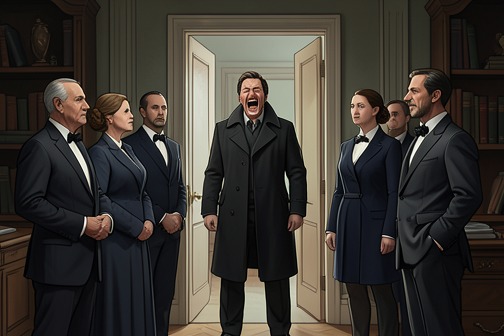
[Fyodor Karamazov disrupts the Father Superior’s dinner](entity:event-recall-event-e12a14b2aa71) when he reappears at the monastery after the prayer, laughing and addressing the assembled company as though his return itself were a joke. The episode turns a gathering meant to bring the family into harmony into a spectacle of provocation: beneath his clowning, Fyodor says he has been watching, listening, and worrying about Alyosha, but he cannot sustain that concern without attacking the people around him.
## The Return at the Doorway
The prayer has ended, and the guests are moving toward the table when Fyodor appears in the doorway. He scans the company, laughs his prolonged, impudent, malicious laugh, and announces, “They thought I had gone, and here I am again.” The entrance makes his return a performance staged for everyone present: he offers no quiet apology or explanation, but forces the company to look at him and wait for the next provocation. Their immediate, wordless stare conveys the effect of the interruption; the arrival feels revolting, grotesque, and scandalous before he has even resumed speaking.
The Father Superior nevertheless receives him courteously. When Fyodor demands to know whether he is to be admitted as a guest, the Superior answers, “You are welcome with all my heart,” then appeals to the gentlemen to put aside their dissensions and live in family harmony, with prayer. His welcome gives the gathering a possible route back to its religious purpose. Fyodor instead makes that appeal another opening for his performance, so the contrast between the Superior’s measured hospitality and the visitor’s disruptive manner becomes the scene’s governing tension.
## A Performance with a Purpose
Fyodor presents himself as a fool, but insists that the act has not made him inattentive. He says that he came partly to see and speak his mind, and explains that while he had been “playing the fool” he had also been listening and looking on the sly. His description complicates the comic mask: he is not simply carried away by disorder, but claims to have observed the family and the gathering from within his own performance. He frames his return as the last act of a show, making self-display both his method of intervention and the barrier that prevents him from speaking without provocation.
The most personal element of his explanation concerns Alyosha. Fyodor says his son is at the monastery and “being saved,” and declares that, as Alyosha’s father, it is his duty to care about his welfare. The assertion does not undo the scandal of the visit, but it reveals a motive that the surrounding mockery might otherwise obscure: Fyodor presents his presence as partly an attempt to see his son and to intervene in matters affecting him. His concern emerges in his own terms, entangled with vanity, insult, and theatricality rather than expressed as a quiet act of parental care.
## From Family Harmony to Open Insult
The Superior’s appeal asks the men to set aside dissension; Fyodor instead turns the gathering toward accusation. He attacks the clergy over money and the burdens borne by ordinary people, and [Father Iosif](entity:character-recall-character-father-iosif-ed6e3887d192) calls his conduct disgraceful. [Father Paissy](entity:character-recall-character-father-paissy-3117359ba9d6) remains obstinately silent. That silence, rather than a counterattack, leaves Fyodor’s challenge hanging in the room, while [Miusov](entity:character-recall-character-miusov-2dee14d7cb33) rushes out and [Kalgonov](entity:character-recall-character-kalgonov-17e3a6b93558) follows him. The hoped-for family harmony gives way to a visible dispersal of the company.
Fyodor’s departure extends the performance rather than resolving it. He says that he will follow Pyotr Alexandrovitch and is not coming to see the others, then goes out shouting and gesticulating. Soon afterward, [Rakitin](entity:character-recall-character-rakitin-062e26409200) sees him and points him out to Alyosha; Fyodor calls to his son from a distance. The call brings the episode back to its personal center even as the manner of leaving preserves its public disorder: he has made himself impossible to ignore, but has not repaired the estrangement or reconciled the family.
## Consequences and Narrative Significance
The scene’s reversal lies in the gap between Fyodor’s professed purpose and the effect of his conduct. He claims concern for Alyosha and describes himself as a father attending to his son’s welfare, yet his entrance, insults, and departure dismantle the Superior’s appeal for peace. The gathering offers a formal setting for reconciliation; Fyodor converts it into a stage on which he can expose grievances, challenge the clergy, and command attention. His wish to rise again after declaring that a person must remain as he has fallen similarly casts the episode as an attempted self-reinvention, although his disruptive behavior keeps that aspiration entangled with the very persona he performs.
The episode also makes Fyodor’s clowning legible as something more than aimless buffoonery. He claims to have been listening while others took him for a fool, and his stated concern for Alyosha gives the spectacle an intimate stake. But the scene offers no clean separation between genuine paternal feeling and self-dramatization: both arrive through the same voice, which moves from declaring responsibility for his son to ridiculing the people assembled around him. The dinner is therefore not a reconciliation achieved, but a failed encounter whose disorder exposes the difficulty of separating Fyodor’s concern from his cruelty and appetite for attention.
Event 11
Lizaveta’s death and Smerdyakov’s birth
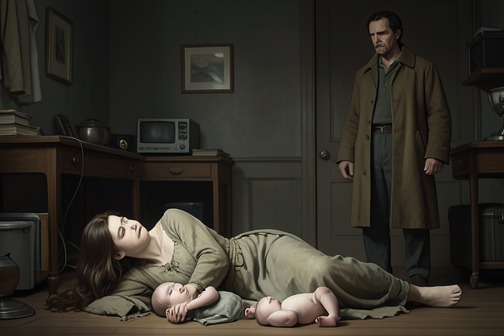
[Lizaveta’s death and Smerdyakov’s birth](entity:event-recall-event-cd7727c8f732) form a grim conjunction of loss and adoption: on the night after [Grigory](entity:character-recall-character-grigory-180b09518946) and Marfa bury their own child, Grigory finds Lizaveta dying in a garden bath-house after giving birth. The infant survives because the couple take him in, but his beginnings remain marked by public suspicion and his alleged father’s denial. The episode establishes both the circumstances of Smerdyakov’s birth and the household into which he is absorbed.
## The Night of the Birth
The discovery follows the burial of Grigory and Marfa’s child. On the next night, Marfa wakes to what she believes is a newborn’s wail, at first hearing it as the cry of her own dead baby. Grigory listens, thinks the sound more like a groan, and goes into the garden. Near the gate, he traces it to the bath-house and recognizes that a woman is in distress.
Inside, Grigory finds Lizaveta, a speechless, intellectually disabled girl known throughout the town by the nickname Stinking Lizaveta. She has given birth and lies dying beside the baby. The scene’s sequence turns private mourning into an unforeseen encounter with another life: what Marfa first hears as the return of her own child’s cry comes from a woman whose labor has ended in mortal danger.
## Rescue and Adoption
Grigory sends Marfa to Lizaveta and runs to fetch an old midwife who lives nearby. They save the baby, but Lizaveta dies at dawn. The rescue therefore cannot restore the mother or undo the loss that has just occurred; it instead leaves the newborn dependent on the people who have found him.
Grigory carries the infant home and places him on Marfa’s lap. He calls the orphan a child of God and says that their lost child has sent them this one, urging his wife to nurse him and weep no more. His words make the adoption an answer to grief, though not a replacement that erases it. Marfa brings the baby up, and the household’s care gives him a place where his birth had left him without one.
## A Name and a Contested Paternity
The child is christened Pavel, and people add Fyodorovitch, meaning son of Fyodor. Fyodor Pavlovich does not object to the naming, and finds the situation amusing, but vigorously denies responsibility for the child. The townspeople, by contrast, are pleased that he has adopted the foundling. Their interpretation and his denial coexist without resolving the question of paternity.
Fyodor Pavlovich later invents the surname Smerdyakov, taking it from Lizaveta’s nickname. In this way, the name that identifies Pavel in the household also carries his mother’s stigmatized public identity forward. The child becomes Fyodor Pavlovich’s second servant and, at the time the story begins, works as a cook while living in the lodge with Grigory and Marfa.
## Narrative Significance
The episode binds birth to bereavement without making them interchangeable. Grigory and Marfa’s own loss shapes the welcome they give the foundling: Grigory understands the infant as arriving in the place left empty by their child, and Marfa raises him. Yet the new household does not settle the questions surrounding the infant’s origins. Fyodor Pavlovich’s denial stands against the townspeople’s assumption that the child is his, while the chosen surname preserves the link to Lizaveta.
The account also gives Smerdyakov an origin defined by other people’s acts and judgments: Lizaveta is identified by a nickname, Grigory and Marfa save and raise her son, and Fyodor Pavlovich supplies a surname while denying responsibility. The discovery in the bath-house is thus both an intimate rescue and the beginning of a contested family history. The episode ends not with a resolution of that dispute but with the boy’s incorporation into Grigory and Marfa’s household, where he grows up as a servant and cook.
Event 12
Dmitri helps Katerina Ivanovna
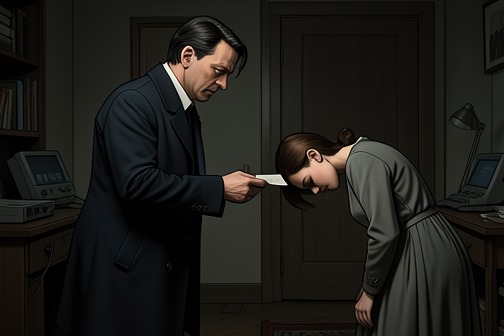
[Dmitri helps Katerina Ivanovna](entity:event-recall-event-c45e7b5cf0d0) in a remembered encounter that turns an urgent appeal for money into a scene of mutual abasement and lasting emotional complication. Recounted by Dmitri to Alyosha, the episode begins with Katerina arriving to claim the 4,500 roubles she has been told Dmitri will give her. He gives her a banknote for five thousand instead, but the form of the gift matters as much as its value: he hands it over in silence and bows deeply, prompting her to answer with a Russian bow that brings her forehead to the floor. Dmitri remembers the exchange as an “adventure,” while also questioning whether his own account makes him appear more noble than he was.
## The appeal and its circumstances
Dmitri’s account begins with the collapse of Katerina’s family’s standing in town. He says that people had grown markedly cool toward them and that her friends had turned their backs. He then approached Agafya Ivanovna, with whom he had maintained a friendship, and told her that her father’s accounts were short of 4,500 roubles in government money. The deficit and the family’s isolation form the background to the crisis; Dmitri describes himself as taking the first step by bringing the shortage to Agafya’s attention.
Katerina came to Dmitri after her sister had told her he would give her 4,500 roubles if she personally asked for the money. In Dmitri’s recollection, she entered and looked directly at him, determined and almost defiant, though uncertainty remained visible in her expression. She began by stating what she had been promised and demanding the money. The appeal is direct, but the strain of making it soon breaks through: she becomes breathless and frightened, and her voice fails.
## The exchange
Dmitri recalls turning to the window and pressing his forehead against the frozen pane. He remembers the ice burning against his skin like fire, a physical sensation that punctuates the moment before he decides what to do. He does not keep Katerina waiting long. He goes to the table, opens a drawer, and takes out a five-thousand-rouble banknote that had been lying inside a French dictionary.
Instead of explaining the difference between the requested sum and the amount he gives, Dmitri shows her the note in silence, folds it, and hands it over. He then opens the door into the passage and steps back to make a deep, formal bow. The gesture transforms the encounter: the money is not merely delivered but offered through a display of respect, one Dmitri describes as especially impressive. The note’s amount exceeds the 4,500 roubles Katerina had been promised, while its location in a dictionary and the ceremonious manner of its delivery remain vivid details in his account.
Katerina shudders and turns pale. She gazes at Dmitri for a moment, then bows down to his feet, not with a boarding-school curtsey but with a Russian bow, her forehead touching the floor. She rises and runs away. The encounter’s expected direction—an anxious petitioner receiving money from the person able to provide it—gives way to a reciprocal gesture of abasement. Dmitri’s bow and Katerina’s answer make the act of assistance inseparable from dignity, gratitude, and the painful inequality between giver and recipient.
## Shame, pride, and self-punishment
Dmitri’s memory does not present the gift as uncomplicated generosity. After Katerina leaves, he says he was wearing his sword, draws it, and nearly stabs himself on the spot. The impulse to turn the blade against himself follows immediately upon the exchange, adding self-punishment to the scene’s emotional aftermath. The account links his act of giving not to a calm resolution but to an inner conflict whose intensity he later recognizes may be difficult to describe fairly.
As he finishes telling the story, Dmitri admits that he may have laid on his inner conflict too thickly in order to glorify himself. He also says that there was no need to have told Alyosha, yet insists that the episode is now known to Ivan and Alyosha and no one else. That qualification makes the disclosure part of the event’s significance: Dmitri is not merely recalling a financial favor but exposing a private episode whose meaning remains unsettled even in his own telling.
## Consequences and significance
The scene establishes the history of Dmitri’s help to Katerina through a concrete act: he gives her a five-thousand-rouble note when she comes seeking the promised 4,500. Its lasting charge lies in the way the exchange complicates the roles of benefactor and petitioner. Dmitri’s formal bow acknowledges Katerina’s dignity, while her bow to the floor expresses the extremity of her response; neither gesture cancels the disparity that brought her to his door.
In retrospect, Dmitri sees the episode through competing possibilities. It can be remembered as an act of assistance, as a moment of prideful self-display, and as the beginning of an inward turmoil that nearly turns into self-inflicted violence. His own suspicion that he is making himself look better prevents the story from settling into a simple portrait of noble generosity. The recollection instead preserves the uneasy mixture of aid, shame, theatrical gesture, and self-reproach that shapes his account of the encounter.
Event 13
德米特里挥霍卡捷琳娜托付的三千卢布
Dmitri’s spending of the 3,000 roubles entrusted to him by [Katerina Ivanovna](entity:character-recall-character-katerina-ivanovna-ebf3ee32d98b) is a decisive breach of trust that binds his pursuit of [Grushenka](entity:character-recall-character-7ec2d155935e) to a concealed debt. Given the money to forward to Agafya Ivanovna in [Moscow](entity:location-recall-location-moscow-b59c72aac896), he takes it instead to [Mokroe](entity:location-recall-location-a18f65fc1883) and consumes it in a revel. His later admission makes the episode more than an account of extravagance: he acknowledges that he hid what he had done, claimed to have posted the money, and cannot supply it when the obligation comes due.
## The Money’s Intended Purpose
Katerina Ivanovna had asked Dmitri to go to the provincial capital and post 3,000 roubles to Agafya Ivanovna in Moscow, with the specific intention that the transaction should remain unknown in their town. Dmitri therefore carried money entrusted for a private remittance, not funds he was free to spend. Its destination and secrecy give the sum a purpose beyond its face value: it represented a duty he had accepted and an act of confidence on which Katerina Ivanovna relied.
The episode takes its sharpest turn when Dmitri admits that the money she had given him was still in his pocket when he went to see Grushenka. He drove with her to Mokroe, twenty-five versts away, and used the intended remittance to pay for an extravagant night of drinking and entertainment. The distance from the town offered no remedy for the betrayal; it only carried the money, and the consequences of his choice, away from the setting in which the obligation had been made.
## The Revel at Mokroe
At Mokroe, Dmitri hired Gypsies, bought champagne, and made the peasants, women, and girls drink. He describes the thousands as sent flying and says that within three days he was stripped bare. The spending is presented not as a measured series of purchases but as a burst of lavish dissipation: money assigned to another person’s needs vanishes into a public celebration arranged around Dmitri and Grushenka.
The revel does not achieve what Dmitri wanted from it. He recalls himself as having been a hero, yet the expenditure produces no sign that Grushenka has yielded to him. The contrast between his grand gesture and its failure makes the spending doubly consequential: he has lost the money without securing the romantic outcome for which he hoped. When he describes Grushenka as someone who could not be won by force of spending, he frames the night as a defeat as well as a waste.
## Concealment and the Unpaid Obligation
After the revel, Dmitri pretended that he had gone to the provincial town. He told Grushenka that he had sent the money and would bring the postal receipt, but never produced it. The false claim converts an impulsive misuse of entrusted funds into an ongoing deception: the remittance has not been made, while Dmitri’s story temporarily suggests that it has.
The missing receipt becomes the concrete sign of the lie. Without it, Dmitri cannot substantiate his claim that Agafya Ivanovna received the money; more importantly, the money itself is gone. When he imagines Grushenka asking what happened to the sum, the question exposes how little his earlier performance can protect him. He has neither the receipt nor the 3,000 roubles he would need to make good on his promise.
## Exposure and Moral Stakes
Dmitri’s confession distinguishes between his acknowledged degradation and the more serious charge of theft. He concedes that he did not send the money and wasted it, but insists that it would still be possible to return the sum and have it forwarded to Agafya Ivanovna. The proposed restitution clarifies the moral alternative: an explanation alone would not discharge the obligation; the money must be restored and sent to the person for whom it was intended.
The event joins romantic rivalry, financial wrongdoing, and public self-exposure in a single chain. Dmitri spent the money while pursuing Grushenka, concealed the expenditure with a false account of posting it, and later faced the prospect that Grushenka would ask where the money was. His extravagance may look like a gesture of conquest, but its aftermath reveals its actual cost: Katerina Ivanovna’s trust has been violated, Agafya Ivanovna has not received the remittance, and Dmitri is left with an obligation his vanished money cannot meet.
Event 14
Dmitri attacks his father
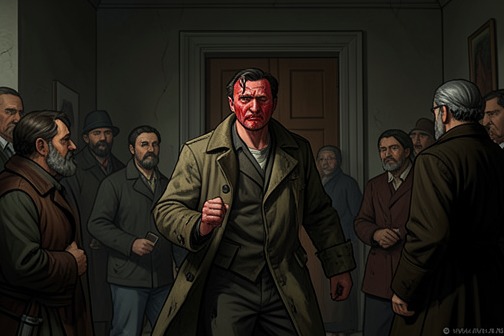
[Dmitri attacks his father](entity:event-recall-event-2c2825a0fe5c) during a furious attempt to get into the inner rooms of [Fyodor Pavlovich’s house](entity:location-recall-location-fyodor-pavlovich-s-h-302b1a38e407). Convinced that [Grushenka](entity:character-recall-character-7ec2d155935e) is inside, he forces his way past the servants and strikes Fyodor Pavlovich; when he leaves, he threatens to return and kill him. The episode turns the long-running conflict between father and son into an immediate, openly stated danger.
## Causes and Background
[Grigory](entity:character-recall-character-grigory-180b09518946) and Smerdyakov have been instructed by Fyodor Pavlovich not to admit Dmitri. They struggle with him in the passage, then stand before the closed doors leading to the inner apartments. Dmitri reads their resistance as confirmation that Grushenka is hidden there and demands that Grigory move aside. His mistaken certainty, combined with his anger at the obstruction, drives the confrontation forward.
## The Assault
Dmitri pushes past Grigory, who falls, and breaks through the door. Fyodor Pavlovich follows, calling for him to be stopped and accusing him of stealing money from the bedroom. Dmitri then seizes his father by the hair, throws him to the floor, and kicks him in the face. Ivan and Alyosha intervene: Ivan pulls Dmitri away, while Alyosha helps restrain him. The attack ends with Dmitri’s brothers separating the two men rather than with any reconciliation.
## Consequences and Significance
Ivan cries out that Dmitri has killed their father. Dmitri answers that Fyodor Pavlovich deserved it and says he will return to kill him if he has not already done so. As he leaves, he declares that he does not repent having shed his father’s blood, curses him, and disowns him. The assault thus makes Dmitri’s murderous threat unmistakable, while the mistaken belief that Grushenka is in the house shows how jealousy and suspicion shape the immediate cause of his violence. In the wider family conflict, the scene establishes both the physical danger Fyodor Pavlovich faces and the threat that will later weigh heavily against Dmitri.
## The Brothers’ Intervention and the Threat on Departure
Fyodor Pavlovich calls for Dmitri to be held and rushes after him. Ivan and Alyosha follow their father; after the assault, Ivan pulls Dmitri away, and Alyosha helps hold him back. The intervention prevents the confrontation from continuing in that moment, but does not settle the hostility between father and son. Dmitri leaves still believing Grushenka is somewhere in the house, and looks at Fyodor Pavlovich with hatred as he goes.
At the doorway, Dmitri says he does not repent having shed his father’s blood, curses him, and declares that he disowns him altogether. His departure therefore carries the quarrel beyond a physical attack: the son openly rejects the father and warns that the danger remains. The scene’s immediate cause is Dmitri’s conviction that Grushenka has been hidden inside, but its final emphasis is the unresolved conflict he leaves behind.
## The Brothers’ Intervention and the Threat on Departure
Fyodor Pavlovich calls for Dmitri to be held and rushes after him. Ivan and Alyosha follow their father; after the assault, Ivan pulls Dmitri away, and Alyosha helps hold him back. Their intervention stops the confrontation from continuing at that moment, but leaves the hostility unresolved. Dmitri departs still convinced that Grushenka is somewhere in the house, looking at his father with hatred.
As he leaves, Dmitri says that he does not repent having shed his father’s blood, curses him, and declares that he disowns him altogether. The parting words extend the attack beyond the immediate violence: Dmitri rejects the father-son bond and makes clear that the threat persists. His belief that Grushenka is hidden inside the house drives the confrontation, while his final declaration reveals how completely anger has overtaken any possibility of reconciliation.
## Consequences and Significance
The intervention prevents the confrontation from continuing at that moment, but it does not resolve the hostility between father and son. Dmitri leaves still convinced that Grushenka is somewhere in the house, looking at his father with hatred. He says he does not repent having shed his father’s blood, curses him, and declares that he disowns him altogether. The parting words carry the attack beyond physical violence: Dmitri rejects the father-son bond and makes plain that the danger persists. His mistaken belief that Grushenka is hidden inside the house precipitates the assault; his threat to return and kill Fyodor Pavlovich gives the quarrel a menacing aftermath.
Event 15
Grushenka’s visit to Katerina Ivanovna
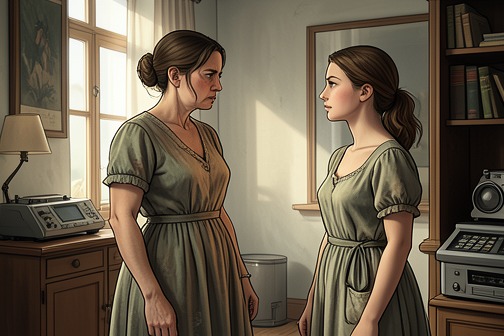
[Grushenka’s visit to Katerina Ivanovna](entity:event-recall-event-grushenka-s-visit-to-ka-1926fbdee51c) is a failed reconciliation staged as a trap: a meeting that begins with apparent warmth ends in a public rupture. [Grushenka](entity:character-recall-character-7ec2d155935e)’s calculated reversal of a gesture of courtesy and her revelation of Katerina’s past expose the rivalry beneath the promise of forgiveness, while Alyosha’s attempts to contain the confrontation cannot prevent its consequences.
## A Meeting Framed as Reconciliation
Grushenka initially presents the encounter as a long-desired meeting. She tells Katerina that she has wanted to know her and visit her, and says she had scarcely expressed that wish before Katerina came to her. The language suggests a meeting that might settle matters between them. But the promise of resolution is unstable: Grushenka immediately complicates Katerina’s favorable impression of her, warning that she may not be as good as she seems and describing herself as someone who will have her own way.
The visit is also bound up with Katerina’s promise concerning Dmitri. Grushenka tells her that she will save him, and insists that Katerina explain to him that she has long loved another man, who is now offering her his hand. Reconciliation therefore carries a practical demand: Katerina must help release Dmitri from their entanglement. The language of mercy and settlement is present from the start, but so is Grushenka’s power to define what the settlement will mean.
## The Courtesy Reversed
The scene turns on a hand offered for a kiss. Grushenka holds Katerina’s hand near her lips for two or three minutes, as though reconsidering, then says she thinks she will not kiss it after all. Her refusal is not an abrupt withdrawal from the ritual but a deliberately prolonged one: the pause makes the anticipated gesture visible before she denies it. She explains that she wants Katerina to remember that Katerina kissed her hand, while she did not kiss Katerina’s.
That small imbalance changes the meaning of the earlier intimacy. A gesture that could have signified mutual respect becomes evidence of unequal regard, and Grushenka’s sugary manner gives way to an intent stare. Katerina suddenly understands the insult, calls Grushenka insolent, and leaps to her feet. The scene’s reversal is carried not by an argument about reconciliation but by the physical detail of a hand held near the lips and then withheld.
## Exposure and Escalation
Katerina orders Grushenka away and calls her a creature for sale. Grushenka answers by turning the accusation back on Katerina: she says Katerina once visited gentlemen at dusk for money and had put her beauty up for sale. The allegation is presented as something Grushenka knows, and it changes the quarrel from a contest over manners into an attack on Katerina’s past and standing. Grushenka’s earlier claim that she had staged the scene for Alyosha’s benefit confirms that the encounter was not simply a failed attempt at closeness; it was a performance with a chosen witness.
Katerina shrieks and tries to rush at Grushenka, but Alyosha holds her back with all his strength. He urges Katerina not to take another step or answer Grushenka, and warns that Grushenka will go away. The effort to prevent a physical attack cannot restore the possibility of reconciliation. The confrontation has already moved from ambiguous courtesy to insult, disclosure, and threatened violence.
## Departure and Aftermath
At the cry, Katerina’s two aunts and a maid-servant hurry into the room. Grushenka takes her mantle from the sofa and says that she will leave, asking Alyosha to see her home. She repeats that she got up the scene for his benefit and tells him he will be glad of it afterward. Alyosha turns away, wringing his hands, as Grushenka runs out laughing musically.
Katerina’s response is not composed anger but collapse: she goes into a fit of hysterics, sobbing and shaking. The abrupt contrast between Grushenka’s laughter as she leaves and Katerina’s distress fixes the encounter as a decisive humiliation rather than a settlement. Alyosha has tried to restrain the immediate violence and is left watching both women’s opposed reactions; the promised reconciliation has instead sharpened their conflict.
Event 16
Dmitri’s crossroads confession
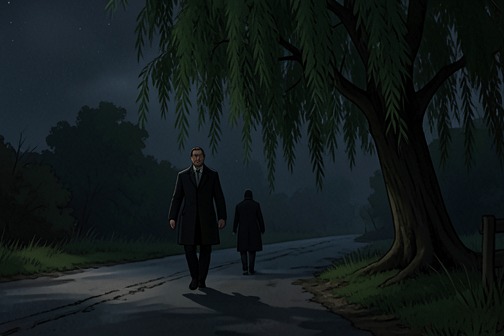
[Dmitri’s crossroads confession](entity:event-recall-event-c6c24ee3756a) is a nocturnal encounter between Dmitri and Alyosha in which a startling ambush gives way to urgent disclosure. After hearing Alyosha’s account of what happened at [Katerina Ivanovna](entity:character-recall-character-katerina-ivanovna-ebf3ee32d98b)’s, Dmitri reveals that he expects terrible disgrace and will proceed with a base plan despite knowing he could still stop. The scene makes his decision, and Alyosha’s role as its witness, explicit before its consequences unfold.
## The encounter at the crossroads
Alyosha is walking quickly along a deserted road from the monastery. Night has nearly fallen; it is too dark to see clearly more than thirty paces ahead. Halfway along the road, at a crossroads beneath a solitary willow, a figure waits. When Alyosha reaches the meeting point, the man rushes out and shouts, “Your money or your life!” The theatrical threat briefly disguises the encounter’s real purpose: Dmitri has chosen a place where he can intercept his brother.
Alyosha recognizes Dmitri and is violently startled. Dmitri explains that he had wondered where to wait for him. Waiting by her house seemed uncertain, because three roads led away from it and Alyosha might have taken another route. The crossroads therefore becomes a practical meeting point shaped by Dmitri’s desire to find Alyosha—and, in the conversation that follows, a threshold at which private knowledge and impending disgrace are brought into the open.
## Alyosha’s account
Dmitri is struck dumb when he hears that [Grushenka](entity:character-recall-character-7ec2d155935e) was with Katerina Ivanovna. He responds with disbelief, asking whether Alyosha is raving. Alyosha then describes what happened from the moment he entered Katerina Ivanovna’s house. The account takes ten minutes. He does not tell it fluently or in perfect sequence, but he makes the events clear and leaves nothing out.
This report changes the encounter from an ambush into a reckoning. Dmitri has intercepted Alyosha to hear news connected with the women and the conflict surrounding them; Alyosha, in turn, supplies the full account rather than merely a fragment. The scene gives its narrative weight to the act of telling: before Dmitri makes his final disclosure, Alyosha has listened and recounted what he witnessed, creating the conditions for his brother’s confidence.
## A confession made in advance
Dmitri abruptly turns toward the town, and Alyosha watches, unable to believe he is leaving so suddenly. Dmitri turns back and calls for one more confession, made to Alyosha alone. He tells him to look closely: terrible disgrace lies ahead, he says, and strikes his chest with his fist as he points to what he bears within himself. The gesture makes the threatened dishonor bodily and personal, not merely a danger imposed from outside.
Dmitri insists that he has never done anything, and never will do anything, comparable in baseness to the dishonor he now carries. Crucially, he says he is still free to prevent what is coming. He can stop or carry it through; he could pull back and recover at least half of his lost honor the next day. Yet he declares that he will not stop. He will carry out his base plan, and Alyosha can bear witness that he announced his intention beforehand.
## Choice, witness, and dramatic consequence
The confession turns on the distance between freedom and decision. Dmitri does not describe himself as powerless: he recognizes a way to withdraw and names the honor he might recover if he did. His declaration that he will nevertheless go forward makes the threatened disgrace a choice he understands, not simply a fate he fails to foresee. The crossroads setting sharpens that structure: more than one road is available, while Dmitri insists that he will take the dishonorable course.
Alyosha’s presence gives the decision a witness and a human relation. Dmitri does not simply leave after delivering the news about Katerina Ivanovna; he turns back to entrust Alyosha with what he has not yet told him. The exchange thus binds disclosure to responsibility: Alyosha knows in advance that Dmitri intends to proceed, while Dmitri makes his brother the person who can testify that the decision was declared openly.
The encounter’s decisive revelation is not the full content of the plan, which remains unnamed in this account, but Dmitri’s conscious commitment to it and his anticipation of disgrace. That withheld detail keeps the scene focused on the moral fact it does disclose: he believes he can stop, understands what continuing will cost, and says he will continue. The confession makes the coming dishonor feel both imminent and chosen.
Event 17
Elder Zosima’s final counsel
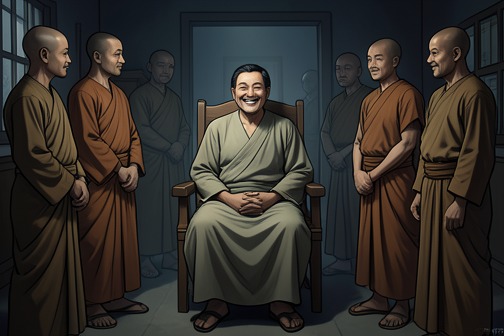
[Elder Zosima’s final counsel](entity:event-recall-event-3b9999e9b77e) joins an ethic of universal love to an immediate demand for humility, repentance, and fidelity to one’s obligations. Given during his last illness, when he is weak but clear-minded and joyful, it is at once a teaching for the monks and a parting gift to Alyosha: the elder tells him to leave the cell and keep the promises he has made before he receives his final word.
## The elder’s condition and purpose
Alyosha is roused before daybreak. Elder Zosima feels so weak that he can scarcely rise from bed, though he wants to sit in a chair. His face is tired, yet bright, and its expression is marked by gaiety, kindness, and cordiality. Physical frailty and inward gladness coexist: the counsel comes not as an abstract summary delivered from a position of strength, but from a man aware that his remaining time is short.
As he speaks, Elder Zosima is not addressing the monks merely to instruct them. He seems eager to share his joy and ecstasy with all people and with all creation, opening his heart once more. That impulse gives the address its expansive reach, even as his failing strength makes it halting and incomplete.
## Love, humility, and repentance
Elder Zosima asks the monks to love one another and to love God’s people. Their enclosure within the monastery does not make them holier than those who remain outside; rather, entering the monastery means that each has acknowledged a need for greater spiritual discipline. The contrast denies them any claim to superiority and directs their religious life outward, toward responsibility for other people.
He connects this responsibility to humility. The monks must not grow proud, whether in relation to the lowly or the great, and must not hate. Instead, they should watch over their own hearts and confess their sins continually. Sin is not a reason to despair: they need not fear recognizing it, provided recognition is joined to penitence. Elder Zosima warns against making conditions with God, presenting repentance as a sincere turning of the heart rather than a bargain.
The counsel also rejects attachment to wealth. The monks are told not to extort, love, or hoard gold and silver. Their alternative is faith: they are to cling to its banner and raise it high. These demands belong together. Humility checks the impulse to place oneself above others; penitence acknowledges one’s own wrongdoing; and freedom from greed makes possible a life directed toward love rather than possession.
## Love as a work of restoration
For Elder Zosima, love is more than a private feeling or a rule for conduct inside the monastery. He imagines the heart becoming tender through infinite, universal, inexhaustible love. Such love gives a person the power to win the world over and to wash away the world’s sins with tears. The image makes compassion active: the believer is called to meet the world’s wrongdoing not with pride or hatred, but with love and sorrow for others.
This vision also explains why the elder’s words reach beyond the monastic community. The monks are not to treat their separation from ordinary life as proof of moral distinction. Their spiritual discipline has its test in how they love people beyond the walls, and their own continual self-examination is inseparable from that outward concern. The address thus places personal repentance and responsibility for the wider world within the same moral practice.
## Alyosha’s promise and the parting gift
When Elder Zosima grows tired again and returns to bed, he thinks of Alyosha as he closes his eyes and sends for him. Alyosha comes immediately. The elder asks whether he has promised something to others; Alyosha answers that he has promised his father, his brothers, and others. Elder Zosima tells him that he must go and keep those promises. He reassures him that he will not die before Alyosha can be present to hear his last word, which he intends as a final gift to the son who loves him.
The instruction makes departure part of the elder’s spiritual teaching. Alyosha’s devotion to his mentor does not require him to remain beside the sickbed at once: his obligations to his father, brothers, and other people must be honored. Elder Zosima’s farewell therefore passes his teaching into action, directing Alyosha away from the cell and toward the relationships for which he has given his word. The final counsel’s legacy is both a vision of love wide enough to embrace the world and a concrete command to fulfill promises within it.
Event 18
Zosima predicts Vassya’s return
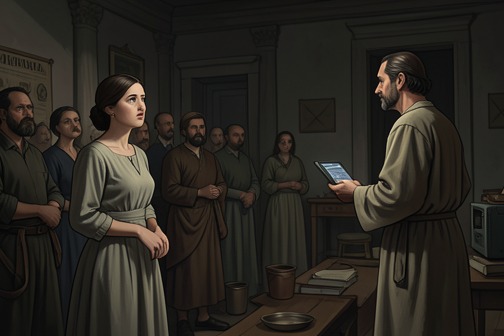
[Zosima predicts Vassya’s return](entity:event-recall-event-3da1f9f122f8) after a sergeant’s widow asks whether she may pray for her missing son as if he were dead. He rebukes the practice as a kind of sorcery, then comforts her with the assurance that Vassya is alive and will soon either come home or write. A letter from [Siberia](entity:location-recall-location-siberia-6bda40295568) arrives almost as soon as she returns home, fulfilling the prediction and making the episode a small but consequential test of faith, hope, and the monastery’s response to apparent miracles.
## The widow’s question and Zosima’s answer
The episode reaches Alyosha through a letter from [Madame Hohlakov](entity:character-recall-character-madame-hohlakov-a79e67f9109e). [Rakitin](entity:character-recall-character-rakitin-062e26409200) has unexpectedly come from town carrying it, and Madame Hohlakov recounts an incident from the previous day, when women had come to receive Zosima’s blessing. Among them was Prohorovna, a sergeant’s widow whose son Vassya had gone to Irkutsk and had sent no news for more than a year. With no word from him, she asked whether she might pray for the repose of his soul.
Zosima first answers sternly. To pray for someone who may still be living as though he were dead, he says, is a kind of sorcery. But his rebuke does not become a condemnation of the grieving mother: he forgives her because she does not understand what she is doing. He then gives her comfort, saying that Vassya is certainly alive and will either return very shortly or send a letter. She should go home and expect him. The movement from correction to consolation matters: Zosima rejects the widow’s fearful assumption of death without dismissing her longing for her son.
## A prediction fulfilled by a letter
The news that follows seems to confirm Zosima’s words with striking speed. Scarcely has Prohorovna reached home when a letter from Siberia is delivered to her. Its writer says that he is an official and hopes, three weeks after the letter reaches his mother, to embrace her. The evidence therefore confirms contact and an announced intention to return, rather than recording the reunion itself; the prediction’s immediate fulfillment lies in the letter’s arrival and its promise of a meeting soon afterward.
Madame Hohlakov presents the news to Alyosha as a prophecy fulfilled literally, and even more than literally. Her excitement gives the event its public force: she warmly urges Alyosha to tell the Superior and the brotherhood, insisting that everyone ought to know. The incident has thus passed through several voices before it reaches the assembled monks—Zosima’s encounter with the widow, the letter’s account as relayed by Madame Hohlakov, and her request that Alyosha carry the report onward. The speed and layered transmission heighten the sense of wonder, while the fact that the confirmation is an ordinary letter keeps the episode anchored in a concrete event.
## [The monastery](entity:location-recall-location-the-monastery-fbc7a3902639) receives the news
Alyosha conveys the account to the monks. Even the most austere among them are affected, and [Father Paissy](entity:character-recall-character-father-paissy-3117359ba9d6) appears graver than the rest. The reaction is not merely a burst of celebration: Zosima’s prediction has become a matter for the whole brotherhood, touching a community already alert to the significance of the elder’s words and example.
When the news of the “miracle” reaches Zosima, he cannot entirely suppress his inner emotion. His eyes gleam, and a grave, solemn smile comes to his lips. He exclaims, “We shall see greater things!” The monks around him repeat, “We shall see greater things, greater things yet!” Their shared response turns the widow’s private relief into a moment of communal expectation. Yet the scene does not end in unqualified acclaim. Father Paissy, frowning again, asks the others to wait at least for a time, placing restraint beside their excitement.
## Hope, wonder, and restraint
The episode’s significance rests on a careful sequence: grief leads the widow to speak of her son as though he were dead; Zosima corrects that assumption but answers her distress with confidence and hope; a letter then confirms that Vassya is alive and intends to embrace his mother. The prediction gives the bereaved mother a reason to expect reunion rather than mourn prematurely, while its fulfillment makes an intimate act of consolation visible to the monastery.
The monks’ responses preserve a tension rather than resolving it. Madame Hohlakov wants the incident proclaimed as a miracle, and Zosima’s words about greater things seem to welcome a future beyond this single occurrence. Father Paissy’s caution, however, interrupts any rush from striking coincidence to settled judgment. The passage presents wonder as a powerful communal experience, but also shows that the community’s response includes a voice urging patience. Its ending holds those impulses together: hope has been renewed, the prophecy appears fulfilled, and the meaning of the event is not reduced to a simple declaration.
Event 19
Dmitri publicly humiliates Snegiryov
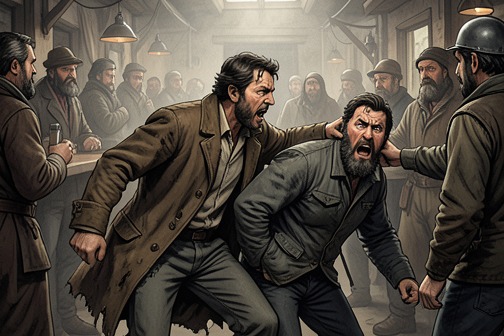
[Dmitri publicly humiliates Snegiryov](entity:event-recall-event-0c7f9bd752ea) in a sudden assault that drags a discharged captain from a tavern by his beard and into the street. The scene’s decisive consequence lies beyond the physical indignity: Snegiryov’s young son Ilusha sees his father being pulled away, rushes to defend him, and is subsequently taunted by schoolboys. A public act of violence thus becomes a lasting humiliation shared by father and son, while the child’s instinctive loyalty gives the episode its moral weight.
## Causes and Setting
The assault is recalled as having occurred about a week before it is discussed. Dmitri encounters the discharged officer in a low tavern; the account says that he somehow loses his temper, seizes Snegiryov by the beard, and drags him out. Snegiryov later emphasizes that he had done nothing to provoke the attack and that Dmitri happened upon him in a towering rage. The scene is presented as a hasty, unjust, and disgraceful action, not as a dispute whose particulars justify what follows.
The captain’s beard becomes the incident’s humiliating emblem. When Snegiryov recounts the scene, he explains that the boys call his beard a “wisp of tow,” a nickname that carries the street’s degradation back into the schoolyard. The violence is therefore not confined to the tavern and market place: its visible mark becomes a handle for repeated mockery.
## The Assault and Ilusha’s Intervention
Dmitri drags Snegiryov out of the tavern and into the market place. The attack coincides with the schoolboys’ departure from school, so the public space fills with witnesses. Among them is Ilusha, who sees his father in distress and runs to him. Calling out that Snegiryov is his father, the boy catches hold of him, embraces him, and tries to pull him away, pleading with the assailant to let go and forgive him.
The child’s intervention sharply alters the scene’s meaning. Snegiryov is not only a man subjected to a public assault; he is a father whose son sees him degraded and tries, with a child’s limited strength, to protect him. The spectators’ laughter deepens the humiliation. What Ilusha encounters is both the violence itself and the surrounding crowd’s refusal to answer his appeal with help.
## Aftermath and the Schoolyard
The assault continues to shape Ilusha’s life after the immediate scene has ended. Snegiryov reports that, since the incident, the boys have teased his son about the “wisp of tow.” The nickname turns the father’s beard into a schoolyard refrain, making the public humiliation recur in the place where Ilusha must meet his peers.
Snegiryov describes the boys as individually capable of gentleness but, together, often merciless. In his account, their teasing stirs a gallant spirit in Ilusha rather than making him ashamed of his father. The child’s response distinguishes his loyalty from the crowd’s ridicule: the same humiliating scene that exposes his father to laughter also reveals Ilusha’s willingness to stand by him.
## Significance
The episode connects adult violence to its consequences for a child without making the assault merely a prelude to the physical injury. Dmitri’s action publicly strips Snegiryov of dignity; Ilusha’s attempt to shield him turns the father’s distress into an intimate test of filial loyalty, witnessed and mocked by others. The beard carries the injury forward as a repeated taunt, so the event’s aftermath is social as well as emotional.
The scene also develops through opposed responses to vulnerability. Dmitri’s uncontrolled force and the bystanders’ laughter leave Snegiryov exposed, while Ilusha answers with an urgent embrace and a plea. That contrast gives the incident its enduring significance: the boy’s appeal cannot undo the humiliation, but it makes visible a bond the crowd’s mockery cannot extinguish.
Event 20
Alyosha and Ilyusha’s stone-throwing conflict
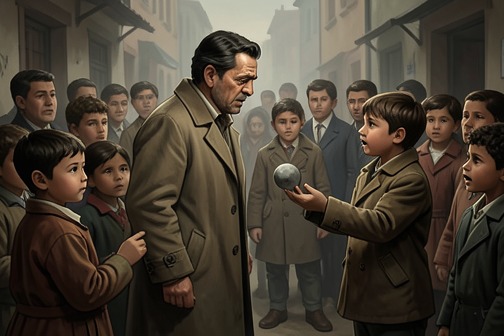
[Alyosha and Ilyusha’s stone-throwing conflict](entity:event-recall-event-8f009bccab13) is the first encounter between them: Alyosha finds a group of schoolboys attacking a solitary child, steps in to shield him, and becomes the target of the boy’s anger himself. The scene begins as an apparent quarrel among children but ends with an unanswered question and a tearful flight, establishing the personal grievance that Alyosha will have to understand before he can help.
## The encounter on the road
Alyosha is looking for someone that day, and he has little time to spare. Yet as he crosses the square and turns onto the road, the sight of excited schoolboys draws him aside. He is fond of children, and their animated faces catch his attention; then he notices that they are carrying stones. Some distance away, another schoolboy stands by a fence with a satchel at his side. About ten years old, pale and delicate-looking, with bright black eyes, he is separated from the group and already part of the confrontation.
The action quickly reveals the imbalance: the boys call attention to their target’s name, shouting, “He aimed it at you, he meant it for you. You are Karamazov, Karamazov!” They urge one another to throw, and six stones fly at the solitary boy. One knocks him down, but he gets up and returns the attack. With stones in their pockets, the group can sustain the assault; the boy is outnumbered, but refuses to retreat.
## Alyosha intervenes
Alyosha challenges the schoolboys for joining together against one child, warning that their numbers could kill him. He runs forward to screen the boy from the stones. His intervention is an attempt to stop the immediate violence, not an accusation that the isolated child is blameless: the boy is throwing stones back. But Alyosha first responds to the danger in front of him, and his arrival changes the direction of the conflict. The schoolboy’s anger shifts from the group to the person trying to protect him.
After Alyosha turns away, the boy throws a particularly large stone at his back. Alyosha confronts him for striking someone from behind and refers to what others say about his sly attacks. The remark connects the present quarrel to a reputation or earlier grievance, but it does not explain its source. Rather than clarify matters, it intensifies the boy’s defiance: he expects Alyosha to retaliate and waits for him to do so.
## The quarrel turns personal
Alyosha does not attack. The boy, seeing that Alyosha still will not fight him, rushes forward and bites his hand before Alyosha can move. The encounter has now passed from a group’s attack on a vulnerable schoolboy to a direct confrontation between the child and Alyosha, who has tried to defend him. Alyosha pulls away and binds his hand with his handkerchief; the injury is painful, but he does not answer it with violence.
Instead, he asks the boy what he has done to be treated this way and how he has wronged him. The question is the scene’s turning point: Alyosha recognizes that the hostility is directed at him for a reason, even though he does not yet know what that reason is. The boy offers no explanation. He breaks into tears and runs away, leaving Alyosha to follow at a distance toward Mihailovsky Street and watch him continue on without looking back.
## Consequences and significance
The encounter ends without reconciliation or disclosure. Alyosha has stopped short of retaliating, but his intervention has not won the boy’s trust; indeed, the child’s attack and flight make clear that the conflict cannot be resolved simply by separating the combatants. The boy’s reference to Alyosha as a Karamazov, together with Alyosha’s mention of what people say about the boy, places their meeting within a wider web of family and local reputation, while leaving the specific cause of the resentment unsettled.
Structurally, the scene turns an incidental roadside disturbance into a personal question Alyosha cannot dismiss. The stones first mark the boy as the vulnerable outsider facing a group; after Alyosha intervenes, they also become a means by which the boy rejects the offered protection. His final tears complicate the aggression without explaining it. That combination of violence, restraint, and unanswered hurt gives Alyosha a reason to seek the child out again and makes the encounter the beginning, rather than the resolution, of their connection.
Event 21
Katerina and Ivan’s parlor confrontation
[Katerina and Ivan’s parlor confrontation](entity:event-recall-event-d0cd2c2a7c2f) turns a strained leave-taking into an exposure of the emotional pattern binding [Katerina Ivanovna](entity:character-recall-character-katerina-ivanovna-ebf3ee32d98b) to Dmitri. Alyosha tries to name what she cannot resolve for herself: pity may have replaced love, while the repeated insults she suffers from Dmitri may intensify rather than loosen her attachment. Ivan confirms that Katerina has made him part of this pattern, using him to avenge herself on Dmitri and, at the same time, on herself. His departure closes the immediate exchange without resolving the triangle; Katerina soon returns holding two hundred-rouble notes and addresses Alyosha with a favor to ask.
## The Leave-Taking and Katerina’s Confession
The conversation is already under way when Alyosha and [Madame Hohlakov](entity:character-recall-character-madame-hohlakov-a79e67f9109e) enter the drawing-room. Katerina is greatly excited, though she looks resolute, and Ivan stands to take his leave. The scene begins, then, at a point of apparent closure: Ivan is preparing to go, but Katerina’s emotional account and Alyosha’s intervention keep the encounter open.
Katerina tells Alyosha that she cannot get over what has happened. She is unsure whether she still loves Dmitri; what she can identify is pity for him, and she doubts that pity is a sign of love. Her uncertainty matters because it does not simply replace one settled feeling with another. She considers whether, if she truly loved Dmitri, she ought now to hate him rather than feel sorry for him. The distinction leaves her caught between attachment and resentment, with neither able to explain away the other.
## Alyosha Names the Pattern
Alyosha answers in a shaking, broken voice, admitting that he does not fully understand what he sees. He nevertheless ventures that Katerina may not love Dmitri at all. The claim is not presented as a calm diagnosis: he speaks in a rush, as though leaping into a danger, and tries to give his intuition a practical form. He proposes that Dmitri be summoned so that he can take Katerina’s hand and Ivan’s, joining the two in an attempt to end the torment.
The proposed reconciliation exposes how far the situation has moved beyond a simple choice between two men. Alyosha sees Katerina as suffering through the very attachment she is trying to understand, but his attempt to arrange an immediate resolution meets her anger. The intensity of her response shows that naming the pattern does not make it easy to accept; his intervention opens a truth, not a way out of it.
## Ivan’s Explanation and Departure
Ivan rises with his hat in his hand and laughs before correcting Alyosha’s understanding. He says that Katerina has repeatedly spoken to him of her love for Dmitri, while also explaining that she has treated Ivan as a means of revenge. In his account, she retaliates through him for the insults Dmitri has continually inflicted on her, and the first meeting with Dmitri remains in her heart as an insult in itself.
Ivan gives the contradiction a name: Katerina loves Dmitri as he is, and the more he insults her, the more she loves him. He calls this her “laceration.” The word makes suffering part of the structure of her attachment rather than a mere consequence that she can simply leave behind. Ivan’s explanation also implicates him: he has been the person through whom she has acted out her revenge, while recognizing that this revenge wounds her as well.
His tone changes as he speaks. Alyosha has never seen this expression on Ivan’s face before: youthful sincerity and strong feeling replace the more familiar mask. Yet the sudden openness does not turn into a renewed courtship or reconciliation. Ivan is leaving, and his account serves as a final clarification of his place in the entanglement, not a promise to remain in it.
## The Unresolved Aftermath
After Ivan goes, Katerina suddenly returns with two two-hundred-rouble notes in her hand. She addresses Alyosha in an apparently calm, even voice, as though nothing has just occurred, and begins by asking him a great favor. The notes make the transition concrete: the emotional confrontation gives way to a request involving money, without any evidence that the preceding crisis has been settled.
This return also prevents Ivan’s explanation from functioning as a neat ending. Katerina has heard Alyosha’s reading, and Ivan has stated his own understanding of her attachment, but the drawing-room scene leaves her feelings and choices unresolved. Its decisive movement is from private uncertainty, through Alyosha’s attempted intervention and Ivan’s disclosure, to Katerina’s composed re-entry with the money in hand. The renewed request carries the conflict forward rather than closing it.
Event 22
Alyosha and Lise confirm their engagement
[Alyosha and Lise confirm their engagement](entity:event-recall-event-a4f5e3f4f0ed) in a private meeting that transforms a youthful attachment into a promise of marriage. The commitment takes shape against two impending separations: Alyosha expects to leave the monastery after Elder [Zossima](entity:character-recall-character-zossima-9b91c014ca58)’s death, and he fears losing the spiritual guide to whom he is bound. Their tender assurances make the future a shared prospect, but [Lise](entity:character-recall-character-lise-265234fabf09)’s insistence that they wait before kissing also keeps the promise distinct from an already settled adult life.
## The Letter and the Future Promise
The engagement is first discussed through a letter Lise had sent the previous day. During an earlier exchange, she asks Alyosha to return it, explaining that she does not want her mother to see it when she comes back. Alyosha says he does not have the letter. That absence does not end the conversation: instead, it makes the letter’s effect—what its contents led Lise and Alyosha to imagine—more important than the paper itself.
Alyosha explains that he believed what Lise had written. He had thought the events she described would come to pass: after Elder Zossima died, Alyosha would leave the monastery, return to finish his studies, and marry Lise once she reached the legal age. He tells her that he will love her and that he believes he could not find a better wife, adding that Elder Zossima had told him he must marry. The plan is therefore neither an immediate wedding nor a merely abstract hope. It has a sequence—Alyosha’s departure and studies, Lise’s coming of age, and marriage—and a spiritual circumstance that makes the monastery’s future part of their private understanding.
## Lise’s Confession
Later, Lise sends Alyosha to check whether her mother is listening. When he returns, she calls him close, takes his hand, and confesses that her letter had not been written as a joke: she had meant it seriously. She hides her eyes, visibly ashamed of the admission. The gesture gives the engagement scene its emotional turn. What might have been dismissed as a girl’s playful declaration becomes an exposed, vulnerable intention, and Alyosha receives it as something to be taken seriously.
Alyosha responds physically as well as verbally. Standing with Lise’s hand in his, he bends and kisses her on the lips; she cries out in surprise, and he is terribly abashed. The kiss does not simply conclude the exchange as a conventional romantic reward. Lise soon sets a boundary, saying they must put off kissing because they are not ready and will have a long time to wait. Their commitment thus includes restraint: affection is acknowledged, but Lise insists that its physical expression should not run ahead of their readiness or the future they have promised one another.
## A Bond Made Amid Parting
Lise asks why Alyosha, whom she considers clever, intellectual, and observant, would choose someone she calls a little idiot and an invalid. Her self-deprecation is paired with happiness at being chosen, and Alyosha answers that she deserves him. The exchange puts Lise’s insecurity beside Alyosha’s assurance without erasing the difference between them: she questions her own worth, while he states his intention directly.
The promise is shadowed by Alyosha’s grief over Elder Zossima. He says that the best man in the world is leaving the earth and that he is bound to him in soul; after Zossima’s death, Alyosha expects to be left alone. He then tells Lise he will come to her and that they will be together in the future. Lise repeats the idea with emphatic joy, imagining them together for all their lives, and invites him to kiss her. Alyosha kisses her again. In this final exchange, marriage is more than a plan attached to reaching a legal age: it becomes the answer the two give, for the moment, to anticipated loneliness and separation.
## Significance and Limits of the Engagement
The scene makes commitment through speech, touch, and response. Alyosha’s earlier description lays out a future sequence; Lise’s later confession confirms that her original letter was earnest; the kisses make their mutual feeling immediate; and her decision to postpone further kissing defines a limit within that intimacy. Each step changes the status of the relationship without collapsing promise into fulfillment. Their engagement is real as an intention and a shared expectation, but the marriage remains future-facing.
That future is also attached to a period of disruption in Alyosha’s life. He expects to leave the monastery when Elder Zossima dies, and he speaks of that death as the loss of the person to whom he is most spiritually bound. His pledge to Lise consequently joins romantic hope to a coming departure from monastic life, while the language of being together answers the loneliness he anticipates. The scene ends on mutual affirmation, not on a wedding or a resolution of everything that lies ahead: its decisive outcome is that Alyosha and Lise accept the promise of a life together and give that promise a tender, provisional form.
Event 23
Snegiryov rejects Katerina’s two hundred rubles
[Snegiryov rejects Katerina’s two hundred rubles](entity:event-recall-event-6fac6311647d) in a scene where financial relief becomes a test of dignity rather than a simple remedy for poverty. Alyosha presents the notes on behalf of [Katerina Ivanovna](entity:character-recall-character-katerina-ivanovna-ebf3ee32d98b), who has herself been insulted by Dmitri and sends aid to Snegiryov’s family as one person injured by the same man reaching out to another. Snegiryov’s refusal turns the offered money into an emblem of shame he will not accept for his boy’s sake.
## The Offer and Its Meaning
Alyosha introduces the offer as a message from his brother Dmitri’s abandoned betrothed, a noble-hearted girl who has suffered a similar insult. He stresses that the assistance comes from Katerina alone: not from Dmitri, who has abandoned her, and not from Alyosha as Dmitri’s brother. Katerina asks Snegiryov to accept because she regards the two of them as having been insulted by the same man, and approaches him like a sister helping a brother in misfortune.
The distinction matters to the offer’s moral shape. It is not presented as payment from the man who humiliated Snegiryov, nor as a general act of charity from the Karamazov family. Alyosha makes Katerina’s personal solidarity explicit, trying to separate her assistance from the insult that has made the Snegiryov household an object of pity. The two hundred-ruble notes, rainbow-coloured and conspicuous in the conversation, nonetheless carry the weight of that humiliating circumstance.
## The Refusal
The two men stand alone beside a great stone near the fence. The notes make a powerful impression on Snegiryov, who at first starts in astonishment; their acceptance is not the outcome Alyosha expects. Snegiryov holds both notes by one corner between thumb and forefinger while the conversation continues, giving the offer a prolonged, uneasy presence before he acts on it.
At last he crumples the notes savagely, flings them onto the sand, and tramples them under his heel. His repeated dismissal of the money makes the gesture unmistakable: this is not a negotiation over whether the sum is sufficient, but a rejection of what accepting it would mean to him. He declares, “the wisp of tow does not sell his honour,” claiming a dignity that the small, crushed papers cannot purchase.
## Shame, Fatherhood, and Aftermath
Snegiryov draws himself up in pride, then turns to run. His defiance gives way, as he goes, to a tearful explanation: “What should I say to my boy if I took money from you for our shame?” The question identifies the decisive stake in his refusal. He understands the money as aid offered in response to the family’s humiliation, and cannot accept it without imagining what its acceptance would communicate to his son.
Alyosha sees that Snegiryov had not known, until the last moment, that he would destroy the offer. He also knows the captain will not turn back if called, and does not pursue him. Once Snegiryov is out of sight, Alyosha picks up the two notes from the sand. They are badly crushed and pressed into it, yet remain uninjured; when he unfolds and smooths them, they rustle like new bills. The scene ends without a reconciliation or a reversal of the refusal: the money survives physically, but Snegiryov has chosen to leave it behind.
## Narrative Significance
The episode makes material assistance inseparable from the relationships and injuries surrounding it. Katerina’s generosity is an attempt at solidarity between people wounded by Dmitri, while Snegiryov experiences accepting it as taking money for his family’s shame. The same notes can therefore signify compassion to the giver and humiliation to the recipient, without either meaning canceling the other.
The scene’s sharp turn—from astonishment, to the notes held at one corner, to their violent destruction, and finally to Snegiryov’s tearful concern for his boy—gives the refusal its force. Its ending preserves the conflict rather than resolving it: Alyosha recovers the notes, but cannot make their acceptance possible. Snegiryov’s act asserts that poverty does not erase his claim to honor, even as the scene shows how painfully that claim is bound to his family’s circumstances.
Event 24
Ivan and Alyosha’s Conversation on Rebellion
[Ivan and Alyosha’s Conversation on Rebellion](entity:event-recall-event-ivan-and-alyosha-s-conv-829c7887b69d) is the brothers’ intimate but irreconcilable argument over innocent suffering and the price of ultimate harmony. Ivan does not simply deny God: he says he cannot accept the world God has made if its eventual reconciliation depends on the suffering of children. Alyosha answers not with a theory that erases the pain, but with the claim that Christ can forgive because he gave his innocent blood for all. Their disagreement is therefore at once theological and personal: Ivan makes suffering the test of any account of justice, while Alyosha insists that forgiveness remains possible without treating the victims’ pain as deserved or negligible.
## The Brothers Meet
Alyosha comes to sit beside Ivan while Ivan is dining alone. The setting is private and informal, but the conversation quickly opens onto questions that exceed the family quarrels and religious provocations of the previous day. Alyosha recalls Ivan’s declaration at their father’s house that there was no God and asks where he should begin. Ivan replies that he had said it to tease Alyosha, and had watched his brother’s reaction. His admission makes the ensuing discussion more than a continuation of that performance: he now tries to state his actual position, while Alyosha listens and presses him to clarify it.
The scene’s closeness matters. Ivan tells Alyosha that he is dear to him and that he does not want to give him up to [Zossima](entity:character-recall-character-zossima-9b91c014ca58). Affection does not soften the argument into agreement; instead, the brothers’ bond gives the disagreement its personal weight. Ivan is speaking to someone whose faith and companionship he values, not to an abstract opponent, and the conversation makes intellectual dissent part of their relationship rather than a reason to end it.
## Ivan’s Rejection of the World
Ivan draws a careful distinction between God and the world created by God. He says that he believes in God, and even believes that suffering will be healed and human contradictions resolved, yet cannot accept the world itself. His objection is not that reconciliation is unimaginable. It is that its promised result cannot justify the suffering on which the world’s history rests. He narrows his case deliberately to the suffering of children, using their vulnerability to make the moral problem impossible to dismiss as a general abstraction.
Ivan explicitly says that he has chosen children to make his case clearer, and that he will not even begin to speak of the wider tears with which humanity’s suffering soaks the earth. This narrowing is an argumentative strategy: it concentrates attention on victims whose suffering cannot readily be explained as punishment or answered by invoking a greater historical good. The conversation thus turns on the gap between eventual compensation and present injury. A future harmony, however complete, cannot make the child’s pain acceptable to Ivan if that harmony is purchased with innocent blood.
## The Returned Ticket and Alyosha’s Answer
Ivan gives this refusal its defining image by saying that he returns his entrance ticket. He is not claiming that God does not exist; he refuses consent to a final order whose happiness rests on unexpiated suffering. Alyosha murmurs that this is rebellion. Ivan objects to the label and speaks earnestly, underscoring that he understands the seriousness of his position rather than offering a casual provocation. The ticket metaphor makes refusal an act of conscience: Ivan will not accept a place in universal happiness on terms he regards as morally intolerable.
Alyosha’s answer does not deny the charge at the heart of Ivan’s argument. He asks whether anyone could have the right to forgive the suffering on behalf of its victims, then answers that there is such a Being: Christ, whose innocent blood was given for all. For Alyosha, Christ’s self-sacrifice grounds the possibility of forgiveness; it is not a defense of the suffering as deserved. The exchange leaves the brothers divided over whether such redemption can answer Ivan’s objection, but makes the disagreement precise: Ivan refuses harmony founded on the victim’s unexpiated pain, while Alyosha places forgiveness in the innocent sufferer’s own sacrifice.
## Significance in the Novel
The conversation establishes the ethical and spiritual terms that shape the brothers’ later encounters. Ivan’s challenge is forceful because it resists an easy appeal to future compensation: children’s suffering remains the test against which a theological account of justice must be measured. Alyosha’s response, in turn, sets forgiveness and Christ’s innocent suffering against Ivan’s refusal—not as a simple proof that the objection has disappeared, but as the ground on which Alyosha can continue to affirm the possibility of reconciliation.
The scene also makes affection and disagreement coexist. Ivan’s declaration that Alyosha is dear to him does not resolve their difference, and Alyosha’s answer does not win Ivan over. Their conversation instead binds a philosophical conflict to an enduring brotherly connection: Ivan makes his refusal legible to the person whose faith he is challenging, and Alyosha meets that refusal without abandoning either his brother or his belief.
Event 25
Ivan recounts “The Grand Inquisitor” to Alyosha
[Ivan recounts “The Grand Inquisitor” to Alyosha](entity:event-recall-event-20c138afa509) as an invented prose poem, but the telling is more than a literary diversion: it gives dramatic form to a conflict over faith, freedom, authority, and the suffering of human beings. The poem’s final silence and kiss pass from the imagined prisoner to the two brothers themselves, turning an argument about whether Ivan can be accepted into an encounter that words cannot settle.
## A poem made for a first listener
Ivan begins by responding to Alyosha’s appeal to the innocent Christ and His blood. He says he has not forgotten Christ; rather, he has wondered why Alyosha had not brought Him into their discussion sooner, since arguments from Alyosha’s side usually place Him in the foreground. Ivan then discloses that about a year earlier he had made up a poem in prose and remembered it, though he has never written even two lines of poetry. He describes having been carried away while composing it and offers Alyosha the position of its first reader—or, more accurately, its first listener.
That distinction frames the episode as an act of spoken invention rather than a written work being read aloud. Ivan calls the poem “[The Grand Inquisitor](entity:character-recall-character-the-grand-inquisito-aa077b8ac14b)” and dismisses it in advance as ridiculous, even as his invitation makes clear that he wants it heard. Alyosha gives him his attention. The intimacy of the performance matters: Ivan’s argument is presented not as a detached treatise but as a story entrusted to his brother, who listens and responds from within the exchange.
## The imagined appearance in [Seville](entity:location-recall-location-7262adae2211)
The poem places its story in Seville, Spain, during the Inquisition. Ivan imagines Christ appearing briefly among a people described as tortured, suffering, and sinful, yet loving Him like children. The setting establishes a sharp contradiction: the name of God accompanies the burning of heretics, while the figure of Christ appears among those who suffer. Ivan’s tale thus brings the question of religious authority into a scene where its claim to serve faith can be measured against what it does to people.
Christ is taken prisoner and shut in a gloomy, vaulted cell in the old palace of the Inquisition. After the day has passed, the Grand Inquisitor enters alone, carrying a light. He pauses to look at the prisoner before approaching Him. The contrast between the two figures is immediate: the Inquisitor possesses the power to confine and judge, while Christ does not answer that power with a speech or counter-command. The encounter that follows is built around the Inquisitor’s long explanation and the prisoner’s refusal to reply.
## The Inquisitor’s case for rule
The Inquisitor presents his authority as a correction of Christ’s work. He says that he turned away from the proud and joined those who would rule for the happiness of the humble. In his account, the people will become an obedient flock, and his dominion will be established through their submission. He predicts that, at his signal, they will prepare the fire for the prisoner who has returned to obstruct their order.
The threat exposes the cost of the Inquisitor’s claimed compassion. He speaks of rule for the humble, yet asserts the right to punish Christ for interfering and anticipates the obedience of those who will carry out his command. The poem therefore makes authority’s justification part of its indictment: the Inquisitor describes his dominion as serving human happiness, but its culmination is the coercion of the very people whose happiness he claims to secure. Ivan’s story gives Alyosha no simple debate between two speeches; its central opposition is between the Inquisitor’s elaborate defense of control and Christ’s silent presence before him.
## Silence, the kiss, and the brothers
Ivan tells Alyosha that he had intended to end the poem with the Inquisitor waiting for his prisoner to answer. Christ has listened intently, looks gently at the old man, and evidently does not wish to reply. The silence weighs on the Inquisitor, who longs for an answer, but what follows is not a rebuttal: the prisoner approaches and kisses him. Ivan says that the kiss glows in the old man’s heart, yet the old man remains attached to his idea. The gesture affects him without undoing his conviction, so the ending leaves a genuine division in place rather than resolving it through argument.
Alyosha asks whether Ivan stands with the Inquisitor. Ivan laughs rather than supplying a clear doctrinal answer. He then tells Alyosha that the formula “all is lawful” will not be renounced, and asks whether Alyosha will reject him for it. Alyosha rises and softly kisses him on the lips. The action echoes the conclusion Ivan has just described: as Christ answers the Inquisitor without words, Alyosha answers his brother with a kiss instead of a counterargument. Ivan calls it plagiarism and thanks him, delighting in the reply. The episode closes with the brothers leaving together, affection preserved without any claim that their disagreement has disappeared.
## Narrative and thematic significance
The episode holds together two related confrontations. Within the poem, the Grand Inquisitor’s political and religious argument meets Christ’s silent presence; in the conversation around it, Ivan’s challenge meets Alyosha’s personal affection. The first encounter ends with the old man still committed to his idea, and the second with Ivan still unwilling to abandon his formula. Yet each ending also contains a gesture that exceeds verbal victory: the kiss touches the Inquisitor without converting him, and Alyosha’s kiss accepts Ivan as a brother without affirming his principle.
Ivan’s chosen form lets him stage an argument through character, place, and action rather than state it only as abstract reasoning. The prison makes the Inquisitor’s authority tangible; his projected obedient flock reveals the order he wants; and the final silence prevents the poem from becoming a conventional exchange in which one speaker answers and defeats the other. The embedded tale remains Ivan’s invention, but its effect is part of the present conversation: Alyosha’s response makes the story’s closing gesture recur between the brothers, linking a dispute about freedom and authority to the unresolved question of whether disagreement can coexist with love.
Event 26
Ivan’s Conversation with Smerdyakov
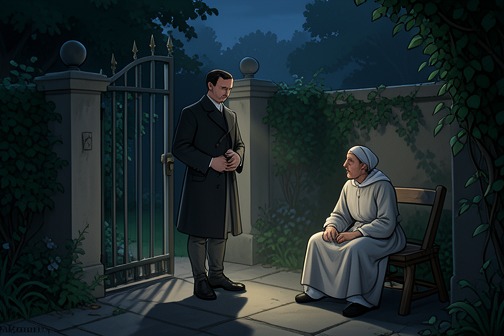
[Ivan’s Conversation with Smerdyakov](entity:event-recall-event-7c780ea9da26) is a pivotal encounter in which a servant’s ostensibly practical explanation becomes an unsettling disclosure about the signals used inside [Fyodor Pavlovich’s house](entity:location-recall-location-fyodor-pavlovich-s-h-302b1a38e407). Ivan arrives already aware of his hatred for Smerdyakov; by the conversation’s end, the servant has described a secret arrangement, urged Ivan to go away, and acknowledged that Ivan could be summoned back if something happened. The scene sharpens the danger surrounding Fyodor Pavlovich while leaving unresolved just how much Ivan understands, intends, or is willing to prevent.
## Setting and Initial Tension
Ivan’s unease takes shape before either man speaks. On a bench at the garden gate, Smerdyakov sits enjoying the cool evening. At the sight of him, Ivan suddenly recognizes that the valet has been troubling him and that he loathes him. The realization gives an emotional name to a dislike Ivan had only recently begun to understand; the conversation that follows is therefore not a neutral exchange of information but a meeting charged with aversion and suspicion.
Ivan tries to pass through the gate without speaking or looking at Smerdyakov. Smerdyakov rises, and Ivan immediately reads the movement as a wish to talk. That inference keeps the servant’s intentions within Ivan’s perspective: the reader sees the approach through the mind of a man already hostile to him. Smerdyakov then says, with distinct resolve, that he is in an awful position and does not know how to help himself. Ivan sits down again, allowing the exchange to begin despite his attempt to avoid it.
## The Secret Signals
Smerdyakov discloses that he and Fyodor Pavlovich have a secret concerning the household arrangements. Fyodor Pavlovich has been locking himself in, and Smerdyakov is expected to notify him if [Agrafena Alexandrovna](entity:character-recall-character-agrafena-alexandrov-a027e89633ab) arrives while Dmitri Fyodorovitch is nearby. The specific code gives the disclosure its force: five knocks signal that Agrafena Alexandrovna has come; three knocks mean that there is something important to tell Fyodor Pavlovich. Smerdyakov adds that Fyodor Pavlovich has shown him the signals several times.
This information makes the household’s private communications newly legible to Ivan, but it also raises the stakes of the secret. The signals connect Agrafena Alexandrovna’s possible arrival with Dmitri Fyodorovitch’s proximity and with a message to Fyodor Pavlovich. Ivan presses Smerdyakov to explain plainly whom he told and what signals he means. The servant’s pedantic composure contrasts with Ivan’s urgency: he presents the arrangement as a fact he is bound to admit, rather than immediately explaining what it might lead to.
## Ivan’s Alarm and the Proposed Departure
Ivan’s questions increasingly focus on what will happen if he leaves. He challenges Smerdyakov’s account that Agrafena Alexandrovna will not come, asking why Dmitri would secretly go to his father if she will not be there. His anger intensifies as the implications gather; he turns white, and then his face shudders and flushes. When he asks why Smerdyakov advised him to go to [Tchermashnya](entity:location-recall-location-tchermashnya-d49bbd71219a), he explicitly connects his own absence to the danger at home: if he goes, Ivan says, Smerdyakov can see what will happen there.
Smerdyakov answers that he spoke out of pity for Ivan. In his place, he says, he would abandon the whole situation rather than remain in it. The advice is thus both a purported act of sympathy and a proposal that would remove Ivan from the household at a consequential moment. Ivan calls Smerdyakov an idiot and a scoundrel, but the exchange does not settle whether the servant’s advice is compassionate, manipulative, or both. Its ambiguity rests on the facts the scene supplies: Smerdyakov knows the signals, understands the possible danger, and is encouraging Ivan to leave.
## An Unresolved Invitation
Even as the conversation seems to approach its end, Ivan asks whether Smerdyakov has anything more to add. He then raises the possibility that he could be sent for from Tchermashnya if something happened. Smerdyakov replies that Ivan could indeed be summoned from there. The answer acknowledges the contingency without explaining what event either man expects, what Ivan would do if recalled, or whether Smerdyakov’s earlier advice was meant to make Ivan’s absence consequential.
The scene’s turn is from aversion to foreknowledge: Ivan begins by recognizing his hatred of Smerdyakov and ends with the servant’s secret code and an explicit warning that something may happen while he is away. Yet the disclosure is not a complete confession or a clear plan. Smerdyakov states the signals and recommends departure, while Ivan voices his alarm; the exchange leaves the precise meaning of their knowledge unresolved. That uncertainty makes the conversation a hinge in the surrounding danger, since absence, warning, and the possibility of being summoned have all been placed before Ivan without being converted into an unambiguous decision.
Event 27
Ivan leaves home for Moscow
[Ivan leaves home for Moscow](entity:event-recall-event-f98c1a1d090f) after a last-minute reversal at [Volovya station](entity:location-recall-location-volovya-station-59408aaaac3f), making his departure more than a change of destination: it exposes his unresolved attachment to the household and the moral unease that follows him away. Though he had not gone to bed intending to leave, he packs his trunk the next morning. His father, rather than dwelling on the impending separation, immediately asks him to perform a favor at [Tchermashnya](entity:location-recall-location-tchermashnya-d49bbd71219a). Ivan sets out to do so, but the words naming that destination return to him with a nervous, involuntary force. At the station he turns back, refuses the detour, and catches the train to [Moscow](entity:location-recall-location-moscow-b59c72aac896). He tries to declare the past finished, yet reaches the city burdened by anguish and the judgment that he is a scoundrel.
## The Departure Takes Shape
Ivan had told [Katerina Ivanovna](entity:character-recall-character-katerina-ivanovna-ebf3ee32d98b), Alyosha, and Smerdyakov the previous day that he was leaving, but the decision seems to have taken practical shape only after he went to bed: he remembers having had no thought of departure then, and certainly no expectation that he would begin the morning by packing. By about nine o’clock his trunk and bag are ready. The contrast between the unanticipated decision and the orderly luggage gives the departure an abrupt, almost self-propelling quality: outward preparation advances before Ivan has settled what leaving means to him.
His father does not respond with an attempt to keep him at home or with an expression of regret. Instead, Fyodor Pavlovich is startled that Ivan did not tell him sooner, then turns quickly to his own business. He asks Ivan to do him a great service by going to Tchermashnya, describing the route as a short turn from Volovya station and a further twelve versts. The practical request redirects Ivan’s departure into an errand for the very household he is leaving. The journey is therefore not yet a clean severance: the father can still enlist the departing son in his affairs.
## The Errand and the Reversal
Ivan goes along with the proposed detour, but his announcement that he is going to Tchermashnya escapes him suddenly, as though the words have dropped from him of their own accord. He laughs in the same peculiar, nervous way as on the previous day, and remembers the episode long afterward. The repeated destination becomes the scene’s hinge: what sounds like a settled plan is accompanied by a reaction Ivan himself cannot comfortably explain.
At Volovya, the thought of what a clever man meant by his words seems to clutch at Ivan’s breathing. The question of why he told him he was going to Tchermashnya presses on him as the carriage reaches the station. Ivan gets out, looks around, glances at the overseer’s wife, and then suddenly returns to the entrance. The physical turn makes the change decisive. He rejects the detour and asks whether he can still reach the railway in time for the seven o’clock train; the answer is that they can just manage it.
## Moscow and the Unfinished Past
At seven Ivan boards the train for Moscow. He frames the journey to himself as a severance: away with the past, the old world left behind, and a new life begun in new places without looking back. But the resolve does not produce relief. Instead of delight, he feels gloom, and his heart aches with an anguish he has never known before. The passage sets intention against consequence: the language of beginning again cannot make the past disappear merely because Ivan has put distance between himself and home.
As he approaches Moscow at daybreak, Ivan rouses himself from meditation and whispers to himself, “I am a scoundrel,” the brief admission giving his departure a moral aftertaste rather than a triumphant ending. Meanwhile Fyodor Pavlovich is satisfied that his son has gone and feels almost happy for two hours while drinking brandy, before his mood shifts. The opposed responses sharpen the separation: the father can initially treat the departure as settled, while Ivan carries its distress with him into the new city.
## Narrative Significance
The episode is structured around successive acts of departure that fail to yield emotional release. Ivan has packed and left; he has accepted his father’s errand, repeated its destination, and then reversed course at the station. Each outwardly practical step is interrupted by an inward disturbance, culminating in the contrast between his declared break with the old world and the self-accusation with which he reaches Moscow.
The destination change also gives the scene a clear narrative turn. Tchermashnya is the favor his father asks of him, but Ivan’s sudden choice to catch the train redirects his movement toward Moscow. The evidence establishes the decision and the anguish that accompanies it, not a full explanation of every thought behind it. What is clear is that leaving home does not settle Ivan’s relation to the past: the journey carries the unresolved burden forward rather than ending it.
Event 28
Smerdyakov’s seizure at the cellar stairs
[Smerdyakov’s seizure at the cellar stairs](entity:event-recall-event-d2a3e791db0b) is a household emergency whose cause remains unresolved: no one can tell whether an epileptic fit made him fall or whether the fall brought on the fit. The episode turns a known vulnerability into an immediate crisis, alarming Fyodor Pavlovich and leaving Smerdyakov unconscious and in need of medical attention.
## The Collapse
Smerdyakov goes down to the cellar to fetch something and falls from the top of the steps. [Marfa Ignatyevna](entity:character-recall-character-864bd26f35f3) is in the yard; she does not witness the fall, but hears his scream, which she recognizes as the familiar cry of someone falling in an epileptic fit. Her indirect witness establishes the emergency while leaving its sequence uncertain: the sound identifies the kind of crisis, not whether it began before or after the descent went wrong.
The household finds Smerdyakov at the bottom of the cellar steps, writhing in convulsions and foaming at the mouth. At first, those present fear that he has broken an arm or a leg. He has not, and Marfa gives thanks that God has preserved him, but the absence of a fracture does not lessen the danger of his unconsciousness or settle what caused the episode.
## An Uncertain Cause
The scene expressly holds open two explanations. Smerdyakov may have suffered a fit as he descended, losing consciousness and falling; alternatively, the fall and shock may have induced a fit in someone already known to be liable to them. Because Marfa hears rather than sees the fall, the crucial order of events cannot be reconstructed from her testimony. The narrative offers neither a definite diagnosis nor a confirmed account of the accident.
That uncertainty makes the staircase more than the setting of an ordinary mishap: it is the point where a familiar medical condition and a dangerous fall become indistinguishable in their effects. The household can describe what it finds—convulsions, foam, unconsciousness—but cannot say which event came first. Its knowledge is immediate and bodily, yet incomplete.
## The Household Responds
Getting Smerdyakov out of the cellar proves difficult. The family calls on the neighbours for help, and together they manage to carry him out. Fyodor Pavlovich is present throughout and helps, visibly alarmed and upset. His participation marks the fit as a crisis that disturbs the household’s master as well as the people directly responsible for care.
The response draws on an earlier episode. The household remembers that Smerdyakov fell from the attic a year before and that ice was put on his head then. Ice is still available in the cellar, and Marfa has some brought up. The practical remedy returns the present emergency to the history of his previous falls, without proving that the earlier and current incidents had the same cause.
## Medical Care and Consequences
In the evening, Fyodor Pavlovich sends for [Doctor Herzenstube](entity:character-recall-character-375ef6f65800), who arrives promptly. The doctor cautions that the episode might have serious consequences and admits that he does not yet fully understand it. He plans to try another treatment the following morning if the remedies already used do not help. The immediate medical response therefore remains provisional, as uncertain as the household’s account of how the fall began.
Smerdyakov does not regain consciousness at once. After the convulsions cease, he is taken to the lodge and placed in a room beside [Grigory](entity:character-recall-character-grigory-180b09518946) and Marfa Ignatyevna. His removal from the cellar and placement near his caretakers end the immediate rescue, but the scene leaves the outcome unsettled: the doctor is still watching for consequences, and the household has no firm explanation for the collapse.
## Narrative Significance
The episode is organized around a gap between what can be seen and what can be known. A scream, a body at the foot of the stairs, convulsions, foam, ice, and a doctor’s cautious prognosis give the crisis material precision; none resolves whether seizure or fall came first. The household acts decisively despite that missing knowledge, rescuing and treating Smerdyakov while waiting for a clearer account.
The cellar concentrates this uncertainty in a confined space from which Smerdyakov must be physically carried. Yet the emphasis is not on an unseen secret but on the limits of observation: Marfa hears the defining scream without seeing the descent, and the others encounter the consequences rather than the beginning. The scene ends with care underway, the cause undetermined, and the danger still present.
Event 29
Elder Zosima’s final conversation with his visitors
[Elder Zosima’s final conversation with his visitors](entity:event-recall-event-f67e7cc8bc91) takes place on the last day of the elder’s life, when Alyosha arrives expecting to find him near death and instead finds him sitting up and able to receive those who have come to see him. The meeting fulfills a promise Zosima made the night before: he would not die without speaking with Alyosha again. Its most urgent counsel is practical and prophetic at once. Zosima tells Alyosha to find his elder brother, Dmitri, without delay, because terrible suffering may still be prevented; he also describes Alyosha’s future beyond the monastery, where misfortune will not exclude happiness. Alyosha later writes down the conversation from memory, making the scene both a final encounter and a record of the instruction that sends him back into the world.
## The promised meeting
Alyosha enters Zosima’s cell with an anxious, aching heart, fearing that illness may have left the elder unconscious or close to death. Instead, he sees Zosima sitting upright. The contrast matters: the expected scene of helpless decline becomes an active farewell, in which the elder can greet his disciple, ask after his family, and give him a task. The encounter is not a recovery or a cancellation of death; it is the last opportunity for counsel before it.
The conversation answers words Zosima had spoken the previous morning as Alyosha lay down to sleep. He had promised that he would not die before the delight of another conversation with his beloved disciple, before looking once more on Alyosha’s face and pouring out his heart. When Alyosha appears in the doorway, Zosima smiles joyfully and holds out his hand. The fulfilled promise gives the meeting a close personal warmth, but also makes its brevity and finality unmistakable: this is the promised return, not an open-ended reprieve.
Other visitors are present, and the conversation belongs to the elder and his visitors rather than to Alyosha alone. Yet Zosima’s attention turns directly to Alyosha, whom he asks to stand up so he can look at him. He asks whether Alyosha has been home and seen his brother. Alyosha finds the question strangely precise: Zosima means the elder brother, Dmitri, whom the elder had bowed to the day before. Alyosha says he saw Dmitri yesterday but could not find him today.
## An urgent charge concerning Dmitri
Zosima turns Alyosha’s answer into an immediate instruction: he must go again the next day, leave everything, and make haste to find Dmitri. The elder explains that there may still be time to prevent something terrible. The urgency is sharpened by his reference to his bow from the previous day: he had bowed to the great suffering that lay in store for Dmitri. His gesture, at first difficult to understand, now stands beside a warning that makes the family crisis a matter of impending consequence, not merely a quarrel to observe from a distance.
Alyosha, deeply moved, asks what suffering awaits his brother and says that Zosima’s words are too obscure. The elder does not satisfy his request for a definite prediction. He says that he seemed to see something terrible, but leaves the vision unexplained. The exchange therefore offers a warning without a full account of what is coming: Alyosha receives enough to act, but not enough to master the future through knowledge. Zosima’s counsel directs him toward his brother rather than toward further speculation.
This charge gives the conversation an immediate outward consequence. Alyosha is told to interrupt whatever else occupies him and return to Dmitri, whose suffering the elder has already acknowledged through his bow. The instruction also fits Zosima’s wider charge to Alyosha to leave the monastery and live among people. The final meeting thus connects spiritual guidance to responsibility for a particular person: Alyosha’s response to the elder is to go toward his brother, not to remain within the safety of the cell.
## Alyosha’s life beyond the monastery
Zosima’s counsel widens from Dmitri’s urgent situation to Alyosha’s future. He recalls the biblical image of a grain of wheat falling into the earth and dying, then tells Alyosha that he will go forth from the monastery but live like a monk in the world. The image makes departure more than a simple change of residence: leaving the enclosure need not mean abandoning the spiritual life formed there. The elder anticipates a life in which the discipline and orientation of the monastery continue amid worldly relationships and trials.
The prediction does not promise an easy path. Zosima tells Alyosha that he will have many enemies and many misfortunes. Yet he also predicts that even his foes will love him and that he will find happiness in misfortune. The contrast does not erase adversity or make it incidental; it gives hardship a place within a life that can still be fulfilled. In this last conversation, the elder’s confidence in Alyosha’s future stands beside his warning about Dmitri, joining long-range encouragement to an immediate demand for action.
## The preserved record and its significance
The account of this last conversation survives, in part, because Alyosha later wrote it down from memory after Zosima’s death. Its form therefore carries the mark of recollection: the reader encounters the elder’s final counsel as an exchange remembered and preserved by the disciple who received it. That record gives the scene a double direction. It looks back toward the promise Zosima kept and forward toward the life he foretold for Alyosha.
As a final meeting, the conversation brings together intimacy, warning, and commission. Zosima’s outstretched hand and joyful greeting answer Alyosha’s fear; the injunction to find Dmitri turns that affection into responsibility; and the prophecy of a monastic life in the world gives the departure from the cell its spiritual meaning. The elder does not explain the coming suffering or shield Alyosha from future misfortune. Instead, he leaves him with a direction: go out, seek his brother, and meet the difficulties of life without surrendering the possibility of happiness.
Event 30
Markel’s spiritual transformation and death during illness
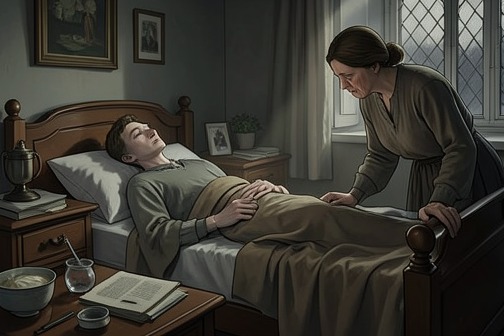
[Markel’s spiritual transformation and death during illness](entity:event-recall-event-35fc52c9179a) mark the passage from a fragile young man’s resistance to religious devotion toward a generous, affirmative vision of life and shared responsibility. In the sixth week of [Lent](entity:time-recall-time-lent-829027562545), consumption overtakes him; during [Holy Week](entity:time-recall-time-holy-week-dc59c5717ada) he begins going to church to comfort his mother, and as his illness worsens he welcomes her prayer before the holy image. His final weeks make his change visible in intimate gestures and startling words, while his death leaves a lasting impression on his younger brother, [Zossima](entity:character-recall-character-zossima-9b91c014ca58).
## Illness and return to devotion
In the sixth week of Lent, [Markel](entity:character-recall-character-markel-53d11b6972d4), already delicate and prone to consumption, falls ill. He is tall and thin, with a pleasing countenance; his weakness soon confines him to bed. The account places his illness within the household’s ordinary life, but its progression gives the weeks a marked religious rhythm: the sixth week of Lent gives way to Holy Week, and then to a late [Easter](entity:time-recall-time-easter-4ee721615d13).
On Tuesday morning of Holy Week, Markel begins going to church. He tells his mother that he is doing it for her sake, to please and comfort her. She weeps with joy and grief. He cannot keep going for long, and eventually has to confess and take the sacrament at home. The movement is small but decisive: he first presents churchgoing as a kindness to his mother, yet the faith he had once resisted becomes something he can share with her even as his body fails.
## The bedside change
The late Easter days are bright and fragrant, but Markel coughs through the night and sleeps badly. In the mornings he dresses and tries to sit upright in an armchair. His mother lights the lamp before the holy image; formerly, he would have forbidden it and blown it out. Now he urges her to light it. He tells her that she is praying when she lights the lamp and he is praying when he rejoices to see her do it: they are praying to the same God. The change is expressed not as an abstract declaration but as a reversal within a familiar household gesture. What he once treated as something to extinguish becomes, to him, a shared act of devotion.
His words also reach beyond consolation. When his mother cries at the sight of him feverish and coughing, Markel tells her not to weep: life is paradise, and everyone is already in paradise without seeing it; if people could see it, heaven would come to earth the next day. Those around him are struck by how strangely and positively he speaks. The claim does not deny his suffering: it is voiced while he lies ill and coughs through the night. Instead, it sets the visible misery of his condition against a vision of goodness that ordinary sight fails to recognize.
Markel extends that vision to the relations between people. He imagines that masters and servants may remain, yet says he will be the servant of his servants, just as they are servants to him. He then says that everyone has sinned against all people, and that he has sinned more than anyone. His mother smiles through her tears at the confession, unable to understand how her sick son could bear such blame. In these remarks, humility is not simply a private feeling: it revises the hierarchy between master and servant and makes responsibility for others universal.
## Death and the memory it leaves
The doctor warns Markel’s mother that her son cannot live long and that the disease is affecting his brain. His room looks onto a shady garden where old trees are coming into bud; spring birds flit among the branches and sing at the windows. The setting places the failing body beside signs of renewed life, without making the illness less real. Markel dies in the third week after Easter. He remains fully conscious, though he can no longer speak, and does not change to the last. His eyes shine as they seek his family; he smiles and beckons to them.
There is much talk in town about his death, and Zossima, who remembers the event as a child, weeps at the funeral. At the time he is impressed but does not fully understand what he has witnessed. The memory nevertheless remains in his heart, a hidden feeling ready to rise and answer when the time comes. Markel’s transformation therefore has an afterlife in the narrative: the brother who falls silent leaves behind a set of remembered words and gestures through which the younger Zossima will later understand responsibility, joy, and devotion. The ending holds physical loss and spiritual inheritance together; Markel dies, but the memory of his response to life persists beyond his final hour.
Event 31
Zosima’s duel and conversion
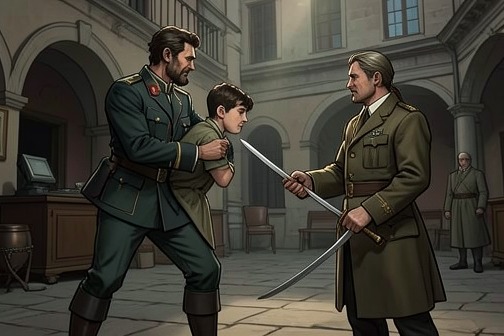
[Zossima](entity:character-recall-character-zossima-9b91c014ca58)’s duel and conversion is the remembered crisis in which Zossima’s military life gives way to repentance and a monastic vocation. The duel is not the event that changes him by itself: the decisive turn comes when he recognizes that his violence toward Afanasy has exposed the moral failure behind his former life, and he responds by asking forgiveness, refusing to continue the duel, and resigning his commission to enter a monastery.
## Background and the turn toward the duel
The recollection places the duel at the end of June. The meeting is arranged for seven the following morning, on the outskirts of town. Zossima describes the duel as a custom deeply rooted among officers, even though duelling was punishable. Its acceptance helps explain how readily he enters a ritual of armed retaliation, but the recollection’s turning point comes the evening before the meeting, when he returns home in a savage mood and strikes his orderly, Afanasy.
The account makes that assault central to what follows. Zossima’s own conduct, rather than an injury inflicted by his opponent or fear of death, becomes the moral fact he cannot escape. The duel thus approaches under the shadow of a prior act: before he can face an adversary, he must face the wrong he has done to someone under his authority.
## Recognition and apology
On the way to the meeting, Zossima tries to understand his distress. He considers whether he fears being killed, then recognizes that this is not the cause. His thoughts return to the previous evening, when he struck Afanasy. In recollection, he sees the assault again: Afanasy had stood rigidly, his head erect and his eyes fixed forward, enduring the blows without daring to move. The remembered scene redirects Zossima’s attention from his own danger to the man he had wronged.
Zossima asks his companions to wait while he returns alone to Afanasy’s room. He acknowledges that he struck him the day before and asks for forgiveness. The apology precedes the duel’s decisive reversal: instead of treating the encounter as a test of military honor alone, Zossima has begun to act on the recognition that he owes an account to the person he injured.
## The duel and refusal to shoot
At the appointed place, the two men stand twelve paces apart, and Zossima’s opponent has the first shot. Zossima stands openly, looking his adversary in the face; the shot grazes his cheek and ear. He calls out in gratitude that no one has been killed, then turns and throws his own pistol far into the wood, declaring that the weapon belongs there. He does not fire back.
That refusal changes the meaning of the meeting. The expected exchange of violence ends with Zossima disarming himself rather than completing the duel. The physical danger has not been absent—the other man has fired—but Zossima’s decisive act is to reject retaliation after surviving the shot. His earlier apology to Afanasy and his refusal to shoot belong to the same moral movement: he abandons the idea that honor requires answering violence with violence.
## Resignation and conversion
After the duel, Zossima tells his companions not to worry about his leaving the service because he has already submitted his papers. He says that, once discharged, he will enter a monastery, and that this is the purpose of his departure from the regiment. The decision gives the duel a consequence beyond the immediate confrontation: Zossima leaves the military world in which duelling is treated as a deeply rooted custom and chooses a religious life instead.
The recollection presents conversion through a sequence of concrete acts rather than as a sudden change of doctrine: Zossima recognizes the violence he has done to Afanasy, returns to ask forgiveness, survives his opponent’s shot without returning fire, and announces his resignation and intended entry into the monastery. The duel becomes the hinge between the officer he has been and the life he resolves to undertake. Its significance lies less in victory over an adversary than in the renunciation of retaliation and the beginning of responsibility for his own actions.
Event 32
Mikhail’s murder of the landowner’s widow

[Mikhail’s murder of the landowner’s widow](entity:event-recall-event-8de99e139149) was a crime concealed for fourteen years by a false trail that brought an innocent serf to trial. As Mikhail later disclosed it to [Father Zossima](entity:character-recall-character-father-zossima-e98aa3890c99), the account connected his rejected proposal of marriage to the widow with his clandestine entry into her home, the killing, and his efforts to implicate her servants. The serf’s death in custody closed the case publicly without revealing the truth, while Mikhail’s eventual admission transformed a hidden crime into the beginning of an extended reckoning with guilt.
## Background and Motive
Fourteen years before the confession, Mikhail had fallen passionately in love with a wealthy, handsome young widow who owned a house in the town. He declared his feelings and tried to persuade her to marry him. His account gives the rejected proposal as the background to the crime, but does not describe the widow’s response in detail or establish any further relationship between them.
Mikhail had not been a close confidant of the widow. He was generally reserved and silent, had no friend to whom he would open his heart, and was regarded as an acquaintance rather than an intimate. During the fortnight before the murder, he had not visited her at all. That distance and absence helped keep his connection to the crime from attracting suspicion, despite the history of his feelings.
## Entry and Murder
Mikhail entered the widow’s house through a skylight and descended a ladder to a door that servants sometimes left unlocked. He expected the door to be open and found it so. Moving through the dark, he reached her bedroom, where a light was burning. Her two maids were away at a birthday party on the same street; the other servants slept in the servants’ quarters or in the kitchen downstairs.
The circumstances of the entry offered opportunity, but Mikhail’s account identifies his own changing emotions as the immediate context for the attack. At the sight of the sleeping widow, he says, passion gave way to vindictive, jealous anger. He killed her before she could cry out. He then took her purse and used keys from beneath her pillow to open her chest and remove some possessions, making the robbery appear to belong to the crime rather than to a visitor who had come for personal reasons.
## The False Accusation and Its Cost
Mikhail deliberately arranged the scene to direct suspicion toward the servants. Suspicion instead settled on Pyotr, one of the widow’s serfs, amid circumstances that seemed to support the accusation. The widow had decided to send him as a recruit because he had no relations and his conduct was unsatisfactory. People had heard him threaten her while drunk in a tavern, and two days before her death he had run away. Other details also appeared to implicate him, including evidence that the maids had gone to the party without permission and that the street door had been left open until they returned.
Pyotr was arrested and tried for the murder. A week after his arrest he fell ill with fever and died unconscious in the hospital. The authorities, judges, and townspeople let the matter end there: the apparent case against the serf had produced no disclosure of Mikhail’s role. His death made the miscarriage of justice irreversible and left the crime officially unresolved in substance, even as the community ceased to pursue it.
## Confession and Significance
Mikhail’s account reached Father Zossima fourteen years after the killing. He went to see the elder three days running and told him what he had done. Father Zossima initially thought him mad, but came to believe the confession, responding with grief and amazement at the scale of the crime. The repeated visits make the telling itself part of the event: what had been hidden from the town and from Mikhail’s acquaintances was finally spoken to a listener who accepted its truth.
The murder’s narrative force lies in the contrast between apparent evidence and concealed responsibility. The details that had seemed to prove Pyotr’s guilt were not invented from nothing; Mikhail’s manipulation of the circumstances allowed ordinary facts—the recruit decision, the threats, the flight, the open door—to form a persuasive but false account. The eventual confession exposes how a calculated crime can exploit the community’s readiness to interpret suspicious behavior as proof, and it connects Mikhail’s private guilt to the innocent man who bore its public consequences.
Event 33
Mikhail’s public confession
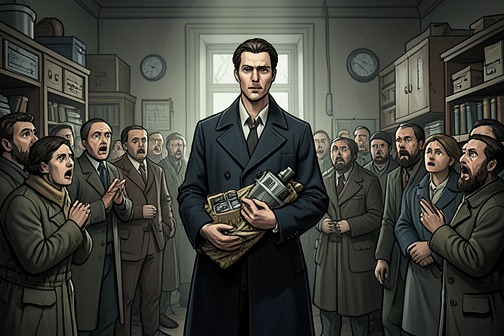
[Mikhail’s public confession](entity:event-recall-event-dbaca054f3be) is the delayed culmination of his struggle to acknowledge a murder he had concealed for fourteen years. Encouraged by [Zossima](entity:character-recall-character-zossima-9b91c014ca58) to speak the truth, he declares his guilt before a town gathering and lays out the objects he had kept as evidence. The confession transforms a secret crime into a public act of responsibility, yet it does not bring immediate communal recognition: the listeners are horrified, and many decide that Mikhail must be deranged. His own account of the act’s consequences is different. He says that confession has brought peace to his heart, and dies a week later; afterward, the town turns against Zossima, the witness and spiritual advocate who had urged him to speak.
## Causes and Preparation
The confession follows a long inward struggle. Mikhail believes that admitting his crime could heal his soul and bring lasting peace, but that conviction fills him with terror: he does not know how he can carry it out. When he looks at Zossima, he says that he has made up his mind. Zossima responds with astonishment that so trivial an incident as their encounter could prompt such a decision, but the exchange marks a turning point: Mikhail’s private resolve now has a witness.
Zossima gives the decision practical and moral force. He tells Mikhail to go and confess, insisting that everything passes while truth remains, and urging him to trust that his children will eventually understand the nobility of his resolution. Mikhail leaves as though persuaded, but readiness does not become action at once. For more than a fortnight he returns to Zossima every evening, still preparing himself. The delay makes the eventual public disclosure an earned act of will rather than a sudden, unconsidered revelation.
## Public Disclosure
Mikhail finally confesses at the annual gathering on his birthday, an occasion attended by people from across the town. After dinner he steps into the middle of the room holding a paper: a formal declaration addressed to the chief of his department, who is present. He reads the account aloud before the assembly, setting out the crime in detail. The private decision Zossima had urged him toward becomes a public declaration made before both townspeople and an official witness.
At the end of the account, Mikhail describes himself as having cut himself off from other people like a monster, says that God has visited him, and declares that he wants to suffer for his sin. He then places on the table the things he has kept for fourteen years, believing they would prove his guilt. The items include jewels belonging to the murdered woman, which he had stolen to divert suspicion; a cross and a locket taken from her neck, with a portrait of her betrothed inside; her notebook; and two letters. Their survival gives the confession a material dimension: these are not merely objects he once took, but evidence he chose to keep instead of destroying.
## Reception and Consequences
The assembly is amazed and horrified, but the response does not match the certainty of Mikhail’s avowal. The listeners refuse to believe him and suppose he is deranged, even as they attend to his story with intense curiosity. In the days that follow, disbelief hardens into a shared judgment: the town agrees that Mikhail is mad. His declaration therefore has an immediate paradoxical effect. He has made the crime public, but public speech does not by itself persuade the community to accept what it hears.
For Mikhail, however, speaking changes his experience of himself. As he lies dying, he tells Zossima that God has had pity on him and is calling him, and that he knows death is near. He says that he feels joy and peace for the first time in many years, and locates the beginning of that inner peace in the moment he did what he had to do. The town’s refusal to believe him does not undo the meaning he gives to confession: in his account, truth-telling has ended his long separation from love and peace.
## Mikhail’s Last Disclosure and the Aftermath
In their final meeting, Mikhail whispers to Zossima that on an earlier visit, at midnight, he had returned intending to kill him. He explains that he hated Zossima and wanted revenge, but that the Lord vanquished the devil in his heart. He adds that Zossima had never been nearer death. The disclosure enlarges the meaning of their relationship: Zossima had not merely advised a murderer from a safe distance; Mikhail had once been on the verge of making him another victim. Confession thus reveals not only the old crime but also a later threat that Mikhail had carried in secret.
A week after that meeting, Mikhail dies. The whole town follows him to the grave, and the chief priest delivers an emotional speech; people lament the illness that cut his life short. Yet the funeral does not reconcile the town to Zossima. Afterward, the townspeople are up in arms against him, and some refuse to see him. The confession’s consequences therefore divide sharply: Mikhail dies with the peace he associates with telling the truth, while Zossima bears the social cost of having urged and witnessed that disclosure.
## Narrative Significance
The event sets private certainty against public disbelief. Mikhail’s declaration is supported by a detailed account and by the objects he has preserved, but the town interprets the speaker as mad rather than accepting his testimony. The confession’s force lies not in a successful public vindication, but in the moral change Mikhail says it produces in him: he moves from terror and isolation toward a willingness to suffer and a renewed capacity to love.
Its structure also turns delayed preparation into a decisive public act. First comes Mikhail’s fearful conviction that confession might heal him; then Zossima’s direct urging; then more than a fortnight of evening visits; finally, the formal declaration before the birthday assembly. The later disclosure that Mikhail once intended to kill Zossima returns the story to its most dangerous private moment, while the hostility after the funeral shows that truth can restore the confessor inwardly without restoring his community’s trust in the witness. The event is narrated by Zossima as a remembered episode, so its public climax is framed through the spiritual relationship that made confession possible.
Event 34
Elder Zosima’s death
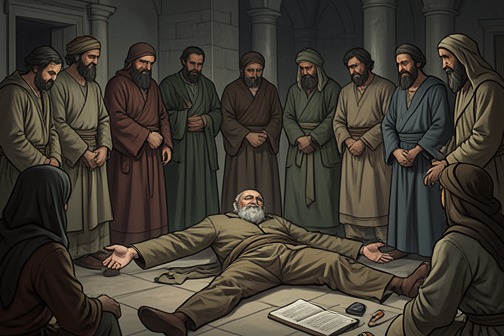
[Elder Zosima’s death](entity:event-recall-event-8ccb6ddd005e) comes suddenly after an evening in which those around him know that he is near death but cannot imagine how soon it will arrive. In his final moments, pain gives way to a quiet, prayerful gesture: he lowers himself to the ground, stretches out his arms, and dies. The news then travels outward from the hermitage to the monastery and the town, where crowds begin to gather. The event closes one life in private reverence while opening a public aftermath that the narrative deliberately leaves for the next book.
## Approach of Death
The death is prepared by the uncertainty of those keeping watch. The people gathered with Elder Zosima on his last evening understand that his life is nearing its end, yet the timing remains impossible to foresee. Even five minutes before his death, they see no clear sign that it is about to happen. That discrepancy—awareness of the approaching end without knowledge of its precise arrival—gives the scene its abruptness: death is expected in general, but not recognized when it is immediately at hand.
The narrative records no extended farewell or final speech. Instead, the turn arrives through the body. Elder Zosima feels an acute pain in his chest, turns pale, and presses his hands to his heart. Those present rise and hurry to him. The physical crisis is unmistakable, but the scene does not linger on medical explanation; its focus shifts to the final movement through which his death acquires its spiritual form.
## The Final Gesture
Despite his suffering, Elder Zosima looks at those around him with a smile. He slowly sinks from his chair onto his knees, bows his face to the ground, and stretches out his arms. Praying and kissing the ground, he gives up his soul to God quietly and joyfully. The sequence moves from chest pain and pallor to kneeling, prayer, and the earthward gesture, joining bodily vulnerability with an expression of religious surrender.
The manner of his death contrasts with the suddenness of its arrival. For the witnesses, the death cannot be predicted even moments beforehand; once it comes, however, its final gesture is not described as panic or resistance. The smile and prayer frame the end as peaceful and joyful, while the ground he kisses gives the scene a concrete focus: the last act is at once a bodily lowering and an act of devotion. The account presents that meaning through what Elder Zosima does, not through a final explanation spoken by him.
## News and Public Response
The news spreads immediately through the hermitage and reaches the monastery. Elder Zosima’s closest friends and those responsible for the necessary observances begin laying out his body according to ancient ritual, while the monks gather in the church. Private grief is thus followed by communal mourning and prescribed care for the dead. The passage moves from the small circle at his deathbed to the wider religious community, with ritual marking the transition between the two.
Before dawn, the news reaches the town. By morning, the death is the subject of conversation throughout the town, and crowds are flocking to the monastery. The outward movement of the news changes the scale of the event: what began as a sudden death witnessed by those gathered near Elder Zosima becomes a public occasion drawing people toward the monastery. The account establishes this gathering but does not yet describe what the visitors see or how the monastery responds to them.
## Narrative Transition
The death concludes the episode of Elder Zosima’s life while directing attention toward its consequences. The narrator explicitly postpones the town’s response until the next book, stopping after noting that crowds are arriving. This boundary makes the death both an ending and a hinge: the final scene completes the movement from bodily pain to prayer, while the spread of the news begins a new sequence beyond the deathbed.
The event’s structure follows that widening circle. It begins with the witnesses’ inability to predict the moment, narrows to the pain and the quiet gestures of Elder Zosima, and then expands outward through ritual, the gathered monks, and the townspeople on their way to the monastery. His death is therefore rendered both as an intensely personal passage and as the starting point of a communal aftermath. The narrative closes before that aftermath unfolds, leaving its significance for the next book to develop.
Event 35
The monastery scandal over Zosima’s rapid decomposition
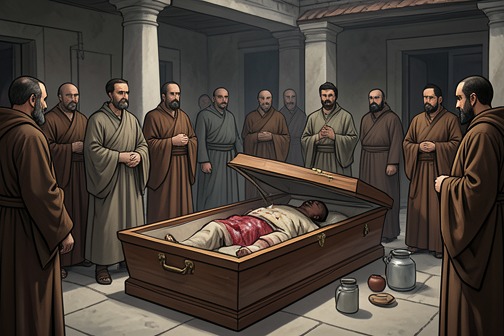
[The monastery scandal over Zosima’s rapid decomposition](entity:event-recall-event-5be21017cdaf) is the public crisis that follows the appearance of a smell of decay from the elder’s coffin. Because many expected the body of a revered elder to show a different sign, the ordinary fact of decomposition becomes an occasion for disappointment, mockery, and hostility. The disturbance does not establish anything about Zosima’s spiritual worth; instead, it lays bare the competing expectations and motives gathered around his reputation, and turns his coffin into the focus of a conflict within the monastery.
## Causes and Expectations
The first signs emerge soon after midday. Those entering and leaving the cell observe them in silence, each apparently afraid to voice what is already on his mind. The quiet does not last: by three o’clock, the smell of decomposition has become unmistakable. The measured passage of time gives the episode its force. An initially unspoken suspicion becomes shared knowledge, and the crowd’s attention shifts from the dead elder to the meaning others will assign to his body.
The monks’ reaction is sharpened by expectation. Some had anticipated a very different condition for the remains of a saint, and the odor seems to them an affront to that expectation. One objection focuses on Zosima’s small, emaciated frame: if his flesh was already dried on his bones, they ask, what could there have been to decay? The question presents itself as an attempt to explain the event, but it also shows how quickly scrutiny of the body becomes scrutiny of the elder’s standing.
## From Quiet Observation to Public Scandal
As decomposition begins, the behavior of the monks entering the cell betrays what the narrator calls their secret motives. They stay briefly, then hurry out to confirm the news to the other monks. What first appeared to be private observation becomes an eager circulation of information. The growing certainty of the smell strips away the remaining appearance of decorum: some begin to act as though the discovery gives them a right to abandon restraint.
The episode is remembered as unprecedented in the monastery’s history. That sense of scandal depends not only on the physical change in the coffin but on the social response it provokes. The signs are difficult for Zosima’s reverent followers, who feel personally affronted by what has happened; for others, they provide an opening to challenge the honor accorded to him. A bodily occurrence thus becomes a test of the community’s loyalties and of the difference between mourning, expectation, and satisfaction at another’s apparent disgrace.
## Rival Memories and Hostility
Some monks recall that the late elder Varsonofy gave off no smell of corruption but a sweet fragrance. They use the comparison malignantly, then distinguish Varsonofy’s supposed glory from Zosima’s: the former, they insist, was honored not merely because he was an elder but because he was a holy man. The comparison turns a remembered fragrance into an argument over who deserves recognition. It does not simply record a precedent; it supplies a standard by which Zosima can be belittled at the moment when his body seems most vulnerable to public judgment.
The criticism broadens from the corpse to Zosima’s teaching. Some denounce his doctrine that life is a great joy rather than a vale of tears, treating the difference as further evidence against him. The narrator identifies more than one cause behind the frivolity, absurdity, and malice at the coffin. One is deep-rooted hostility among monks toward the institution of elders, regarded by its opponents as a pernicious innovation. More powerful still, in the narrator’s account, is jealousy of Zosima’s saintliness, which had become so firmly established during his lifetime that questioning it had seemed almost forbidden. His influence had been won more by love than by miracles, making the reaction to the body a dispute over the very basis of his authority.
## Ferapont’s Entrance and the Meaning of the Disturbance
At the height of the excitement, an uproar erupts in the passage, openly defying decorum. The door is flung open and [Father Ferapont](entity:character-recall-character-father-ferapont-c0e63f9e2a79) appears, accompanied by a crowd of monks. His arrival brings the disturbance into the open: the tensions that had circulated through insinuation, comparison, and criticism now take the form of a noisy confrontation at the cell. The episode’s movement from silence after midday to an unmistakable odor at three, then to public tumult, makes the scandal a sequence of increasingly visible responses rather than a single discovery.
The event leaves two judgments in sharp tension. Zosima’s opponents take the decomposition as grounds for disparagement, while his devoted followers experience the incident as an injury to the memory of a man they revered. The narrator does not treat bodily preservation as proof of holiness; instead, he exposes how readily people turn a corpse into evidence for positions they already hold. At the coffin, expectation becomes rivalry, and the physical fact of decay reveals more about the living community—its resentment of the elder institution, its envy of Zosima’s reputation, and its difficulty separating spiritual authority from the signs it hopes to see—than it resolves about sanctity.
Event 36
Grushenka decides to meet her former lover
[Grushenka decides to meet her former lover](entity:event-recall-event-04dc0d947837) after secretly awaiting news from him and misleading Dmitri about where she will spend the evening. When a messenger arrives from [Mokroe](entity:location-recall-location-a18f65fc1883) with a note summoning her, she leaves at once, calling the decision the beginning of a new life. Her departure breaks Dmitri’s immediate hopes, but her final message insists that she has not chosen his rival because Dmitri lacks worth: she says she has fallen to a scoundrel rather than to his noble heart.
## The Secret Appointment
[Grushenka](entity:character-recall-character-7ec2d155935e) has told Dmitri that she will spend the evening with her old protector, [Kuzma Kuzmitch Samsonov](entity:character-recall-character-kuzma-kuzmitch-sams-01466b7f39d0), counting his money, as she says she does one evening each week. The explanation gives her a plausible cover for waiting elsewhere, but she knows she has deceived Dmitri and has made him promise to believe her. The lie is not casual: she wants him away while she anticipates news that she describes as priceless.
[Rakitin](entity:character-recall-character-rakitin-062e26409200) notices the unusual strain in her behavior and asks why she is so afraid of Dmitri that day. Grushenka answers that she is expecting important news and does not want Dmitri there. She suspects he does not believe her story about visiting Samsonov and may be hiding in an ambush behind [Fyodor Pavlovich’s house](entity:location-recall-location-fyodor-pavlovich-s-h-302b1a38e407), in the garden, watching. Thus the appointment is shadowed by Dmitri’s jealous vigilance even before its purpose is openly named.
## The Former Lover’s Summons
Grushenka eventually tells Rakitin that her officer is coming. He is already at Mokroe, and she has received a letter saying that he will send a messenger from there. The news gives concrete shape to the expectation that has made her anxious: the former lover is not merely a memory, but a man nearby who has summoned her through a message and a waiting carriage.
When [Fenya](entity:character-recall-character-fenya-c166a124be25) rushes in to announce that a messenger has arrived, Grushenka’s concealed prospect becomes immediate action. A carriage has come from Mokroe with Timofey the driver and three horses; the horses are being changed, and there is a letter for her. The relay of horses and the waiting vehicle make the choice urgent. The summons has arrived with the means to carry her away, leaving little space between news and departure.
## A Sudden Departure
Grushenka takes the note to the candle and reads its few lines at once. Her face turns white and distorted, and she gives a wan smile. For a moment she stands as though uncertain; then the blood rushes to her head and her cheeks glow. The brief hesitation gives way to a decisive reversal: she announces that she will go, says goodbye, and declares that her fate is sealed.
She tells [Alyosha and Rakitin](entity:relation-recall-relation-alyosha-and-rakitin-317d68e668c4) to leave and asks them not to let her see them again. She describes herself as flying to a new life and asks Rakitin not to remember evil against her. Her words combine exhilaration with an awareness of the hurt she is causing. She does not present the departure as an easy escape: she says she is giving up five years of her life, marking the decision as a painful break with the past as well as a rush toward what awaits her at Mokroe.
## The Message to Dmitri
After Alyosha and Rakitin have reached the bottom of the steps, Grushenka opens her bedroom window and calls after Alyosha. She asks him to give her greetings to his brother Dmitri and to tell him not to remember evil against her, although she has brought him misery. The message acknowledges the consequence of her departure rather than pretending it will leave Dmitri untouched.
She also gives Alyosha her own phrasing to carry back: Grushenka has fallen to a scoundrel, not to Dmitri, whom she calls a noble heart. The contrast separates her choice from a judgment that Dmitri is inferior or unworthy. She leaves for her former lover, but the last word she sends to Dmitri preserves tenderness and regret inside the rejection. The episode ends with departure, not reconciliation: her fate is declared sealed, while her message leaves Dmitri to receive both the wound and the esteem she still expresses for him.
Event 37
Alyosha’s spiritual crisis and rebirth
[Alyosha’s spiritual crisis and rebirth](entity:event-recall-event-6669e613b9a7) is the turning point in which the apparent dishonor of Elder [Zossima](entity:character-recall-character-zossima-9b91c014ca58)’s body shakes Alyosha’s faith in providence, but does not end in rejection. His return to belief comes not through the miracle he expected, but through [Grushenka](entity:character-recall-character-7ec2d155935e)’s pity, the Cana reading, and a vision that binds spiritual joy to the earth and to responsibility for all people.
## Causes and the wound of injustice
The crisis begins when Zossima’s body shows signs of premature decomposition rather than producing the signs of sanctity Alyosha had hoped for. The narrator cautions against reducing Alyosha’s grief to disappointment that the elder’s body did not immediately perform miracles. What wounds him is a perceived injustice: the man he believed should be exalted above everyone is instead degraded and dishonored. Alyosha is not simply waiting for supernatural proof; he thirsts for justice, for an acknowledgment of what Zossima has meant and deserves.
That longing makes the public response especially painful. The apparent triumph of those aligned with [Father Ferapont](entity:character-recall-character-father-ferapont-c0e63f9e2a79) seems to Alyosha to turn the event into a verdict against his elder, while providence appears to have hidden its face at the most critical moment. Nature’s laws seem blind and pitiless where Alyosha had expected a sign of divine order. His sorrow therefore reaches beyond private bereavement: it is a struggle to reconcile the elder’s goodness with a world in which the visible outcome appears to dishonor it.
The crisis is intensified by Alyosha’s bond with Zossima. As Alyosha hurries away, not toward the church, his eyes meet those of [Father Paissy](entity:character-recall-character-father-paissy-3117359ba9d6). Alyosha quickly lowers his gaze to the ground, and Paissy reads his distress from that look. The gesture gives the inner upheaval a visible form: Alyosha cannot yet turn toward the religious setting or meet another’s eyes, even as his grief is recognized by someone who understands its force.
## Grushenka’s compassion and the little onion
Alyosha’s encounter with Grushenka reverses the direction of his visit. He tells [Rakitin](entity:character-recall-character-rakitin-062e26409200) not to taunt him for having rebelled against God: he has lost a treasure and cannot be judged in that moment. He acknowledges that he had come seeking a wicked soul, feeling drawn toward evil because he believed himself base and evil; instead, he has found a true sister, a loving heart. The change is not a debate won by argument. It is an experience of pity that meets him while his faith is wounded.
[The little onion](entity:expression-recall-expression-the-little-onion-24f99609790c) gives that compassion its memorable image. Grushenka recounts a tale about a wicked woman who had done no good deed except once pulling up an onion for a beggar. That single act becomes the slender possibility by which the woman’s guardian angel might plead for her. The story matters in the scene not as an abstract lesson but as an image of how a small, concrete kindness may bind one person to another, even when a life seems otherwise barren of good.
Alyosha answers Grushenka’s vulnerability by bending toward her, smiling tenderly, and gently taking her hands. He says that all he gave her was an onion, a tiny one. Grushenka has feared that no one could truly love her except with shameful desire; Alyosha’s response offers another kind of affection, marked by tenderness rather than possession. His own eyes fill with tears. The exchange gives the crisis a human answer: compassion is not a proof that suffering is deserved or that providence has visibly intervened, but an act of love made real between two people.
## Cana: a vision of welcome
After the encounter, Alyosha listens as Father Paissy reads from the Gospel account of the marriage at Cana in Galilee. Exhaustion gradually overcomes him, and the reading carries into a vision. In it the room seems to widen; the walls recede, and the wedding feast gathers into view. Alyosha wonders aloud within the vision where the wise governor of the feast is and who is being brought in. The scene changes the meaning of his exclusion and sorrow: the feast is not simply something he watches from outside.
A soft voice tells Alyosha that he, too, has been called and invited, asking why he has hidden himself out of sight and urging him to join the others. In the vision, he understands himself as a guest at the marriage in Cana. The invitation directly counters the isolation of his crisis. Where the apparent decay of Zossima’s body had seemed to mark divine abandonment, the feast presents welcome and joy; Alyosha is not asked to solve the scandal before he can belong.
The vision culminates not in an argument but in an overwhelming inward response. Something glows in Alyosha’s heart and fills it until it aches; tears of rapture rise from his soul, and he wakes with a cry. The physical intensity of the scene matters: spiritual restoration is felt as a movement of the whole person, not as a tidy explanation that cancels his grief.
## Return to the earth and to all people
Alyosha’s first decisive act after the vision is to throw himself down on the earth. He cannot explain why he embraces it or why he longs so irresistibly to kiss it; he kisses it weeping and sobbing. The gesture turns the vision’s joy toward the material world. The earth is not an obstacle from which spiritual life must escape: it is the place to which Alyosha returns, with love and tears.
His renewed feeling also expands beyond himself. He longs to forgive everyone and everything and to beg forgiveness—not for himself alone, but for all people and for everything. He feels that others are praying for him, while threads from the innumerable worlds of God seem to link his soul to them. The experience gives personal consolation a communal dimension: Alyosha’s recovery is inseparable from a sense of mutual belonging and responsibility.
The episode thus moves through a sharp change of value without erasing its cause. Alyosha’s expectation that Zossima would receive public vindication gives way to anguish when the visible outcome appears to contradict it; compassion and the Cana vision then reopen his capacity for love. The rebirth is not a claim that the body’s decomposition was unreal or that Alyosha’s grief was mistaken. Instead, the movement from wounded expectation to tenderness, invitation, and an embrace of the earth shows faith taking a form that does not depend on the miracle he first wanted.
Event 38
Alyosha’s spiritual awakening after Elder Zosima’s death
[Alyosha’s spiritual awakening after Elder Zosima’s death](entity:event-recall-event-618341b8de55) transforms grief into a lasting conviction and prepares him to leave the monastery for life among other people. In a moment he later remembers as a visitation of the soul, the grieving young man rises from the earth with a firmness he had not possessed before. The experience is both an inward turning point and the hinge between his life under his elder’s guidance and the outward mission that follows.
## The Moment of Awakening
The experience follows an intense inward echo whose force Alyosha feels as tangible and unshakable as the vault of heaven. What enters his soul is not presented as a reasoned conclusion or an argument: it is an idea that takes sovereignty over his mind, with a force he recognizes as decisive for his whole life. The narration makes the change bodily as well as spiritual. He has fallen to the earth weak; he rises from it resolute.
That reversal gives the scene its shape. Weakness and strength, falling and rising, are held together in a single moment, so that awakening appears not as an escape from grief but as a change in what grief can mean for Alyosha. The experience does not erase the sorrow surrounding [Elder Zosima’s death](entity:event-recall-event-8ccb6ddd005e). Instead, it gives Alyosha an inward firmness capable of enduring beyond the immediate crisis.
## Memory and Lasting Conviction
The event becomes a permanent landmark in Alyosha’s life. He never forgets that minute, and later speaks of it with implicit faith, describing it as the hour when someone visited his soul. His recollection does not turn the experience into a public proof or a doctrine: it remains an intimate certainty, conveyed through the contrast between his former weakness and his sudden sense of resolve.
The remembered event thus carries its own authority for Alyosha. Its significance lies not only in the ecstasy itself but in its duration: what happened in one hour remains with him throughout his life. The narrative presents spiritual change as an experience that survives its moment and continues to govern what follows.
## From the Monastery into the World
Within three days, Alyosha leaves the monastery. The departure is explicitly in accordance with Elder Zosima’s instruction that he should sojourn in the world; it is therefore not a rejection of his elder’s guidance but its fulfillment. The awakening and the departure belong to the same transition: inward firmness gives Alyosha the strength to take up the outward life his elder had already directed him toward.
The scene brings the monastery’s period of mourning to a consequential close without suggesting that Alyosha has simply put his loss behind him. He carries the remembered hour with him as he crosses from the protected setting of the monastery into the world. His rising from the earth and his departure within three days form the paired movements of the episode: an inward renewal followed by a change of place and vocation.
## Narrative Significance
The episode marks a shift in Alyosha’s relation to spiritual authority. Elder Zosima’s instruction remains active after his death, while Alyosha’s own experience supplies the resolve needed to obey it. The elder’s counsel and the young man’s awakening are not competing explanations of the departure; together they make the transition intelligible, joining inherited guidance to a conviction Alyosha experiences as his own.
The narration gives this change a concentrated, memorable form: a decisive hour, a fall and a rising, a memory that never fades, and a departure three days later. Rather than expanding the experience into a detailed account of what Alyosha sees or hears, it emphasizes the lasting certainty it leaves in him. The awakening’s decisive consequence is practical as well as inward: Alyosha leaves the monastery to sojourn in the world, carrying his newly firm resolve beyond the place where it arose.
Event 39
The Mokroye episode
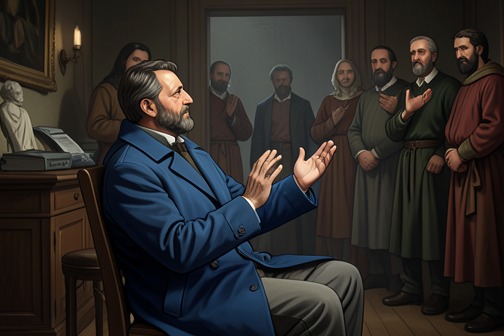
[The Mokroye episode](entity:event-recall-event-39e09b58c3e0) is a volatile encounter in which [Dmitri Fyodorovitch Karamazov](entity:character-recall-character-dmitri-fyodorovitch-49b9100cf5b2) and [Grushenka](entity:character-recall-character-7ec2d155935e)’s reunion collides with the return of her former lover, the Polish officer. At its center is a reversal: Dmitri arrives expecting rejection, Grushenka insists that he stay, and the officer’s carefully staged claim to forgiveness instead exposes the hollowness of the past she has mourned. The episode’s abrupt movement from tears and tenderness to public humiliation, then to wine and delirious celebration, makes reconciliation feel both real and precarious.
## Arrival and reversal
Dmitri enters the blue room to face the company, cold all over and with his heart throbbing. Grushenka is the first to notice him, and her cry of recognition announces his arrival before he can explain himself. His immediate response is not the defiance or pursuit that might have been expected: he flings up his hands, begs to be passed by, and says he will not hinder anyone. Then, surprising the company and apparently himself, he sinks into a chair and bursts into tears, turning his head toward the wall and gripping the chair’s back as though embracing it. The gesture makes his distress visible while withholding his face from the room.
Grushenka answers this collapse by urging him to cheer up and declaring that she is very glad he has come. Addressing the company, though plainly directing the declaration toward the man on the sofa, she insists that she wants him to stay and says that if he goes, she will go too. Her words reverse the expectation created by Dmitri’s fearful entrance: he has come prepared to yield, but she publicly chooses his presence. The choice does not settle the encounter; it places the return of her former lover and the company’s attention inside a newly charged triangle.
## The officer’s appeal and its failure
The Polish officer enters theatrically, throwing himself before Grushenka and proclaiming that he has received a mortal insult. He then presents his visit as an attempt to forget and forgive the past. That performance makes reconciliation sound like an act of generosity on his part, but Grushenka abruptly loses patience. She rejects the premise that he has come to forgive her and turns the officer’s supposed magnanimity into an occasion for exposing the gap between his claim and her experience.
The immediate breach concerns Dmitri’s offer of three thousand roubles to persuade the officer to depart. The officer says that when he saw Grushenka’s lovers, Dmitri offered him the money and he spat in his face. Grushenka is shocked that Dmitri would offer money for her and asks whether she is for sale. Dmitri protests that she is pure and shining, but his idealizing defense cannot undo the injury: his attempt to manage the rival’s departure has made her sound like something to be bought. The offer therefore changes the terms of the scene. What might have remained a contest between two men becomes a confrontation over Grushenka’s dignity and her power to choose.
The officer’s own appeal collapses when he declares that he came to make her his wife but has found her a different woman, whom he calls perverse and shameless. Grushenka orders him to return where he came from and says she will have him turned out. Her rejection is not simply a choice between the two men. She reassesses the object of her old longing: she says she had been miserable for five years not for his sake but because of her anger, and insists that this man is not the falcon she remembers. In her recollection, the former lover laughed and sang to her; the present visitor, with his wig and theatrical manner, appears instead as a gander. The remembered romance loses its authority in the moment she measures it against the man before her.
## From humiliation to revel
After rejecting the officer, Grushenka sinks into her chair and hides her face in her hands. A chorus begins a rollicking dance in the adjoining room, setting festive music against the pain and humiliation in the company. The contrast does not erase the confrontation; it gives the scene a sudden change of register, from bitter exposure to collective revelry.
The following chapter calls what comes next almost an orgy, a feast open to all, and Grushenka is the first to call for wine. She wants to become quite drunk as they were before and reminds Dmitri of the time they made friends at Mokroye. The reference gives the celebration a history: their present closeness echoes an earlier reconciliation at the same place, rather than beginning from nothing. For Dmitri, this apparent happiness is nearly delirious; he feels that his happiness is at hand.
## Reconciliation left unsettled
The celebration does not become a simple declaration of lasting union. Grushenka continually sends Dmitri away from her even after welcoming him, asking him to enjoy himself and to encourage dancing and merrymaking. Her contradictory conduct keeps intimacy and distance in the same scene: she has rejected the officer and insisted that Dmitri remain, yet she does not give him uninterrupted possession of her attention.
That unresolved rhythm defines the episode’s consequence. The officer’s return forces Grushenka to distinguish the living man before her from the remembered lover who has sustained five years of misery; Dmitri’s tearful entrance and offer of money expose, in turn, how readily his desperation can wound the woman he idealizes. Their shared feast marks a genuine movement toward renewed happiness, but the repeated sending-away prevents the episode from presenting reconciliation as secure. Mokroye brings the old romance to an end and opens the prospect of a new attachment without making that prospect effortless or settled.
Event 40
Mitya and Grushenka reconcile in Mokroye
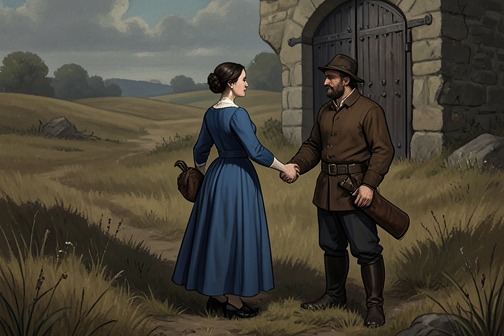
[Mitya and Grushenka reconcile in Mokroye](entity:event-recall-event-e3210c0f6ab6) when [Grushenka](entity:character-recall-character-7ec2d155935e) names the love she had tried to mistake for anger, asks Mitya to forgive her and love her, and accepts a future with him. The scene’s decisive turn is not simply that the lovers come together again: Grushenka confesses that she tormented him out of spite, while both begin to imagine a life in which they can be honest and good. Their promise is ardent but not secure; even in the embrace, Mitya is haunted by the blood whose meaning and consequences remain unresolved.
## The confession beneath the tears
Grushenka has been struggling to stifle her sobs when she sees Mitya and beckons him closer. She grips his hand tightly and revisits the five years in which she loved another man. At first she wonders whether she loved the man himself or only her anger; then she rejects that explanation. The memory returns to her as a young woman of seventeen, recalling how kind and merry he seemed and how he sang to her. What had hardened into resentment and fixation is briefly seen again as an old attachment rooted in tenderness.
The confession is not a simple erasure of the intervening years. Grushenka recognizes that her feelings have been tangled with anger, and that her interpretation of them has changed. She weeps again but will not release Mitya’s hand. By holding on while she revises her own story, she makes the reconciliation depend on recognition: before she can ask for a future, she must admit what she had felt and what she had done with that feeling.
## Naming the person she loves
Grushenka asks Mitya to stay because she has one more thing to tell him. She asks him to identify the man she loves, then explains the answer through the image of a falcon flying in and her heart sinking. When Mitya entered, she says, everything grew bright; seeing his fear, she understood that he was the man she loved. The image turns his arrival into the instant when a confused emotional truth becomes legible to her.
She also corrects the account Mitya has heard of her earlier words. [Fenya](entity:character-recall-character-fenya-c166a124be25) told him that Grushenka had called to Alyosha from the window, saying she had loved Mitya for an hour and was now going to love another. Grushenka now calls her own belief foolish: she could not love someone else after Mitya. That reversal matters because the reunion answers a perceived abandonment. The words Mitya had been given suggested that her love was brief and already displaced; Grushenka now tells him directly that this was not the truth.
Her questions—whether he forgives her and whether he loves her—are followed by action. She rises, holds his shoulders with both hands, and Mitya, unable to speak in his rapture, gazes at her before embracing and kissing her passionately. The scene moves from uncertainty to mutual recognition through speech, touch, and response: she risks asking, and he answers with an embrace.
## Spite admitted, a different future proposed
Grushenka does not leave the reconciliation at the level of desire. She asks Mitya to forgive her for tormenting him and admits that she did it out of spite. She connects that spite to the old man she drove out of his mind, making clear that her conduct has harmed others as well as the man before her. Her confession gives the lovers’ reunion an ethical dimension: being forgiven does not make the injury disappear, but naming the motive changes what they can ask of one another next.
The moment is exuberant as well as grave. Grushenka says she is going to get drunk and dance, tears herself away, and disappears behind a curtain; Mitya follows her. He thinks that, whatever happens next, he would give the whole world for this one minute. Grushenka drinks a full glass of champagne at one gulp and becomes tipsy. The rapid shift from tears and admission to dancing and drink carries the force of relief, but Mitya’s thought already places the happiness under pressure: it is a precious interval, not a guarantee that the danger has passed.
## A promise shadowed by what remains
Later, still holding Grushenka in his arms, Mitya sinks to his knees beside the bed. Grushenka calls him a brute but also generous, and says that the future must be honorable. She asks them to be honest and good rather than brutes, and to leave this place for somewhere far away. Her request gives their reconciliation a destination and a standard: escape together, but also become different in how they treat themselves and others.
Mitya agrees that they must go and promises to take her away. Yet his longing for a new life is bound to the unresolved crime and suffering represented by blood. He says he would give his whole life for one year only to know about that blood. The image complicates any straightforward happy ending: love has become mutual and hopeful, but the past cannot simply be left behind by changing their surroundings. The scene closes on a promise to fly away together and on the question of whether Mitya can learn what the blood means. Reconciliation changes the emotional direction of the story; it does not settle its dangers.
Event 41
Mitya is arrested for parricide
Mitya’s arrest for parricide transforms a private reunion with [Grushenka](entity:character-recall-character-7ec2d155935e) into an official accusation of murder. As investigators enter and charge him with killing his father, [Fyodor Pavlovitch Karamazov](entity:character-recall-character-fyodor-pavlovitch-k-b6aa9958b858), Mitya draws a distinction between his murderous intention and his innocence of the crime itself; Grushenka, in turn, tries to share his punishment. The scene establishes the central tension between intention, legal accusation, and responsibility, while making their separation the immediate consequence of the arrest.
## The Investigators Enter
While Mitya and Grushenka are together, she notices someone watching them through the curtains and asks who it is. Mitya turns, sees that the curtains have been parted, and approaches the intruder. A firm voice calls him to come over. When he passes through the curtain, he finds the room filled with unfamiliar people. He recognizes them, and his first response is bewilderment: he asks what their presence means.
The interruption is swift and formal. The newcomers are not the people who had been in the room earlier; they are investigators and others involved in the case. Mitya’s question is overtaken by the proceedings, and the little lawyer addresses him as an ex-lieutenant before formally informing him that he is charged with murdering his father that night. The prosecutor also speaks, but Mitya hears the words without understanding them. The scene’s shift from a private encounter to a room full of officials gives the arrest its force: the charge is no longer a threat or suspicion at a distance, but a public statement delivered directly to him.
## The Charge and Mitya’s Denial
The accusation is specifically that Mitya murdered Fyodor Pavlovitch Karamazov. In the later account of the arrest, Mitya looks wildly at the people around him, unable to follow what is being said, then rises and protests that he is not guilty of his father’s blood. His denial is qualified by an admission: he says that he meant to kill his father, but insists that he did not commit the murder.
That distinction is decisive to the scene. Mitya does not deny the murderous intention that makes the accusation plausible; he denies that intention is proof of the act. His words expose the gap between what he wanted or believed himself capable of doing and what he claims actually happened. Yet the formal charge has already fixed the investigators’ immediate view of him, and his denial does not stop the arrest or the proceedings that follow.
## Grushenka’s Plea and Their Separation
As Mitya protests, Grushenka rushes from behind the curtain and throws herself at the police captain’s feet, declaring herself at fault. She begs that they be judged together and punished together, saying she will go with Mitya even if it means death. Her plea makes the arrest a shared emotional crisis: she presents herself not as a detached witness but as someone who believes her own wrongdoing has helped bring them to this moment.
Mitya immediately rejects her attempt to take responsibility for the murder. He kneels beside her, holds her, and insists that she is not guilty of any bloodshed. Their opposing appeals—Grushenka’s request to share his punishment and Mitya’s insistence that she is innocent—cannot change the officials’ course. Mitya later remembers being forcibly pulled away from her by several men; Grushenka is led out, and when he recovers his composure he is sitting at the table with the men bearing metal badges beside and behind him. The arrest thus ends their physical reunion and places Mitya in the custody of the authorities.
## Significance of the Arrest
The arrest turns the story’s conflict over Mitya’s father into a legal crisis. Its dramatic center is not simply the announcement of guilt, but the collision between an acknowledged intention and a denied act. Mitya’s words preserve that distinction even as the investigators proceed against him, while Grushenka’s plea reveals how deeply she understands herself to be implicated in his fate. Their separation gives the accusation an immediate personal cost, and the formal charge begins the process through which Mitya will be treated as his father’s murderer.
Event 42
The preliminary investigation of Mitya’s parricide case
[The preliminary investigation of Mitya’s parricide case](entity:event-recall-event-bb330ae71ed5) is the first formal effort to determine what happened on the night Fyodor Pavlovich was killed. Its decisive tension lies between Mitya’s emphatic denial of the charge and the accumulating testimony that seems to contradict his story. As he tries to explain himself, the investigators record his words as evidence, but the details he considers crucial do not always register with them as he intends.
## The Investigation Begins
The investigation belongs to Book IX, “The Preliminary Investigation,” and begins with [Perhotin](entity:character-recall-character-perhotin-6a81d9d8da6f)’s official career. Its procedural setting changes the terms of Mitya’s predicament: he is no longer simply recounting events to acquaintances, but answering an investigating lawyer and a group of officials who are writing down his account and assessing it against other evidence.
Mitya’s emotional state makes that change difficult. He speaks quickly and at length, nervously and effusively, as though his listeners were his best friends. Yet the questioning is formal: the lawyer asks whether he declares himself innocent of his father’s death, and Mitya answers that he is. He adds that he is guilty of the blood of another old man, but not of his father’s. His distinction acknowledges other guilt without conceding the central accusation.
## Mitya’s Account and the Investigators’ Record
The investigators summarize his position in official language: for the present, the record will state that he absolutely denies the charge. The secretary writes down what the lawyer dictates. This act of recording gives Mitya’s denial a clear place in the proceedings, but it also marks the difference between his expansive, emotionally charged narrative and the compact formulations entered into the protocol.
That difference is especially apparent when Mitya describes deciding to give his father the “signal” that [Grushenka](entity:character-recall-character-7ec2d155935e) had arrived, so that Fyodor Pavlovich would open the window. The lawyers pay no attention to the word “signal,” apparently failing to grasp its meaning in this context. Mitya notices their incomprehension. A detail that matters to his reconstruction of the night therefore risks being flattened or overlooked in the very process meant to establish what happened.
In another sudden disclosure, Mitya says that he would have killed [Fenya](entity:character-recall-character-fenya-c166a124be25) had he had time. The investigators carefully write down this statement as well. His willingness to describe a violent intention adds to the record, even though it does not establish that he killed his father. The investigation’s pressure thus lies partly in the distinction between what Mitya admits about his conduct and the particular crime he denies.
## Money, Evidence, and Contradiction
The question of money becomes the central point of the witness examination. The officials seek to establish whether Mitya spent three thousand or fifteen hundred roubles at Mokroye on his first visit a month earlier, and whether he spent three thousand or fifteen hundred on the more recent occasion. The difference is not a minor bookkeeping issue: it bears on Mitya’s account of the money and on how the events surrounding the murder are interpreted.
At a key moment, Mitya interrupts his own account to make what he calls a full confession: the money was his own. The lawyers react with surprise because this is not the confession they expected. The reversal shows how easily the word “confession” can mislead when the investigators and Mitya attach different meanings to it. His disclosure concerns the money, not an admission that he killed his father.
The witness evidence, however, does not resolve the dispute in Mitya’s favor. The narrator reports that all the testimony bears against him; not one witness supports his account, and some introduce new facts that nearly crush it by contradicting what he has said. The investigation therefore ends this phase with a widening gap between Mitya’s denial and the evidentiary picture presented by others. It does not itself establish his guilt, but it makes the case against him appear increasingly formidable.
Event 43
Dmitri Karamazov is formally committed to custody
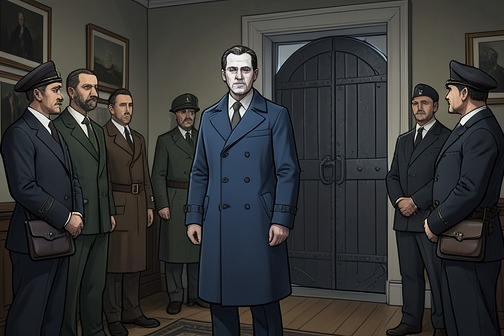
[Dmitri Karamazov is formally committed to custody](entity:event-recall-event-a4b2839707bd) when the investigative protocol is completed and the committal is read to him. The legal act makes him a prisoner and ends his immediate freedom of movement, but it does not settle the distinction at the heart of the scene: he denies killing his father while accepting punishment for his murderous intention. His departure turns an accusation into an official confinement and gives his resolve to endure suffering a public form.
## Causes and Formal Committal
After the protocol has been signed, [Nikolay Parfenovitch](entity:character-recall-character-ea18fa1e8b16) solemnly reads the committal to Dmitri. The document sets out the official circumstances of the case and the procedure by which copies are communicated to the deputy prosecutor and other authorities. Its formal language places Dmitri within the machinery of investigation: he is no longer merely under suspicion but, from that moment, a prisoner.
Dmitri is told that he will be driven at once to the town and confined there. He listens attentively and only shrugs his shoulders. The gesture registers his recognition of the immediate consequence without turning the proceeding into an argument over its legal terms. The decision has been made; his remaining choice is how to meet it.
## Dmitri’s Statement and Moral Distinction
Dmitri interrupts the proceedings to address everyone in the room. He widens the moment beyond his own case, accusing those present, himself included, of cruelty and of making others suffer. He then accepts the torture of accusation and the public shame attached to it, hoping that suffering may purify him. His words do not amount to a confession to the murder: he explicitly maintains that he is not guilty of his father’s blood.
Instead, Dmitri distinguishes the crime he denies from the intention he acknowledges. He accepts punishment not because he killed his father, but because he meant to kill him and believes he might have done so. This distinction gives the committal its moral tension. The law takes him into custody as the accused in a murder case, while Dmitri frames his acceptance of suffering as an answer to his own culpable desire. He also refuses to treat that acceptance as surrender: he warns that he will fight the accusation to the end and leave the final judgment to God.
## Farewells and Removal
Before leaving, Dmitri turns to [Grushenka](entity:character-recall-character-7ec2d155935e) and asks her forgiveness for his love and for having ruined her through it. He breaks off before saying more and goes out, immediately surrounded by men assigned to keep constant watch on him. His farewell makes the loss of freedom inseparable from the personal consequences he believes his actions have caused; even while facing confinement, he speaks of responsibility toward the woman he loves.
Two carts are waiting at the bottom of the steps. The setting recalls the preceding day, when Dmitri had driven up there in haste with [Andrey](entity:character-recall-character-andrey-21147ea6b79d)’s three horses, but the movement is now reversed: instead of arriving under his own momentum, he is escorted away under guard. As the cart starts, [Kalganov](entity:character-recall-character-a26a62c3f0a2) clasps Dmitri’s hand. Dmitri warmly thanks him for his generosity, but the cart moves and their hands part. The bell begins ringing, and Dmitri is driven off toward the town, leaving the gathering behind and entering custody.
## Consequences and Significance
The committal is both an administrative threshold and a test of Dmitri’s account of himself. Its precise legal procedure establishes his prisoner status, while his public statement insists that the accusation does not erase the difference between committing murder and desiring it. He accepts the shame and hardship that follow without conceding the act itself, holding together self-condemnation and resistance to the charge.
The farewells give the legal transition human consequences: Dmitri asks Grushenka’s forgiveness, acknowledges Kalganov’s kindness, and is separated from them as the cart departs. The scene ends not with a resolution of guilt, but with removal under guard. Dmitri’s promised struggle against the accusation and his declared willingness to suffer therefore remain in tension as he is taken away.
Event 44
Kolya lies on the tracks as a train passes
Kolya lies between the rails as a train passes in a reckless nighttime dare that makes a spectacle of his courage, nearly costs him his life, and leaves a lasting mark on his relationship with his mother. The episode begins as a wager among older boys, but its aftermath converts a performance meant to win standing among them into a promise of restraint made to the person whose fear he had not reckoned with.
## The wager and its stakes
During his stay at the station, Kolya played with six or seven boys, most of them between twelve and fifteen. On the fourth or fifth day, the group made a foolish bet. Kolya was almost the youngest and felt looked down upon as a result; vanity or reckless bravado moved him to wager two roubles that he would lie between the railway rails at night as the eleven o’clock train approached, and remain there while it passed at full speed.
The dare answered an insult to his standing: the others had treated him as a small boy, unfit to associate with them. To prove otherwise, he accepted a danger that the group could not safely control. The boys chose a point half a mile from the station, allowing the train time to gather speed, and arranged to meet in the evening. Recognition among his companions was the prize; a moving train made the cost of failure immediate and irreversible.
## The train passes
The night was pitch-dark and moonless. At the appointed time Kolya lay down between the rails while the five boys who had taken the bet waited among bushes below the embankment. Their suspense gave way to alarm and remorse when they heard the train rumbling away from the station. Two red lights appeared in the darkness, and the train roared toward them.
The boys shouted for Kolya to run, but there was no time. The train flew past. They rushed to him and found him lying motionless, pulling and lifting him in alarm. Then he got up and walked away without a word. His first appearance afterward suggested that he had simply endured the ordeal: he later explained that he had pretended to be insensible in order to frighten the others. But he also confessed, long afterward to his mother, that he really had lost consciousness. The apparent mastery of fear was therefore partly a pose, and the most dangerous moment of the wager was one Kolya himself could not consciously command.
## Reputation and consequences
The incident established Kolya’s reputation as a desperate character. The boys’ immediate terror, followed by his silent recovery, supplied the story with its striking image; his later explanation complicated it. He had wanted to demonstrate courage, yet the episode did not prove that he had remained fully conscious or unafraid. The distinction between daring and control became visible only after the train had passed.
Kolya returned to the station white as a sheet. The next day he suffered a slight attack of nervous fever, though he was in high spirits and pleased with himself. The physical aftermath thus accompanied, rather than immediately erased, the pride he took in what he had done. The boys’ astonishment gave him the standing he had sought, while the incident exposed how little that triumph guaranteed his safety.
## His mother’s fear and Kolya’s promise
News of the exploit nearly drove Anna Fyodorovna, known as Madame Krassotkin, out of her mind with horror. Her hysterical attacks lasted several days, with intervals between them. What had begun as a challenge among boys now had a consequence Kolya could not treat as another test of reputation: his mother’s terror made the danger personal and persistent.
Seriously alarmed at last, Kolya promised on his honour that he would never repeat such pranks. At his mother’s insistence, he swore before the holy image and by the memory of his father. The “manly” Kolya then burst into tears like a six-year-old. That reversal reveals the strain behind his posture of independence: he could risk his life to resist being dismissed as a child, yet his mother’s distress drew out the child she feared she might lose. The railway dare ends not simply in survival and notoriety, but in a vow that changes his attitude toward her.
Event 45
Ilusha tricks Zhuchka with pin-filled bread
[Ilusha tricks Zhuchka with pin-filled bread](entity:event-recall-event-dc0504397d62), an act that becomes more than a cruel prank in the story: Ilusha believes he has killed a hungry stray dog, and that belief weighs on him as he grows ill. The later discovery that Zhuchka is alive does not erase the original act, but it changes what Ilusha understands about its outcome and offers a concrete possibility of relief from his remorse.
## The prank and its source
Before Zhuchka disappears, Ilusha learns the trick from Smerdyakov, who had served as footman to the boys’ late father. Smerdyakov shows the boy how to put a pin inside a piece of bread and throw it to a hungry dog, expecting the animal to swallow it. Ilusha uses the trick on Zhuchka, a stray that lives in a yard where it is not fed despite barking throughout the day.
The account emphasizes that the dog’s hunger is part of the circumstances of the prank: [Zhutchka](entity:character-recall-character-zhutchka-077ec221e614) rushes at the offered bread and swallows it. Ilusha sees the dog squeal and run away, and takes that response as confirmation that the pin has harmed it. The prank therefore rests on a cruel imbalance: the dog is driven by hunger to accept the bread, while the child does not understand the full consequence of the act until afterward.
## Remorse and illness
Ilusha later confesses what he did to Kolya and cries bitterly. He embraces Kolya, trembling, and keeps returning to the image of Zhutchka running away squealing. The remembered scene has become the center of his remorse; Kolya recognizes that Ilusha is tormented by the belief that he caused the dog’s death.
During Ilusha’s illness, this belief becomes an explanation he cannot set aside. He tells his father through tears that he is ill because he killed Zhutchka and that God is punishing him. His father and the boys search for the dog, hoping that finding it alive might bring Ilusha joy and help ease the distress bound up with his illness. The prank’s consequence thus extends beyond the moment of the throw: Ilusha interprets his suffering through the memory of the dog, while those around him look for evidence that his feared outcome did not occur.
## Zhutchka found alive
Kolya eventually brings a dog to Ilusha and points out the identifying marks Ilusha had described: one eye is blind and the left ear is torn. Kolya says he found the dog in the Fedotovs’ backyard, where it had made its home without being fed, and explains that it had been a stray that ran away from a village.
The discovery revises the account of what happened to the bread. Kolya reasons that if Zhutchka had swallowed the pin, it must have died; since it is alive, he concludes that it spat the bread out. Ilusha had not seen that happen: he saw the dog run off squealing and believed it had swallowed the pin. Kolya instead attributes the squealing to the pin pricking the dog’s tongue, and the dog’s survival supplies the evidence that Ilusha lacked at the time.
## Narrative consequence
The event is recalled through Kolya’s explanation rather than presented only as an isolated childhood prank. Its meaning develops in stages: Smerdyakov teaches the trick; Ilusha gives the bread to the hungry dog; the dog’s flight becomes, in Ilusha’s memory, proof of a fatal consequence; and Kolya’s return with the dog challenges that conclusion. The repeated recollection of Zhutchka’s squealing marks how a brief action can persist as a moral burden even when its outcome remains unknown to the person who caused it.
Zhutchka’s return does not make the prank harmless or undo Ilusha’s intention to torment the dog. It does, however, distinguish the deed from the death Ilusha fears he caused. In that distinction, the episode links a child’s capacity for cruelty with his capacity for remorse, and makes the living dog—not an abstract reassurance—the decisive answer to his belief that his illness is punishment for having killed it.
Event 46
Ilusha stabs Kolya
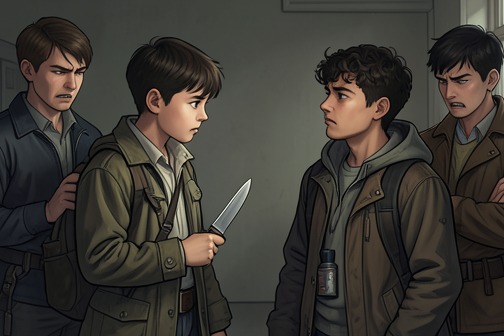
[Ilusha stabs Kolya](entity:event-recall-event-6f70c11e34ca) is a remembered schoolyard attack whose significance lies not in the slight wound it causes but in the shame, isolation, and belated regret surrounding it. Recounted by Kolya to Alyosha, the episode reveals how a boy’s effort to provoke and test another’s temper becomes part of the cruelty that leaves Ilusha alone—and how Kolya’s silence afterward postpones the reconciliation he later wishes he had offered.
## The Setting and Build-Up
Kolya describes the incident while explaining the state Ilusha was in after the affair involving his father. Kolya had expected Ilusha to show a little temper; instead of helping him, he began treating him with contempt, turning away when they met or smiling sarcastically. The recollection is self-accusing: Kolya identifies his own conduct as part of the pressure accumulating around Ilusha.
The other boys noticed that Kolya had given Ilusha up and joined in taunting him with the nickname “Wisp of tow, wisp of tow!” The mockery developed into regular skirmishes, and Ilusha was given a severe beating. Kolya’s account places the knife attack after these humiliations, presenting it not as an isolated burst of violence but as the culmination of a period in which Ilusha had been singled out and provoked.
## The Attack and Its Immediate Aftermath
After the beating, Ilusha flew at the boys as they came out of school. Kolya stood a few yards away and watched. He later insisted that he had not laughed: he felt sorry for Ilusha and was close to running to his aid. But when their eyes met, Ilusha seemed to read something in Kolya’s look—or to imagine that he had—and suddenly pulled out a penknife and struck Kolya in the right thigh.
Kolya did not move. He met the attack with a contemptuous stare, as if inviting Ilusha to strike again, and framed the wound as repayment for the kindness he believed he had shown. Ilusha did not stab him a second time. Instead, he broke down, frightened by what he had done; he threw away the knife, began to cry, and ran off. The change from attack to remorse is abrupt: the blade gives way almost at once to tears, while Kolya’s stillness leaves the encounter suspended between defiance and pity.
## The Silence and Kolya’s Regret
Kolya did not report the stabbing. He kept the other boys quiet so the teachers would not hear about it, and he did not tell his mother until the scratch had healed. The choice spared Ilusha immediate punishment, but it also left the breach between them unaddressed. Kolya later admits that he should have gone to Ilusha and forgiven him—or, as he corrects himself, tried to make things right—when Ilusha fell ill. His regret turns the attack into more than a brief schoolyard clash: what stayed with him was the missed chance to reconcile.
## Narrative Frame and Significance
The episode reaches the reader through Kolya’s retrospective account to Alyosha, rather than as a scene narrated in the moment. That framing makes the attack inseparable from the work of recollection: Kolya revisits not only the knife wound but his own earlier contempt, his failure to approach Ilusha when illness later made reconciliation possible, and the regret that followed. His account also corrects the appearance of a simple aggressor and victim. Ilusha’s violence is real, but Kolya places it within a sequence of abandonment, taunting, and beating; his own silence then protects Ilusha from the masters while leaving their personal estrangement unresolved. The remembered scratch thus carries the weight of a larger injury—the delay of forgiveness.
Event 47
Kolya reunites Ilusha with Zhuchka
[Kolya reunites Ilusha with Zhuchka](entity:event-recall-event-8ee2a33bc47e) by bringing [Perezvon](entity:character-recall-character-perezvon-5cd81c29b0a1) to the sick boy’s bedside and showing him the marks that identify the dog he had mourned. The recognition transforms an anxious visit into a moment of overwhelming joy: Ilusha reaches for the animal, and the two are joined again in an embrace that gives his illness-stricken room a sudden tenderness.
## The Visit and Its Surprise
Kolya enters while [Captain Snegiryov](entity:character-recall-character-captain-snegiryov-4337e34707b5) and the boys have gathered around Ilusha’s bed to look at a tiny mastiff pup, born the day before. The visit is therefore already centered on a dog, but the pup is not the animal Ilusha has longed for. Kolya’s arrival brings a different expectation into the room: he has come prepared to reveal something that Ilusha and the others do not yet understand.
The captain had been told to expect a visit for Ilusha, but had not known that Kolya would be the visitor. He had long wished for Kolya to come, because Ilusha had been fretting for the boy. That prior longing gives Kolya’s appearance an emotional charge before he reveals why he has come; the reunion answers not only Ilusha’s hope of seeing his friend, but also the captain’s hope for his son.
## Perezvon’s Entrance
Kolya does not hold the surprise back. He calls for [Smurov](entity:character-recall-character-smurov-40d3b02450f1) to open the door and blows his whistle as soon as it is open. Perezvon dashes into the room, and Kolya commands him to beg. The dog rises upright on his hind legs beside Ilusha’s bed, making the familiar animal’s trained trick the visible beginning of the recognition.
Ilusha starts and lurches forward, bending over Perezvon and staring at him with suspense. The recognition breaks out suddenly: he cries that it is [Zhutchka](entity:character-recall-character-zhutchka-077ec221e614), his voice caught between joy and suffering. The moment hinges on a change from uncertainty to certainty, but its force comes through his body as much as through speech: he surges toward the dog before he can fully explain what he sees.
## How Kolya Proves the Dog’s Identity
Kolya lifts Perezvon and brings him close to Ilusha, then points to two identifying marks: the dog is blind in one eye, and its left ear is torn. These are the very signs Ilusha had described. Kolya explains that the marks enabled him to find the dog and adds that it belonged to no one. His explanation gives the recognition concrete grounds: the dog is not merely similar to Zhutchka, but matches the description by which Ilusha had known and remembered him.
Kolya’s triumph is eager and unguarded. He says he wanted to show Ilusha the dog in all his glory, and his face glows with delight. But the intensity of Ilusha’s response is greater than Kolya realizes: Ilusha is white as a sheet, staring open-mouthed, unable to speak. Kolya has arranged a display and a happy surprise; for the sick boy, the return of the dog is a reunion charged with the pain of what he feared was lost.
## Recognition and Embrace
After first identifying the dog, Ilusha calls Perezvon again, snapping his thin fingers and beckoning. Kolya encourages the dog to jump onto the bed. Perezvon darts to Ilusha, who throws both arms around his head, and the dog immediately licks his cheek. Ilusha stretches out and hides his face in the animal’s shaggy coat.
The scene’s joy is expressed through this direct physical contact rather than through an extended explanation. Ilusha’s first cry identifies Zhutchka; his later call and embrace make the recognition a reunion. Perezvon’s licking answers Ilusha’s gesture, while Ilusha’s face disappears into the dog’s coat. The captain exclaims over the sight, and Kolya sits down again at the edge of the bed. Around the two reunited companions, the room’s attention gathers into a shared response to Ilusha’s happiness.
## Significance in Ilusha’s Story
The reunion matters because it fulfills a particular longing within Ilusha’s illness: the dog he had been fretting over is restored to him through Kolya’s attention and effort. The evidence emphasizes both the marks that make the identification certain and the physical intensity with which Ilusha receives the animal. Recognition is not an abstract piece of information; it changes the emotional state of the room, carrying the boy from suspense and suffering into a brief, unmistakable joy.
Kolya’s role is essential to the event’s shape. His whistle, command, and explanation turn the entrance of Perezvon into a carefully staged reveal, while his delight contrasts with Ilusha’s speechless, almost overwhelmed reaction. The dog’s trick first holds the room’s attention; Ilusha’s cry then gives the performance its true meaning. The scene ends not with further explanation but with the boy holding the dog close, a small and intimate reunion set against the circumstances of his illness.
Event 48
Ilusha learns he is near death
[Ilusha learns he is near death](entity:event-recall-event-a0e1d7929a79) when the doctor’s evasive prognosis reaches him despite his father’s attempt to soften it. Instead of remaining a diagnosis delivered by an authority figure, the prospect of death becomes the boy’s own knowledge—and, in the farewell he begins at his bedside, a claim on the living to remember him. His request to be buried by the big stone where he and his father used to walk gives that remembrance a particular place, while his appeal to his father, Kolya, and [Perezvon](entity:character-recall-character-perezvon-5cd81c29b0a1) carries their shared life beyond the scene.
## The Doctor’s Prognosis
The doctor comes out of Ilusha’s room in his fur coat and cap, looking angry and disgusted, as though he fears getting dirty. His manner sets the family’s distress against a brisk professional impatience. When the captain begs to know whether anything can still save his son, the doctor answers that it is no longer in his hands, then proposes sending the patient at once to Syracuse, where a change of climate might help. The urgency of his suggestion offers a possibility, but its strained, qualified delivery does not restore confidence.
The proposed journey immediately exposes the distance between medical advice and the family’s circumstances. Kolya explains that Syracuse is in Sicily. The captain falters and gestures toward his surroundings, asking the doctor to recognize that he has seen the mother and the rest of the family; the doctor then distinguishes the family’s destination, saying that they should go to the Caucasus. The exchange brings the prognosis down from an abstract recommendation to a problem facing an impoverished household, while the doctor’s emphatic insistence on speed leaves the family with little time and no assurance.
## Ilusha Understands
The captain still clings to the doctor’s words, imploring him and asking whether absolutely nothing can save the boy. His hope is expressed through appeals to the doctor’s authority and through the expectation that some answer might yet change Ilusha’s fate. But once the captain returns to the room, Ilusha makes clear that the uncertainty has not protected him from understanding. He tells his father that he knows what the new doctor said about him and that he saw it. The revelation turns the father’s effort to conceal the prognosis into part of the scene’s emotional strain: Ilusha has already read the truth in what the adults have tried to manage around him.
At the bedside, Ilusha is holding his father’s hand and calling for him. When the captain returns, the boy seizes him and Kolya in an embrace, hiding his face on his father’s shoulder. His wasted arms and violent excitement register both physical weakness and the force of his need to gather those closest to him. The embrace is not simply a response to bad news; it becomes the form his farewell takes, bringing father and friend together around him before he gives voice to what he wants them to do after he is gone.
## A Farewell Made of Requests
The captain begins to reassure his son that the doctor said he would get better and that they would be happy, but Ilusha interrupts with knowledge rather than accepting comfort. Then he asks his father not to cry. If he dies, his father should take in a good boy, choose one of the boys, call him Ilusha, and love him in his place. The request imagines care continuing after his death, but it also reveals how directly the boy understands what his absence will mean to his father. Kolya answers sharply, telling him he will get well; the insistence is an attempt to resist the farewell Ilusha is already making.
Ilusha then asks his father never to forget him and specifies how he should be remembered. He wants to be buried beside the big stone where he and his father used to go for walks, and he asks his father to return there in the evening with Kolya. He adds Perezvon to the scene he hopes they will repeat, promising, in effect, a continuing place in their walks and companionship. The details matter: remembrance is not left as a general sentiment but attached to a familiar landmark, a time of day, named companions, and the dog who belongs to their life together.
## The Farewell’s Aftermath
The force of Ilusha’s request is visible in Kolya’s response. He runs out into the passage, saying he will bring Perezvon with him, because the dog would howl and bother the family if left behind. He does not want to cry, but breaks down once he is outside, where Alyosha finds him weeping. His movement out of the room gives the scene a second, wordless farewell: Ilusha has spoken of the future openly, while Kolya can only endure that prospect away from the boy’s bedside.
The episode’s decisive change is not that the doctor offers hope, but that Ilusha recognizes the threatened loss and gives the people around him a way to carry their attachment forward. The scene does not show his death; it records his awareness that it may be near and the promises he asks from his father and Kolya. In the proposed visits to the big stone, companionship becomes an act that can outlast the sickroom. Ilusha’s farewell makes remembrance concrete, binding grief to a place, a repeated evening walk, and the friends and dog he does not want left behind.
Event 49
Mitya embraces suffering and shared responsibility

[Mitya embraces suffering and shared responsibility](entity:event-recall-event-08ab593a2baf) in a confession to his brother that gives his approaching punishment a meaning beyond legal guilt. Though he insists that he did not kill his father, he accepts that he must go: the suffering he faces has awakened a new self, and he now understands responsibility as extending to every person, especially the suffering child he calls the “babe.” The prospect of the mines becomes not only a sentence to endure but a place where he might love, serve, and help another human being recover a soul.
## The New Self
Mitya says that in the last two months a new man has risen within him. He had been hidden, he explains, and would never have come to the surface without the blow from heaven that has overtaken him. The change is not a claim that he has become fearless or that the punishment is slight. He says he is not afraid of spending twenty years in the mines, breaking ore with a hammer; what frightens him is the possibility that the new man might leave him. His anxiety therefore concerns the endurance of his moral awakening, not merely the length or physical hardship of his sentence.
That distinction gives his acceptance its tension. Mitya does not present suffering as automatically purifying, nor does he treat the prospect of penal labor as proof that he deserves the crime of which he is accused. He separates the two claims plainly: he did not kill his father, but he must go. The sentence he accepts is thus not a factual confession to murder. It is a decision to bear a wider responsibility that, in his understanding, cannot be dismissed simply because he is innocent of that particular act.
## The Mines as a Place of Fellowship
Mitya imagines the mines as a community of people who have been driven underground and condemned to hard labor. Even there, he says, he may find a human heart in another convict and murderer beside him, make friends with him, and share a life of love and suffering. His vision reverses the expected meaning of the setting: the mine is a place of punishment, yet its prisoners are not beyond companionship or renewal.
He imagines that patience might thaw and revive a frozen heart. A person could wait upon a fellow convict for years and bring up from the depths a lofty soul, a feeling and suffering creature; he even imagines bringing forth an angel or creating a hero. The movement is from the literal darkness of underground labor to a moral possibility discovered within another person. Mitya’s hope does not depend on escaping the sentence. It rests on the possibility that fellowship and sustained care can persist inside it, and that those who seem most lost are not beyond change.
## The Babe and Responsibility for All
Mitya connects this vision of the convicts to a question about the “babe.” He recalls dreaming of the child at just such a moment and asks why the babe is poor. To him, the dream is a sign: he is going for the babe. He extends the word beyond little children, saying that big children are babes too. The image thus gathers vulnerable people into one moral claim rather than limiting responsibility to the young or to those nearest him.
From that recognition comes his formulation that everyone is responsible for all. He says there are hundreds of such people, and that all are to blame for them; someone must go for all. The phrase shifts the meaning of his impending punishment. Mitya does not claim that he personally caused every person’s suffering, but he refuses to regard another person’s degradation as wholly someone else’s concern. His acceptance becomes an answer to suffering beyond his own case: he will go on behalf of the babes, not because the court’s accusation is true, but because he believes responsibility cannot stop at the boundary of individual innocence.
## A Hymn from Underground
Mitya’s vision ends not with a promise of release but with a song imagined from the depths of the earth. He foresees men underground singing a glorious hymn to God, with joy belonging to God. The image carries forward the fellowship he has imagined among convicts: people who suffer together may also share love, and their voices may affirm joy even in the place of forced labor.
As he speaks, the intensity of the confession becomes physical. He is almost gasping for breath; he turns pale, his lips quiver, and tears roll down his cheeks. The scene makes clear that this acceptance is no cool explanation of a settled theory. The new self he fears losing is bound to an urgent, emotionally overwhelming conviction: though innocent of his father’s murder, he will accept suffering as a way of standing with others, loving them, and bearing responsibility for all.
Event 50
Mitya tells Alyosha of his plan to escape to America
Dmitri tells Alyosha of his plan to escape to America at a moment when flight is both a practical proposal and a moral crisis. Ivan has arranged a way out and urges him to take it, but Dmitri fears that escape would mean turning away from the suffering he has understood as a possible path to salvation. He asks Alyosha to help decide, placing his love for [Grushenka](entity:character-recall-character-7ec2d155935e) and his conscience in direct conflict.
## The Secret and Its Confidence
The conversation begins with Dmitri walking across the room, frowning as evening approaches and worry overtakes him. He responds to Grushenka’s suspicion that a plot has been made against her and that Katerina is involved by correcting her: that is not the secret. Instead, he announces that he will tell Alyosha what has been arranged. The revelation is private, not because the old warder or the soldiers can hear every word—Dmitri makes sure they cannot—but because he has not yet decided what to do.
Dmitri tells Alyosha that he had meant to wait. He could not settle anything without him: Alyosha is “everything” to him, and, although Dmitri says Ivan is superior to them, he calls Alyosha his angel and makes the decision depend on his brother’s response. His appeal is not simply for information or assistance. Dmitri expects Alyosha’s eyes to reveal what he thinks, and is already afraid that the look will decide the question before Alyosha speaks.
## Ivan’s Escape Proposal
Dmitri identifies Ivan as the source of the proposal. Ivan suggests that Dmitri escape, and Dmitri says the details have already been thought through and can be arranged. The destination is America, and Grushenka is to go with him. For Dmitri, this condition is essential: he insists that he cannot live without her. He also fears that if he remains in [Siberia](entity:location-recall-location-siberia-6bda40295568) as a convict, she may not be allowed to follow or marry him. His imagined future there is not an abstract sentence but a life without Grushenka, figured in the image of working underground with a hammer and finally smashing his own skull with it.
The proposal therefore offers more than freedom from confinement. It offers a chance for Dmitri and Grushenka to remain together, while the prospect of Siberian punishment threatens to separate them. Yet the escape is not presented as a simple victory over an unjust fate. Dmitri immediately turns from what he wants to what flight would mean: he would have run away from suffering, rejected a sign, and turned his back on what he calls a way of salvation. The prospect of America attracts him, but his own account makes clear that he believes escape could cost him something morally important.
## The Conflict Between Love and Atonement
Dmitri’s choice is charged by two commitments that he cannot reconcile in the moment. He says he cannot live without Grushenka, but he has also begun to understand suffering as something he may have to endure rather than evade. America promises reunion and a new life; accepting punishment would mean remaining in the ordeal that he regards as a possible means of redemption. The plan’s emotional force comes from the fact that neither course is merely a practical alternative. Each claims a different part of his future.
Dmitri also brings up the hymn he has told Alyosha about. He fears that others will dismiss what he has said as madness or folly, while insisting that he is neither mad nor a fool. He believes Ivan understands the hymn too, though Ivan does not answer and does not believe in it. Dmitri reads Alyosha’s expression as an answer of its own and pleads with him not to decide yet. His distress rises as he asks Alyosha to spare him from judgment and wait until after the trial. The decision is postponed, not resolved.
## Money, Urgency, and an Unfinished Decision
Dmitri later adds the financial terms to his account of Ivan’s plan. Ivan has found out about everything, has told Dmitri he will arrange the escape, and is set on it. The cost is explicit: Ivan will pay ten thousand for the escape and provide twenty thousand for America. These sums turn the proposal from a desperate wish into an organized undertaking with practical means, while making Ivan’s resolve unmistakable.
Even with the plan laid out, Dmitri remains unable to decide for himself. His account returns to Alyosha as the person whose judgment he needs, while Ivan’s certainty that Dmitri will obey him adds pressure from another direction. The scene ends with the escape still a proposal rather than a completed act. Its lasting significance lies in this suspended choice: Dmitri is offered a way to preserve his life with Grushenka, but he understands that accepting it may also mean refusing the suffering through which he hoped to change.
Event 51
Alyosha assures Mitya that he believes him innocent
[Alyosha assures Mitya that he believes him innocent](entity:event-recall-event-304c6f7d5dc9) in a private farewell that turns fear into strength on the eve of the next day’s proceedings. Mitya’s question is not a request for evidence or legal judgment: he needs to know whether Alyosha, in his own heart, believes him to be the murderer. Alyosha’s unequivocal answer gives him new life and strength for tomorrow, while exposing how even their close bond has been shadowed by Mitya’s fear of being disbelieved.
## The Farewell and the Question
After they kiss hurriedly, Alyosha is about to leave when Mitya calls him back. He asks Alyosha to face him, then demands the whole truth, as before God: does Alyosha believe that he committed the murder? Mitya presses him not to lie, making clear that reassurance will mean nothing unless it is sincere.
The exchange is emotionally urgent, but the evidence does not describe a new inquiry into the crime. Mitya is asking for Alyosha’s personal conviction, not a reconstruction of events. The distinction gives the scene its immediate stakes: as Mitya faces what is coming the next day, he cannot bear to leave without knowing whether the brother he trusts most regards him as a murderer.
## Alyosha’s Answer
Alyosha responds that he has never, for a single instant, believed Mitya was the murderer. His voice shakes, and he raises his right hand as though calling God to witness the truth of what he says. The gesture lends his answer the force of a solemn assurance rather than a hurried attempt to comfort Mitya.
The answer brings a visible change. Mitya’s face lights up, and he thanks Alyosha as if he has drawn a breath after fainting. He says that Alyosha has given him new life. The shift is the scene’s decisive turn: Mitya’s fear that even his brother might believe him guilty gives way to renewed confidence, founded not on a change in the case but on Alyosha’s declared trust.
## What the Assurance Means to Mitya
Mitya admits that, until this moment, he had been afraid to ask Alyosha. The confession reveals that his anxiety is not limited to the prospect of legal punishment. Even Alyosha’s confidence had seemed uncertain to him, and the need to ask directly shows how much he depends on his brother’s belief in his innocence.
Alyosha’s words give Mitya strength for the next day, but the exchange offers no account of a changed legal situation or a resolution of the charge. Its consequence is personal: Mitya can face what lies ahead with the knowledge that Alyosha does not think him the murderer. He sends Alyosha away with a blessing and, as his final word to him, tells him to love Ivan.
## Brothers, Trust, and the Scene’s Turning Point
The scene brings together affection and insecurity. Mitya and Alyosha kiss before parting, yet Mitya still needs to summon Alyosha back and ask for the plain truth. Their closeness does not make doubt impossible; rather, it makes Alyosha’s answer especially consequential. Mitya’s relief shows that the assurance reaches him as an act of trust, not merely as consolation.
For Alyosha, the encounter ends in tears. He is struck by how distrustful Mitya has been and by the fact that Mitya lacked confidence even in him. The farewell therefore leaves both brothers affected: Mitya departs strengthened for tomorrow, while Alyosha is newly aware of the fear that had kept his brother from asking. The event’s significance lies in this change of conviction between them, not in any resolution of the murder case.
Event 52
Alyosha tells Ivan, “It wasn’t you”
Alyosha tells Ivan, “It was not you killed father,” confronting his brother’s private conviction that he is responsible for their father’s murder. The exchange is decisive not because it resolves the crime, but because Alyosha distinguishes Ivan’s moral self-accusation from the act of killing and makes that distinction impossible for Ivan to ignore.
## The denial and its immediate stakes
The conversation begins with Alyosha insisting that a document cannot incriminate Dmitri because Dmitri did not murder their father. Ivan stops and asks who Alyosha believes the murderer is. Alyosha answers that Ivan already knows. When Ivan dismissively frames the alternative as a story about the epileptic Smerdyakov, Alyosha does not turn the exchange into an argument over evidence; he holds to the knowledge he believes Ivan already possesses.
Alyosha then says plainly that Ivan did not kill their father. Ivan is thunderstruck, asking what Alyosha means by “not you.” The exchange shifts from the question of who physically committed the murder to the burden Ivan has taken upon himself. Alyosha’s repeated denial is therefore both a claim about the crime and a response to his brother’s inward accusation.
## Naming Ivan’s private guilt
Ivan falters, asking when he ever said this, and recalls that he was in [Moscow](entity:location-recall-location-moscow-b59c72aac896). Alyosha replies that Ivan has said it to himself many times, alone during the two dreadful months. He describes Ivan as having accused himself and confessed inwardly that he was the murderer, while insisting that Ivan is mistaken and is not the murderer.
This is the scene’s central revelation: Alyosha understands Ivan’s guilt not as a public confession but as a private, repeated judgment. The distinction between having committed the murder and believing oneself responsible is the point on which the conversation turns. Alyosha does not dismiss Ivan’s anguish; he addresses it directly, denying the conclusion Ivan has reached about himself.
## A reassurance that unsettles
The words do not produce immediate relief. After a long silence, the brothers stand facing one another, both pale. Ivan begins to tremble and clutches Alyosha’s shoulder. The physical change follows the accusation and denial, making visible how sharply Alyosha’s words have affected him without explaining away the guilt that preceded them.
Ivan then whispers that Alyosha has been in his room at night, when “he came.” He demands that Alyosha confess whether he has seen him. Alyosha, bewildered, asks whether Ivan means Mitya. This unanswered question leaves the exchange suspended between Alyosha’s effort to reassure his brother and Ivan’s troubled reference to a nighttime visitor. The scene does not identify that visitor here or establish what Ivan means; its force lies in showing that Alyosha’s words have reached a private experience Ivan cannot readily explain.
## Significance in the brothers’ exchange
Alyosha’s statement is an act of intimate moral address: he speaks as though compelled to tell Ivan that self-accusation does not make him the murderer. Its effect is not a clean absolution. Ivan’s shock, trembling, and abrupt question open another uncertainty even as Alyosha offers reassurance. The scene thus separates legal or factual guilt from Ivan’s inward sense of responsibility, while leaving the source and meaning of his nighttime experience unresolved.
Event 53
Katerina shows Ivan Mitya’s letter

[Katerina shows Ivan Mitya’s letter](entity:event-recall-event-50b7037d585c) at the moment Ivan is struggling to face the possibility that Smerdyakov murdered their father—and that Ivan himself helped bring the crime about. Mitya’s drunken threat, preserved on paper, seems to settle Ivan’s uncertainty: he takes it as proof that Mitya killed their father, and therefore as reassurance that Smerdyakov was not the murderer and Ivan was not guilty of putting him up to it. The scene’s decisive turn lies in this swift conversion of moral doubt into apparent certainty, a certainty the letter appears to support but cannot, by itself, establish.
## The Confession and the Document
Ivan has been walking about the room and speaking in a strange, disconnected way. At last he sits at the table, leans his head on his hands, and says that if Smerdyakov, rather than Mitya, is the murderer, he shares Smerdyakov’s guilt because he put him up to it. He immediately qualifies the confession: he does not yet know whether he did so. But he carries the thought to its stark conclusion, declaring that if Smerdyakov is the murderer, then Ivan is a murderer too.
Katerina answers without speaking. She rises, goes to her writing table, opens a box, takes out a sheet of paper, and lays it before Ivan. The gesture gives the scene its material pivot: against Ivan’s uncertain, self-accusing words, she places a written record that appears fixed and definite. The paper is Mitya’s letter to her, written while he was drunk on the very evening he threatened his father.
## What Mitya Wrote
The surviving lines of the letter combine farewell, a promise to repay Katerina’s three thousand roubles, and a threat directed at their father. Mitya writes that the next day he will try to obtain the money and repay her; if he cannot borrow it, he will go to his father and break his skull, then take the money from under the pillow, provided Ivan has gone. He also promises to repay Katerina even if doing so means going to [Siberia](entity:location-recall-location-siberia-6bda40295568). The threats and promises sit side by side: the letter records both a contemplated act of violence and an insistence that the debt will eventually be paid.
The document’s force comes from its specificity. It names the intended victim, the money, the proposed means of taking it, and the condition involving Ivan’s departure. It is not a confession to a murder already committed; it is a written threat made in advance. But its directness makes it easy for Ivan to treat it as an explanation of the crime, collapsing the difference between a declared intention and proof that its author carried it out.
## Ivan’s Reversal
On reading the letter, Ivan becomes convinced that Mitya is the murderer. His reasoning follows the same conditional path as his earlier confession, but now runs in reverse: if Mitya killed their father, Smerdyakov did not; if Smerdyakov did not, then Ivan did not put him up to the murder. The letter thus changes the emotional charge of the scene. Ivan’s admission of possible responsibility gives way to relief and renewed confidence in Mitya’s guilt.
Ivan regards the letter as a logical proof and sees no remaining doubt. He does not consider the possibility that Mitya and Smerdyakov might have committed the murder together; the narrator notes that such a theory does not fit the facts. The episode therefore does not present Ivan’s conclusion as an established account of what happened. It presents his conviction as a response to a compelling document, one that answers his immediate fear while leaving the central question of guilt unresolved.
## Aftermath and Significance
The effect continues beyond Katerina’s room. The next morning Ivan thinks of Smerdyakov with contempt, and a few days later he wonders how he could have been so distressed by his suspicions. The paper has not merely altered his view of Mitya; it has changed how he interprets his own recent anguish. What had seemed like evidence of a possible moral entanglement becomes, in his eyes, an error that can be dismissed.
The scene’s dramatic irony rests on the gap between the letter’s evidentiary force and the certainty Ivan draws from it. Mitya’s words make him a plausible suspect, but Ivan’s sudden reassurance reaches further: he treats evidence of a threat as proof of the murder and uses that inference to relieve himself of suspicion. Katerina’s silence and the physical act of presenting the paper sharpen the reversal. A written threat seems to close the case for Ivan just as the possibility of Smerdyakov’s guilt has opened a question he cannot bear to leave unanswered.
Event 54
Ivan’s second confrontation with Smerdyakov
[Ivan’s second confrontation with Smerdyakov](entity:event-recall-event-fd10db9c4abf) is the moment when suspicion about Ivan’s responsibility for his father’s murder becomes an explicit moral charge. Smerdyakov says that Ivan did not commit the murder and did not wish to do it himself, but wanted someone else to act; Ivan leaves their meeting shaken, remembers his own earlier foreboding, and begins to see his departure as part of the crime’s moral history. The confrontation does not settle what Ivan did or intended, but it forces him to face a distinction between physical authorship and culpable desire.
## Background and Accusation
Smerdyakov’s account makes Ivan’s prior knowledge and departure central to the accusation. He argues that Ivan left his father to his fate while knowing beforehand that murder might occur, and that others could infer from his conduct that he had no objection to the crime. Ivan protests that he had not known of the murder and demands to hear what Smerdyakov means by suggesting an additional suspicion. The dispute is not simply over who carried out the killing: it concerns what Ivan’s expectations and wishes may have permitted.
Smerdyakov sharpens that distinction by separating the act itself from the desire for another person to perform it. He tells Ivan that he could not have committed the murder and did not want to commit it himself, but that he did want somebody else to do it. The accusation unsettles Ivan because it recasts his relation to the crime without claiming that he wielded the instrument or carried out the physical act. Ivan presses Smerdyakov to explain why he would have wanted the murder, while Smerdyakov speaks with a composure that makes the charge harder to dismiss as a momentary outburst.
## The Meaning of Ivan’s Departure
Smerdyakov also interprets Ivan’s departure as a message. He says he had thought Ivan was reckoning on him, and argues that leaving despite a foreboding about Smerdyakov was equivalent to saying that Smerdyakov could kill their father without interference. This is Smerdyakov’s interpretation of Ivan’s conduct, not an independent confirmation of Ivan’s intention. Its force lies in making a seemingly passive decision—going away—appear consequential within the chain of events.
After the confrontation, Ivan walks out of the cottage without looking back. The evening moon is present in the scene, but the decisive movement is inward: his thoughts turn from the question of whether he can give information against Smerdyakov to the question of what his own departure meant. Ivan doubts that he can offer useful evidence and anticipates that Smerdyakov may accuse him instead. The uncertainty keeps the encounter from becoming a clean confession or a resolved investigation; it leaves Ivan caught between suspicion of another man and recognition of his own possible complicity.
## Recognition and Consequences
Ivan’s recollection of listening on the stairs on the final night in his father’s house returns with such force that he stops where he is. He acknowledges that he had expected the murder and begins to say that he had wanted it, repeating the question of whether that desire was truly his. The repeated self-interrogation conveys no settled verdict; instead, it marks the point at which Smerdyakov’s accusation becomes an unbearable question Ivan can no longer keep outside himself. He even thinks that if he does not dare to kill Smerdyakov, life is not worth living, an extreme response that registers his agitation rather than resolving his responsibility.
Ivan goes directly to [Katerina Ivanovna](entity:character-recall-character-katerina-ivanovna-ebf3ee32d98b) rather than home. As she tries to soothe him, he paces and speaks in a disconnected manner before sitting with his elbows on the table and his head in his hands. He tells her that if Smerdyakov, not Dmitri, is the murderer, then he shares Smerdyakov’s guilt because he put him up to it—while immediately qualifying that he does not yet know whether he did so. The statement captures the confrontation’s unresolved outcome: Ivan has not established what he did, but he has accepted that the truth about the murder may implicate him beyond the question of who physically committed it.
## Narrative Significance
The scene changes the murder’s moral focus without changing its basic factual uncertainty. Smerdyakov’s accusation draws a line between performing a crime and wanting another person to perform it, then challenges whether deliberate departure can function as consent. Ivan’s answer remains uncertain, but his memory and subsequent admission give the accusation a consequence it did not have while confined to Smerdyakov’s speech: Ivan begins to treat his own wishes and choices as part of the event’s history.
The movement from confrontation to solitary recollection and then to disclosure before Katerina Ivanovna also gives the episode its shape. Smerdyakov supplies an interpretation; Ivan first resists it, then encounters the memory that makes resistance difficult, and finally voices a conditional claim of shared guilt. The scene therefore provides neither a straightforward confession nor a final exoneration. Its decisive revelation is Ivan’s recognition that moral responsibility may survive even where direct physical action is absent, while the truth of his own intention remains unsettled.
Event 55
Smerdyakov confesses the parricide to Ivan
Smerdyakov confesses the murder of Fyodor Pavlovich to Ivan in a confrontation that overturns the assumption that Dmitri killed their father and places Ivan’s own responsibility at the center of the crime. Smerdyakov identifies himself as the killer, calls Dmitri innocent, and claims that he acted with Ivan’s help; his account turns the three thousand roubles from a missing sum into tangible evidence, and his accusation forces Ivan to confront the difference between directly committing murder and helping make it possible.
## The accusation and the money
Smerdyakov is not frightened during the confrontation. He fixes Ivan with an expression of intense hatred and whispers that Ivan was the one who murdered their father. The accusation is not a literal description of who carried out the killing; it anticipates Smerdyakov’s more complicated claim that Ivan bears responsibility as an accomplice. Ivan sinks back in his chair, appearing to ponder the charge, then laughs malignantly. His reaction offers no simple answer to whether he accepts or rejects what Smerdyakov is saying.
When Ivan reaches toward the money, his hands twitch. Smerdyakov notices and unfolds the bundle himself. Inside are three packets of hundred-rouble notes, amounting to the three thousand roubles associated with the murder. He tells Ivan that the full sum is present and that there is no need to count it, then invites him to take it. Ivan turns white and sits back. The money makes the confession concrete: Smerdyakov is not merely accusing Ivan in anger but placing the proceeds of the crime before him.
Smerdyakov presses the point by asking whether Ivan could truly have remained unaware until then. Ivan answers that he did not know and says that he had kept thinking of Dmitri, his brother. He clutches his head, registering the collapse of the explanation under which Dmitri was the killer. Ivan then asks directly whether Smerdyakov acted alone or with his brother’s help. Smerdyakov replies that he acted with Ivan’s help and declares Dmitri entirely innocent. The confession therefore delivers two connected disclosures: the identity of the murderer and the falsehood of the case against Dmitri.
## Smerdyakov’s account of the crime
Ivan demands the particulars, asking Smerdyakov to recount how the murder happened and to omit nothing. Smerdyakov begins with the episode in the cellar: after Ivan had gone away, he went down into it. Asked whether his seizure had been real or feigned, he admits that he staged it. That admission clarifies how an apparently incapacitating attack had concealed his movements rather than preventing them.
In Smerdyakov’s account, he took advantage of Fyodor Pavlovich’s fixation on [Grushenka](entity:character-recall-character-7ec2d155935e). He directed the older man’s attention toward the window by suggesting that Grushenka was outside, in the bushes. When Fyodor leaned out to look, Smerdyakov took an iron paperweight from the table and struck him with it. He then wiped the object, returned it to its place, went to the icons, removed the money from the envelope, and left the envelope and its pink ribbon on the floor. These details give Ivan the chain of actions behind the killing and connect the stolen sum to the bundle Smerdyakov now offers him.
## Complicity, judgment, and aftermath
Ivan threatens to keep Smerdyakov alive so that he can answer at the trial. Raising his hand, he invokes God as witness and admits that he may have been guilty, perhaps through a secret desire for his father’s death. At the same time, he disputes Smerdyakov’s account of his influence, insisting that he may not have urged him on. The exchange leaves a sharp distinction between the act of murder, which Smerdyakov confesses, and the degree of moral responsibility Ivan can acknowledge or deny.
Smerdyakov’s offer of the money also unsettles the apparent motive for the murder: if he killed for the three thousand roubles, Ivan asks, why is he now giving them away? Smerdyakov sighs and tells him to take the money. Ivan says that he will, while continuing to question the reason for the offer. The money thus serves at once as evidence, the object of the crime, and a test of Ivan’s response to Smerdyakov’s claim of shared guilt.
The confession changes the meaning of the impending trial. Dmitri’s innocence is established within Smerdyakov’s account, but that account also makes Ivan a necessary witness to the circumstances and a possible moral participant. Ivan’s threat to preserve Smerdyakov for trial turns their private confrontation toward public judgment; the scene’s central uncertainty is no longer who performed the murder, but what Ivan’s help amounted to and whether the law can account for that responsibility.
## Narrative significance
The scene replaces a circumstantial accusation against Dmitri with Smerdyakov’s firsthand confession, but it does not make guilt simple. The murderer openly identifies his own actions while transferring part of the moral burden to Ivan. The bundle of notes sharpens that conflict: Ivan is invited to take the exact sum Smerdyakov says he obtained, even as the offer implicates him in the history of the money. By joining confession, accusation, and material evidence in one encounter, the episode redirects the parricide mystery from the question of the killer’s identity to the question of responsibility shared across different kinds of action.
Event 56
Murder of Fyodor Pavlovich Karamazov
The murder of [Fyodor Pavlovich Karamazov](entity:character-recall-character-fyodor-pavlovich-ka-c1e02d6021b7) is the crime that drives [Dmitri Karamazov’s trial](entity:action-recall-action-445b8d320f2a) and exposes the distance between legal proof and moral responsibility. Its identity is contested in court: Ivan says the servant Smerdyakov killed their father, while also declaring that he incited him. The resulting conflict is not only over who committed the murder, but over how desire, knowledge, and responsibility implicate those who did not carry it out.
## The Crime and Its Accusation
The trial begins at ten o’clock in the morning on the day after the events the narrator has described. The murder is therefore presented through the public proceedings that follow it, where the question of Dmitri’s guilt governs the testimony and argument. The narrator recounts the trial retrospectively, noting that he cannot reproduce every question in order, a qualification that makes the account an act of recollection rather than a complete transcript.
Ivan’s intervention sharply unsettles the case against his brother. Asked how certain money came into his possession, Ivan answers that he received it from Smerdyakov the previous day and had been with him shortly before he hanged himself. He then names Smerdyakov as their father’s killer and adds that he incited him. The admission does not simply replace one accused man with another: it couples Ivan’s claim to knowledge of the murderer with a confession of moral involvement. His further insistence that everyone desires a father’s death broadens the question from the physical crime to the wishes and culpability surrounding it.
## The Alternative Account of the Murder
During the courtroom argument, the prosecutor addresses the possibility that Smerdyakov’s seizure on the night of the murder was feigned or strategically timed. He reconstructs the household as containing five people: Fyodor Pavlovich, his servant [Grigory](entity:character-recall-character-grigory-180b09518946), Grigory’s wife [Marfa Ignatyevna](entity:character-recall-character-864bd26f35f3), Dmitri, and Smerdyakov. Having set aside the victim and dismissed the possibility that the servants killed their master, he presents the remaining alternatives as Dmitri and Smerdyakov.
The prosecutor’s reasoning is explicitly conditional. If Dmitri’s denial is believed, he argues, Smerdyakov must have been the murderer, since no other person remains to be considered. This is an inference advanced in court, not an independent confirmation of every detail of the crime. The distinction matters: the trial’s competing accounts turn the small household into a closed field of suspicion, while the truth must be established through claims whose credibility is itself disputed.
The prosecution also imagines a sequence in which Smerdyakov, recovering from an attack, leaves his bed and approaches the sound of activity without a clear initial purpose. In this reconstruction, his mind is clouded and his faculties are only partly awake. After hearing his frightened master explain what has happened, he supposedly forms a plan: kill the old man, take the three thousand roubles, and shift the blame onto Dmitri. The account presents the plan as a possibility assembled by the prosecutor, not as an observed scene or a confession reproduced here.
Money gives that theory its practical motive and its central uncertainty. The prosecutor suggests that the three thousand roubles could have represented a future for Smerdyakov, and argues that he may have known where Fyodor kept them. He invokes the torn envelope on the floor as part of the case, while conceding that the money may indeed have existed. The envelope, the disputed money, and the proposed use of a stone from the garden form a chain of circumstantial reasoning; in the courtroom, none of those details by itself settles the question of who killed Fyodor.
## The Question Put to the Jury
The jury’s decision is framed around whether Dmitri committed the murder for robbery and with premeditation. The narrator remembers the question as the President’s first and chief one, though he admits that he does not recall its exact wording. He also recalls the complete hush before the foreman of the jury answered. The scene concentrates the sprawling family conflict into a formal choice about Dmitri’s act, motive, and intention.
The question exposes the danger of treating a compelling account as equivalent to proof. The courtroom has heard a theory that points to Smerdyakov and Ivan’s declaration that his brother is innocent, but it must decide whether Dmitri himself killed their father. The narrator’s imperfect memory preserves the moment’s silence and decisive formulation rather than a full record of the evidence. That retrospective limitation echoes the larger difficulty of reconstructing the murder from statements, inferences, and contested knowledge.
## Knowledge, Guilt, and the Ending
The uncertainty persists beyond the courtroom argument. Before the verdict, Kolya asks Alyosha whether Dmitri is innocent or guilty and whether it was his brother or the valet who killed their father. Alyosha answers that the valet killed him and that his brother is innocent. [Smurov](entity:character-recall-character-smurov-40d3b02450f1) says he had reached the same conclusion; Kolya fears that an innocent man will perish. Their exchange shows how the case has become a moral crisis for those watching it, not merely a question for the jury.
The murder thus binds together three distinct forms of responsibility. Smerdyakov is named as the person who carried out the killing; Ivan acknowledges that he incited it; and Dmitri faces judgment as the accused brother whom Alyosha believes innocent. The trial’s central distinction is between committing the crime and being implicated in its causes or desires. Yet the formal proceedings do not dissolve the tension: the reader encounters the murder through arguments and remembered scenes, while the characters’ certainty about guilt remains sharply divided.
Event 57
Trial of Dmitri Karamazov
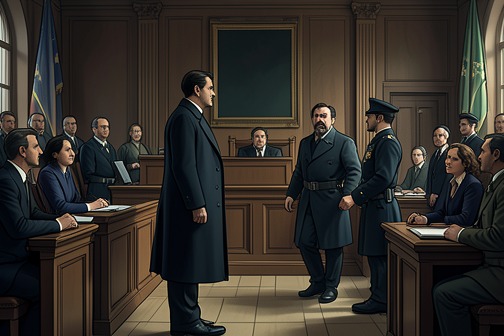
The trial of [Dmitri Karamazov](entity:character-recall-character-4cf82f255bf0) begins at ten o’clock in the morning in the district court, the day after the events that precede it. Its decisive significance lies in the gap between the case debated in court and the verdict delivered by the jury: the proceedings examine the alleged murder and robbery of Fyodor Pavlovich, while the jury ultimately declares Dmitri guilty without qualification. The trial is presented not as a detached legal record but through a narrator who openly admits that his account cannot reproduce everything in full detail or in exact order.
## Opening of the Case
The court formally opens the case concerning the murder of Fyodor Pavlovich. When the presiding judge orders the prisoner brought in, Dmitri appears before the assembled court. The narrator records the hush surrounding his entrance and admits that Dmitri made an unfavorable impression on him. This personal reaction is part of the account’s framing: the trial’s events reach the reader through a witness who acknowledges both his impressions and the limits of his recollection.
The hearing is organized around the central accusation that Dmitri killed his father for the sake of robbery and with premeditation. That formulation becomes the jury’s first and chief question at the end of the proceedings. The stakes are therefore not simply whether Dmitri was present amid the surrounding family conflict, but whether the prosecution’s account of motive and murder has been established.
## [Katerina Ivanovna](entity:character-recall-character-katerina-ivanovna-ebf3ee32d98b)’s Letter
A pivotal moment comes when Katerina Ivanovna, amid an emotional crisis in court, insists that she has more evidence to give immediately. She hands the presiding judge a document and identifies it as a letter from Dmitri. The letter is the one Dmitri wrote at the Metropolis tavern, and its appearance gives the prosecution a document that had already been described by Ivan as a mathematical proof.
The letter’s force in the proceedings is presented as a reversal in the courtroom’s understanding of the evidence: what Ivan had characterized as conclusive is recognized as such by those considering the case. Katerina Ivanovna’s intervention thus links her personal testimony and distress to the legal argument against Dmitri. The document does not merely add another detail; its admission gives renewed weight to the claim that Dmitri intended to rob and kill his father.
## Defence and the Question of Proof
The defence speech by [Fetyukovitch](entity:character-recall-character-fetyukovitch-b893577859b2) is introduced under the heading that its argument cuts both ways. In subsequent addresses, he challenges the proposition that money was stolen and disputes that a murder by Dmitri has been proved. The defence’s questions press the distinction between a compelling account of the crime and proof that the accused committed it.
This dispute gives the trial its central tension. The letter appears to offer a strong basis for the accusation, while Fetyukovitch argues that the absence of robbery and uncertainty over the murder itself undermine the case. The narrative does not reduce the hearing to a simple exchange of claims: it shows how the same proceedings can give evidence a seemingly decisive interpretation and then subject the inferences drawn from it to challenge.
## Verdict and Significance
After the bell calls the court back to order, the jury deliberates for exactly one hour. The narrator remembers the answer to the first and chief question: whether the prisoner committed the murder for robbery and with premeditation. The foreman answers, “Yes, guilty!” The jury repeats the same answer to every question, offering no extenuating comment.
The verdict settles the legal outcome presented in the trial, but its starkness is also part of the episode’s significance. The narrator emphasizes that no one had expected the jury to answer in this way. The hour of deliberation ends not with qualifications or a divided account, but with a uniform judgment that collapses the court’s competing arguments into a categorical finding of guilt. The trial’s structure—from the charge, through the contested letter and the defence’s challenge, to the repeated verdict—makes the uncertain interpretation of evidence and the final authority of legal judgment central to its narrative role.
Event 58
Dmitri’s arrest at Mokroe
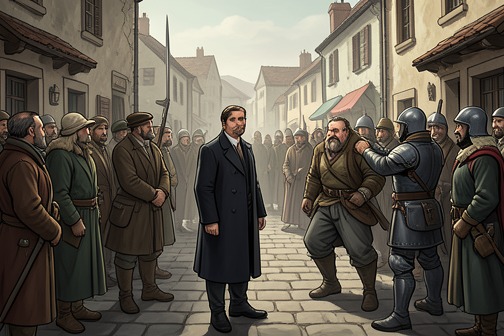
[Dmitri’s arrest at Mokroe](entity:event-recall-event-dmitri-s-arrest-at-mokr-0932b741d6ec) marks the abrupt conversion of a night of drinking and spending into a public criminal case. The arrest binds together facts that can look like proof of murder—the money Dmitri squandered after his father’s death and a letter written the day before it—while the later courtroom account reveals that the real murderer, Smerdyakov, has died by suicide. The event’s significance lies in that collision between circumstantial evidence and the truth the trial struggles to recognize.
## From [Mokroe](entity:location-recall-location-a18f65fc1883) to the Courtroom
The arrest belongs to the aftermath of the events at Mokroe, where Dmitri is taken into custody on suspicion of murdering his father. The surviving evidence here gives only a narrow view of the arrest itself; its force emerges chiefly through the courtroom recollections and disclosures that revisit it. Mokroe is recalled as the village where Dmitri went with [Grushenka](entity:character-recall-character-7ec2d155935e) after the murder and where he squandered money that the prosecution treated as stolen from his father.
That sequence becomes a compact accusation: Dmitri had a motive connected with money, had been seen spending money after the murder, and had left behind a threatening letter. But the evidence also distinguishes the suspicion surrounding him from the fact of his guilt. His arrest makes him the accused; it does not make him the murderer.
## Smerdyakov’s Death in Court
During the trial, the statement that Smerdyakov has died by suicide produces a stir and a whisper among the audience. Many in the courtroom have not yet heard the news. As soon as it is announced, Dmitri cries out from his place, “He was a dog and died like a dog!” His counsel rushes to him, and the President addresses the disturbance.
The outburst gives the death a public consequence before it can become a settled explanation of the crime. The court hears that Smerdyakov is dead, but the revelation does not simply clear Dmitri: the prosecution’s case and the audience’s attention remain caught in the visible evidence against him. Dmitri’s reaction is both an expression of hostility toward the dead man and a sudden interruption in the decorum of the trial, exposing how much the case depends on a truth that its proceedings have not yet securely established.
## Money, the Letter, and the Case Against Dmitri
In the trial’s questioning, [Fetyukovitch](entity:character-recall-character-fetyukovitch-b893577859b2) cautiously probes an episode involving four thousand roubles that [Katerina Ivanovna](entity:character-recall-character-katerina-ivanovna-ebf3ee32d98b) had given Dmitri at the beginning of their acquaintance. The detail matters because the lawyer recognizes that clarifying when it happened may offer something favorable to the defense. The passage also notes that Fetyukovitch, although brought from [Petersburg](entity:location-recall-location-petersburg-2b56d8d0c312) partly at Katerina Ivanovna’s instance, had not known about this episode. The defense is therefore working with a crucial piece of the history that its own counsel has not previously been told.
Katerina Ivanovna’s later account links Dmitri’s actions to the money and to his relationship with Grushenka. She says that Dmitri wanted to repay her, but also needed money for the woman he followed. In her version, he murdered his father, failed to repay her, and went off with Grushenka to the village where he was arrested. She further claims that he squandered the money he had stolen after the murder.
The letter supplies another piece of the prosecution’s case. Katerina Ivanovna says Dmitri wrote it the day before the murder, while drunk and out of spite, believing she would never show it. Its timing and threatening force make it damaging testimony, yet the scene also presents it as an object whose meaning depends on who reveals it and when. Alongside the money spent at Mokroe, it helps explain why suspicion becomes conviction, even as Smerdyakov’s death throws the unresolved truth of the murder into sharper relief.
## Significance of the Arrest
The arrest at Mokroe is a threshold between Dmitri’s private, disorderly flight with Grushenka and the public machinery of accusation. The court reconstructs the village episode through money, travel, and testimony, turning the aftermath of the murder into a narrative of apparent guilt. The suicide announcement disrupts that narrative without immediately undoing it: the man whose death might have transformed the case cannot himself testify, while Dmitri’s conspicuous reaction risks being read as passion rather than evidence.
The event thus establishes the central tension of Dmitri’s prosecution. The arrest is supported by a chain of circumstances that is powerful in its details but incomplete in its account of who killed his father. Later revelations make the distinction decisive: Dmitri’s custody at Mokroe initiates the case against him, while the trial’s own fragments disclose how readily a plausible story can harden into a verdict before the truth is fully heard.
Event 59
Ivan’s courtroom confession
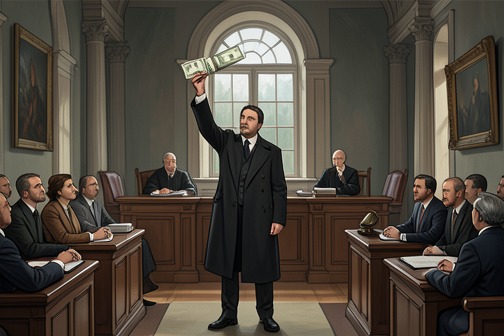
[Ivan’s courtroom confession](entity:event-recall-event-ivan-s-courtroom-confes-a2575f22814a) is the moment when the trial of [Dmitri Karamazov](entity:character-recall-character-4cf82f255bf0) is interrupted by a competing account of their father’s murder. Ivan brings forward the notes connected with the crime, says that he received them from Smerdyakov, and names Smerdyakov—not Dmitri—as the murderer. At the same time, he implicates himself as the one who incited the killing. The disclosure shifts the scene from the question of Dmitri’s guilt to Ivan’s own moral responsibility, but his condition and the ensuing disorder prevent the confession from becoming a composed, sustained account.
## The Money as Evidence
Ivan’s intervention begins with a physical object: a roll of notes that he identifies as the money that had lain in the envelope and for which, he says, their father was murdered. He draws it out before the court and asks the superintendent to take it. The usher passes the roll to the President, making the money part of the proceedings rather than merely an assertion in Ivan’s speech.
The President immediately asks how Ivan could have obtained the money if it is the same money. That question marks the gap between possession and proof: Ivan’s dramatic presentation does not by itself establish the notes’ history. His answer supplies the crucial link. He says that he got them from Smerdyakov the previous day, shortly before Smerdyakov hanged himself. The notes therefore serve at once as material evidence and as the means by which Ivan brings Smerdyakov’s accusation into the courtroom.
## Naming the Killer and His Own Part
Ivan’s statement reverses the accusation focused on Dmitri. He insists that Smerdyakov killed their father, not his brother, and then adds that he incited Smerdyakov to do it. The two claims are inseparable in the scene: Ivan challenges the trial’s account of who committed the murder while refusing to present himself as morally uninvolved.
His confession also enlarges responsibility beyond the direct act. Ivan calls Smerdyakov the murderer, yet makes his own influence part of the crime’s history. He asks who does not desire a father’s death, linking his personal admission to a more general question about culpability. The statement does not erase the distinction between killer and instigator; it insists that the distinction does not absolve him.
## The Court’s Reaction and the Collapse of the Scene
The President responds by asking whether Ivan is in his right mind. The question registers the court’s uncertainty about how to receive the accusation, especially as the proceedings become increasingly agitated. Alyosha rushes toward Ivan, but the usher has already seized him by the arm. When the usher asks what he is doing, Ivan looks at him, takes him by the shoulders, and violently throws him to the floor.
The police seize Ivan, who screams furiously and continues shouting incoherently as he is removed. The court is thrown into confusion. The interruption leaves the confession unresolved as a courtroom performance: Ivan has produced the money and made a direct accusation, but the scene ends not with orderly examination of his claims, but with his removal and the disruption of the proceedings.
## Significance in the Trial
The confession creates a sharp conflict between legal accusation and moral self-indictment. Ivan’s claim that Smerdyakov killed their father directly contests Dmitri’s position as the accused, while his admission that he incited the crime prevents the alternative account from becoming a simple declaration of his brother’s innocence. The notes give the confession a concrete center, and Ivan’s account of how he received them supplies a specific connection to Smerdyakov shortly before his death.
Yet the scene offers no calm resolution. The President’s question about Ivan’s sanity, Alyosha’s attempt to reach him, and the court’s confusion frame the disclosure as both consequential and difficult to assimilate. Ivan speaks publicly, but cannot remain in control of the act of speaking. His confession thus places the murder’s hidden history before the court while making visible the limits of testimony when the speaker is overcome and the institution turns to restraint.
Event 60
Katerina Ivanovna’s disclosure of Dmitri’s letter

[Katerina Ivanovna’s disclosure of Dmitri’s letter](entity:event-recall-event-katerina-ivanovna-s-dis-93e412481b2d) is the courtroom revelation that converts a private threat into damaging evidence against [Dmitri Karamazov](entity:character-recall-character-4cf82f255bf0). In a moment of acute distress, she insists on remaining in court, hands the President the letter, and urges him to read it. The document links Dmitri’s stated intention to kill his father with the location of the money, and its force in court deepens the danger of his conviction.
## The interruption in court
[Katerina Ivanovna](entity:character-recall-character-katerina-ivanovna-ebf3ee32d98b)’s evidence comes amid the proceedings, when she is already in a state of hysterics. She sobs and cries out, but refuses to leave the court and struggles against being removed. Instead, she pleads to the President that she has more evidence to give at once. The urgency is not merely a demand to be heard: she is trying to make the court confront a document she believes explains what happened.
She presents the paper as a letter from Dmitri and points him out in court, accusing him of killing his father. Her appeal is immediate and emphatic: the President is to take the letter and read it quickly. The physical act of submitting the document shifts the scene from an emotional accusation to a claim supported by written evidence.
## What the letter says
The document is the letter Dmitri wrote at the Metropolis tavern. Written a day before the murder, it records a threat against his father and refers to where the money was kept. Katerina says Dmitri was drunk when he wrote it, and argues that he did so from spite, believing she would never show it to anyone. In her account, he counted on her reluctance to take revenge or ruin him, even if he carried out the threat.
Katerina directs the court to read the letter attentively and says it describes in advance both how Dmitri would kill his father and where the money was located. The phrase she singles out is the statement, ‘I shall kill him as soon as Ivan has gone away.’ By emphasizing Ivan’s departure, she presents the letter not as a general outburst but as a threat tied to a particular circumstance. The paper therefore appears to disclose both intent and an anticipated opportunity.
## Evidence and accusation
The letter’s effect rests on the distinction between an accusation made in court and a threat Dmitri put in writing before the murder. Katerina maintains that he had described the killing beforehand; the court recognizes the letter’s apparent conclusiveness. Ivan had previously referred to it as a “mathematical proof,” a description that captures how tightly its wording seems to fit the prosecution’s case.
That evidentiary force does not make the letter a complete account of the murder. Within the trial scene, it establishes what Dmitri wrote and how Katerina interprets it; it is treated as evidence of planning, not as a direct account of who committed the killing. Its central importance is that it gives the charge against him a written basis, joining his expressed threat to the money’s location and to the condition that Ivan first leave.
## The personal cost of disclosure
Katerina’s intervention is also bound up with her own distress. After handing up the letter, she drops into her chair, hides her face in her hands, and sobs convulsively and silently, afraid that she may be expelled from the court. The contrast between her earlier insistence on being heard and her subsequent effort to stifle every sound marks the disclosure as a painful reversal: the evidence has been delivered, but its consequences are no longer under her control.
The letter had been kept from the court until this moment, although Katerina says she saw its significance when she first read it. Her decision to produce it makes the document’s private history part of the public case. The trial is no longer dealing only with what Dmitri is alleged to have done; it must also weigh a written threat whose apparent precision gives the prosecution a powerful argument.
## Consequences in the trial
The narrator explicitly connects the letter to the severity of Dmitri’s fate. Its “mathematical” conclusiveness is recognized, and the account says that without it Dmitri might have escaped his doom, or at least faced a less terrible one. The disclosure thus marks a decisive shift in the trial: what Katerina offers as proof becomes a major reason the case against Dmitri hardens.
The scene’s force comes from the collision between a document that appears orderly and a witness whose behavior is visibly overwhelmed by the act of presenting it. The letter’s words can be read and assessed in court; Katerina’s distress cannot undo their effect. Her disclosure turns an earlier private threat into public evidence and leaves Dmitri more exposed to the judgment that follows.
Event 61
Ivan’s hallucinated encounter with the devil
[Ivan’s hallucinated encounter with the devil](entity:event-recall-event-ivan-s-hallucinated-enc-2cd2a725757f) becomes a struggle over where Ivan’s own thoughts end and the visitor’s voice begins. After Alyosha arrives, Ivan insists that the devil had been sitting on the sofa and that the encounter was not a dream. The apparition gives bodily form to what Ivan finds mean and contemptible in himself, yet its taunts also force him to hear truths he had not been willing to admit. The scene ends not with certainty about the visitor’s independent reality, but with Ivan’s physical and mental collapse as Alyosha keeps watch.
## The Visit and Ivan’s Insistence
Ivan rejects the idea that the encounter was merely a dream. He says the visitor had been sitting on the sofa and recalls that, when someone knocked at the window, he threw a glass at him. His account gives the hallucination a sharply defined place in the room and an object tied to his response, even as his insistence that it was not a dream leaves the status of the experience unsettled.
Ivan tells Alyosha that the devil has visited him twice, almost three times. The visitor is not, he insists, the grand supernatural figure Ivan associates with Satan, scorched wings, thunder, and lightning; instead, he is a simple devil who taunts Ivan for being angry at the modesty of the apparition. The comic scale of this visitor does not lessen his power over Ivan. His smallness itself becomes part of the provocation, and Ivan’s explanation shows how the encounter has repeatedly returned rather than passing as a single, isolated dream.
## The Devil as Ivan’s Double
Ivan calls the devil himself: the mean and contemptible element within him. He also recognizes the visitor’s cleverness as a means of provoking him. The devil’s taunts about Ivan believing in him keep Ivan listening, making the apparition’s power depend not only on supernatural menace but on Ivan’s own reaction to the possibility that it is real.
The visitor is not simply a voice Ivan can dismiss. Ivan admits that it told him much that was true about himself—things he says he would never have confessed to himself otherwise. That admission makes the encounter a disturbing form of self-recognition: what Ivan experiences as an adversary can articulate knowledge that belongs to Ivan, while appearing to come from outside him. He even says that he would be glad to believe the devil, rather than himself, was responsible for what the visitor represents.
## Alyosha as Witness and Counterpresence
Ivan’s account is directed to Alyosha, whose presence alters the scene. Ivan says that Alyosha would have driven the visitor away and adds that the devil disappeared when Alyosha arrived. He tells his brother that he loves his face, and speaks as though Alyosha’s arrival has interrupted the visitor’s hold over him. The affection is strikingly direct: in the middle of describing an apparition that embodies his own degradation, Ivan turns toward the brother whose presence offers relief.
Alyosha answers not by confirming that the devil was physically present but by recognizing Ivan’s exhaustion. His compassionate observation that the visitor has worn Ivan out does not settle whether the encounter was dream or waking reality; it attends instead to its visible consequence. Ivan continues to describe the visitor’s teasing and its effect on him, while Alyosha remains beside him rather than leaving to summon a doctor, afraid to leave his brother alone.
## Collapse and Narrative Significance
The episode moves from Ivan’s forceful insistence on the reality of the visitor to the failure of his own speech and consciousness. He continues talking after he has lost consciousness, but his words become incoherent and difficult to articulate; he then staggers violently, with Alyosha there to support him. The devil encounter is thus embedded in the immediate progression of Ivan’s illness, not presented as an episode that can be cleanly separated from his physical deterioration.
The scene’s unresolved boundary between hallucination and waking experience is central to its effect. Ivan supplies concrete details—the sofa, the window, the thrown glass—yet the visitor’s most consequential disclosures are inward: he voices truths Ivan recognizes as his own and gives his self-accusation the shape of another speaker. Alyosha’s arrival interrupts the visit but does not dissolve the conflict. Instead, the encounter leaves Ivan exposed, exhausted, and dependent on his brother’s presence as his consciousness gives way.
Event 62
Ilusha Snegiryov’s funeral
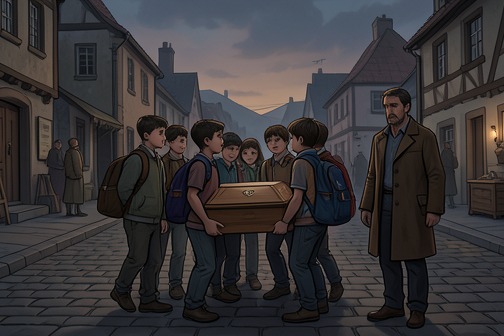
[Ilusha Snegiryov’s funeral](entity:event-recall-event-ilusha-snegiryov-s-fune-40f133d4cc6c) gathers his schoolfellows around the boy’s coffin and gives their grief a communal form. Held two days after [Dmitri Karamazov](entity:character-recall-character-4cf82f255bf0) was sentenced, the funeral moves from the family’s house to the church and then to the stone, where Alyosha addresses the boys. Ilusha’s final request that they stay beside his father shapes the day; Alyosha’s words turn that charge into a promise to remember Ilusha together.
## The Gathering and Ilusha’s Last Request
Alyosha arrives late, after the mourners have already decided they must carry the flower-decked little coffin to the church without him. The boys have been waiting at the house, and their relief at his arrival is immediate. About twelve schoolfellows stand with their schoolbags or satchels still on their shoulders, a detail that keeps their ordinary lives visible within the funeral gathering.
The boys remember what Ilusha told them as he lay dying: they were to be with his father, because his father would cry. Their presence therefore answers a specific request rather than serving only as a tribute to the dead boy. Kolya Krassotkin is at the front of the group and greets Alyosha; he explains that the boys are distressed by the captain’s grief. They know the bereaved father has not been drinking that day, though he seems to them as if he were drunk. Their observation makes the father’s disorientation part of what the boys have come to witness and help bear.
## The Funeral Service
At the church, the coffin is set in the middle, while the boys gather around it and stand reverently through the service. The building is old and poor, with many ikons lacking their settings. The setting gives the ceremony a plain, unadorned character: the attention rests on the small coffin, the mourners’ attendance, and the prayers rather than on display.
The father, still distracted, fusses about during the service. The funeral prayers nevertheless move and rouse him. His grief does not disappear, but the ritual momentarily draws him out of his agitation and into the shared work of mourning. In this way the service affects both the boy’s immediate family and the schoolfellows who have formed a circle around his coffin.
## From Mourning to Speech
After the service, Alyosha looks from one to another of the boys’ bright, pleasant faces and asks to say a word to them at the stone. The shift from the church’s formal prayers to an address among the boys gives the funeral a second center. The gathering is no longer only assembled around the body; it becomes a group listening to one another and considering what they will carry beyond the ceremony.
Alyosha’s speech links the boys’ affection for one another to their shared attachment to Ilusha. He identifies Ilusha as the one who has united them in the kind feeling they mean to remember throughout their lives. The point is not that sorrow can be undone, but that the boys’ bond now has a common source and a continuing obligation: they are to remember the boy who brought them together.
## Memory as a Shared Promise
Alyosha asks the boys to keep a place for him in their hearts and tells them that he, in turn, has a place for each of them. He then calls on them never to forget Ilusha and asks that his memory live in their hearts from that time onward. The boys answer together, promising that the remembrance will endure. The exchange makes memory reciprocal: it holds not only Ilusha among the living but also Alyosha and the schoolfellows within a lasting community of affection.
The funeral’s movement from the house, where the boys honor Ilusha’s request to accompany his father, through the church service, to Alyosha’s address at the stone gives the mourning a clear ethical and communal shape. Ilusha’s death is not presented as a resolution of grief. Instead, his remembered wish and the boys’ response leave them with a continuing task: to stand by his father and keep the dead boy present in their shared lives.