1876
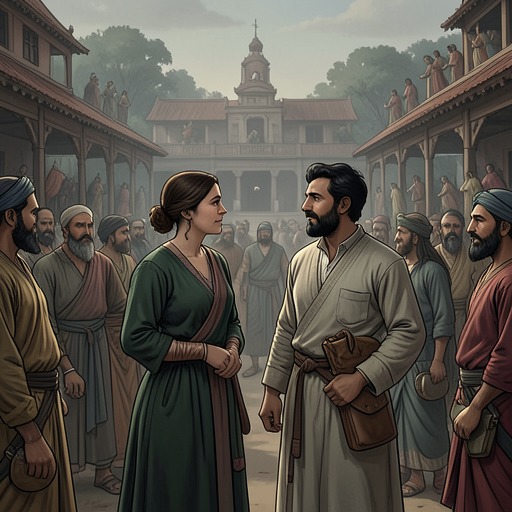
A Blessed Christian Lineage
When his father took the seven-year-old Reverend E. John Ipe to see the visiting Patriarch of Antioch, the frightened boy kissed the Patriarch’s ring and received a blessing. The story later made him known as the Little Blessed One, securing the family’s place among the Syrian Christians of [Kerala](entity:location-recall-location-kerala-482602bf5b44).
Pappachi’s adulthood before retirement
Pappachi’s Entomological Ambition
[Pappachi](entity:character-recall-character-pappachi-140fbd655cf9) served as an Imperial Entomologist and believed that his career should have brought him lasting fame. A moth he collected was eventually recognized as a new species, but the honor went to a junior officer, leaving Pappachi embittered by a discovery that came too late to claim.
During Mammachi and Pappachi’s marriage
A Marriage Ruled by Violence
[Pappachi](entity:character-recall-character-pappachi-140fbd655cf9) beat [Mammachi](entity:character-recall-character-mammachi-ee579c7de0b2), resenting the attention she received when her pickle-making became successful. He also stopped her violin lessons after her teacher praised her talent, and his possessiveness turned domestic life into a long exercise in fear and humiliation.
When Baby Kochamma was eighteen
Baby Kochamma Falls in Love
[Baby Kochamma](entity:character-recall-character-baby-kochamma-385497fb8013) became infatuated with [Father Mulligan](entity:character-recall-character-father-mulligan-8fb29bb2f69a), an Irish Jesuit who visited her father. She staged charitable encounters and biblical questions to keep him near, but his affection never became a promise of marriage or a shared life.
A year after Father Mulligan’s visits began
A Novice’s Failed Devotion
Convinced that religious life might bring her closer to [Father Mulligan](entity:character-recall-character-father-mulligan-8fb29bb2f69a), [Baby Kochamma](entity:character-recall-character-baby-kochamma-385497fb8013) defied her father and entered a Catholic convent in [Madras](entity:location-recall-location-madras-f306311f334a). She soon discovered that the plan offered no special access to the priest, and her father withdrew her from the convent.
After Baby Kochamma left the convent
An Ornamental Gardening Diploma
Reverend Ipe arranged for [Baby Kochamma](entity:character-recall-character-baby-kochamma-385497fb8013) to study in Rochester, where she earned a diploma in ornamental gardening. She returned still devoted to [Father Mulligan](entity:character-recall-character-father-mulligan-8fb29bb2f69a), but her hopes of a life with him had not changed and could not be fulfilled.
After Pappachi retired and the family settled in Ayemenem
Mammachi Starts a Business
[Mammachi](entity:character-recall-character-mammachi-ee579c7de0b2) began selling her pickles and jams after they proved popular at a local Bible Society fair. Orders grew into year-round work, and she built the business through her own skill despite [Pappachi](entity:character-recall-character-pappachi-140fbd655cf9)’s refusal to help and his increasing resentment.
During Chacko’s Oxford-era return home
Chacko Stops the Beatings
[Chacko](entity:character-recall-character-chacko-2755b810f4af) found [Pappachi](entity:character-recall-character-pappachi-140fbd655cf9) beating [Mammachi](entity:character-recall-character-mammachi-ee579c7de0b2) and physically stopped him, warning his father never to do it again. Pappachi destroyed his rocking chair in a rage and never struck Mammachi afterward, though he continued to punish her with silence and calculated neglect.
During Pappachi and Mammachi’s time in Vienna
Mammachi’s Violin Lessons End
[Mammachi](entity:character-recall-character-mammachi-ee579c7de0b2) studied violin while the family was in Vienna, and her teacher believed she had unusual ability. [Pappachi](entity:character-recall-character-pappachi-140fbd655cf9) abruptly ended the lessons after hearing the praise, another instance of his effort to contain his wife’s independence and public recognition.
After the family’s move to Ayemenem
Pappachi’s Death
[Pappachi](entity:character-recall-character-pappachi-140fbd655cf9) died after suffering a heart attack, leaving [Mammachi](entity:character-recall-character-mammachi-ee579c7de0b2) and their children behind. Mammachi cried at his funeral, while [Ammu](entity:character-recall-character-ammu-964e44d700c3) observed that habit and a lifetime of shared routine could outlast affection even in a destructive marriage.
After Pappachi’s death
Chacko Returns to the Factory
[Chacko](entity:character-recall-character-chacko-2755b810f4af) left his teaching job and returned to [Ayemenem](entity:location-recall-location-ayemenem-06735b63c2f5) with business ambitions, investing in machinery and registering [Mammachi](entity:character-recall-character-mammachi-ee579c7de0b2)’s successful enterprise as a partnership. He treated the factory as his own, while the law gave [Ammu](entity:character-recall-character-ammu-964e44d700c3) no claim to family property because she was a daughter.
After Chacko took charge of the pickle business
The Factory Takes Its Name
[Chacko](entity:character-recall-character-chacko-2755b810f4af) named the enterprise [Paradise Pickles & Preserves](entity:location-recall-location-paradise-pickles-pre-75b45b0486a6) and commissioned its labels from [Comrade K. N. M. Pillai](entity:character-recall-character-comrade-k-n-m-pilla-37397cc6f570). The factory expanded, but Chacko’s borrowing and financial mismanagement began to undermine its earlier profitability.
After her return from Rochester
Baby Kochamma Tends Her Garden
[Baby Kochamma](entity:character-recall-character-baby-kochamma-385497fb8013) devoted herself to an elaborate ornamental garden at the [Ayemenem House](entity:location-recall-location-ayemenem-house-112c7eb878a0), cultivating rare flowers and shaping hedges with exacting care. The garden became an outlet for ambition and control in a life otherwise narrowed by unreturned love.
Ammu’s adolescence in Delhi and Ayemenem
Ammu’s Constrained Girlhood
[Pappachi](entity:character-recall-character-pappachi-140fbd655cf9) refused to pay for [Ammu](entity:character-recall-character-ammu-964e44d700c3)’s college education, so she returned with her parents to [Ayemenem](entity:location-recall-location-ayemenem-06735b63c2f5) and waited for marriage proposals that did not come. Without an adequate dowry, she saw marriage as her only escape from a household ruled by her father’s temper.
Ammu’s early adulthood
Ammu Marries Baba
During a visit to [Calcutta](entity:location-recall-location-calcutta-db42bfe5a389), [Ammu](entity:character-recall-character-ammu-964e44d700c3) met [Baba](entity:character-recall-character-baba-f68625e7f8c5) at a wedding and accepted his proposal despite not being in love with him. She judged that marriage offered a better chance at freedom than returning to her parents’ home, but the decision brought her into a destructive relationship.
After Ammu’s marriage
Ammu’s Life on the Tea Estate
[Ammu](entity:character-recall-character-ammu-964e44d700c3) moved with [Baba](entity:character-recall-character-baba-f68625e7f8c5) to his job at a tea estate in [Assam](entity:location-recall-location-assam-82a6cf2d1b29), where her beauty and social ease made her popular among the planters. Behind the outward comfort, Baba’s alcoholism and lies made their home unstable and increasingly unsafe.
Before the twins’ birth
Hollick’s Proposition
After [Baba](entity:character-recall-character-baba-f68625e7f8c5)’s drinking jeopardized his job, his manager Hollick offered him an alternative to resignation: treatment away from the estate while [Ammu](entity:character-recall-character-ammu-964e44d700c3) was sent to Hollick’s bungalow to be “looked after.” Baba brought the proposal home, revealing that he was willing to trade his wife’s safety for his own employment.
After Hollick’s proposal
Ammu Rejects Hollick’s Deal
[Ammu](entity:character-recall-character-ammu-964e44d700c3)’s refusal enraged [Baba](entity:character-recall-character-baba-f68625e7f8c5), who attacked her and then passed out. She struck him with a heavy atlas; his apology was followed by renewed pressure to accept the arrangement, confirming the pattern of drunken violence and coercion in their marriage.
November 1962
The Twins Are Born
With [Assam](entity:location-recall-location-assam-82a6cf2d1b29) under wartime evacuation and [Ammu](entity:character-recall-character-ammu-964e44d700c3) too pregnant to travel, [Estha and Rahel](entity:relation-recall-relation-estha-and-rahel-1bc62649b8f3) were born in [Shillong](entity:location-recall-location-shillong-7b6326dada9b) by candlelight. They arrived eighteen minutes apart as two separate babies, though their deep sense of shared identity would later make them feel like one person divided between two bodies.
After the twins were born and violence reached the children
Ammu Leaves Baba
When [Baba](entity:character-recall-character-baba-f68625e7f8c5)’s violence began to include [Estha and Rahel](entity:relation-recall-relation-estha-and-rahel-1bc62649b8f3), [Ammu](entity:character-recall-character-ammu-964e44d700c3) left him and returned to [Ayemenem](entity:location-recall-location-ayemenem-06735b63c2f5) with the children. [Pappachi](entity:character-recall-character-pappachi-140fbd655cf9) refused to believe her account of Hollick’s proposal, and Ammu found herself back in the home she had once fled, now without a husband or her earlier hopes.
Velutha’s childhood
Velutha’s Childhood Skill
[Velutha](entity:character-recall-character-velutha-f95aeebc9535) showed exceptional skill making toys and small objects, and [Mammachi](entity:character-recall-character-mammachi-ee579c7de0b2) persuaded his father to send him to the school established for Untouchable children. He later trained with a German carpenter in [Kottayam](entity:location-recall-location-kottayam-6364ddf395b8) and became an accomplished carpenter and mechanic.
After Velutha’s training
Velutha Leaves Ayemenem
Tension grew between [Velutha](entity:character-recall-character-velutha-f95aeebc9535) and [Vellya Paapen](entity:character-recall-character-vellya-paapen-efe6a6c172f2), who feared that his son’s confidence would be treated as insolence by Touchables. Velutha left home and disappeared for four years; rumors linked him to construction work, prison, and the Naxalite movement.
Five months before Sophie Mol’s visit
Velutha Returns to Work
[Velutha](entity:character-recall-character-velutha-f95aeebc9535) returned to [Ayemenem](entity:location-recall-location-ayemenem-06735b63c2f5) after years away, and [Mammachi](entity:character-recall-character-mammachi-ee579c7de0b2) rehired him to maintain the factory. He repaired its machinery and ran much of its practical work, but she paid him less than a Touchable carpenter and still treated his presence in the house as a special concession.
After Ammu returned to Ayemenem
Ammu and the Twins at Home
[Ammu](entity:character-recall-character-ammu-964e44d700c3) raised [Estha and Rahel](entity:relation-recall-relation-estha-and-rahel-1bc62649b8f3) in her parents’ house, loving them intensely while resenting the vulnerability and dependence that made them easy targets in a hostile family. She was judged for being divorced and for having married outside the community, while the twins found their strongest refuge in each other.
During the twins’ early childhood
Ammu’s Forbidden Restlessness
Music sometimes drew [Ammu](entity:character-recall-character-ammu-964e44d700c3) away from the duties and constraints of motherhood into a more reckless, solitary freedom. Her restless independence foreshadowed the relationship that would later defy the rules governing caste, family, and who could love whom.
During the twins’ childhood in Ayemenem
Baby Kochamma’s Resentment
[Baby Kochamma](entity:character-recall-character-baby-kochamma-385497fb8013) resented [Ammu](entity:character-recall-character-ammu-964e44d700c3)’s refusal to accept the fate of a manless woman and regarded the twins as burdens who lived in their maternal family’s house on sufferance. She withheld affection and watched for chances to assert authority over them.
During their childhood before December 1969
The Twins Learn the Family’s Anglophilia
[Chacko](entity:character-recall-character-chacko-2755b810f4af) described the family as Anglophiles, trapped outside their own history and taught to admire the people who had conquered them. He used the imagined [History House](entity:location-recall-location-history-house-7d484e7d600c) across the river to explain how colonial rule had altered the family’s sense of identity and belonging.
During the twins’ childhood
Ammu’s Marriage and the Twins’ Identity
The family’s divided loyalties shaped how [Estha and Rahel](entity:relation-recall-relation-estha-and-rahel-1bc62649b8f3) were treated: they were the children of divorced parents, and [Baby Kochamma](entity:character-recall-character-baby-kochamma-385497fb8013) disparaged them as mixed religious and cultural outsiders. Their closeness gave them a private identity that resisted the categories imposed by adults.
1957 and the following years
The Communist Government’s Rise
[Kerala](entity:location-recall-location-kerala-482602bf5b44) elected a Communist government in 1957, led by E. M. S. Namboodiripad, before the central government dismissed it amid political conflict. [Chacko](entity:character-recall-character-chacko-2755b810f4af) followed the movement’s fortunes closely, while the novel shows how local reformist politics could challenge class inequality without dismantling caste divisions.
By the late 1960s
The Naxalite Challenge
A more militant Naxalite movement challenged parliamentary communism, and reports of killings and armed revolt intensified fear among landowners. In [Kerala](entity:location-recall-location-kerala-482602bf5b44), Communist leaders tried to harness workers’ anger through electoral politics, leaving the boundaries of their solidarity exposed.
Before December 1969
Mammachi’s Enterprise Grows
[Mammachi](entity:character-recall-character-mammachi-ee579c7de0b2)’s pickle business employed local workers and became a family institution, but [Chacko](entity:character-recall-character-chacko-2755b810f4af)’s loans and unequal control weakened it. The factory’s workforce included Untouchable laborers, while the old caste hierarchy continued to shape wages, status, and who was allowed into the family house.
Before December 1969
Pappachi’s Plymouth
[Pappachi](entity:character-recall-character-pappachi-140fbd655cf9)’s sky-blue Plymouth became a conspicuous family possession, but he had guarded it as a private symbol of status and revenge. After his death it passed to [Mammachi](entity:character-recall-character-mammachi-ee579c7de0b2) and carried the family on the journey to meet [Margaret Kochamma and Sophie Mol](entity:relation-recall-relation-margaret-kochamma-so-e797a6637761).
Rahel’s school years
The Twins’ School Troubles
[Rahel](entity:character-recall-character-rahel-3a112ffa2a73) was expelled from successive schools for pranks, smoking, and setting fire to a teacher’s false-hair bun. Teachers described her as polite but friendless and unable to conform to expectations of how a girl should behave.
After Rahel’s school expulsions
Rahel Leaves School Unfinished
[Rahel](entity:character-recall-character-rahel-3a112ffa2a73) entered an architecture college in [Delhi](entity:location-recall-location-delhi-0ebfda7a8b21) but spent eight years there without completing the course. She drifted through low-paid drafting jobs and lived outside conventional expectations, with little family guidance and no clear plan for her future.
During Rahel’s years in Delhi
Rahel Marries Larry
[Rahel](entity:character-recall-character-rahel-3a112ffa2a73) met Larry McCaslin, an American researcher in vernacular architecture, and married him with little sense of commitment or direction. She returned with him to Boston, but he could not understand the distance in her eyes or the emptiness left by her separation from [Estha](entity:character-recall-character-estha-9422ddad72ce).
After Rahel moved to Boston
Rahel’s Marriage Ends
[Rahel](entity:character-recall-character-rahel-3a112ffa2a73) and Larry’s marriage failed, and they divorced. She later worked as a waitress and then as a night clerk at a Washington-area gas station, where violence and danger became part of her daily life without offering a substitute for home.
In the months before Sophie Mol’s visit
The Factory’s Labor Tensions
[Comrade K. N. M. Pillai](entity:character-recall-character-comrade-k-n-m-pilla-37397cc6f570) encouraged the Paradise Pickles workers to demand improved wages and benefits, while [Chacko](entity:character-recall-character-chacko-2755b810f4af) believed that his benevolent attitude would keep them loyal. The workers resented [Velutha](entity:character-recall-character-velutha-f95aeebc9535)’s special responsibilities, and Pillai saw his position as an obstacle to political influence.
Before December 1969
A Visit After Joe’s Death
After [Joe](entity:character-recall-character-joe-9b197d8c56ff) died in a car accident, [Chacko](entity:character-recall-character-chacko-2755b810f4af) invited [Margaret Kochamma and Sophie Mol](entity:relation-recall-relation-margaret-kochamma-so-e797a6637761) to spend Christmas in [Ayemenem](entity:location-recall-location-ayemenem-06735b63c2f5). Margaret accepted the invitation to help her daughter recover, despite the complicated history of her marriage to Chacko.
The week before the airport meeting
The English-Speaking Rule
[Baby Kochamma](entity:character-recall-character-baby-kochamma-385497fb8013) prepared the twins for [Sophie Mol](entity:character-recall-character-sophie-mol-b5614e23e8ec)’s visit by fining them for speaking Malayalam and making them write lines promising to use English. She wanted them to perform as polished representatives of the family, turning a child’s welcome into an exercise in class aspiration and [Anglophilia](entity:concept-recall-concept-anglophilia-93af88a2669e).
Before Ammu’s marriage
Ammu’s Childhood Under Pappachi
[Ammu](entity:character-recall-character-ammu-964e44d700c3) remembered [Pappachi](entity:character-recall-character-pappachi-140fbd655cf9)’s private cruelty: after she crept back into the house for her beloved gumboots, he beat her with his riding crop and made her watch as he cut the boots to pieces. The episode formed her fierce resistance to male authority and her readiness to confront those who tried to control her.
December 1969
The March at the Crossing
On the family’s drive to [Cochin](entity:location-recall-location-cochin-aa2001ccca37), a Communist labor march stopped traffic at a railway crossing. The procession included workers demanding improved conditions and an end to caste-based forms of address, bringing political upheaval into the private world of the family’s car.
During the December 1969 march
Rahel Calls to Velutha
[Rahel](entity:character-recall-character-rahel-3a112ffa2a73) recognized [Velutha](entity:character-recall-character-velutha-f95aeebc9535) among the marchers and called to him from the Plymouth. [Ammu](entity:character-recall-character-ammu-964e44d700c3) sharply reprimanded her, and the twins sensed that their mother’s anger carried a meaning they could not understand.
During the December 1969 march
Baby Kochamma Waves the Flag
A marcher teased [Baby Kochamma](entity:character-recall-character-baby-kochamma-385497fb8013) and forced her to wave a red flag and repeat a revolutionary slogan. Humiliated before the crowd, she later directed her anger at [Velutha](entity:character-recall-character-velutha-f95aeebc9535), whom she associated with the march and with the loss of her social authority.
On the drive to Cochin
Ammu’s Words Wound Rahel
After [Rahel](entity:character-recall-character-rahel-3a112ffa2a73) made a careless remark about the Orangedrink Lemondrink Man, [Ammu](entity:character-recall-character-ammu-964e44d700c3) told her that hurtful words made people love someone less. Rahel took the warning literally, and the image of a cold moth settling on her heart became a measure of her fear of losing her mother’s affection.
December 1969, at Abhilash Talkies
Estha Sings at the Cinema
During a screening of The Sound of Music, [Estha](entity:character-recall-character-estha-9422ddad72ce) could not stop singing along and was ordered out by the audience. He went into the cinema lobby alone, where a refreshments seller noticed him and began drawing him into conversation.
December 1969, during the film
The Cinema Assault
Orange drink lemon drink man lured Eusta to the convenience store counter behind and committed sexual assault on him. When Eusta left, he was holding the drink, with sticky liquid on his hands, filled with inexplicable fear; the man found out where Eusta lived and later hinted that he could
Later that day at Abhilash Talkies
A Warning at the Cinema
Amu returned with Eshta, and the man who drank orange and lemon implied he knew their family's factory and could find the boy. Eshta refused to stay alone with him and hurried back to his family; Laheal retreated in fear from the man's predatory smile
After the cinema
Ammu’s Rebuke on the Stairs
On the stairs of the cinema, [Rahel](entity:character-recall-character-rahel-3a112ffa2a73) sarcastically suggested that Amu marry a man who drinks orange lemon drink. Amu told her that careless words would make others love her less; the children remembered this conversation and added another piece of evidence that love may be taken back unexpectedly
The night before Sophie Mol’s arrival
A Night at the Sea Queen
A family lives at the Haihou Hotel in Kochin. [Estha](entity:character-recall-character-estha-9422ddad72ce) and [Ammu](entity:character-recall-character-ammu-964e44d700c3) share a room, while [Rahel](entity:character-recall-character-rahel-3a112ffa2a73) sleeps with Chaco. She asks her parents if it is necessary to love one's child most, showing her anxiety about her place in the family and her place in the home
The morning Sophie Mol arrived
The Airport Ambassadors
At [Cochin](entity:location-recall-location-cochin-aa2001ccca37) Airport, the infant Chakram told the twins that they were ambassadors, who would influence Sophie Moore's first impression of India. Rahal was distracted by the dirty cement kangaroo; [Estha](entity:character-recall-character-estha-9422ddad72ce) was still suffocated by the thought that the man in the cinema might find his own
The Day Sophie Mol Came, December 1969
Sophie Mol Arrives
Margaret Cocha and Sophie More arrived from [London](entity:location-recall-location-london-420923d4a60a), where Chaco greeted them with flowers, full of enthusiasm. The family's welcome became a public performance, with children required to behave perfectly, and adults assessing their place in this new family structure
At Cochin Airport, the day Sophie Mol arrived
The Airport Welcome Goes Awry
Estara did not respond as expected to Marguerite Kocama's greeting, while [Rahel](entity:character-recall-character-rahel-3a112ffa2a73) hid herself behind a dirty curtain. Amu got angry in front of everyone and threatened to send away the twins, turning the welcome into a humiliating lesson in obedience
The drive from Cochin to Ayemenem
The Cousins Test Their Affection
Sophie More explained that she loved her deceased stepfather [Joe](entity:character-recall-character-joe-9b197d8c56ff) more than Chaco, although she called Chaco her biological father. La listed Sophie in her list of people she loves, while Sophie admitted she still does not love the twins, revealing that the distribution of affection and belonging is not equal
The drive home on the day Sophie Mol arrived
The Dead Elephant
Sophie More arrived that day, and on the way home, the family saw a dead temple elephant lying by the roadside and stopped to check if it was their familiar Ko Khu Tongban. Upon learning that the dead animal was a stranger, they felt relieved and continued on their way; the children
The welcome gathering at Ayemenem House
Ammu and Chacko Clash
At the welcome party, Margaret Koczhma asked men and women how to have children, and Amu answered with a blunt joke. Chako asked Amu to apologize, but she preferred to leave the party rather than accept his authority or comply with the pressure from her family to play the role
The Day Sophie Mol Came
Rahel Finds Comfort with Velutha
Laher slipped away from the formal welcome ceremony to greet his familiar friend Veluta, playing their own game, being close to each other. Amu watched them, realizing there was a world excluding her; in that meaningful glance, Amu and Veluta saw each other for the first time with
The Day Sophie Mol Came
Velutha’s Place in the Household
Wei Lutua repaired the machines in the family's home and served the family, but the caste system prevented him from freely entering the mansion. The family relied on his labor, yet they were also bound by a social order in which his presence and confidence were seen as an offense
The Day Sophie Mol Came
The Welcome Cake
[Kochu Maria](entity:character-recall-character-kochu-maria-0d666e23258d) prepared a large welcome cake, Mamachigo prepared the violin for Sophie Morel. The servants watched the family approaching at the edge of the gathering; the twins felt as if they had become background figures, standing beside the favored child who had returned from England
The first days after Sophie Mol arrived
Rahel Resents Sophie Mol
Lahar found it hard to accept that Sophie More was receiving so much attention, watching whether Amu loved her cousin more. Sophie's pale appearance, British-style clothing, and her status as the daughter of Chako made the twins more clearly aware of how the family ranked their children
About a week after Sophie Mol arrived
The Cousins Play at Being Ladies
Estara, Lalaher, and Sophie Mor wear old saris and play adult women, inventing identities such as Madame Pile, Madame Epan, and Madame Rajagopalan. Velutah does not mock their game but warmly welcomes them, giving them coconut water and carving a small
During the week before her death
Sophie Mol’s Loneliness
[Sophie Mol](entity:character-recall-character-sophie-mol-b5614e23e8ec) revealed that she felt lonely, and the twins responded by inviting her into their world. Their growing friendship offered the possibility of a bond that might have changed how the family remembered her, but that story was cut short before it could fully develop.
Several days before Sophie Mol’s death
Velutha Repairs the Boat
The twins found an [old vallom boat](entity:object-recall-object-vallom-261113545a06) and asked [Velutha](entity:character-recall-character-velutha-f95aeebc9535) to help them make it usable. He agreed to mend it and teach them how to work the wood, while warning them to be careful on the river.
After the twins found the boat
The History House Beckons
[Estha](entity:character-recall-character-estha-9422ddad72ce) imagined crossing the river with supplies to the abandoned [History House](entity:location-recall-location-history-house-7d484e7d600c), a place the twins had long associated with forbidden history and mystery. He prepared for the possibility that anything could happen, while [Rahel](entity:character-recall-character-rahel-3a112ffa2a73) joined him in the plan.
The afternoon before Sophie Mol’s drowning
The Twins Prepare to Cross
The twins secretly prepared the old boat and gathered provisions, planning a trip across the river to the [History House](entity:location-recall-location-history-house-7d484e7d600c). They arranged to wait until [Ammu](entity:character-recall-character-ammu-964e44d700c3) was asleep, turning their imagined escape into a real crossing that would carry the children into disaster.
The night of the crossing
Sophie Mol Joins the Plan
[Sophie Mol](entity:character-recall-character-sophie-mol-b5614e23e8ec) persuaded [Estha and Rahel](entity:relation-recall-relation-estha-and-rahel-1bc62649b8f3) to take her with them, believing that all three children’s disappearance would make the adults regret their treatment of them. She brought food from the fridge, while the twins carried their collected supplies to the river.
Before dawn, the night Sophie Mol drowned
The Boat Capsizes
The children rowed across the swollen river in darkness, steering against the current as [Velutha](entity:character-recall-character-velutha-f95aeebc9535) had taught them. A floating log struck the old boat, which overturned; [Estha and Rahel](entity:relation-recall-relation-estha-and-rahel-1bc62649b8f3) reached shore, but the current swept the boat and [Sophie Mol](entity:character-recall-character-sophie-mol-b5614e23e8ec) away.
Dawn after the crossing
Sophie Mol’s Body Is Found
A fisherman found [Sophie Mol](entity:character-recall-character-sophie-mol-b5614e23e8ec)’s body in the river and brought her into his boat, with the silver thimble still clenched in her hand. The family learned that the child had drowned, and the loss set the household’s grief and accusations into motion.
Before dawn after Sophie Mol drowned
The Children Hide at the House
Exhausted and terrified, [Estha and Rahel](entity:relation-recall-relation-estha-and-rahel-1bc62649b8f3) reached the back verandah of the [History House](entity:location-recall-location-history-house-7d484e7d600c) and hid with their toys and supplies. They believed that they would be imprisoned for Sophie’s death, unaware that [Velutha](entity:character-recall-character-velutha-f95aeebc9535) was already asleep nearby.
The night the children disappeared
Ammu Is Locked Away
After [Vellya Paapen](entity:character-recall-character-vellya-paapen-efe6a6c172f2) disclosed [Ammu and Velutha’s relationship](entity:relation-recall-relation-ammu-and-velutha-s-r-a37d3d021a71), [Mammachi](entity:character-recall-character-mammachi-ee579c7de0b2) and [Baby Kochamma](entity:character-recall-character-baby-kochamma-385497fb8013) confined [Ammu](entity:character-recall-character-ammu-964e44d700c3) to her bedroom while they dealt with [Velutha](entity:character-recall-character-velutha-f95aeebc9535). When the children asked why she was locked in, Ammu, overwhelmed by anger, told them that they were the reason she was trapped and wished she had left them in an orphanage.
The night before the police raid
Vellya Paapen Exposes the Affair
[Vellya Paapen](entity:character-recall-character-vellya-paapen-efe6a6c172f2) told [Mammachi](entity:character-recall-character-mammachi-ee579c7de0b2) that he had seen [Velutha](entity:character-recall-character-velutha-f95aeebc9535) and [Ammu](entity:character-recall-character-ammu-964e44d700c3) together, crossing the river and returning at dawn. Torn between loyalty to the family and love for his son, he offered to kill Velutha himself, treating his confession as repayment for the family’s past favors.
The night of Vellya Paapen’s revelation
Mammachi Turns on Velutha
[Mammachi](entity:character-recall-character-mammachi-ee579c7de0b2)’s rage at the affair became a defense of caste and family prestige. With [Baby Kochamma](entity:character-recall-character-baby-kochamma-385497fb8013) guiding the situation, she summoned [Velutha](entity:character-recall-character-velutha-f95aeebc9535), abused him, threatened him, and spat in his face before he left the house in shock.
The night after the affair was exposed
Baby Kochamma Builds a False Case
[Baby Kochamma](entity:character-recall-character-baby-kochamma-385497fb8013) went to the [Kottayam Police Station](entity:location-recall-location-kottayam-police-stat-5b240dce4b55) and falsely accused [Velutha](entity:character-recall-character-velutha-f95aeebc9535) of trying to rape [Ammu](entity:character-recall-character-ammu-964e44d700c3), recasting their consensual relationship as an assault. She presented the accusation as a threat to an old family and hid her own role in provoking the crisis.
The night Velutha sought help
Pillai Abandons Velutha
After leaving the [Ayemenem House](entity:location-recall-location-ayemenem-house-112c7eb878a0), [Velutha](entity:character-recall-character-velutha-f95aeebc9535) went to [Comrade K. N. M. Pillai](entity:character-recall-character-comrade-k-n-m-pilla-37397cc6f570) for support. Pillai refused to intervene, saying the Party would not defend a worker’s private misconduct, and concealed that Velutha belonged to the Party.
After midnight on the night of the storm
Velutha Crosses to the History House
With nowhere else to go, [Velutha](entity:character-recall-character-velutha-f95aeebc9535) crossed the swollen [Meenachal River](entity:location-recall-location-meenachal-river-a07ea3616efe) and entered the abandoned [History House](entity:location-recall-location-history-house-7d484e7d600c). He moved toward the place where the twins were sheltering, unaware that the police were coming for him.
Early morning after Sophie Mol drowned
The Police Raid the History House
A group of policemen crossed the river and found [Velutha](entity:character-recall-character-velutha-f95aeebc9535) asleep beside the children in the back verandah. They attacked him with controlled brutality, treating the beating as a demonstration of caste power and state authority rather than an arrest conducted by law.
The dawn after the river crossing
Velutha Is Beaten to Death
The police smashed the face, ribs, spine, and knee of Velut, causing severe injuries and leaving him unable to move. His blood had a sickly sweet odor, which the twins would remember for decades; the officer took some of the children's belongings and left him on the verandah
After the police raid
The Children Identify Velutha
The police interrogated Estaa and [Rahel](entity:character-recall-character-rahel-3a112ffa2a73), asking them about the toys and items in the House of [History](entity:concept-recall-concept-history-ce015fb48ea5). The twins were frightened and confused, denying that they recognized the man who was beaten and injured as Veluta, even though they watched him being taken away
At Kottayam Police Station, after the raid
Baby Kochamma Coerces the Twins
Officer Thomas Matthew told the infant Cocha that the children's statements contradict her false report, and therefore the police may face charges of custodial death. She privately told the twins that they would be sent to prison and that Amu would suffer, unless one of them identifies Velluta as the
At the police station, shortly after the raid
Estha Says Yes
Pediatrician Chama selected Estar to answer the officer's questions. He walked into the detention room and saw Velluta's destroyed body; when asked if this man was the one who kidnapped them, Estar said "yes." This word remained etched in his memory for the rest of
After the police station interrogation
Ammu Tries to Correct the Record
Amu took the twins to the Cota Yam police station, trying to retract the false statement. Officer Thomas Matthew insulted her, called her a prostitute, and struck her chest with a baton, indicating that the police intended to maintain social order, not to uncover the truth
After Sophie Mol’s funeral
The Inspector Harasses Ammu
Officer Thomas Matthew struck Amu in the chest with a baton while telling her to be quiet and go home. He intentionally committed violence, treating a woman who challenged caste and police authority as someone who must be controlled and silenced
After Estha’s identification
The Police Take Velutha
Wei Lutua was seriously injured, and the police still detained him. He died after being beaten, and the official statement described the incident as the police legally handling a person accused of kidnapping and murder, covering up the truth of the attack
Shortly after her body was found
Sophie Mol’s Funeral
Sophie More was buried in a child-sized casket in the yellow church of Aymen. Amu, [Estha](entity:character-recall-character-estha-9422ddad72ce), and [Rahel](entity:character-recall-character-rahel-3a112ffa2a73) were required to stand apart from other family members, and sorrow and suspicion gradually solidified around them
After Sophie Mol’s funeral
Ammu Is Expelled
Pediatrician Chama directed Chako's sorrow towards Amu and the twins, saying Amu should be responsible for the family's shame. Chako ordered Amu to leave the house. When she left, she had no place to stay safely and could not keep the children with her
After Sophie Mol’s death and funeral
Estha Is Returned to Baba
The family consulted an expert, who believed that separating dizygotic twins would not cause particularly serious harm. Amu was forced to send Esta on the train to [Calcutta](entity:location-recall-location-calcutta-db42bfe5a389) to meet [Baba](entity:character-recall-character-baba-f68625e7f8c5); Esta carried a small suitcase, a few clothes, and the memory of having said "yes
The Day Estha Was Returned
Ammu and Estha Say Goodbye
At [Cochin](entity:location-recall-location-cochin-aa2001ccca37) Port Terminal, Amu held Estaa's hand, grasping it through the iron bars of the train window, promising to pick him up once she found a job. She worried she would never come back; as the train departed, it also took away her voice
After Velutha’s arrest
The Communist Party Seizes the Factory
K·N·M·Pile led the Communist Party to surround the Heaven Pickled Vegetables and Candies Factory, claiming the management falsely accused Velluta, as revenge for his legitimate union activities. This political action further damaged the business, and Pile's earlier refusal to protect Vell
After Sophie Mol’s death
The Family Business Collapses
Factory debts, political instability, and family grief led to the bankruptcy of Heaven Pickled Vegetable Factory. Chaco gave up his business and political ambitions; his family sold the land to repay loans and expenses, and soon after he migrated to Canada
During the years after Sophie Mol’s death
Mammachi Dies
When Mama Chi died, the family's former prosperity and shared life were gradually fading. Chaco later went to Canada; infants Cocha Ma and Cochu Maria remained in the [Ayemenem](entity:location-recall-location-ayemenem-06735b63c2f5) manor, accompanied by Estaa's absence and the family's unresolved past
Years after Estha was sent away
Ammu’s Last Return
After losing her job again, Amu briefly returned to Aiyemenn, experiencing an asthma attack and swelling from the medication. She eagerly discussed various possible futures with Rachel, but her fear of adulthood and separation prevented her from letting her daughter respond
At age thirty-one, after her final job search
Ammu Dies Alone
[Ammu](entity:character-recall-character-ammu-964e44d700c3) went to Alleppey for a job interview and died alone in a cheap lodge after an asthma attack. The church refused to bury her, so [Chacko](entity:character-recall-character-chacko-2755b810f4af) took her body to an electric crematorium, where [Rahel](entity:character-recall-character-rahel-3a112ffa2a73) watched the fire consume the last of her mother’s presence.
After Ammu’s cremation
Rahel Refuses to Write
The family asked [Rahel](entity:character-recall-character-rahel-3a112ffa2a73) to write to [Estha](entity:character-recall-character-estha-9422ddad72ce) about [Ammu’s death](entity:event-recall-event-ammu-376f29bb0ae9), but she could not bring herself to send a letter to someone she experienced as part of herself. Their separation continued without words or a shared account of what had happened.
Over the years after his return to Baba
Estha’s Silence Deepens
[Estha](entity:character-recall-character-estha-9422ddad72ce) gradually stopped speaking and learned to disappear into the background of the places he inhabited. He finished school with ordinary results, refused college, and made a quiet life through housework, shopping, and long walks.
During the twenty-three-year interval
Rahel Drifts Abroad
After [Ammu’s death](entity:event-recall-event-ammu-376f29bb0ae9), [Rahel](entity:character-recall-character-rahel-3a112ffa2a73) drifted through schools, college, and casual work, eventually marrying Larry McCaslin and moving to America. When that marriage ended, she survived through low-paid jobs and carried an absence she could not explain away.
In her old age, before Rahel’s return
Baby Kochamma Watches Television
[Baby Kochamma](entity:character-recall-character-baby-kochamma-385497fb8013) abandoned her ornamental garden for satellite television, contests, and consumer promotions. She remained frightened of political upheaval and dispossession, locking the house, food, and medicine against imagined intruders.
By the time Rahel returns
The River Is Diminished
A barrage built to increase rice harvests weakened the [Meenachal River](entity:location-recall-location-meenachal-river-a07ea3616efe), which had become polluted, shallow, and choked with weeds. The landscape that once marked the twins’ freedom and childhood now carried waste and the consequences of development.
By the time Rahel returns
The History House Becomes a Resort
A hotel company transformed [Kari Saipu](entity:character-recall-character-kari-saipu-6f3bb5d07d07)’s old house and neighboring ancestral homes into a heritage resort called Heritage. The past became a staged attraction for tourists, even as the polluted river and nearby poverty were screened from view.
Over the years after the funeral
Sophie Mol’s Death Becomes a Memory
The details of [Sophie Mol](entity:character-recall-character-sophie-mol-b5614e23e8ec)’s life faded, but the family’s sense of loss remained vivid and recurring. The twins carried the event as a defining wound, while the story’s unanswered questions continued to shape every later encounter with the past.
Twenty-three years after Estha was sent away
Rahel Returns to Ayemenem
After [Baby Kochamma](entity:character-recall-character-baby-kochamma-385497fb8013) told her that [Estha](entity:character-recall-character-estha-9422ddad72ce) had been sent back to [Ayemenem](entity:location-recall-location-ayemenem-06735b63c2f5), [Rahel](entity:character-recall-character-rahel-3a112ffa2a73) left her job in America and returned. She came to see her twin, not Baby Kochamma, and found him walking silently through the rain.
Twenty-three years after the first separation
Estha Is Returned Again
[Baba](entity:character-recall-character-baba-f68625e7f8c5), now retired and preparing to emigrate to Australia, sent [Estha](entity:character-recall-character-estha-9422ddad72ce) back to [Ayemenem](entity:location-recall-location-ayemenem-06735b63c2f5) with clothes and a letter. Estha did not resume speech or explain his past, and [Rahel](entity:character-recall-character-rahel-3a112ffa2a73)’s return reopened the memories that his silence had contained.
After Rahel’s return to Ayemenem
The Twins Reunite in Silence
[Estha](entity:character-recall-character-estha-9422ddad72ce) walked past [Rahel](entity:character-recall-character-rahel-3a112ffa2a73) without greeting her, while [Baby Kochamma](entity:character-recall-character-baby-kochamma-385497fb8013) insisted that he no longer recognized people. Rahel nevertheless felt the noise of his memories return, and their reunion began through shared presence rather than conversation.
Soon after Rahel returned
Rahel Meets Comrade Pillai Again
[Comrade K. N. M. Pillai](entity:character-recall-character-comrade-k-n-m-pilla-37397cc6f570) recognized [Rahel](entity:character-recall-character-rahel-3a112ffa2a73) and questioned her about America, her divorce, and whether she had children. Their conversation exposed the persistence of local gossip and the political survivor’s talent for making personal tragedy into something he could dismiss or use.
During Rahel’s visit to the Ayemenem House
The Twins Find the Old Notebooks
[Rahel](entity:character-recall-character-rahel-3a112ffa2a73) searched [Pappachi](entity:character-recall-character-pappachi-140fbd655cf9)’s study and found the twins’ old [Wisdom Exercise Notebooks](entity:object-recall-object-wisdom-exercise-notebo-bc7b029e9e0f), including childhood stories and notes written in their joint hand. The notebooks preserved ordinary moments with [Ammu](entity:character-recall-character-ammu-964e44d700c3) and revealed how much of their shared childhood had been lost to separation.
While Rahel reads the notebooks
The Story of Ammu’s Death Returns
The notebooks brought back the last time [Ammu](entity:character-recall-character-ammu-964e44d700c3) visited [Ayemenem](entity:location-recall-location-ayemenem-06735b63c2f5), sick and trying to imagine a future in which she could bring her children together. [Rahel](entity:character-recall-character-rahel-3a112ffa2a73) remembered how she had ignored [Chacko](entity:character-recall-character-chacko-2755b810f4af)’s request to see Ammu off, a small refusal that became her last encounter with her mother.
On the day Sophie Mol arrived
The Twins’ Secret Boat Plan
The novel returns to the children’s earlier preparations: [Estha and Rahel](entity:relation-recall-relation-estha-and-rahel-1bc62649b8f3) had found an old boat, gathered supplies, and planned to cross the river to the [History House](entity:location-recall-location-history-house-7d484e7d600c). What had seemed to them like an adventure became the route by which [Sophie Mol](entity:character-recall-character-sophie-mol-b5614e23e8ec) drowned and the family’s tragedy took shape.
Twenty-three years after Sophie Mol’s death
Karna’s Oath in the Temple
[Rahel](entity:character-recall-character-rahel-3a112ffa2a73) attended a late-night Kathakali performance at the [Ayemenem Temple](entity:location-recall-location-ayemenem-temple-92fba3ae3cb9), where the performers staged [Karna](entity:character-recall-character-karna-48df111c5903)’s meeting with [Kunti](entity:character-recall-character-kunti-4f721e9c3aee). Karna could not renounce his loyalty to Duryodhana, but promised his mother that she would still have five sons, a compromise that echoed the novel’s conflicts between love, duty, and impossible choices.
Before dawn during the temple performance
Bhima Kills Dushasana
The [Kathakali Men](entity:character-recall-character-kathakali-men-c00e723818be) moved from [Karna](entity:character-recall-character-karna-48df111c5903)’s story to [Bhima](entity:character-recall-character-bhima-5ba68abf4c71)’s revenge against [Dushasana](entity:character-recall-character-dushasana-53e790addaa8), ending in a violent enactment of blood and vengeance. [Estha and Rahel](entity:relation-recall-relation-estha-and-rahel-1bc62649b8f3) watched from separate places in the temple, recognizing in the performance a rage that recalled the police beating of [Velutha](entity:character-recall-character-velutha-f95aeebc9535).
After their resort performances, during the late-night temple show
The Kathakali Men Seek Forgiveness
The performers came to the temple after entertaining tourists with shortened versions of their stories. They danced to ask forgiveness for turning sacred narratives into commercial spectacle, while the novel contrasts their remaining artistic devotion with the resort’s commodification of [Kerala](entity:location-recall-location-kerala-482602bf5b44)’s past.
After the twins’ reunion
The Factory Is a Ruin
[Rahel](entity:character-recall-character-rahel-3a112ffa2a73) entered the abandoned Paradise Pickles factory, where the vats and machinery stood silent and a bat flitted through the damp air. The place held the memory of the day [Sophie Mol](entity:character-recall-character-sophie-mol-b5614e23e8ec) arrived and of the secret that would soon be sealed by the family’s fear and betrayal.
After the late-night Kathakali performance
The Twins Reunite at the Temple
[Estha and Rahel](entity:relation-recall-relation-estha-and-rahel-1bc62649b8f3) sat apart during the performance but were joined by the story and their shared memory of loss. They left together in the early morning, still unable to speak openly about the past that connected them.
The afternoon of the day the affair began
Ammu’s Dream of the One-Armed Man
[Ammu](entity:character-recall-character-ammu-964e44d700c3) dreamed of a cheerful, one-armed man who held her beneath an oil lamp while unseen watchers surrounded them. The dream gave shape to her desire and fear, imagining a love that could exist only in fragments and at the cost of the lives and futures around it.
After Ammu woke from her afternoon dream
The Twins Ask About Their Father
[Estha and Rahel](entity:relation-recall-relation-estha-and-rahel-1bc62649b8f3) asked [Ammu](entity:character-recall-character-ammu-964e44d700c3) whether their father might have lost their address, but abandoned the question when they sensed her silence. They returned to physical closeness with their mother, sharing the familiar details of her body and the marks left by their birth.
Later that afternoon
Ammu Fears the Future
Alone in the bathroom, [Ammu](entity:character-recall-character-ammu-964e44d700c3) confronted her fear that age, poverty, and illness had already decided the shape of her life. She understood that she desired a future she could not see and that her longing for freedom was drawing her toward a dangerous choice.
Night of the day Sophie Mol arrived
Ammu Goes to the River
A song on [Ammu](entity:character-recall-character-ammu-964e44d700c3)’s transistor seemed to answer her fear of losing her dreams, and she hurried to the river. [Velutha](entity:character-recall-character-velutha-f95aeebc9535) was there, although he had been floating downstream; their mutual certainty drew them together despite the danger each understood.
The first of the thirteen nights
Ammu and Velutha Become Lovers
[Ammu and Velutha](entity:relation-recall-relation-ammu-and-velutha-0d5d35045957) embraced and made love beneath the mangosteen tree, crossing caste boundaries and the rules that governed their family. Their intimacy offered [Ammu](entity:character-recall-character-ammu-964e44d700c3) a brief return to desire and life, while both understood that discovery could destroy their livelihoods and the twins’ childhood.
The thirteen nights after Sophie Mol arrived
The Thirteen Nights
[Ammu and Velutha](entity:relation-recall-relation-ammu-and-velutha-0d5d35045957) continued their secret meetings, limiting their words and promises to small things and the question of whether they would meet again tomorrow. Their tenderness grew alongside terror, as they tied their futures to a fragile life neither could protect.
The last of the thirteen nights
The Final Goodbye
After one of their meetings, [Ammu](entity:character-recall-character-ammu-964e44d700c3) told [Velutha](entity:character-recall-character-velutha-f95aeebc9535) she had to leave and then promised to return the next day. He watched her walk away with a dry rose in her hair, while their brief private world remained exposed to the forces already moving against them.
Before Sophie Mol’s birth
Margaret Kochamma’s First Marriage
[Margaret Kochamma](entity:character-recall-character-margaret-kochamma-20532fe42020) met [Chacko](entity:character-recall-character-chacko-2755b810f4af) while she worked as a waitress in [Oxford](entity:location-recall-location-oxford-6b47fed333f9), and his warmth and political imagination opened a world beyond her small, orderly life. They married without either family’s approval, but the demands of work, money, and domestic life eroded the attraction that had brought them together.
After Chacko and Margaret moved to London
Margaret Kochamma Leaves Chacko
[Margaret Kochamma](entity:character-recall-character-margaret-kochamma-20532fe42020) became pregnant and later met [Joe](entity:character-recall-character-joe-9b197d8c56ff), whose steadiness contrasted with [Chacko](entity:character-recall-character-chacko-2755b810f4af)’s disorder and dependence. She left Chacko and married Joe; Chacko returned to India heartbroken, while [Sophie Mol](entity:character-recall-character-sophie-mol-b5614e23e8ec) grew up calling Joe her father.
Two months before Margaret Kochamma and Sophie Mol traveled to India
Joe’s Death
[Joe](entity:character-recall-character-joe-9b197d8c56ff) died in a car accident, leaving [Margaret Kochamma and Sophie Mol](entity:relation-recall-relation-margaret-kochamma-so-e797a6637761) bereaved. Margaret kept up the appearance of ordinary life for her daughter, but accepted [Chacko](entity:character-recall-character-chacko-2755b810f4af)’s invitation to [Ayemenem](entity:location-recall-location-ayemenem-06735b63c2f5) in the hope that a change of place might help them recover.
The Day Sophie Mol Came
Margaret Kochamma Reaches Ayemenem
Margaret Cochaama brought Sophie More to her home, carrying with her sorrow for [Joe](entity:character-recall-character-joe-9b197d8c56ff) and complex feelings towards Chaco. The family welcomed them with solemn etiquette, while Amu and the twins keenly sensed how these British visitors had altered the family's attention and balance
The night the children crossed the river
Sophie Mol’s Final Day
After [Ammu](entity:character-recall-character-ammu-964e44d700c3)’s angry words made the twins believe she no longer wanted them, [Estha and Rahel](entity:relation-recall-relation-estha-and-rahel-1bc62649b8f3) ran away with [Sophie Mol](entity:character-recall-character-sophie-mol-b5614e23e8ec). The children’s attempt to escape and make the adults regret their treatment ended when their boat capsized in the swollen river.
After Sophie Mol’s body returned to Ayemenem
Margaret Kochamma Blames Estha
Overcome by grief and medication, [Margaret Kochamma](entity:character-recall-character-margaret-kochamma-20532fe42020) repeatedly slapped [Estha](entity:character-recall-character-estha-9422ddad72ce), believing him responsible for [Sophie Mol’s death](entity:action-recall-action-sophie-mol-86a51678d6ca). She later wrote an apology, but by then he had been sent away and [Ammu](entity:character-recall-character-ammu-964e44d700c3) had left, leaving [Rahel](entity:character-recall-character-rahel-3a112ffa2a73) to receive a remorse that could not repair the family.
Morning after the night of the crossing
The Police Find the Children
The police discovered [Estha and Rahel](entity:relation-recall-relation-estha-and-rahel-1bc62649b8f3) at the [History House](entity:location-recall-location-history-house-7d484e7d600c) beside [Velutha](entity:character-recall-character-velutha-f95aeebc9535). Their presence gave the police a way to link Velutha to the children, while the toys and provisions exposed the twins’ failed attempt to run away.
After the police raid and Sophie Mol’s death
Velutha’s Death Becomes an Official Story
The press reported that [Velutha](entity:character-recall-character-velutha-f95aeebc9535) had been charged with kidnapping and murder and killed in a police encounter. The public account concealed the affair, the false accusation, the children’s coerced testimony, and the beating that left him dying in custody.
After Ammu was expelled
The Family Sends Estha Away
[Ammu and Estha](entity:relation-recall-relation-ammu-and-estha-458cd745b1ef) were separated, and [Estha](entity:character-recall-character-estha-9422ddad72ce) remained with [Baba](entity:character-recall-character-baba-f68625e7f8c5) while [Rahel](entity:character-recall-character-rahel-3a112ffa2a73) stayed in [Ayemenem](entity:location-recall-location-ayemenem-06735b63c2f5). The decision broke the twins’ shared childhood and began the long silence and displacement that followed them into adulthood.
After Ammu’s final return to Ayemenem
Ammu’s Death Is Cremated
[Ammu](entity:character-recall-character-ammu-964e44d700c3) died alone in a lodge in Alleppey, and [Chacko](entity:character-recall-character-chacko-2755b810f4af) took her body to the electric crematorium because the church would not bury her. [Rahel](entity:character-recall-character-rahel-3a112ffa2a73) watched as her mother’s body was consumed and later could not write to [Estha](entity:character-recall-character-estha-9422ddad72ce) about the death.
Near the ending, after Rahel’s return
Rahel and Estha’s Adult Encounter
In the darkness of [Estha](entity:character-recall-character-estha-9422ddad72ce)’s room, [Rahel](entity:character-recall-character-rahel-3a112ffa2a73) and Estha reached for each other and had sex. The encounter was not presented as happiness or simple desire but as an expression of shared grief, isolation, and the intimacy of two lives shaped by the same trauma.