16/17 September
Mrs. Ferrars’s Death
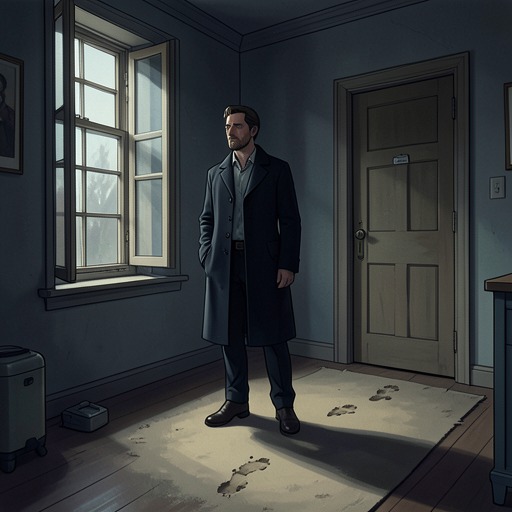
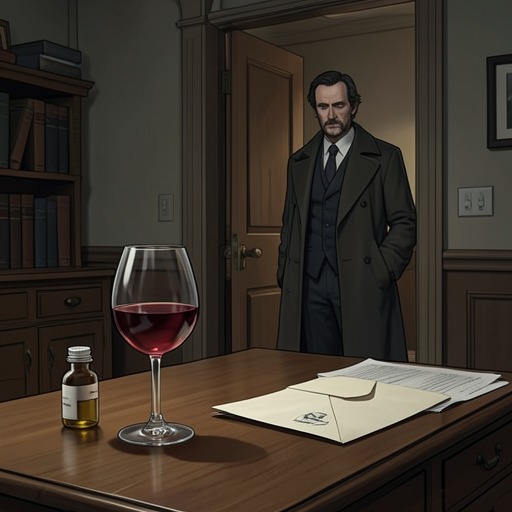
[Mrs. Ferrars](entity:character-recall-character-mrs-ferrars-6e7a6b65b1a6) dies after taking an overdose of veronal. [Dr. James Sheppard](entity:character-recall-character-dr-james-sheppard-f0c3d7f10fdd) is called to [King's Paddock](entity:location-recall-location-king-s-paddock-eaea6f0e5acd) the next morning and finds that nothing can be done; he considers the death potentially more complicated than an accident but has no evidence to establish otherwise.
At breakfast, [Caroline](entity:character-recall-character-caroline-3b2c27d4184e) has already heard the news through the village grapevine. She insists Mrs. Ferrars deliberately killed herself out of remorse for poisoning her husband, [Ashley Ferrars](entity:character-recall-character-ashley-ferrars-87498e28c1f3), while James argues against the theory even as he privately suspects it may be true.
The morning after Mrs. Ferrars’s death
Village Suspicions
James recalls that [Mrs. Ferrars](entity:character-recall-character-mrs-ferrars-6e7a6b65b1a6)’s husband died a little over a year earlier, officially from acute gastritis after years of heavy drinking. [Caroline](entity:character-recall-character-caroline-3b2c27d4184e) has long accused his wife of poisoning him, and now interprets the widow’s sleeplessness and distressed appearance as signs of guilt.
James fears that anything he tells Caroline will spread through [King's Abbot](entity:location-recall-location-king-s-abbot-ec1251d67e80). He says Mrs. Ferrars left no letter, then catches himself revealing that he had checked; Caroline takes the slip as confirmation that her brother shares her suspicions.
The days following Mrs. Ferrars’s death
The King's Abbot Households
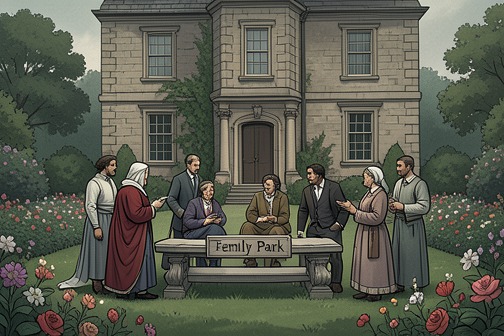
James sketches the village’s social landscape: [Fernly Park](entity:location-recall-location-fernly-park-460e697498cd) belongs to [Roger Ackroyd](entity:character-recall-character-roger-ackroyd-f6134cd3f8ec), a wealthy manufacturer who has become its civic centre. Ackroyd’s stepson, [Ralph Paton](entity:character-recall-character-ralph-paton-0c637749933a), is handsome and charming but extravagant and unreliable; Ackroyd has repeatedly worried about him.
The village has long speculated about Ackroyd’s possible marriage, first to his housekeepers and more recently to [Mrs. Ferrars](entity:character-recall-character-mrs-ferrars-6e7a6b65b1a6). His widowed sister-in-law, [Mrs. Cecil Ackroyd](entity:character-recall-character-mrs-cecil-ackroyd-866f87a95a01), and her daughter Flora live at Fernly, where the forceful [Miss Russell](entity:character-recall-character-miss-russell-9ee44e4ad316) presides over the household. These overlapping dependencies and ambitions make the household a ready-made field for gossip and suspicion.
The day before Mrs. Ferrars’s death
Ralph and Mrs. Ferrars
While considering whether [Mrs. Ferrars](entity:character-recall-character-mrs-ferrars-6e7a6b65b1a6) intended to take her own life, James remembers seeing her walking closely beside [Ralph Paton](entity:character-recall-character-ralph-paton-0c637749933a). She had spoken to him earnestly, and their intimacy troubles James because Ralph has recently returned after an absence of several months.
The memory becomes an early, misleading thread in James’s thinking. He wonders whether Ralph was involved in Mrs. Ferrars’s secret, though the truth of the scene is not what he imagines.
Friday morning after Mrs. Ferrars’s death
Ackroyd’s Invitation
James encounters [Roger Ackroyd](entity:character-recall-character-roger-ackroyd-f6134cd3f8ec), who looks devastated by [Mrs. Ferrars](entity:character-recall-character-mrs-ferrars-6e7a6b65b1a6)’s death and says that he urgently needs to speak with him. They arrange to meet for dinner at [Fernly Park](entity:location-recall-location-fernly-park-460e697498cd) that evening.
When James asks whether the trouble concerns Ralph, Ackroyd appears not to understand the question. James recognizes that something more serious than Ralph’s latest difficulty is troubling his old friend.
Friday morning
Miss Russell’s Questions
[Miss Russell](entity:character-recall-character-miss-russell-9ee44e4ad316) consults James about her knee, then asks whether drug addiction can be cured and whether rare poisons can defeat detection. James explains that the question sounds like something from a detective story, but she presses him about cocaine, curare, and the contents of his poison cupboard.
Her inquiries seem disconnected at the time. In retrospect, they point toward her private worries about a drug-dependent relative and foreshadow the secrets concealed within the household.
Friday, around lunchtime
Ralph at the Inn
[Caroline](entity:character-recall-character-caroline-3b2c27d4184e) tells James that Ralph has arrived in [King's Abbot](entity:location-recall-location-king-s-abbot-ec1251d67e80) and is staying at [The Three Boars](entity:location-recall-location-the-three-boars-c286c1c7eb0f) rather than at [Fernly Park](entity:location-recall-location-fernly-park-460e697498cd). She believes he has been meeting a girl secretly and confidently guesses that the girl is Flora.
James is surprised that Ralph is in the village after being told by Ackroyd that he was in London. Caroline says she has also heard that Ralph went out with a girl the previous night, reinforcing her theory of a secret engagement.
Friday, late morning
The Marrow Across the Wall
James’s new neighbour, Mr. Porrott, accidentally hurls a vegetable marrow over the garden wall and apologizes with theatrical courtesy. He explains that he misses his former work and the old friend who once accompanied him, now living in Argentina.
Their talk turns to James’s failed speculation and Porrott’s interest in human nature. Porrott recognizes James’s investment choices as resembling those of his absent friend, then asks about [Ralph Paton](entity:character-recall-character-ralph-paton-0c637749933a), whose appearance has caught his attention.
Friday, late morning
A Secret Engagement
Porrott tells James that [Roger Ackroyd](entity:character-recall-character-roger-ackroyd-f6134cd3f8ec) confided that [Ralph Paton](entity:character-recall-character-ralph-paton-0c637749933a) and [Flora Ackroyd](entity:character-recall-character-flora-ackroyd-9f33f066c00d) are engaged. Ackroyd has long hoped for the match and is pleased, though James finds it difficult to reconcile such confidence with the reserved, supposedly retired neighbour.
[Caroline](entity:character-recall-character-caroline-3b2c27d4184e) returns from speaking with Ackroyd, who claims to have known nothing of Ralph’s arrival in the village. She also learns that the engagement has been formally announced, while James realizes the announcement may have placed pressure on Ralph.
Friday, early afternoon
Caroline Overhears Ralph
On her walk through the wood adjoining Fernly, [Caroline](entity:character-recall-character-caroline-3b2c27d4184e) overhears Ralph speaking angrily with a young woman. He says Ackroyd may disinherit him, that he expects to inherit a fortune eventually, and that the woman should leave the matter to him.
Caroline cannot identify the girl but suspects Flora. James sees problems in that theory, yet is troubled by Ralph’s apparent financial anxiety and by the possibility that Ackroyd might alter his will.
Friday afternoon
Ralph’s Lone Hand
James visits Ralph at [The Three Boars](entity:location-recall-location-the-three-boars-c286c1c7eb0f). Ralph admits that he is in serious trouble because of his stepfather and says he cannot see a way forward, but refuses to explain further, insisting that he must handle the crisis alone.
James recognizes the unusual gravity in Ralph’s manner. Their meeting leaves him worried, while Ralph’s silence helps create the mystery surrounding his later disappearance.
Friday evening, about 7:30 p.m.
Dinner at Fernly
James arrives at [Fernly Park](entity:location-recall-location-fernly-park-460e697498cd) for dinner, carrying his medical bag in case of an emergency. In the drawing room he hears a small sound and later identifies it as the lid of the [silver display table](entity:object-recall-object-b82d5ea7467a) closing. [Miss Russell](entity:character-recall-character-miss-russell-9ee44e4ad316) is there, breathing hard and eager to explain why she was in the room.
Flora reveals that she and Ralph have been engaged for about a month, though the announcement has only just been made. [Mrs. Ackroyd](entity:character-recall-character-mrs-ackroyd-bf5ce91aada4) tries to enlist James in securing a settlement for Flora, while Major [Hector Blunt](entity:character-recall-character-hector-blunt-2906a9ba0fd8) and secretary [Geoffrey Raymond](entity:character-recall-character-geoffrey-raymond-d60e0edd90c7) join the gathering.
Friday evening, after dinner
Ackroyd’s Confession of a Confession
Ackroyd takes James to his study and pretends to discuss medicine until the servants are gone. He then reveals that [Mrs. Ferrars](entity:character-recall-character-mrs-ferrars-6e7a6b65b1a6) confessed the previous day that she poisoned [Ashley Ferrars](entity:character-recall-character-ashley-ferrars-87498e28c1f3) and had been blackmailed for a year by someone whose identity she refused to disclose.
Ackroyd is torn between protecting the dead woman and pursuing the blackmailer. He says he suspects the person may be within his household, but cannot bring himself to name the suspicion. He has promised Mrs. Ferrars twenty-four hours before acting.
Friday evening, shortly before 9 p.m.
The Blue Letter
The evening post brings a long blue envelope in [Mrs. Ferrars](entity:character-recall-character-mrs-ferrars-6e7a6b65b1a6)’s handwriting. Ackroyd reads the opening lines aloud: she says that a life calls for a life and that she is taking the only road open to her, while leaving him to punish the person who made her life unbearable.
James presses Ackroyd to read the rest and reveal the blackmailer’s name, but Ackroyd refuses to read a letter meant for him alone. He lays the envelope aside, unread, as James leaves the study at about ten minutes to nine.
Friday, about 9 p.m.
The Stranger at the Gate
As James leaves [Fernly Park](entity:location-recall-location-fernly-park-460e697498cd), a young man in a turned-up collar asks for directions to the house. The stranger’s rough voice seems familiar, but James cannot place it and watches him enter through the lodge gates.
James reaches home shortly afterward and tells [Caroline](entity:character-recall-character-caroline-3b2c27d4184e) a misleadingly incomplete account of his dinner. He later winds the clocks with her, maintaining the appearance of an ordinary evening while the stranger heads toward Fernly.
Friday, about 10:15 p.m.
The Locked Study
A telephone caller claiming to be [Parker](entity:character-recall-character-parker-e302c8f4e3c8) says [Roger Ackroyd](entity:character-recall-character-roger-ackroyd-f6134cd3f8ec) has been murdered and summons James to Fernly. When James arrives, the real Parker denies making the call. The study is locked from inside, and James and Parker break the door open.
Ackroyd sits dead in his chair, stabbed from behind with [the murder dagger](entity:object-recall-object-the-murder-dagger-9d72f4a6c111). James carefully avoids disturbing the body, while the arrival of Raymond and Blunt confirms that the household has been thrown into crisis.
Friday night, after 10:15 p.m.
An Apparent Burglary
[Inspector Davis](entity:character-recall-character-inspector-davis-7764177bc8ba) finds the study window open, with rubber-studded footprints on the sill. James says he himself shut and bolted it earlier. The apparent route of entry and escape, combined with the locked door, suggests an intruder entered and stabbed Ackroyd before fleeing.
Raymond reports hearing Ackroyd’s voice at about half-past nine refusing someone’s request for money. The blue envelope containing [Mrs. Ferrars’s letter](entity:object-recall-object-mrs-ferrars-s-letter-4bd397782ab2) has vanished, and [Parker](entity:character-recall-character-parker-e302c8f4e3c8) becomes visibly shaken when questioned about the evening.
Friday night, around 9:45 p.m.
Flora’s Last Visit
[Parker](entity:character-recall-character-parker-e302c8f4e3c8) says Flora came out of the study and told him that Ackroyd did not wish to be disturbed. Flora confirms that she said goodnight to her uncle, who appeared normal and sent her away; she cannot remember whether the study window was open because the curtains were drawn.
When she learns that Ackroyd is dead, Flora faints. Her account gives the police an apparent last sighting of the victim alive, shaping the initial belief that the murder occurred after a quarter to ten.
Friday night, later
The Tunisian Dagger
The dagger is identified as a Tunisian curio that had been kept in the [silver display table](entity:object-recall-object-b82d5ea7467a). James recalls hearing its lid close when he arrived for dinner; [Miss Russell](entity:character-recall-character-miss-russell-9ee44e4ad316) says she found the table open and shut it, but cannot say whether the weapon was still inside.
[Inspector Davis](entity:character-recall-character-inspector-davis-7764177bc8ba) suspects [Parker](entity:character-recall-character-parker-e302c8f4e3c8), who seems to have been listening at the study door and may have had access to the room. Raymond and Blunt provide their fingerprints for comparison, but the weapon’s history remains unclear.
Saturday morning
Poirot Revealed
Flora visits James and asks him to accompany her to the neighbour’s house. She reveals that Mr. Porrott is actually [Hercule Poirot](entity:character-recall-character-hercule-poirot-16ed38cee024), the celebrated Belgian detective who retired to [King's Abbot](entity:location-recall-location-king-s-abbot-ec1251d67e80) and asked [Roger Ackroyd](entity:character-recall-character-roger-ackroyd-f6134cd3f8ec) to keep his identity quiet.
Flora wants Poirot to investigate because she fears the police will wrongly accuse Ralph. James advises against involving him, but Flora insists that she wants the truth and persuades Poirot to accept the case.
Saturday morning
Poirot Joins the Police Inquiry
James recounts the murder to Poirot, including the missing letter, the locked study, the stranger, and the suspected blackmail. Poirot questions why James visited Ralph at the inn after the murder and senses that the doctor has not told him everything.
At the police station, Poirot introduces himself to [Colonel Melrose](entity:character-recall-character-colonel-melrose-47bcf2d14f89) and [Inspector Raglan](entity:character-recall-character-inspector-raglan-c8f20924b502). Raglan dismisses the earlier suspicion of [Parker](entity:character-recall-character-parker-e302c8f4e3c8) but focuses on Ralph, whose disappearance, money troubles, and similar rubber-studded shoes appear to incriminate him.
Saturday morning
The Study’s Unquiet Objects
Poirot examines the study and asks James to reconstruct the body’s position. The doctor cannot remember the state of the fire, but [Parker](entity:character-recall-character-parker-e302c8f4e3c8) recalls that it had nearly gone out and that a large chair had been pulled away from the wall when the body was found.
Poirot treats apparently insignificant details as clues. He reasons that Ackroyd must have opened the window himself to admit someone he knew, and wonders why the chair was later pushed back into place.
Saturday morning
The Telephone Call Traced
The police establish that the call summoning James came from a public telephone at [King's Abbot](entity:location-recall-location-king-s-abbot-ec1251d67e80) station at 10:15 p.m. The northbound mail train left minutes later, encouraging the theory that the caller intended to escape by rail.
Poirot rejects the idea that the call was pointless. He believes its purpose must be connected to the murder and says that its explanation may unlock the whole case.
Saturday, late morning
Raglan’s Case Against Ralph
[Inspector Raglan](entity:character-recall-character-inspector-raglan-c8f20924b502) constructs a timeline that places the murder between 9:45 and 10 p.m. He argues that Ralph came to Fernly, argued with Ackroyd over money, stole the dagger, returned through the window, and killed his stepfather before fleeing.
The lodgekeeper reports seeing Ralph enter the grounds at 9:25, and the footprints match the pattern of one pair of Ralph’s shoes. Poirot points out that the tracks could be misleading, but Raglan considers the accumulating evidence compelling.
Saturday, late morning
The Summerhouse Clues
Following the path from the study, Poirot searches [the summerhouse](entity:object-recall-object-the-summerhouse-c21b63bc0567). He finds a fragment of stiff, starched cambric and a small goose quill, then notes that the secluded spot could have served as a meeting place rather than merely a shortcut.
The quill suggests drug use, while the fabric may have come from a servant’s apron. Poirot keeps both objects, sensing that the summerhouse connects an outside visitor with someone inside Fernly.
Saturday, before lunch
The Goldfish Pond Ring
Poirot walks with James through Fernly’s gardens and asks who will inherit the estate. James admits he has not considered the question, while Poirot observes that the doctor still has something to hide.
At the goldfish pond, James and Poirot see Flora meet Blunt. After Blunt stirs the water while looking for something bright, Poirot discreetly retrieves a gold wedding ring engraved “From R., [March 13](entity:time-recall-time-march-13-fa78d6d65fd6).” The discovery hints at a concealed marriage.
Saturday, around lunchtime
Flora’s Inheritance
The family solicitor, [Mr. Hammond](entity:character-recall-character-mr-hammond-88e8d065f891), explains Ackroyd’s will. Flora receives twenty thousand pounds, [Mrs. Cecil Ackroyd](entity:character-recall-character-mrs-cecil-ackroyd-866f87a95a01) receives income from a trust, and Ralph inherits the estate and the business residue; [Miss Russell](entity:character-recall-character-miss-russell-9ee44e4ad316) and several others receive smaller legacies.
Flora tells Blunt that her inheritance means freedom from dependence and humiliating economies. Her relief is mixed with unease about the life she has been forced to lead, and her careless reference to lying catches Blunt’s attention.
Saturday afternoon
The Parlour Maid’s Dismissal
[Inspector Raglan](entity:character-recall-character-inspector-raglan-c8f20924b502) discovers that forty pounds are missing from the hundred Ackroyd put in his bedroom collar box. Raymond says the money was intact when Ackroyd deposited it the previous evening, leaving open the possibility of theft or a payment made later.
The inspector questions [Ursula Bourne](entity:character-recall-character-ursula-bourne-3d05e405173a), who says Ackroyd dismissed her after she disturbed papers on his desk. Poirot asks how long the interview lasted and notices that no one can confirm Ursula’s claimed alibi in her room.
Sunday afternoon
The Folliott Visit
At Poirot’s request, James visits Mrs. Folliott, Ursula’s former employer, to learn about the parlour maid’s background. Mrs. Folliott becomes visibly uncomfortable and refuses to provide useful details, suggesting that Ursula’s past is being concealed.
James returns without answers. Meanwhile, Poirot has visited [Caroline](entity:character-recall-character-caroline-3b2c27d4184e) and won her confidence by discussing his celebrated cases, then asks her to recall the patients James saw on Friday morning.
Sunday evening
Caroline Shares the Wood Conversation
[Caroline](entity:character-recall-character-caroline-3b2c27d4184e) admits that she told Poirot what she overheard in the wood: Ralph feared Ackroyd might disinherit him and did not want him to alter his will. James is angry because he worries that the information will strengthen the case against Ralph.
Caroline believes the unknown girl may provide Ralph with an alibi. She also tells Poirot that [Miss Russell](entity:character-recall-character-miss-russell-9ee44e4ad316) visited James on Friday, a detail that brings the housekeeper’s questions about drugs and poisons back into focus.
Monday
The Inquest
Monday, an investigation into the cause of death of Mrs. Ferrals and Roger Eckerhold was held. Doctor James Shepard testified about the cause of death and possible time of death of Eckerhold. The absence of Ralph Peyton was mentioned, but not emphasized much. Afterward, Detective Lagren
Monday, after the inquest
The Fingerprints on the Dagger
Inspector Lagrange said that the fingerprint on the knife did not belong to anyone in the mansion, and he expected these fingerprints would point to Ralph or the mysterious stranger. Poirot reminded everyone that fingerprints might be of no use, and proposed checking the fingerprints of the deceased
Monday evening
The Family Confrontation
Poi, Florabella publicly reaffirmed her loyalty to Ralph and asked Raymond to announce their engagement. Poirot persuaded her to delay the announcement for two days, then asserted that everyone present was hiding the truth and vowed to uncover it despite any opposition from the crowd
Monday night
The Goose Quill Explained
Pollo told Dr. James Shepard that the hollow goose feather tube used for drug use was a tool for carrying heroin, which is commonly known as "snow." This usage points to someone with connections in North America. He inferred that the Summer House was a convenient place for outsiders to meet people from Fen
Tuesday morning
The Missing Forty Pounds
Mrs. Eckley called in Dr. James Shepard. She finally admitted that on Friday she went into Mr. Eckley's study to look for his will. She said that Ursula saw her by the desk, and then Mr. Eckley also entered the room; she then took a magazine and
Tuesday morning
Ursula’s Concern for Ralph
When Doctor James Shepard left Fenly Manor, Ursula asked Ralph whether he was safe, and whether the police thought that Eclair was killed before 9:45. She kept asking about the time, as if she knew something important that happened that night, but was worried that speaking up would
Tuesday afternoon
Raymond’s Debt
Doctor James Shepard told Poirot about Mrs. Eclair's visit and the fact that [Caroline](entity:character-recall-character-caroline-3b2c27d4184e) found Ralph's boots to be black. Poirot was disappointed by the clue about the boots and then asked [Miss Russell](entity:character-recall-character-miss-russell-9ee44e4ad316) what she had talked about with James on Friday, especially whether she mentioned cocaine. After
Tuesday afternoon
Parker’s Blackmail Past
Polish recreated the account of [Parker](entity:character-recall-character-parker-e302c8f4e3c8)'s actions, pretending to test whether the sounds in the hall could be heard outside. He asked Parker why there were two cups on the tray, and then concluded that Parker's statement that he was merely curious was true, and he had not killed anyone
Tuesday afternoon
Hammond’s Financial Evidence
[Mr. Hammond](entity:character-recall-character-mr-hammond-88e8d065f891) confirmed that Mrs. Ferrals sold securities within the year, paying at least £20,000. He had suspected she was supporting someone, but did not know that the payments were related to blackmail
Tuesday evening
Charles Kent Arrested
a telephone call reported that a man named charles kent had been detained in liverpool, and the police believed he was the stranger at fenly manor. doctor james shepard, polio, and detective lagren went to identify him
Tuesday night
Kent’s Alibi
Kent said he left the Fenly manor before the murder and was drinking at the [Dog and Whistle](entity:location-recall-location-dog-and-whistle-f1b8f17a80c6) tavern before 9:45. The waitress confirmed he was there at that time and was carrying a large sum of money, which provided the police with an alibi for the time of Edward
Wednesday morning
Flora’s False Goodnight
Bolton thought that on the night of the murder, Flora may not have entered the study at all. [Parker](entity:character-recall-character-parker-e302c8f4e3c8) saw her standing outside the door, hand on the doorknob, not coming out from inside; she may have come down from the private staircase in Acleridge's bedroom
Wednesday morning
Blunt’s Love for Flora
Pollo told Brant that he had been hiding his love for Flora, while Flora did not love Ralph as Brant imagined. Flora remained loyal to Ralph out of sense of honor and sympathy; her engagement was also influenced by economic dependence, and was a desire to escape a restricted life
Wednesday afternoon
The False Arrest Report
Polish persuaded Detective Raglan to publish a newspaper notice claiming that Ralph had been found in [Liverpool](entity:location-recall-location-liverpool-7a375e857bb9) and was about to leave for America. This notice was deliberately fabricated to provoke those who knew Ralph's whereabouts or were concerned about him to react
Wednesday evening
Ursula Seeks Poirot
Ewa saw the false news about Ralph's arrest in the newspaper and anxiously went to the house of Dr. James Shepard. She admitted that she had been pretending all along and asked Poirot for help, because she believed Ralph was innocent and also believed that Poirot was both clever and
March 13, six months before the murder
Ralph and Ursula’s Marriage
Ewa explained that she was born into a poor Irish family. Rather than accept the limited prospects available to an untrained young woman, she chose to become a servant. At Fenley Manor, she fell in love with Ralph, and they secretly married on March 13th. Ralph promised to
Friday afternoon before the murder
Ursula Tells Ackroyd
Upon learning that Eclairde intended to announce that Ralph and Flora were engaged, Ursula called Ralph to her, and confronted him in the woods. She refused to continue hiding their marriage, and their argument was overheard by Carolin. Subsequently, Ursula told Eclairde the truth
Friday evening, between about 9:10 and 9:45 p.m.
Two Meetings in the Summerhouse
Eula said she first met [Charles Kent](entity:character-recall-character-charles-kent-a8429cd102e2) at the Summer House for two secret meetings. Kent is her son whom she has kept secret from everyone. He came back from abroad and became addicted to drugs, and asked her for money; she gave him all the money she had, and sent him away before
Wednesday evening
Ralph’s Concealment Revealed
Poirot asked Ursula when she separated from Ralph, pointing out that her statement implied that Ralph was outside the house until nearly the time of the murder. Her account still made her suspectable, because after she returned to the house, no witness could prove her whereabouts. James admitted he completely did
Wednesday, about 9 p.m.
Poirot’s Final Gathering
At the Pollos, the suspects from Fenly Manor gathered, including Ursula, [Parker](entity:character-recall-character-parker-e302c8f4e3c8), and Russell. Pollos pointed out that Ursula was Ralph's wife, then announced that everyone present was a suspect and promised to reveal the truth. He re-examined the clues: the meeting in
Wednesday night, during Poirot’s gathering
The Dictaphone Explanation
Polo revealed that Ecloird had secretly bought a recorder from Diktaphone company. The sounds Raymond and Brant heard at nine thirty may have been the recorder playing content Ecloird had previously dictated; this means Ecloird may have already been dead at that time. This discovery shook
Wednesday night
Ralph Returns
Ralph appeared at the gathering, reuniting with Ursula. Poirot explained that James had helped him hide to protect his wife from suspicion and had hidden him in a sanatorium near [Cranchester](entity:location-recall-location-cranchester-6d6d46776d02) under a different name. Ralph said he left Summer House about 9:45, then
Wednesday night, after Ralph’s return
A Warning to the Murderer
Pollo told the gathered people that the murderer was among them. The next morning he would report to Detective Lagrange. He did not reveal the identity of the murderer, leaving the criminal one last opportunity to confess, also indicating that the clues had narrowed the suspects. A telegram arrived from a ship heading
Wednesday night, after the gathering
The Missing Dictaphone
Pollo explained to James that the fake phone call ensured the murder would be discovered that night, rather than waiting until the next morning. The person who called wanted the murderer to return to the study when the body was found, giving the criminal the opportunity to take something hidden out of sight. The arm
Wednesday night, during Poirot’s explanation
The Footprints Reconsidered
Pollo re-examined the rubber sole shoe prints on the windowsill of the study, concluding they were forged to frame Ralph. The killer could take Ralph's shoes from the inn, put them on to make the footprints, and then swap them back for his own. [Caroline](entity:character-recall-character-caroline-3b2c27d4184e) found that Ralph
Wednesday night
Poirot Accuses the Doctor
Polish put the clues together, sketching the characteristics of the killer: the killer had been to San'yuzhou Inn, knew that Ecloird had a tape recorder, understood how to operate it, could get a knife, and was carrying a bag big enough to hold and take the tape
Wednesday night
The Blackmail Motive
Pollock explained that James used his medical knowledge about [Ashley Ferrars](entity:character-recall-character-ashley-ferrars-87498e28c1f3)' poisoning to blackmail [Mrs. Ferrars](entity:character-recall-character-mrs-ferrars-6e7a6b65b1a6). Within a year, he extorted at least two thousand pounds, then lost a large sum of money through speculation, and pushed her too far, forcing her to confess to Ector. James
Wednesday night
The Genuine Telephone Call
Pollo explained that the phone call was indeed made, but James lied and altered the content of the call. On Friday morning, James asked a waiter on an American cruise ship to leave a message at a sick person's home and arranged to call from the station; the waiter later reported that the recipient
Early Thursday morning
The Full Confession
After leaving Pollo, James wrote the last part of his manuscript, no longer hiding his crime as he had before. He admitted he had taken his weapon with him, but after seeing the dagger on the silver tray, he switched to that dagger to commit the murder
Early Thursday morning, at the novel’s end
The Planned Suicide
James concluded that Poirot and Detective Lagrange would arrange everything so that the truth would reach the police, while avoiding exposing him in a way that would shame [Caroline](entity:character-recall-character-caroline-3b2c27d4184e). He intended to take Veronal and commit suicide, disguising it as an overdose, and make his death similar to that of Mrs