
The Theme of Social Labels
The OutsidersThe novel critiques the labels 'greaser' and 'Soc,' showing that they are shallow and fail to capture the humanity of individuals.
increasing Bearing strength in each event
 decreasing
Bearing strength in each eventdecreasingThe Meaning of a Label
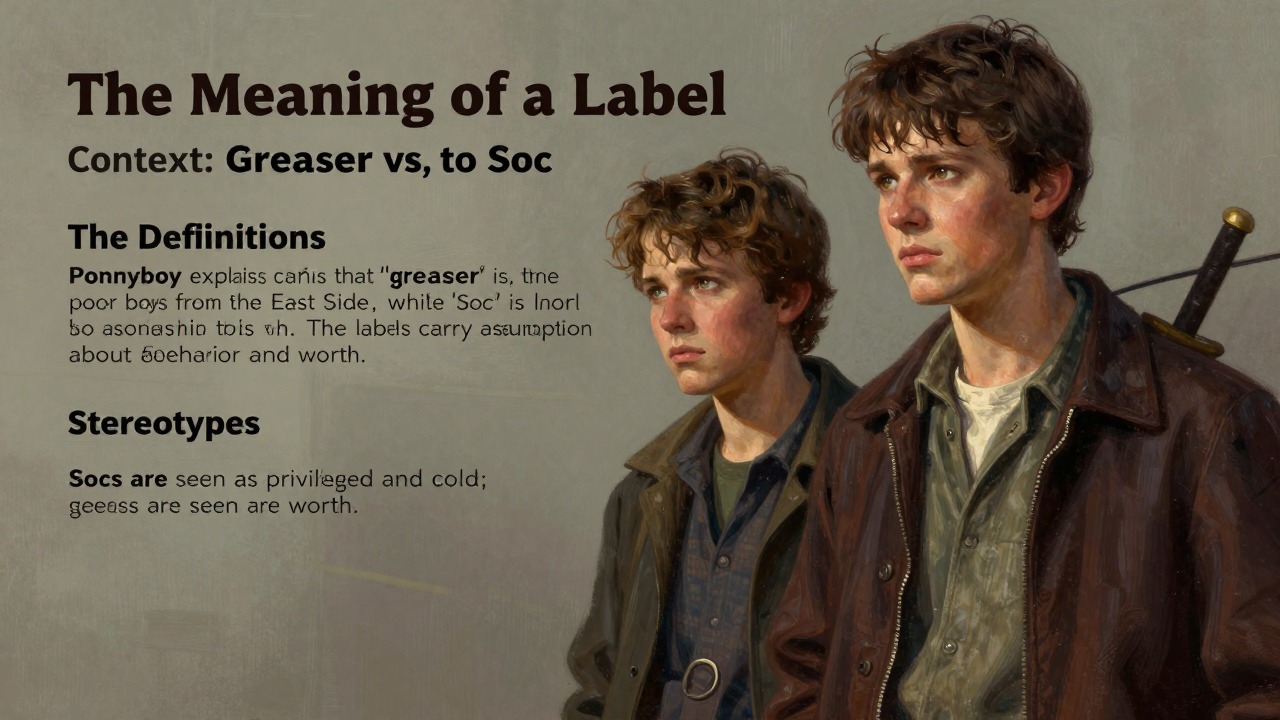
Greaser vs. Soc
The Definitions
Ponyboy explains that 'greaser' is a term for the poor boys from the East Side, while 'Soc' is short for Socials, the rich kids. The labels carry assumptions about behavior and worth.
The Stereotypes
Socs are seen as privileged and cold; Greasers are seen as hoods and troublemakers. Ponyboy knows that neither label captures the truth. He is a greaser, but he is also a good student and a dreamer.
The Unfairness
Ponyboy feels the injustice of being judged by his label. He is automatically seen as a hood, even though he tries to stay out of trouble. The label precedes him.
Breaking the Stereotypes
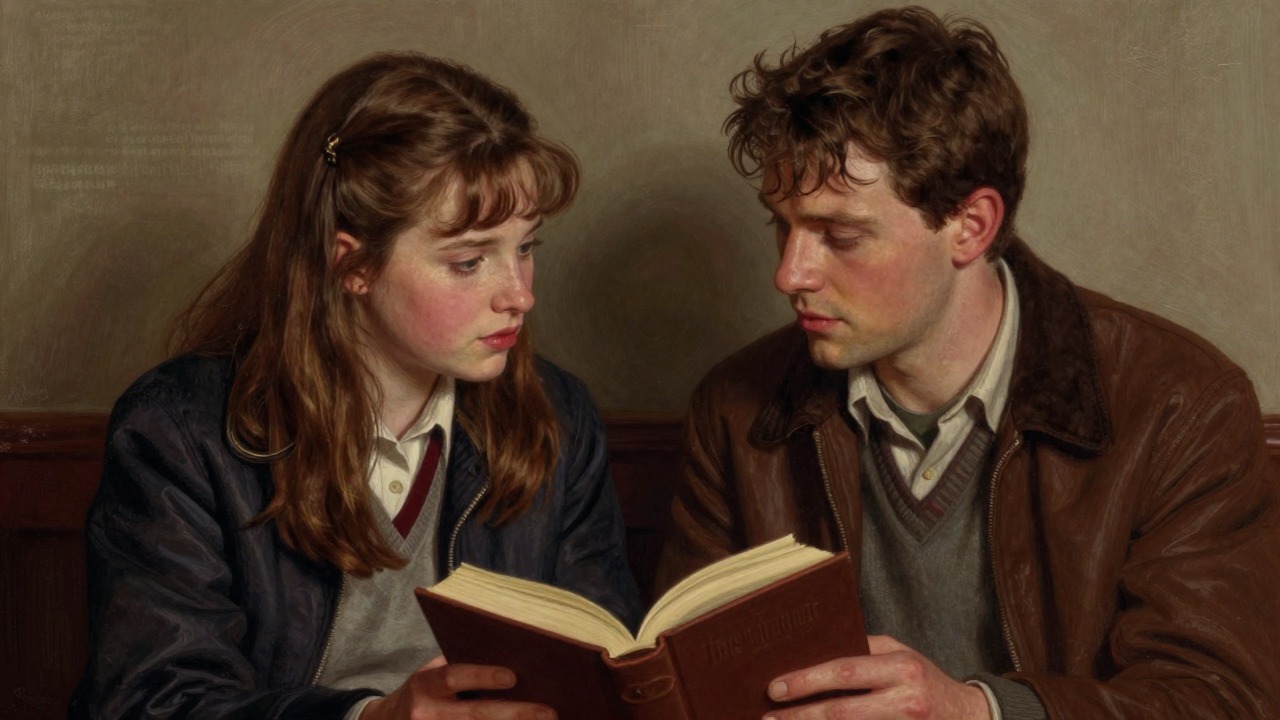
Individuals, Not Labels
Cherry and Randy
Cherry Valance is a Soc, but she is kind and understanding. Randy Adderson is a Soc, but he is sick of the fighting. They are not the cold, heartless caricatures.
Johnny and Dally
Johnny is a greaser, but he is gentle and sensitive. Dally is a greaser, but he is capable of great love and sacrifice. The labels do not define them.
Ponyboy's Realization
Ponyboy learns that people are individuals. He tells Randy, "Greaser didn't have anything to do with it. It's the individual." The novel argues for looking beyond labels.
Writing Against Labels
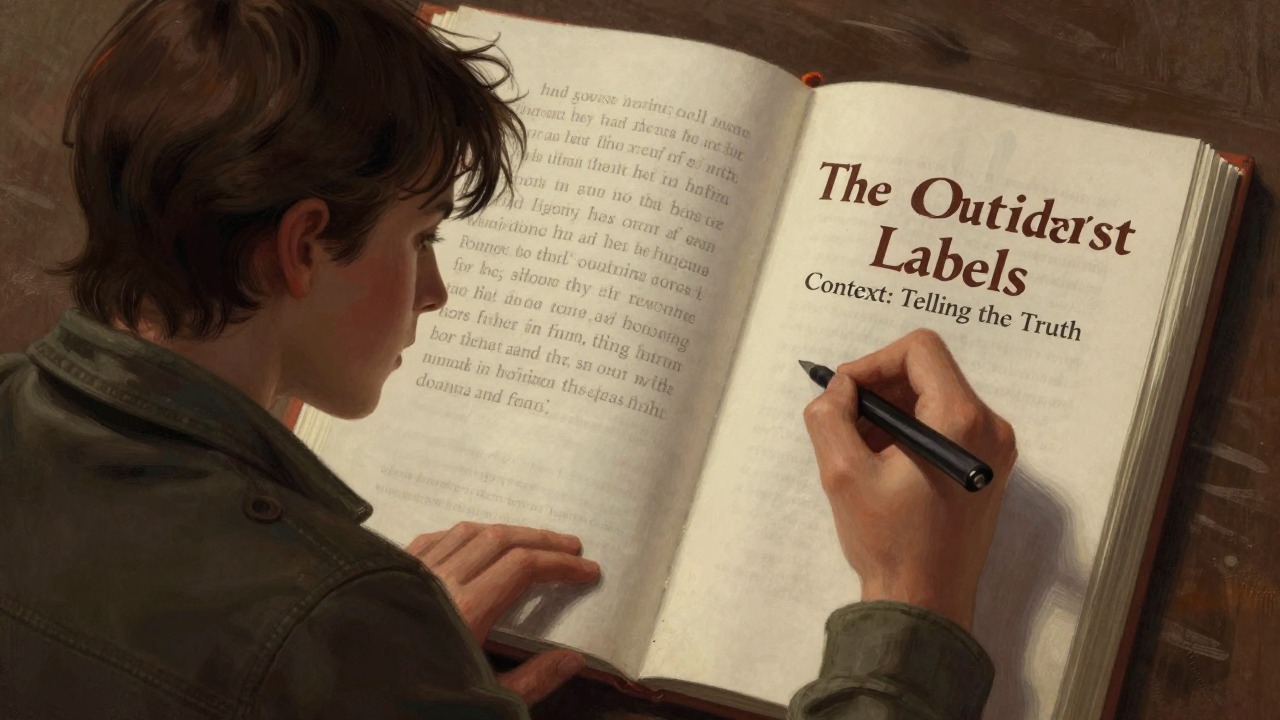
Telling the Truth
The Theme
Ponyboy writes his story to show the truth about greasers. He wants people to understand that they are not just hoods. They are human beings with hopes and fears.
The Power of Narrative
By telling his story, Ponyboy challenges the labels. He hopes that his words can change perceptions. The novel itself is a testament to the power of individual stories.
A Call for Empathy
Ponyboy's final message is that everyone has a story. The labels are masks. The reader is invited to see the world through his eyes and to recognize the shared humanity.
early in the story, Chapter 1
throughout the story, especially Chapter 7
the end of the novel, Chapter 12
