
The Theme of Social Injustice
The OutsidersThe novel highlights the systemic inequalities that trap the Greasers in poverty and violence, and the lack of opportunities for a better life.
increasing Bearing strength in each event
 decreasing
Bearing strength in each eventdecreasingThe Economic Trap
No Way Out
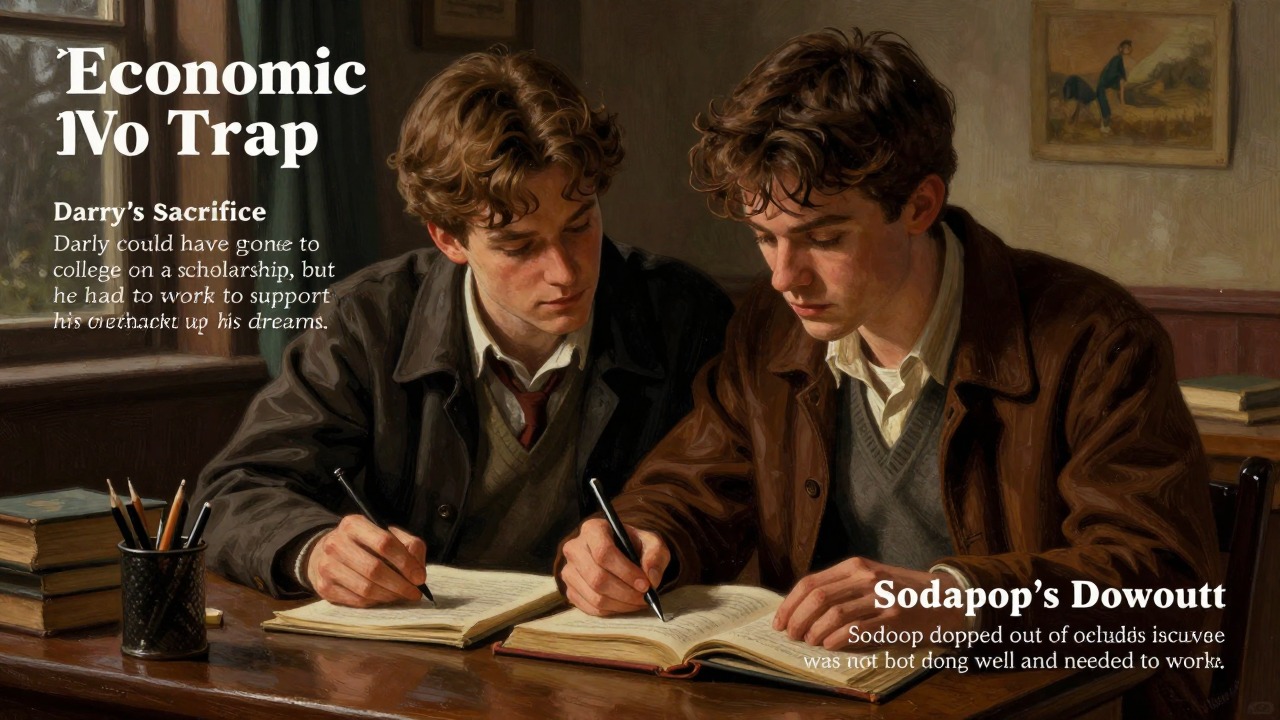
Darry's Sacrifice
Darry could have gone to college on a scholarship, but he had to work to support his brothers. The lack of money forces him to give up his dreams.
Sodapop's Dropout
Sodapop dropped out of school because he was not doing well and needed to work. He is stuck in a dead-end job. The system does not give him a chance.
The Cycle of Poverty
The Greasers are poor because they have no resources. They cannot escape the neighborhood. The system is rigged against them.
The Legal System
Unequal Justice
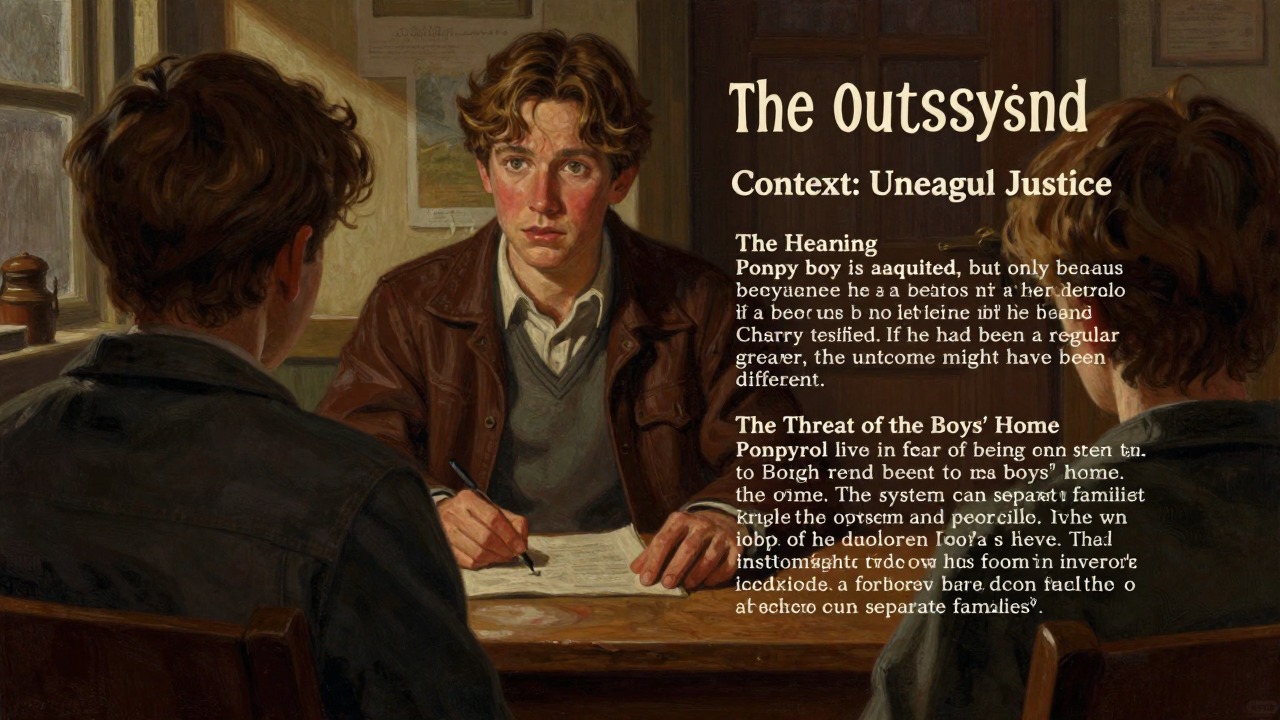
The Hearing
Ponyboy is acquitted, but only because he is a hero and because Cherry testified. If he had been a regular greaser, the outcome might have been different.
The Threat of the Boys' Home
Ponyboy lives in fear of being sent to a boys' home. The system can separate families. The threat hangs over them.
Dally's Record
Dally is a product of the system. He was arrested at ten, and he never had a chance. The police and the courts are part of the problem.
The Lack of Opportunity
No Future
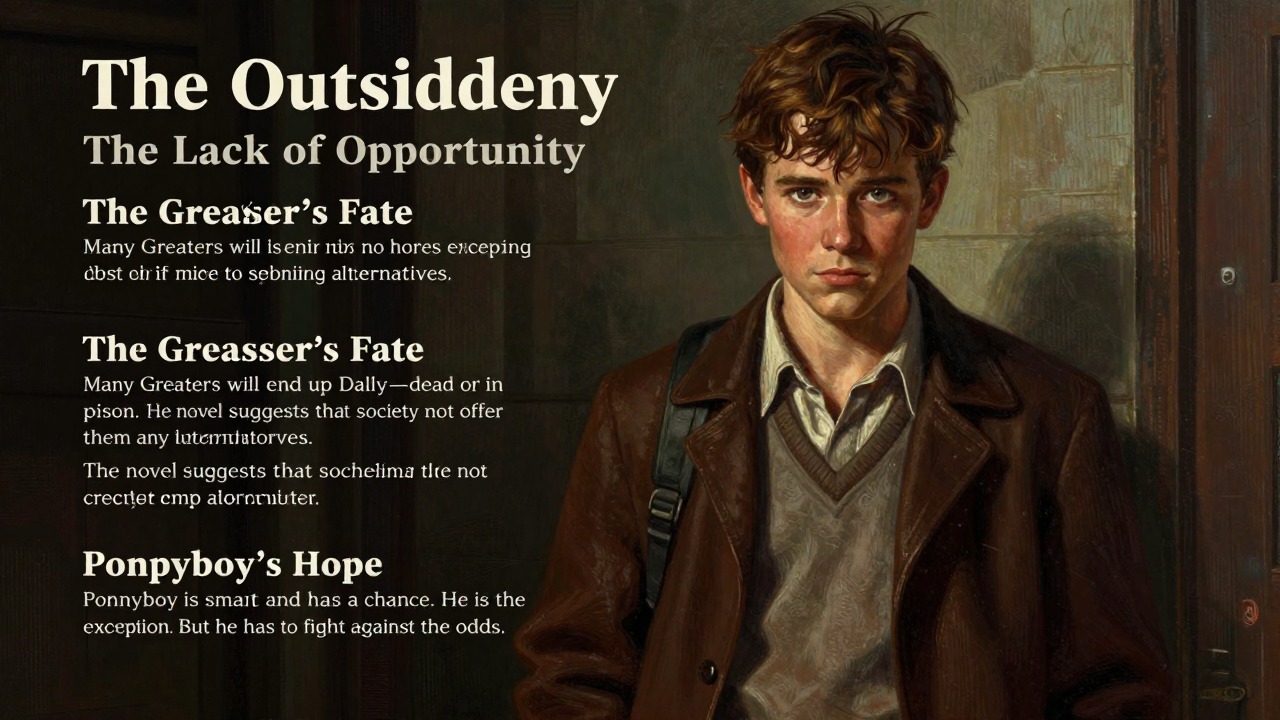
The Greaser's Fate
Many Greasers will end up like Dally—dead or in prison. The novel suggests that society does not offer them any alternatives.
Ponyboy's Hope
Ponyboy is smart and has a chance. He is the exception. But he has to fight against the odds. The novel is a plea for more opportunities for kids like him.
The Broader Message
The Outsiders is a social critique. It calls for empathy and understanding. It argues that the system must change to give everyone a fair chance.
early in the story, Chapter 1
the hearing, Chapter 12
throughout the story
