Dally's death
Dallas Winston dies in the vacant lot moments after robbing a grocery store, shot down by police in a deliberate act of suicide-by-cop. The event is the immediate, devastating consequence of Johnny Cade's death and the final collapse of the novel's most hardened character. Dally's death completes a double tragedy that leaves Ponyboy Curtis, the narrator, reeling and forces the surviving greasers to confront the cost of their world.
Background and Character
Dallas Winston, known as Dally, is the toughest and most dangerous member of the greaser gang. He has spent three years on the wild side of New York, been arrested at the age of ten, and has a police record a mile long. Ponyboy describes him as having eyes that are "blue, blazing ice, cold with a hatred of the whole world." Dally is "tougher, colder, meaner" than the rest of the greasers, and the shade of difference that separates a greaser from a hood is not present in him. He has been hardened by a life of violence and neglect; his father does not care whether he is in jail or dead in a car wreck. Dally himself tells Johnny, "You get hardened in jail. I don't want that to happen to you. Like it happened to me." Despite this exterior, Dally has a deep, protective attachment to Johnny Cade, the gang's pet. Johnny is the only person Dally loves, and Johnny's hero-worship of Dally is reciprocated by Dally's fierce, if unspoken, devotion.
The Immediate Aftermath of Johnny's Death
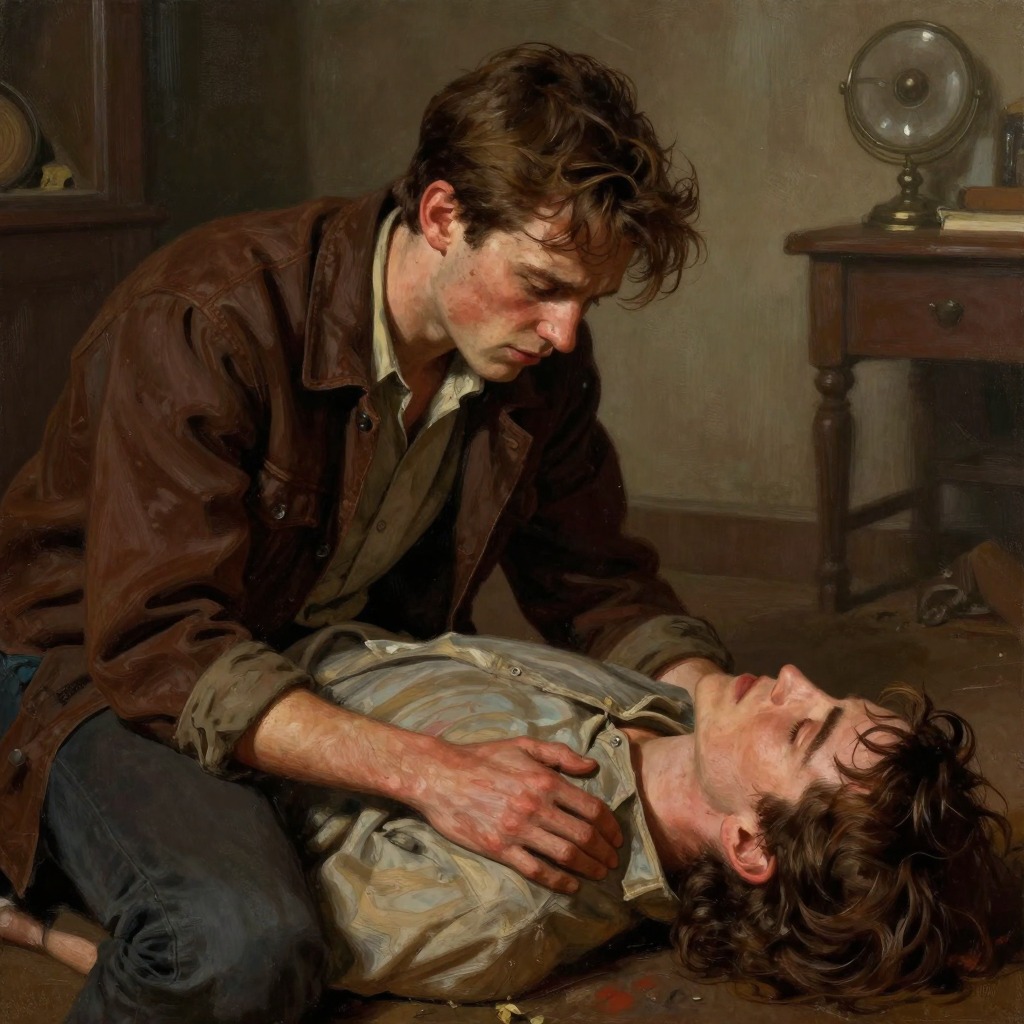
After the rumble, Dally and Ponyboy rush to the hospital to see Johnny, who is dying. Dally tells Johnny they have beaten the Socs, but Johnny's only response is that fighting is useless. When Johnny dies, Dally's reaction is immediate and devastating. He slams back against the wall, his face contracted in agony, and begs, "Oh, damnit, Johnny, don't die, please don't die..." He then bolts through the door and down the hall. Ponyboy later realizes that "Johnny was the only thing Dally loved. And now Johnny was gone." Two-Bit speaks for everyone when he says, "So he finally broke. So even Dally has a breaking point." Dally's breakdown is the first sign that his legendary toughness has a limit.
The Robbery and the Phone Call
Dally leaves the hospital and, in a state of complete emotional collapse, robs a grocery store. He phones the Curtis house from a booth, and Darrel Curtis answers. Dally tells Darry he has just robbed a store and the cops are after him, asking for a place to hide. Darry hangs up and announces, "We gotta hide him. He'll be at the lot in a minute." The entire gang, including Steve Randle who has three broken ribs, leaves the house at a dead run to meet Dally.
The Shooting in the Vacant Lot
The gang reaches the vacant lot just as Dally comes running from the opposite direction. A police car pulls up across the street, and doors slam as the policemen leap out. Dally reaches the circle of light under the street lamp and skids to a halt. He turns and jerks a black object from his waistband. Ponyboy remembers Dally's earlier words: "I been carryin' a heater. It ain't loaded, but it sure does help a bluff." But Ponyboy realizes that was only yesterday, and yesterday was a lifetime ago. Dally raises the gun, and Ponyboy thinks, "You blasted fool. They don't know you're only bluffing." The policemen's guns spit fire into the night. Dally is jerked half around by the impact of the bullets, then slowly crumples with a look of grim triumph on his face. He is dead before he hits the ground. Ponyboy understands in that instant that this was what Dally wanted: "Dally Winston wanted to be dead and he always got what he wanted."
Consequences and Thematic Significance
Dally's death is the second loss of the night, and it shatters the remaining greasers. Steve Randle stumbles forward with a sob, but Sodapop Curtis catches him by the shoulders and says, "Easy, buddy, easy, there's nothing we can do now." Ponyboy, already in shock, sees the world spinning and feels himself swaying before the ground rushes up to meet him. He collapses from exhaustion, shock, and a minor concussion. The novel draws a stark contrast between the two deaths: "Two friends of mine had died that night: one a hero, the other a hoodlum." Johnny dies gallant, saving children from a burning church; Dally dies violent and desperate, a juvenile delinquent. Ponyboy remembers Dally pulling Johnny through the window of the burning church, giving them his gun, and risking his life for them, but he knows there will be no editorials praising Dally. Dally's death is the logical endpoint of a life lived without hope or love, and it forces Ponyboy to confront the question of what it means to be a greaser and whether there is any way out of the cycle of violence and despair.