Event 1
西班牙内战
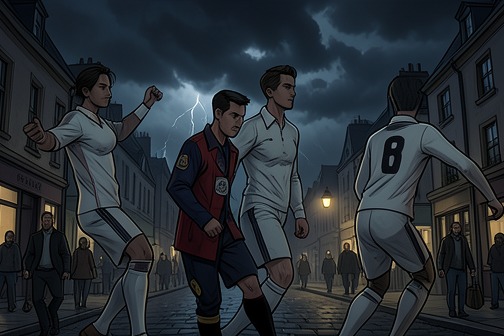
The [Spanish Civil War](entity:event-recall-event-49f09e853580) is the historical rupture that unsettles [Barcelona](entity:location-recall-location-barcelona-c4abb0c424bd) and shapes the novel’s intimate histories of disappearance, bereavement, and concealment. Its violence reaches the next generation through family stories and deliberate silences: [Daniel](entity:character-recall-character-daniel-ff434f340c88) first encounters its human cost in [Clara](entity:character-recall-character-clara-dd20800f9dca)’s account of her father, then learns that his own mother had asked his father not to speak to him about the war. Later testimony links the conflict to [Julian Carax](entity:character-recall-character-julian-carax-be183933964c)’s return and reported death, while the aftermath shows how the end of fighting can leave violence and fear in place.
## Background and Personal Loss
Clara’s account gives the war a particular family history. Her father, a lawyer connected to the Catalan president’s cabinet, sent his wife and daughter across the border at the beginning of the conflict. He remained in Barcelona, believing that the danger could be read in the streets, factories, and barracks more clearly than in the morning press. At first he wrote weekly from his office on Calle Diputacion; later his letters came without a return address, and eventually he wrote from a cell in [Montjuic](entity:location-recall-location-7a322a000210) Castle. He never came out. His letters became the family’s fragile channel to him: Clara’s mother read them aloud, sometimes skipping passages, while Clara later persuaded her cousin Claudette to read them through from beginning to end. When the letters stopped, Clara feared the worst, but the family had no clear account of what had happened.
The answer came much later, and only in fragments. After returning to Barcelona, Clara’s mother hired a detective to investigate. Months of work produced a broken wristwatch and the name of the man said to have killed her father in the moat of Montjuic Castle: [Javier Fumero](entity:character-recall-character-javier-fumero-52229d3d5640). Clara says he had shifted among political factions before joining the police after Barcelona fell. The account makes her father’s death both personal and political: his loyalty to people he trusted left him exposed, while the later prominence of the man named as his killer contrasts with the disappearance of the victim from public memory. Clara’s mother died within months of returning, and Clara went to live with her uncle Gustavo, who became her only family in Barcelona.
## Daniel’s Inherited Silence
The war reaches Daniel not first as a history lesson but as a boundary in family life. His father is private and rarely speaks about the past; Daniel has grown up amid postwar poverty and resentment, taking the city’s sadness as if it were simply part of the natural order. Clara’s story unsettles that assumption. It makes him consider that disappearance could be carried out by a living person in uniform, rather than arriving as the impersonal, incomprehensible death he associated with losses in childhood.
When Daniel asks his father about the war, his father explains that Daniel’s mother had made him promise never to talk about it or let Daniel remember what happened. The promise turns silence into a deliberate inheritance, intended to protect the child but also leaving him without the knowledge needed to understand the city and his family. His father admits he sometimes wonders whether he was wrong to keep the promise. The scene places Daniel between generations: the war is present in the adult’s hesitation and in the son’s newly sharpened questions, even when it has been withheld from him.
## Barcelona at War and After
The novel presents Barcelona as a city whose ordinary surfaces coexist with danger and uncertainty. Clara’s family leaves because her father distrusts assurances that nothing can happen there; his judgment is grounded in the political signs he sees around him. Years later, Daniel walks through a city marked by postwar stillness, scarcity, and resentment, and begins to understand that what had seemed like a stable world was shaped by events adults had kept out of view. The war is thus shown both as a period of upheaval and as a pressure that continues to organize everyday life after the fighting.
[Nuria Monfort](entity:character-recall-character-a3f0c940cf66)’s account supplies another, carefully qualified version of what happened. She says that in the summer of 1936, shortly after the war began, the municipal morgue reported that Julian Carax’s body had been found three days earlier in a [Raval](entity:location-recall-location-2dac5c5405f4) alley. He was in rags and had been shot; he carried a copy of [The Shadow of the Wind](entity:object-recall-object-the-shadow-of-the-wind-812d422ba692) and his passport, stamped to show that he had crossed the French border a month before. His father refused to claim the body, denying that he had a son, and after two days the unclaimed corpse was buried in a common grave in Montjuic Cemetery. A morgue employee kept the book and later contacted Cabestany’s publishing house, which is how [Nuria](entity:character-recall-character-nuria-2fe21833825c) learned of the death. She stresses the uncertainty surrounding Julian’s final weeks: he had apparently returned to Barcelona without contacting either his father or his friends, and his whereabouts were unknown. The report makes the war a setting for Julian’s disappearance, but does not resolve the mysteries around his identity, movements, or fate.
## The End of Fighting and the Work of Forgetting
Nuria’s recollection of the war’s final phase rejects the idea that the end of combat immediately restores safety. Barcelona had endured months of battles, bombardments, hunger, and political violence; when the decisive crisis came, there was no compassion. After the weapons fell silent, killings continued in secret, and Nuria describes the following weeks as bringing more bloodshed than the combat itself. She recalls a peace marked by prison, cemetery, shame, and the sense that those who survived would carry secrets to their graves.
The postwar years make that silence social as well as personal. Nuria says people tried to persuade themselves that what they had seen and learned was an illusion, while fear and the need to survive encouraged quiet. In her account, Javier Fumero had joined the victorious side and was reported to be turning against former allies; the story links wartime political opportunism to the danger that persists after victory. These details are presented as Nuria’s testimony and as reports circulating among survivors, not as an omniscient account of every incident. Her warning that wars have no memory describes a cycle: experiences remain unspoken until the witnesses are gone, and then their unresolved consequences can return under another name.
## Memory, Testimony, and Consequence
The event’s significance lies not only in what it destroys but in how its history is transmitted. Clara’s father leaves letters that her family reads in his absence; Daniel’s mother asks that the war not be discussed; Nuria eventually writes down what she witnessed and entrusts her pages to her father, asking that they reach Daniel if she cannot say goodbye herself. These contrasting acts—preserving, withholding, and passing on testimony—show memory as a precarious responsibility rather than a settled record.
Nuria’s pages ask Daniel to remember her, connecting remembrance with continued existence and making the act of reading a response to the losses the war has obscured. The novel therefore frames the Spanish Civil War through partial accounts, family secrets, official erasure, and the testimony of survivors. Its consequences do not end with the fighting: they persist in missing people, guarded conversations, impoverished lives, and the effort to give the dead and disappeared a place in memory.
Event 2
The murder of Clara's father
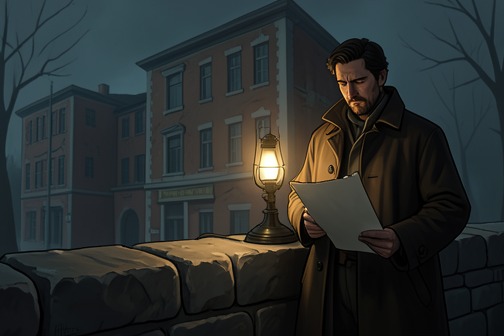
[The murder of Clara's father](entity:event-recall-event-d71894d383fd) is both a personal loss and an instance of wartime violence obscured by official power. He was a prominent lawyer with ties to the Catalan president's cabinet; after anticipating danger and sending his wife and daughter across the border, he continued writing to them from secret confinement in [Montjuic](entity:location-recall-location-7a322a000210) Castle, where he was killed. Years later, [Clara](entity:character-recall-character-clara-dd20800f9dca)'s search for the truth yielded a broken wristwatch and the name of the man responsible, while a separate account of a body identified as [Julian Carax](entity:character-recall-character-julian-carax-be183933964c) exposed how the police could dictate who a dead person was and where he would be buried.
## Background and Separation
At the start of the [Spanish Civil War](entity:event-recall-event-49f09e853580), Clara's father sent his wife and daughter out of Spain. Others thought his fear excessive, trusting that violence would not reach [Barcelona](entity:location-recall-location-barcelona-c4abb0c424bd). He instead read the danger in the streets, factories, and barracks, and understood that a nation could fail to recognize itself when war clouded its judgment. His foresight did not save him: remaining near his friends out of loyalty left him vulnerable to people who would eventually betray him.
For months, he wrote to his wife and daughter once a week. At first the letters came from his office on Calle Diputacion; later they carried no return address. Eventually he wrote secretly from a cell in Montjuic Castle, to which he had been taken without anyone seeing him enter. His correspondence provided a fragile thread between the separated family and the father held beyond their reach. Then the letters stopped.
## Clara's Account of the Loss
Clara's mother read the letters aloud, skipping passages her daughter could sense were too painful to hear. Later, when her mother slept, Clara asked her cousin Claudette to read them through from beginning to end. Blind, Clara received her father's words through other people's eyes; the loss was therefore conveyed through a family ritual of reading as well as through silence. She did not cry in front of others, even when the letters ceased and the family's fears deepened.
When Clara recounted the past to [Daniel](entity:character-recall-character-daniel-ff434f340c88), she described her father's death as the consequence of loyalty to people who betrayed him. Her warning against trusting even those one admires grew out of this history. The statement gives the murder a lasting personal consequence: it becomes the origin of Clara's guardedness, not merely a fact about the war.
## The Search and Its Results
After the family returned to Barcelona, Clara's mother found a city changed by the war, with her husband's absence felt throughout it. She hired a detective to establish what had happened. Months of investigation recovered only a broken wristwatch and the name of the man who had killed him in the moat of Montjuic Castle: [Javier Fumero](entity:character-recall-character-javier-fumero-52229d3d5640). The detective's limited findings left the family with a name and an object, but no fuller account of the killing.
Clara described Fumero as a man who had shifted among political factions and sold his services to whoever paid most. After Barcelona fell, he joined the police and became a decorated inspector. The change from hired gunman to celebrated officer sharpens the disparity between the fate of Clara's father and the authority of his killer. The father disappeared from public memory, while the man Clara named as his murderer acquired an official position and public recognition.
## Conflicting Records and False Identification
A later investigation into the supposed death of Julian Carax offers a disturbing parallel. A morgue worker recalled a body brought in during September 1936, said by police to have been found in a [Raval](entity:location-recall-location-2dac5c5405f4) alley. It carried a book and a passport identifying the dead man as Julian [Fortuny](entity:character-recall-character-fortuny-b3b9bd73b7a5) Carax, born in Barcelona in [1900](entity:time-recall-time-1900-a6b17cfe5ca2). The passport showed that he had entered the country through La Junquera a month earlier, and the body appeared to have died from a close-range gunshot wound. Carax's father, [Antoni Fortuny](entity:character-recall-character-antoni-fortuny-f322900e82ec), was summoned to identify it.
The morgue worker also remembered a third policeman who watched the proceedings, then spat on the body's face, kept the passport, and ordered the corpse sent to Montjuic for burial in a common grave. When the worker protested that the regulations required proper identification before burial, the officer threatened him, declared that the dead man was whoever he said he was, and signed the registration form. The same signature later appeared on numerous death certificates for unidentified bodies. This record shows how murder and bureaucratic procedure could converge: an official could close a case not by establishing identity, but by imposing one.
## Aftermath and Significance
The later account complicates the apparent certainty of Clara's family history without undoing its central loss. Her father was killed in Montjuic Castle and left behind a broken watch, letters, and a daughter who had to reconstruct his fate from partial testimony. In the Carax case, a passport, a morgue register, and a witness's memory disclose how readily state records could be made to support a false identity and erase the actual circumstances of death.
The murder thus belongs to a larger pattern in which the war's victims are not only killed but also obscured by silence, misidentification, and burial without public recognition. Clara's story preserves what official memory suppresses: her father's foresight, his correspondence, his loyalty, and the name of the man she held responsible. Her testimony turns a fragmentary private archive into a counter-record of the violence that the city and its institutions failed to acknowledge.
Event 3
The duel at Père Lachaise
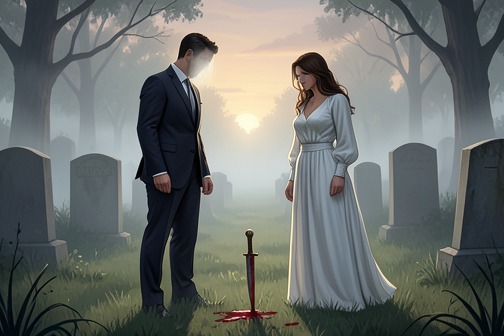
[The duel at Père Lachaise](entity:event-recall-event-b525a3770902) is the pivotal but unresolved event in the rumors surrounding [Julian Carax](entity:character-recall-character-julian-carax-be183933964c)’s disappearance. Reported to have taken place at dawn on the day of his wedding, it intervenes just as his fortunes seemed to be improving, and leaves behind no settled account of what happened to him.
## Background and Stakes
In the spring of 1936, Monsieur Roquefort heard from his bookseller friend that Carax had published a novel which, for the first time, had earned him a favorable review in Le Monde. The same rumor held that Carax was going to marry a woman of good social standing. After years of obscurity and misfortune, his prospects appeared to be changing; the duel abruptly unsettled that apparent turn toward success.
## The Duel and Its Immediate Result
The bookseller could provide few details. The duel had taken place at dawn in Père Lachaise cemetery, on the very day Carax was due to marry. Its circumstances were unclear, and the one firm consequence in the account was that the bridegroom never arrived at the church. The story thus joins a violent encounter to a broken wedding, without explaining who fought, what provoked the duel, or what happened during it.
## Conflicting Reports
The event generated incompatible explanations rather than a verifiable outcome. Some said Carax had died in the duel and been abandoned in an unmarked grave. Others believed a shady affair had forced him to leave his fiancée at the altar, flee [Paris](entity:location-recall-location-657453741ed3), and return to [Barcelona](entity:location-recall-location-barcelona-c4abb0c424bd). The supposed grave could not be found, weakening the claim that he had died there without resolving his fate.
A later version placed his death in Barcelona, where he was said to have died in extreme poverty. The girls at the brothel where he played piano reportedly collected money for a proper burial, but by the time their money order arrived, his body had already been placed in a common grave with beggars and unidentified people found floating in the harbor or dead from cold at a subway entrance. This account does not establish that the duel killed him; instead, it extends the uncertainty by offering a different city, death, and burial.
## Narrative Significance
The duel is presented through hearsay relayed to Monsieur Roquefort, not as a witnessed scene. Its importance lies partly in that distance: a single known consequence, Carax’s absence from the church, becomes the hinge for mutually incompatible stories of death, flight, and return. The cemetery setting and the rumors of unmarked and common graves deepen the association between Carax’s disappearance and the erasure of his identity, while the event itself remains unresolved.
Event 4
Daniel's first visit to the Cemetery of Forgotten Books
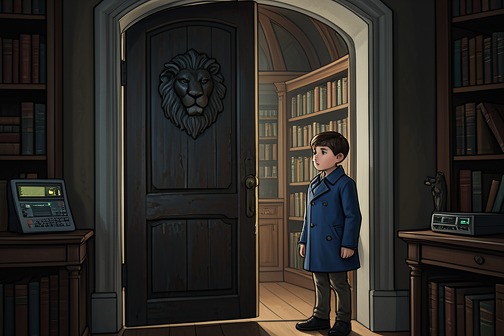
[Daniel's first visit to the Cemetery of Forgotten Books](entity:event-recall-event-c24204e552e9) changes his life by binding him to a forgotten novel by [Julian Carax](entity:character-recall-character-julian-carax-be183933964c). Led there at nearly eleven by his father, [Daniel](entity:character-recall-character-daniel-ff434f340c88) enters a secret sanctuary for books in danger of oblivion, accepts the duty of keeping one alive, and chooses [The Shadow of the Wind](entity:object-recall-object-the-shadow-of-the-wind-812d422ba692). The visit makes reading an act of guardianship and begins Daniel’s connection with Carax, whose life and work will become central to his own story.
## A Secret Threshold
The visit begins before dawn, when Daniel and his father leave their home and make their way from the Ramblas through [Calle Arco del Teatro](entity:location-recall-location-e8e60a2f928a) into the [Raval](entity:location-recall-location-2dac5c5405f4) quarter. The route passes from the city’s waking streets into a secluded world; at its end stands a large, time-darkened door that Daniel sees as the entrance to a palace of echoes. His father has insisted that Daniel tell no one about what he is about to see, not even his friend Tomas. Secrecy is therefore part of the initiation, not an incidental detail.
[Isaac](entity:character-recall-character-isaac-0cf7a5f5888b), the cemetery’s guardian, admits them. Daniel’s father introduces him as his son, says that the bookshop will one day be Daniel’s, and explains that the time has come for him to learn about this place. The approach through a shadowed staircase and a gallery of painted creatures gives way to a round hall beneath a glass dome. Bookshelves and walkways rise through it in a vast, intricate structure. For Daniel, still a child, the discovery is both physical and imaginative: the hidden library seems to open another world inside the familiar city.
## The Library’s Custodianship
Daniel’s father describes the [Cemetery of Forgotten Books](entity:organization-recall-organization-cemetery-of-forg-23b02ca7e387) as a sanctuary whose books carry the souls of their writers and readers. Their spirits, he explains, grow stronger as books change hands and are read. No one knows when the cemetery began or who created it; his own knowledge comes from what his father told him when he was brought there. The library’s history thus reaches backward across generations, transmitted as a family inheritance rather than a settled record.
Its guardians rescue books when libraries disappear, bookshops close, or works are consigned to oblivion. The books kept there have been lost to public memory, but they remain available for a future reader to find. The cemetery consequently stands in contrast to the ordinary trade of the bookshop: books may be bought and sold, Daniel’s father says, but their deeper purpose is not ownership. Each has already been someone’s companion, and the guardians’ task is to prevent that relationship from being erased altogether.
The visit carries an obligation as well as wonder. By tradition, every first-time visitor must choose one book and adopt it, promising to keep it from disappearing for the rest of their life. Daniel’s father stresses that this is a promise for life and tells him that the choice now belongs to him. The rule turns a private encounter with a book into a lasting responsibility, making the reader its protector as well as its discoverer.
## Choosing Carax’s Novel
Daniel spends nearly half an hour wandering among the shelves, where he encounters titles in languages he recognizes and others he cannot identify. He reflects on the many worlds contained within books and contrasts them with the distractions of life outside the library. At the moment of choice, he cannot tell whether chance or destiny has led him to a particular volume: a book in wine-coloured leather whose title is printed in gold. It is The Shadow of the Wind, by Julian Carax, an author Daniel has never heard of.
Daniel takes the book down carefully and turns its pages. A cloud of golden dust rises from it as it leaves its place on the shelf. He carries it out under his arm, convinced that it had been waiting for him, perhaps for years or even before his birth. This feeling of mutual selection complicates the formal rule of adoption: Daniel believes not only that he has chosen the novel, but that the novel has chosen him.
## Reading and the Beginning of a Bond
That afternoon, back in the apartment on [Calle Santa Ana](entity:location-recall-location-c16ef1bc0771), Daniel shuts himself away to read. The novel follows a man searching for the father he never knew, a quest that becomes entangled with lost youth and a cursed love. Its narrative unfolds as a sequence of stories nested within one another, like Russian dolls, and multiplies into reflections. Daniel reads through the night, so absorbed that the cathedral bells at midnight scarcely register; he reaches the last page at dawn and resists closing his eyes because he does not want the spell to end.
The choice therefore immediately fulfils the cemetery’s promise: a forgotten work reaches a new reader and acquires renewed life through his attention. Daniel’s adoption is not just a symbolic pledge. He begins to live with the novel’s characters and story, and the book’s mysteries take root in his imagination. His later recollection of wanting a pen to write with, and his father’s promise to buy one if he completed a first work, shows how literary ambition briefly follows this formative reading before the enthusiasm gives way to childhood interests in mechanical toys. The book itself, however, remains the lasting connection.
## A Choice That Reaches Beyond the Visit
The novel’s author is not merely a name on a cover. Daniel’s selection of Carax’s book becomes the first link in a larger chain of encounters with Carax’s past and with the people connected to it. The story Daniel reads—its search for an unknown father, its lost youth, and its haunting love—also establishes patterns that will echo through the life he later investigates. The Cemetery gives Daniel no explanation of who Carax is; instead, it places the book in his hands and leaves its questions open.
The significance of the visit also reverberates through the spaces Daniel encounters later. In the [Aldaya mansion](entity:location-recall-location-6f64acba7996), he descends into a crypt and reads [Penelope Aldaya](entity:character-recall-character-193e8fd6b78c)’s name and dates, 1902–[1919](entity:time-recall-time-1919-e95757725058), on a coffin; later, Julian confronts the paired tombs of Penelope and [David Aldaya](entity:character-recall-character-david-aldaya-b9a0ed2aeb41), both marked with 1919. Much later, the mansion itself has been restored and repurposed as an advertising agency. These later scenes make the Cemetery’s promise to preserve forgotten books resonate with the precarious survival of human stories: buildings change use, lives disappear from memory, and a reader’s act of attention can keep a past from vanishing without a trace.
Event 5
丹尼尔结识克拉拉·巴塞罗
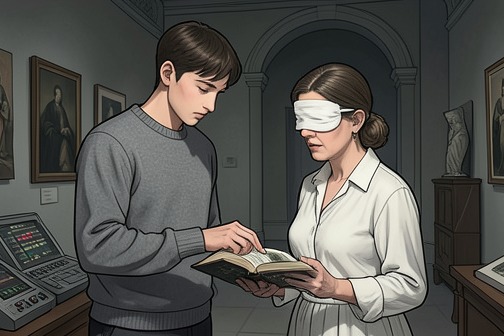
[Daniel Sempere](entity:character-recall-character-daniel-sempere-0696c584b499) meets [Clara Barceló](entity:character-recall-character-clara-barcel-17ef45432be2) at the Ateneo when [Gustavo Barceló](entity:character-recall-character-gustavo-barcel-800ce64e68a5) brings his niece to meet the boy who has found a book by [Julián Carax](entity:character-recall-character-juli-n-carax-262d09df7e21). [Clara](entity:character-recall-character-clara-dd20800f9dca)’s blindness and her distinctive way of engaging with books initially unsettle [Daniel](entity:character-recall-character-daniel-ff434f340c88), but their first conversation opens into a sustained companionship built around reading, description, and shared time. The encounter joins Daniel’s fascination with Clara to the history she tells him: Carax’s novel has transformed her experience of reading, while her family has been marked by political violence and bereavement.
## The Meeting at the Ateneo
On a hot, misty Sunday, Daniel arrives at the Ateneo carrying the Carax book to meet Gustavo Barceló. In a gallery overlooking the building’s interior garden, Barceló is accompanied by a young woman in white. He first asks Daniel whether he has brought the book, then leaves with it to examine the volume, introducing the woman as his niece, Clara. Barceló explains that she is the family’s expert on Carax, giving her a place in the conversation beyond that of a companion brought along to meet Daniel.
Clara tells Daniel that he has impressed her uncle by refusing Barceló’s offer to buy the book. The remark immediately establishes that she has been listening to what the book means to Daniel, and that she is prepared to speak to him directly. Daniel, meanwhile, is captivated by her and unsure how to behave. When she reaches out to learn his face by touch, he lets her guide his hand and remains still as she traces its features. Their meeting is therefore marked by an exchange of ways of knowing: Daniel looks at Clara, while Clara uses touch to form an impression of him.
## Clara’s Relationship with Books
Clara tells Daniel that she encountered Carax’s writing by chance in Provence. Her tutor, Monsieur Roquefort, lent her and her cousin Claudette [The Red House](entity:object-recall-object-the-red-house-e8a0e85ebcac), presenting it as a love story in hopes of drawing the girls into reading. Clara recalls that the novel was the first book to make reading feel like something other than an obligation imposed by teachers and tutors. Through it, she discovered the pleasure of imagination, beauty, language, and exploring the inner life.
For Clara, that discovery has particular force because she has lost her sight. She explains that reading enabled her to live more intensely and to recover, in another form, something of the sight she had lost. The account does not reduce her to blindness: she describes a literary experience with its own history and emotional importance, and identifies what books make possible in her life. Carax’s novel is not simply an object that Daniel happens to bring to the meeting. It is the point at which their separate experiences converge, and the reason Clara can speak to him as someone who understands the book’s power.
## Family Loss and the Past
Clara’s story of reading is set against her family’s experience of the [Spanish Civil War](entity:event-recall-event-49f09e853580). Her father, a prominent lawyer connected to the Catalan president’s cabinet, sent his wife and daughter across the border when war began. From [Barcelona](entity:location-recall-location-barcelona-c4abb0c424bd) he wrote regularly, first from his office and later without a return address. His letters eventually came from a cell in Montjuïc Castle, where he was killed. Clara’s mother read the letters aloud, sometimes leaving out passages; Clara later asked her cousin to read them again in full. She did not show her grief, even when the letters stopped and the family feared the worst.
After the war, Clara’s mother returned to a Barcelona transformed by her husband’s absence. An investigation recovered a broken wristwatch and identified [Javier Fumero](entity:character-recall-character-javier-fumero-52229d3d5640) as the man who had killed him at Montjuïc Castle. Clara recounts that Fumero had changed political allegiances before joining the police after Barcelona fell. Her mother died within months, and Clara went to live with her uncle Gustavo, whom she describes as her only family and best friend. His visits had long brought her books; now he reads to her each night, even when tired. This background gives Clara’s attachment to books a family context: they are part of the care Gustavo offers and part of the imaginative life she has made amid loss.
## From Introduction to Companionship
After hearing about Clara’s nightly reading, Daniel offers to read to her. He immediately worries that the offer may seem presumptuous, but Clara welcomes it. When he must leave, she invites him to return the following day, and their first meeting becomes the start of many visits. In the summer of 1945 and the years that follow, Daniel comes to the Barceló home almost daily, apart from the days when Clara has music lessons with [Adrián Neri](entity:character-recall-character-adri-n-neri-d72f6f1c8f67).
The visits develop into a shared routine rather than remaining limited to Carax. The pair read [The Shadow of the Wind](entity:object-recall-object-the-shadow-of-the-wind-812d422ba692) over roughly a fortnight, then turn to other works from Barceló’s extensive library. Some afternoons they spend little time reading, choosing instead to talk or walk around the square and as far as the cathedral. Clara asks Daniel to describe the places and things along the way, and he guides her through the city. Their outings often end at a milk bar on Calle Petritxol, where they share whipped cream or hot chocolate with sponge fingers. These recurring details show how the meeting grows into a form of companionship: books provide a beginning, but the relationship also takes shape through conversation, shared walks, and Daniel’s descriptions of their surroundings.
## Narrative Significance
The encounter is narrated retrospectively by Daniel, who remembers that afternoon as the beginning of an attachment that affected him for years. His account places youthful infatuation beside a more complex recognition of Clara’s life: she is Gustavo’s niece, a devoted reader, a daughter shaped by her father’s disappearance and her mother’s death, and a blind young woman who has developed her own relation to literature and the city. Her account also brings the political past of Barcelona into Daniel’s personal story, linking the books that draw them together to a history of violence and silence.
The meeting establishes a pattern that continues through the later visits: Daniel reads and describes, while Clara listens, asks questions, and responds from a perspective he cannot share. That pattern is intimate, but it also exposes the limits of his first impression. At the Ateneo, he is absorbed by Clara’s appearance and by his own excitement; through her story, the encounter becomes a lesson in what reading means to another person. The book that brought them into the same room thus begins a relationship in which literary imagination, memory, and attentive companionship are intertwined.
Event 6
Cabestany warehouse fire
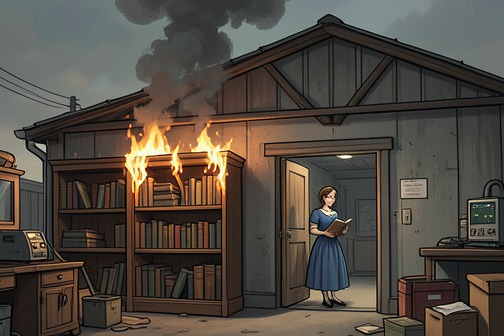
The [Cabestany warehouse fire](entity:event-recall-event-4d2d06b9e779) was the deliberate destruction of the publisher’s remaining stock of [Julian Carax](entity:character-recall-character-julian-carax-be183933964c)’s novels after a failed attempt to buy it. Nearly all the books were lost, but [Nuria](entity:character-recall-character-nuria-2fe21833825c) had privately rescued one copy of each title. The fire therefore marks both a near-erasure of Carax’s published work and the point at which its survival depended on a secretary’s foresight and the few copies she saved.
## Causes and Background
Between 1928 and 1936, Cabestany published eight of Carax’s novels. The publisher was not chiefly known for literary fiction: he made his money from catechisms and inexpensive sentimental novels about a provincial heroine, Violeta LaFleur. His reasons for publishing Carax were uncertain to those discussing the history; one account suggests that Cabestany may have been intrigued by the project, or may simply have enjoyed contradicting conventional opinion. The novels’ modest standing in the firm’s commercial life contrasts with the lasting consequences of their threatened destruction.
After Cabestany took over the firm, a prospective buyer offered three times the market value for the entire remaining stock of Carax’s novels. The offer came from [Laín Coubert](entity:character-recall-character-la-n-coubert-381f2b75fc85), whose purpose [Daniel](entity:character-recall-character-daniel-ff434f340c88) immediately understood: the books were to be burned. The publisher’s son, who handled the negotiation, tried to raise the price beyond what Coubert had offered. Coubert withdrew, and the proposed sale gave way to an act of destruction rather than a transfer of the books.
## The Fire and the Loss
A few days after the failed negotiation, shortly after midnight, Cabestany’s warehouse in [Pueblo Nuevo](entity:location-recall-location-05513535dc6d) burned down to its foundations. The sequence connected the fire to the interrupted purchase: the stock Coubert had sought was destroyed after the seller demanded more money and the offer was withdrawn. In recounting the episode, the narrator asks whether Coubert had bought the books, then learns that the negotiation ended not in a sale but in the warehouse fire.
The loss was nearly complete, but not absolute. When Daniel asks whether all of Carax’s books were destroyed, the answer is that nearly all were. This distinction matters: the fire eliminated the bulk of the stock, while a small set of saved copies kept the titles from disappearing altogether. The surviving books became the material basis for later recovery.
## Nuria’s Intervention
Before the fire, Cabestany’s secretary Nuria heard about Coubert’s offer and had a premonition. On her own initiative, she went to the warehouse and took one copy of every Carax title. Her action was not presented as an order from the publisher or as a planned response by the firm. It was an individual decision made before the danger became a confirmed loss.
Nuria had corresponded with Carax and, over the years, the two had formed a friendship of sorts. She was also described as probably the only person in the publishing house—and perhaps in all [Barcelona](entity:location-recall-location-barcelona-c4abb0c424bd)—who had read his novels. Her rescue of the copies therefore joined personal acquaintance to practical preservation: she knew the author through their correspondence, had read the work, and ensured that each title survived in at least one copy.
The account places this act within Nuria’s wider fondness for lost causes. As a child she took in small animals she found in the street; later, she adopted failed authors, perhaps in part because her father had wanted to be a writer and never succeeded. These details do not make her intervention less concrete: she went to the warehouse herself and removed a copy of each title. They do, however, frame the rescue as one instance of a recurring tendency to protect what others have neglected or abandoned.
## Aftermath and Significance
The fire’s consequences extend beyond the immediate destruction because the saved copies made subsequent recovery possible. Much later, proofs of Carax’s three novels turned up in a furniture warehouse belonging to the Cabestany family. [Gustavo Barceló](entity:character-recall-character-gustavo-barcel-800ce64e68a5) then closed his bookshop, sold its stock, and created a publishing company dedicated to reissuing Carax’s works. Its first volume contained those three novels and sold 342 copies, far behind the year’s bestseller, an illustrated life of the bullfighter El Cordobés.
The reissue did not reverse the loss or establish that all eight novels had been recovered. It does show the contrast between the fire’s near-total destruction of the stored stock and the later, limited return of Carax’s work to print. The surviving copies and proofs carried the novels across that gap: first out of the warehouse before the fire, and eventually into a new edition. The episode makes preservation depend less on the commercial value assigned to Carax’s books than on the decisions of people who refused to let them vanish.
Event 7
Daniel's first encounter with Lain Coubert
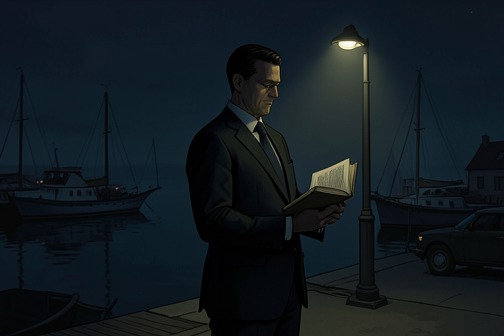
[Daniel's first encounter with Lain Coubert](entity:event-recall-event-4f05a2f52890) transforms a shadowy pursuer into a personal and unmistakable danger. On a night when [Daniel](entity:character-recall-character-daniel-ff434f340c88) has left home in anger and grief, Coubert finds him by the harbour and offers money for [The Shadow of the Wind](entity:object-recall-object-the-shadow-of-the-wind-812d422ba692). His knowledge of Daniel's attachment to [Clara](entity:character-recall-character-clara-dd20800f9dca) and the final revelation of his fire-scarred face make clear that the book is not merely a valuable object: it is the focus of a threat that reaches into Daniel's private life.
## The pursuit begins
After slamming the apartment door, Daniel rushes into the street and walks without direction. A stranger has been watching him from Puerta del Angel; dressed in a dark suit, with one hand in his pocket, he follows at a slight limp. Daniel continues through the city for an hour or more, eventually reaching the Columbus monument and then the harbour. There, memories of boat trips with his father and of the cemetery on [Montjuic](entity:location-recall-location-7a322a000210) place his present distress beside the family past and the city of the dead.
The stranger approaches in the shadows and addresses him as Daniel, offering a cigarette and remarking that it is a good night for remorse. The familiarity unsettles Daniel, and the stranger soon explains that he knows more than Daniel's name. He says that Daniel possesses something he wants and offers good money for it. Daniel denies that the stranger has identified the right person, but the reply is confident: the man says he has known for a long time that Daniel has the book, because people talk and he listens.
## The book and the bargain
The object Coubert wants is The Shadow of the Wind. He treats its purchase as a straightforward negotiation, asking Daniel to name a price and offering a thousand duros. He presents the offer as generous enough to buy many books, while dismissing the volume Daniel protects as rubbish. The contrast makes the bargain a contest over the book's value as much as over its possession: Coubert wants Daniel to surrender what he has chosen to keep safe.
Daniel refuses the stranger's premise and asks what he could possibly know about the book. Coubert does not explain how he learned of it; he insists instead that the question is only one of price. His claim that people talk and he listens leaves the reach of his information unclear, while establishing that Daniel's secret has not remained entirely private. The offer is framed as an attempt to obtain the novel without violence, but the insistence behind it makes that assurance unstable.
## Clara becomes part of the threat
Coubert tries to establish an intimacy Daniel has not granted him. He praises Daniel's nerve and intelligence, then points to Clara as someone who could make a person lose his senses. The mention of her name immediately changes the encounter: Daniel's attention shifts from the stranger's offer to the possibility that he knows Clara too. He demands to know what Coubert knows about her.
Coubert says that he may know more about Clara than Daniel does and advises Daniel to forget her, while also suggesting that Daniel will not be able to do so. Daniel then recognizes him as the anonymous man who had harassed Clara in the street. The recognition confirms that Clara had not invented or misidentified the stranger, and turns Daniel's fear into a warning on her behalf. He tells Coubert that Clara does not have the book and orders him not to touch her again.
Coubert replies that Clara is not his concern: he wants the book. He says he would rather obtain it fairly and without harming anyone, but the distinction offers little reassurance after his demonstrated knowledge of Clara and his reference to her earlier harassment. Before the encounter ends, he tells Daniel to resolve matters with Neri and says he would not trust him, broadening the stranger's warning beyond the immediate negotiation.
## The face revealed
When Daniel asks what should be done with the books, Coubert answers with an instruction: burn them. He takes a match from a box and strikes it, briefly allowing Daniel to see his face. The revelation is stark: the stranger has no visible nose, lips, or eyelids, and his face is a blackened mask of scarred skin consumed by fire. Daniel recognizes it as the same dead skin Clara had touched. The match goes out, and Coubert disappears into darkness again.
The reveal changes the encounter from an unsettling attempt at persuasion into a confrontation with a man whose appearance connects him to the destruction he demands. His injunction to burn the books gives the meeting its clearest statement of purpose, while his threat that they will meet again ensures that the encounter does not resolve the danger. He says that he never forgets a face and hopes Daniel will make the right decision, invoking both Daniel's safety and Clara's. The episode thus binds the fate of The Shadow of the Wind to the safety of the people Daniel cares about: Coubert wants the novel, but his pursuit has already crossed into Daniel's relationships and threatens to continue.
Event 8
Daniel discovers Clara and Adrián Neri
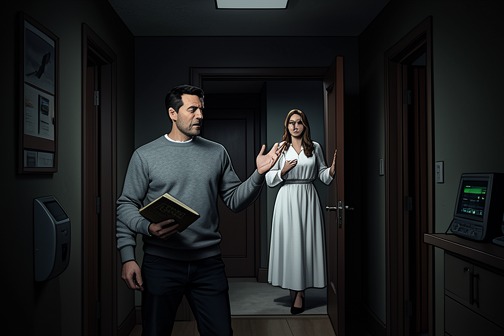
[Daniel discovers Clara and Adrián Neri](entity:event-recall-event-e0120884ea4d) together at the moment his imagined intimacy with [Clara](entity:character-recall-character-clara-dd20800f9dca) collides with the reality of her life beyond him. He had entered the Barceló residence to retrieve [Julián Carax](entity:character-recall-character-juli-n-carax-262d09df7e21)’s book and give it to the threatening stranger who had demanded it. Instead, he finds Clara with her music teacher, is forced out of the apartment, and leaves with his infatuation broken but his feelings unresolved. The episode ends not with hatred or clean escape, but with [Daniel](entity:character-recall-character-daniel-ff434f340c88) carrying the book back to the [Cemetery of Forgotten Books](entity:organization-recall-organization-cemetery-of-forg-23b02ca7e387).
## Background and Purpose
The discovery takes place in the Barceló residence during a storm. Daniel knows the apartment as a place he has come to regard as a second home, but that familiarity does not make him welcome in its private rooms. He moves through the darkened residence toward the library, where Clara keeps Carax’s book in a glass cabinet near the balcony.
Daniel’s immediate objective is practical and urgent: he plans to take the book, deliver it to the stranger, and be rid of the man. His private motive is more complicated. Before leaving the library, he imagines departing Clara’s life forever, yet pictures the intimacy he has long fantasized about with her. The book he presses to his chest seems, in that instant, both a treasured companion and something he is preparing to betray.
## Discovery and Confrontation
With the book in hand, Daniel starts away without intending to alert Clara. A voice from behind a door stops him. He approaches her bedroom and opens it, discovering Clara with [Adrián Neri](entity:character-recall-character-adri-n-neri-d72f6f1c8f67). The encounter overturns the scene Daniel had imagined: he had pictured her asleep and himself as the intimate presence in her room, but finds that her relationship with Neri is real and that he has no place in it.
Neri notices Daniel and breaks off what is happening. Clara, unaware of the reason for his interruption, asks why he has stopped; Neri tells her he will be back and turns his anger on Daniel. Daniel remains fixed on Clara as Neri grabs him and drags him from the bedroom through the conservatory. At the front door, Neri throws him onto the landing. Carax’s book slips from Daniel’s hands, and Neri picks it up and throws it back at him.
Neri warns Daniel not to return or approach Clara in the street, threatening a further beating. He then demands the keys. Daniel refuses, and Neri strikes him again before searching his pockets and taking them. He leaves Daniel outside the closed apartment door. Daniel retrieves the book and makes his way down the stairs and out into the rain, hurt and struggling to breathe. The book, originally the purpose of his entry, is also the object Neri returns to him as he casts him out.
## Aftermath and Emotional Reversal
The rejection does not produce the hatred Daniel vows to feel. Looking back at the Barceló apartment from the entrance to the square, he sees its windows still dark in the rain and admits that he wants to hate Clara but cannot. In his account, true hatred is an art learned over time; at this moment, the attachment that has shaped his fantasies remains stronger than his anger.
Daniel nevertheless swears never to see Clara again, speak her name, or remember the years he believes he wasted beside her. His resolve coexists with fear that jealousy and shame will return when the details of the night settle into his memory. For now, however, he feels unexpectedly at peace: the anger that drove him from home has ebbed, even as he anticipates its possible return. The episode thus marks a sharp change in his understanding of Clara without resolving the feelings he has built around her.
## The Book and the Return
Before going home, Daniel makes another choice. He goes to [Calle Arco del Teatro](entity:location-recall-location-e8e60a2f928a) and the Cemetery of Forgotten Books, the place his father first brought him six years earlier. In the rain, he knocks repeatedly at its old door, then takes Carax’s book from inside his jacket and rereads the opening sentence that had first captivated him.
The return links the personal humiliation in Clara’s apartment to Daniel’s continuing bond with Carax’s work. He had entered the residence intending to surrender the book to the stranger; after Neri’s attack, he still has it and carries it back to the place where his connection with it began. Clara’s discovery ends his romantic idealization in its former form, but does not sever his attachment to the book or settle the danger surrounding it.
Event 9
Daniel hides The Shadow of the Wind
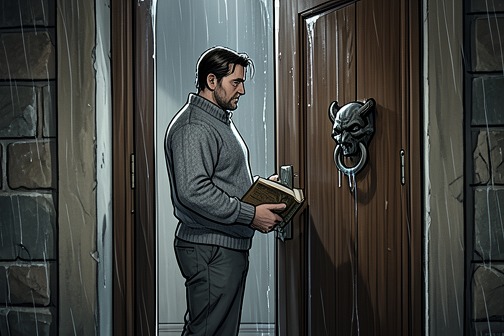
[Daniel](entity:character-recall-character-daniel-ff434f340c88)’s decision to hide [The Shadow of the Wind](entity:object-recall-object-the-shadow-of-the-wind-812d422ba692) in the [Cemetery of Forgotten Books](entity:organization-recall-organization-cemetery-of-forg-23b02ca7e387) transforms an urgent act of protection into a ritual of preservation. Returning before dawn to the place where his father first brought him, he entrusts the novel to a labyrinth whose obscurity can shield it from an arsonist. He does not abandon the book: with the keeper [Isaac](entity:character-recall-character-isaac-0cf7a5f5888b)’s advice, Daniel marks the route to its hiding place and vows to come back for it.
## Background and Return
The night begins with Daniel leaving the Barcelos apartment in anger and jealousy, then finding himself unable to hate [Clara](entity:character-recall-character-clara-dd20800f9dca). He has sworn not to see her again, but before going home he feels there is one more thing he must do to clear his conscience. In the rain, he makes for [Calle Arco del Teatro](entity:location-recall-location-e8e60a2f928a), recognizing the wooden door and baroque facade from his first visit with his father six years earlier.
The entrance evokes that earlier encounter with an unsettling change of emphasis. Black water runs down the narrow street toward the [Raval](entity:location-recall-location-2dac5c5405f4) quarter, and the doorway reeks of urine and rotten wood. The Cemetery of Forgotten Books seems more than ever to smell of death. Daniel knocks first at the demon-faced knocker’s horns, then again with six louder blows, until his fist hurts. When no one appears, he crouches against the door and takes the novel from inside his jacket, reopening the first sentence that had enthralled him years before.
That remembered opening carries a private burden beyond the book itself. It recalls Daniel’s mother’s deathbed confession: she had loved another man, whom she had been told was killed in the war, and asked Daniel to find him because he was his real father. Daniel connects the rainy summer of that memory with his own learned capacity for lying. The novel he has come to protect is thus bound to a family secret and to the first reading experience that shaped his life.
## Isaac and the Choice to Hide the Book
When the door finally opens, Isaac appears with an oil lamp. His sharp eyes notice the volume beneath Daniel’s jacket, and he identifies it as a Carax novel, remarking that at most ten people in town may know of the author or have read the book. Daniel explains that one of those people intends to set it on fire and that he can think of no better hiding place than the Cemetery. Isaac objects that it is a cemetery, not a safe; Daniel answers that the book needs to be buried where nobody can find it.
The exchange defines the refuge’s paradox. The place is not secure because it resembles a conventional strongbox but because its immense, disorienting archive makes discovery difficult. Isaac lets Daniel slip inside, where the vestibule is dark and damp. He gives Daniel the lamp, then produces a ring of keys and works an elaborate lock concealed beneath a glass case of relays and cogwheels. The mechanism’s levers and fulcrums move in sequence until steel bars clamp the great door into the stone wall, closing the outside world behind them.
Shortly before dawn, Daniel enters the labyrinth alone with the lamp. He thinks he remembers the route from his first visit, but its spiraling passages defeat his memory: three attempts to follow a remembered path return him to the same point. Isaac waits there with a wry smile. Daniel asks whether there is a way to cheat the maze, and Isaac invokes the Minotaur, offering him an old penknife and a practical answer: make a notch at each corner, in a pattern only he will recognize. The archive’s maze can be negotiated, Isaac suggests, not by mastering it all at once but by leaving marks along the way.
## The Hidden Shelf
Following Isaac’s advice, Daniel begins again, marking the shelves with a C and an X whenever he changes direction. Twenty minutes later, deep inside the tower, he finds a suitable hiding place. A row of books on the disentailment of church property by Jovellanos forms an unremarkable outer layer. Behind it, Daniel discovers another row, concealed by what he sees as a wall of marble prose: plays by Moratín, a new copy of Curial e Guelfa, and Spinoza’s Tractatus Theologico Politicus.
Daniel places the Carax novel between a 1901 yearbook of civil-court minutiae from Gerona and a collection of novels by Juan Valera. To make room, he removes a book of Golden Age poetry and takes it with him; The Shadow of the Wind occupies its place. He then restores the Jovellanos volume, sealing the hidden row behind the visible one. The concealment is carefully composed rather than haphazard: the novel disappears within a shelf already crowded with works whose scholarly and literary presence makes an effective screen.
The act of hiding is not an act of relinquishment. Before the journey into the maze, Daniel has already insisted that he will return for the book. The marks made with Isaac’s penknife preserve a private route through the otherwise unreadable structure, while the disguised shelf preserves the novel from the person who wants to destroy it. Together, these choices make the hiding place both a grave and a deposit: the book is buried from its enemy, but kept accessible to its guardian.
## Preservation, Memory, and Return
Daniel leaves by following the marks he placed on the way in. As he walks through the dark tunnels of books, he is overcome by sadness at the scale of what remains undiscovered. His own chance encounter with a single unknown book has opened a universe to him; he imagines tens of thousands more books still unexplored and forgotten. The abandoned pages become, in his perception, worlds and souls without owners, sinking in darkness while the world outside the library seems to lose its memory and mistake forgetting for wisdom.
This reflection enlarges the meaning of his immediate task. Daniel has come to save one volume from deliberate destruction, but the journey exposes a broader vulnerability: books may survive physically yet remain lost to readers, just as a community may carry a past while forgetting it. The Cemetery gathers those possibilities into one image. It is at once a shelter for endangered writing and a necropolis of works whose stories may never again be heard.
At dawn, Daniel returns to the apartment on [Calle Santa Ana](entity:location-recall-location-c16ef1bc0771). He slips inside without turning on the light and sees the party table still laid out, the cake untouched and the crockery waiting. His father remains awake in his best suit, watching from an armchair by the window and smoking a cigarette, something Daniel has not seen him do for years. The scene does not undo the secrecy or the trouble of the night; it places Daniel’s return to his family beside his act of safeguarding a book whose first sentence has accompanied him since childhood.
The episode closes its immediate danger without closing the novel’s future. Daniel has hidden The Shadow of the Wind where its would-be destroyer is unlikely to find it, but his promise to return keeps the story open. The route marked through the maze gives that promise a material form: amid countless forgotten books, this one remains deliberately recoverable.
Event 10
Fermín's recruitment by the Sempere bookshop
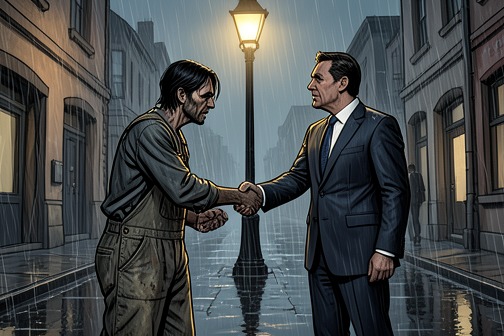
Fermín’s recruitment by the [Sempere bookshop](entity:location-recall-location-6525f3983854) is the turning point that carries him from homelessness into work, shelter, and friendship. The offer grows out of [Daniel Sempere](entity:character-recall-character-daniel-sempere-0696c584b499)’s recognition that the struggling bookshop needs a resourceful searcher; it soon becomes clear that Fermín’s intelligence and ingenuity exceed even that initial purpose.
## Causes and Background
The relationship begins before the job offer. After [Daniel](entity:character-recall-character-daniel-ff434f340c88) is thrown out of a house, injured and shaken, a beggar in the shadows asks whether he is all right and invites him to wait for the rain to ease. Daniel had recently refused to help the man, and now accepts his concern with visible embarrassment. The reversal establishes the mutual recognition at the heart of their later partnership: the person Daniel had dismissed is the one who offers him kindness.
The man introduces himself as Fermín Romero de Torres, currently unemployed. He presents himself with a handshake and the optimism that his lost position and honour will eventually be restored. At this stage, he is living on the street, but his confident talk hints at a self beyond his present circumstances. The encounter gives Daniel a reason to remember him, even though neither yet knows how that meeting will change their lives.
Months later, the bookshop’s business is improving, and Daniel’s father says they need another person to help locate orders. He imagines someone who would combine detective work with poetry, charge little, and not shrink from impossible tasks. Daniel thinks of Fermín as the right candidate. The invitation is therefore practical, but it also rests on a quality the earlier encounter had already suggested: Fermín can meet hardship with talk, wit, and an insistence that the future might improve.
## The Offer and Its Welcome
Daniel finds Fermín at his usual lodgings beneath the arches of Calle Fernando. Fermín is assembling a newspaper’s front page from discarded scraps, including a prominent account praising the dictatorship’s public works. His response to the propaganda is irreverent, and his sharp commentary immediately makes him seem suited to the bookshop’s search work. Daniel approaches quietly and asks whether Fermín remembers him.
Daniel brings him to the shop and introduces him to his father. Fermín initially resists entering, worried that his appearance will embarrass Daniel in what he regards as a respectable establishment. Daniel’s father answers that his son has invited Fermín to lunch, then gently takes his arm and urges him upstairs for a hot bath before they go to Can Sole. The welcome is not made conditional on Fermín first presenting himself as respectable: the family offers hospitality while he is still hesitant and self-conscious.
At home, Daniel and his father find that Fermín has endured severe hardship, but they do not press him to explain it. They provide clean clothes, and Daniel’s father speaks with him as he helps him get settled. The scene shifts the terms of the meeting: Fermín is no longer simply the stranger who once offered Daniel shelter from the rain, but a guest being received into the family’s domestic life. Their care makes room for trust without demanding disclosure.
## The Recruitment
Once Fermín has been welcomed, Daniel’s father offers him a job in the bookshop. The work is to find rare books for clients, a task he describes as literary archaeology: it requires knowledge of the classics as well as practical skill in obtaining books at a good price. The position comes with little pay, but the arrangement also includes meals at the family table and a place in their apartment until they can find Fermín a suitable room in a pension.
Fermín responds to the offer by promising that he would do anything for Daniel’s father, even kill for him. His declaration is answered with an ordinary, constructive proposal rather than a request for violence: the family needs a bookseller’s help, not a weapon. Asked whether he will join the team, Fermín is so overwhelmed that he bursts into tears. His response marks the emotional force of an offer that gives him not only work but also a place among people who have chosen to receive him.
The arrangement quickly extends beyond the shop. Fermín eventually rents a room in a pension on Calle Joaquin Costa, and a connection between the family’s neighbour Merceditas and the landlady allows them to avoid the police guest form. This keeps Fermín from appearing on the records that might expose him to Inspector Fumero and his men. Employment thus provides more than a livelihood: the practical network around the bookshop also helps shield him from unwanted official attention.
## Work and Consequences
Fermín proves himself almost immediately. He arrives at the shop every morning at seven, neatly dressed and ready for a twelve-hour shift or longer. His duties are not confined to routine order-finding: his instincts for investigation, knowledge of books, and knack for devising ways to obtain them make him exceptionally effective. Requests that once seemed strange or difficult can be solved in days, sometimes hours.
His methods are as imaginative as the job requires. He can talk his way into the private libraries of duchesses on Avenida Pearson and horse-riding enthusiasts, adopting fictitious identities to leave with books given to him or bought for very little. What began as Daniel’s hunch that the bookshop needed a half-detective, half-poet becomes a demonstrated skill: Fermín understands both the literary value of a title and the social improvisation required to find it.
The change in his circumstances is visible over the month after he leaves street life. With a regular place to work and the household’s support, he becomes cleaner, better dressed, and more settled; he also gains weight. His appetite for chocolate and Swiss rolls sits alongside his continuing enthusiasm for Greek tragedy. These ordinary details register a return to daily pleasures, while his punctuality and long hours show how fully he commits himself to the opportunity.
## Significance
The recruitment transforms a chance act of kindness into an enduring working relationship. Daniel had first been the recipient of Fermín’s concern, and later becomes the person who recognizes Fermín’s abilities and brings him into the shop. Daniel’s father completes that welcome by offering a job, food, and temporary shelter. The exchange is reciprocal: Fermín has already helped Daniel in a moment of need, and the family now gives Fermín a way to rebuild his life without forcing him to account for his past.
The episode also establishes the distinctive contribution Fermín makes to the bookshop. His work joins literary knowledge to practical investigation, allowing the search for rare books to become a field for intelligence, persuasion, and comic invention. The bookshop’s needs give his talents a purpose; his success, in turn, makes him far more than an extra pair of hands. Recruitment is therefore both a concrete change in his circumstances and the beginning of a partnership that will shape the shop’s daily life.
Event 11
Fermín's breakdown and torture scars
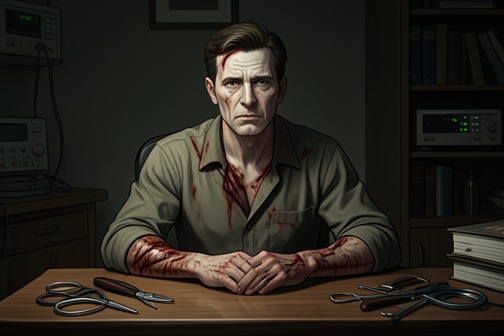
[Fermín's breakdown and torture scars](entity:event-recall-event-a2ddde1cd6f4) mark the moment when his apparently miraculous return to respectable life is interrupted by the visible consequences of political violence. A midnight emergency at his boarding house reveals that the capable bookseller is still carrying a past his companions cannot yet fully know; after the crisis, the doctor identifies his scars as burns inflicted with a soldering iron. The episode joins private care to the novel’s wider concern with the injuries and silences left by war.
## Causes and Background
Several months after Fermín began working at the bookshop, his landlady telephoned the [Sempere](entity:character-recall-character-sempere-1504787700d2) household at two o’clock on a Sunday morning. She reported that he had shut himself in his room, was shouting and striking the walls, and had threatened to harm himself if anyone entered. His threat made the situation urgent, while the landlady’s request that they not call the police shaped the immediate response: [Daniel](entity:character-recall-character-daniel-ff434f340c88)’s father promised that they would come at once.
The emergency interrupts a period in which Fermín had seemed to transform himself. He had become an energetic bookseller, hunting down requested volumes, organizing stock, and polishing the shop. That visible competence had not erased the vulnerability signaled by his sudden crisis. The contrast makes the episode a reversal of the apparent recovery: the man who had made himself useful and dependable is revealed as someone still living with severe, unspoken harm.
## The Night at the Pension
Daniel and his father hurried to the boarding house on Calle Joaquin Costa in the [Raval](entity:location-recall-location-2dac5c5405f4). Inside, they heard Fermín’s cries from the end of a dark corridor, while other residents watched anxiously from their rooms. Daniel’s father approached Fermín’s door and called to him, but the sounds from within made clear that they could not settle the crisis through conversation alone.
When they returned to the pension, they found Fermín naked, crying and shaking, and the room in disarray. Daniel’s father held him while Dr Baro assessed him. The doctor checked his pulse and pupils, then prepared an injection and asked the others to hold Fermín still so that he could administer it. Daniel helped; after the injection, Fermín’s agitation subsided and he fell asleep. The episode is presented through the bewildered reactions of the people trying to help him: they can respond to the immediate danger, but they do not yet know its cause.
## What the Scars Reveal
While Fermín slept, Dr Baro examined the scars covering his emaciated body. Daniel asked whether they came from cuts. The doctor corrected that assumption: they were burns, and the marks had been made with a soldering iron. His finding turns a frightening but initially unexplained breakdown into evidence that Fermín had been tortured. The scene does not supply a detailed account of the torture; its disclosure is confined to the doctor’s identification of the injuries and the response of those present.
That restraint gives the scars their narrative weight. They are not merely signs of past suffering but physical evidence of a history that Fermín has not explained to Daniel in this episode. His breakdown brings that history into the room before he can narrate it himself. The gap between what his companions see and what they understand anticipates the book’s broader treatment of traumatic experience as something that can persist in silence and return unexpectedly.
## Recovery and Aftermath
Fermín slept for two days. When he awoke, he remembered nothing of the episode and believed only that he had woken in a dark cell. The confusion connects his present surroundings with the fear associated with confinement, without establishing that he consciously recalled the events behind his scars. Ashamed of what had happened, he went on his knees to ask the landlady’s forgiveness. He offered to paint the pension and, knowing of her devotion, promised to arrange ten masses at the Church of Belén.
His apology meets a practical, compassionate response. The landlady tells him to recover and not frighten her again; Daniel’s father pays for the damage and asks her to give Fermín another chance. She agrees, and her affection for him grows after the fright has passed. She also makes him promise to take the tablets Dr Baro prescribed. The ending therefore restores Fermín to the fragile community of the pension, not by explaining or erasing his past, but through accommodation, medical care, and a renewed place among people who are themselves poor and alone.
## Narrative Significance
The episode is a small-scale encounter with the novel’s larger pattern of delayed disclosure. Elsewhere, Daniel’s father recalls that Daniel’s mother made him promise never to speak to their son about the war or let him remember what had happened. In a later account of the war, the narration describes how silence can make what people witnessed seem like an illusion, and how the truth may remain untold until those able to speak are gone. Fermín’s crisis gives this historical silence a bodily counterpart: those around him see the marks, but the episode offers no full testimony from him about their origin.
The event also establishes a form of witnessing grounded in care rather than interrogation. Daniel, his father, the doctor, and the landlady each respond to what is immediately before them: they summon help, keep Fermín safe, treat his injuries, and allow him to stay. The scars disclose the cost of violence, while the aftermath shows the limits and importance of ordinary support. Later, in a letter to Daniel, [Nuria Monfort](entity:character-recall-character-a3f0c940cf66) asks him to remember her and not let her go; her appeal echoes the novel’s concern that people and their histories remain vulnerable to disappearance when no one carries their stories forward.
Event 12
Discovery of the Fortuny photograph
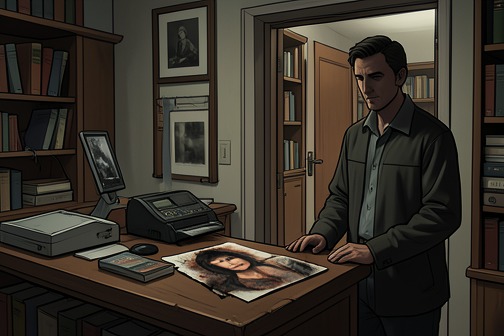
The discovery of the [Fortuny](entity:character-recall-character-fortuny-b3b9bd73b7a5) photograph gives [Daniel Sempere](entity:character-recall-character-daniel-sempere-0696c584b499) his first unmistakable visual link between [Julián Carax](entity:character-recall-character-juli-n-carax-262d09df7e21) and the hatmaking family whose name Carax had not used. Found on the counter after an unexplained disturbance in the bookshop, the scorched portrait turns a shadowy name into a young face and points [Daniel](entity:character-recall-character-daniel-ff434f340c88) toward the history of the Fortuny shop.
## The disturbance in the bookshop
Daniel is alone in the shop, leafing through the order book, when he hears slow footsteps. He calls out, wondering whether his father or Fermín is there, but gets no answer. A stifled laugh seems to reach him; then several books fall from the shelves. The sequence leaves him unsure whether an ordinary client has ignored the closed sign or whether something more unsettling is happening.
He takes a letter opener and moves cautiously toward the back-room door. The footsteps sound again, this time retreating. The bell rings, a draft comes in from the street, and Daniel peers into the shop to find no one. He double-locks the front door, then recognizes that he feels ridiculous and cowardly. Returning toward the back room, he notices a piece of paper on the counter. It is not a note but an old photograph, left behind in the empty shop.
## A portrait marked by fire
The photograph is a studio portrait printed on thick cardboard, its edges burned and its smoky image marked by charcoal-like fingerprints. It shows a smiling young couple: the man, about seventeen or eighteen, has light hair and delicate, aristocratic features; the woman, perhaps a year or two younger, has pale skin, a finely chiselled face, and short black hair. Her expression suggests happiness, and her teasing closeness to the man gives the image an intimacy that reaches Daniel before he knows who the pair are.
The setting in the portrait supplies a more concrete clue. Behind the couple is an ornate shop window filled with old-fashioned hats. Daniel estimates from their clothes that the photograph is at least twenty-five or thirty years old. Fire has destroyed nearly all the area around the surviving image, but a stern face can still be discerned behind the old-style counter, with a ghostly figure suggested behind lettering on the glass. The damage does not simply age the photograph: it makes the remnant of the scene appear to have survived a surrounding destruction.
## Identifying Carax and the Fortuny name
The lettering in the photograph reads “Sons of ANTONIO FORTUNY” and gives an establishment date of 1888. Daniel recognizes its relevance because, on his visit to the [Cemetery of Forgotten Books](entity:organization-recall-organization-cemetery-of-forg-23b02ca7e387), [Isaac](entity:character-recall-character-isaac-0cf7a5f5888b) had told him that Carax used his mother’s surname rather than his father’s, which was Fortuny. Carax’s father had owned a hat shop in Ronda de San Antonio. The portrait’s shop window and its printed name therefore connect a specific family business to the history Daniel has been investigating.
Looking again at the couple, Daniel becomes certain that the young man is Carax. The identification changes the photograph from an evocative relic into evidence: the boyish face belongs to the author whose identity and past have remained difficult to grasp. The photograph also places him in the Fortuny setting associated with his father, revealing a family connection behind the name Carax used.
## The image’s double meaning
Daniel reads the couple’s expressions as an image of light and hope, the promise of youth still visible in their faces. Yet the photograph’s scorched edges place that promise beside the destruction that has nearly erased the surrounding scene. The contrast becomes sharper when Daniel imagines that the smiling young Carax cannot see the flames closing in on him. That image foreshadows danger without explaining its cause: the surviving portrait preserves a moment of happiness, while its damage makes the future seem already present at its margins.
The scene is shaped by a shift from uncertainty to recognition. At first, Daniel can account for the noises only as a possible intrusion, and the empty shop makes the disturbance difficult to interpret. The photograph then supplies what the vanished visitor does not: a physical object whose lettering and faces can be examined. Its arrival brings Carax’s past into the bookshop not as a full account but as a trace—burned, partially legible, and specific enough to redirect Daniel’s investigation. The discovery thus joins suspense to historical evidence: the shop’s brief apparent haunting yields a portrait, and the portrait links Carax to Fortuny, his father’s surname, and Ronda de San Antonio.
Event 13
Fortuny and Sophie Carax's marriage
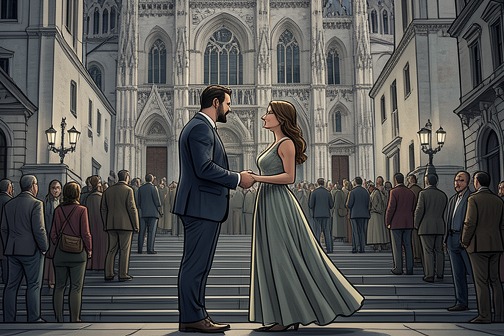
The marriage of [Antoni Fortuny](entity:character-recall-character-antoni-fortuny-f322900e82ec) and [Sophie Carax](entity:character-recall-character-sophie-carax-e62db76a80c8) joins a prosperous [Barcelona](entity:location-recall-location-barcelona-c4abb0c424bd) hatter to a young French music teacher, but the union quickly becomes a household shaped by unequal power, repudiated paternity, and estrangement. Its consequences reach beyond the couple: [Sophie](entity:character-recall-character-dc26c4121a1d)’s lasting injuries end her piano playing, while Julian grows up under a man who refuses to recognize him as a son.
## Courtship and Marriage
In 1899, Antoni Fortuny met Sophie Carax by the steps of Barcelona Cathedral after making a vow to St Eustace, whom he regarded as a saint especially responsive to prayers about love. [Fortuny](entity:character-recall-character-fortuny-b3b9bd73b7a5) was over thirty, an established bachelor, and eager to marry without delay. Sophie, a French woman living in a boarding house for young women on Calle Riera Alta, supported herself by giving private music and piano lessons to the children of Barcelona’s wealthiest families. Her father, a pianist at a theatre in Nîmes, had died of tuberculosis in 1886; she had no family or money to fall back on.
Fortuny, by contrast, had recently inherited a reputable hat shop on Ronda de San Antonio, where he had learned his trade and imagined one day teaching it to a son. He saw Sophie as beautiful, young, and suited to the future he wanted. After four months of persistent courtship, she accepted his proposal. A friend of Fortuny’s father warned that the marriage might be too convenient for Sophie and advised him to wait at least a year. Fortuny dismissed the caution, convinced that he already knew everything he needed to know about his future wife.
They married at the Basilica del Pino and planned a three-day honeymoon at a spa in Mongat. Before they left, Fortuny privately asked his father’s friend for advice about married life; the friend sarcastically told him to ask Sophie. The newlyweds returned to Barcelona after only two days. Neighbours reportedly saw Sophie crying when she came back into the building, an early sign that the marriage had not become the intimate partnership Fortuny had expected.
## Paternity and Domestic Rupture
According to a later account attributed to Sophie, Fortuny did not approach her sexually after the wedding. When she attempted to initiate intimacy, he rejected her, and six months later she told him she was pregnant by another man. The identity of the child’s father remained undisclosed: Sophie did not reveal it even after Fortuny responded with violence. The marriage thus shifted from a hurried courtship to a crisis in which Fortuny’s expectations of paternity and his authority over the household eclipsed Sophie’s safety.
Fortuny’s response was shaped by his own family history. Having seen his father strike his mother repeatedly, he told himself that he was doing what was right, stopping only when he feared another blow might kill Sophie. Unable to accept that he did not know the child’s father, he decided the child must be the devil’s and treated the pregnancy as evidence of sin. He filled the apartment with crucifixes, including the bedroom where Sophie had been confined. When she questioned whether he had gone mad, he struck her and drove her from the room. The following day she was still on the landing, and the injuries to her right hand never healed completely.
The assault also altered Sophie’s future beyond the immediate violence: she could no longer play the piano. Fortuny considered expelling her, but feared that the public scandal would harm the hat shop; he believed that customers would not buy hats from a man known to have been cuckolded. He kept her in the apartment, but assigned her a dark, cold room at the back, turning a marriage that had promised Sophie a home into a life of enforced separation within the same household.
## Julian’s Birth and the Divided Household
Sophie gave birth to a boy in that back room, assisted by two neighbours. Fortuny did not come home until three days after the birth. Sophie presented Julian as the son God had given him and pleaded that the child should not be punished for her actions: he needed a home and a father, she argued, and her sins were not his. Her appeal placed the question of fatherhood before Fortuny as a moral responsibility, even as he continued to regard Julian as the product of the betrayal he believed had taken place.
The first months after Julian’s birth remained difficult. Fortuny reduced Sophie to the status of a servant; they no longer shared a bed or a table, and spoke mainly when household matters required it. Once a month, usually around the full moon, Fortuny entered Sophie’s room at dawn and initiated an encounter without speaking. Sophie tried to use those brief moments to win back his affection, but the attempts produced no renewed closeness and no further children. After several years, Fortuny stopped visiting her room and spent his late nights reading the Gospels for consolation.
## Marriage’s Aftermath
Fortuny also tried, with the aid of the Gospels, to develop affection for Julian. The effort did not overcome his conviction that the boy was not his flesh and blood, and he saw none of himself in the child. Julian, in turn, showed little interest in hats or catechism. At Christmas he rearranged the figures in the Nativity scene and invented a plot in which the Magi kidnapped the infant Jesus; his notebooks filled with fantastical drawings and stories rather than signs of the life Fortuny had imagined teaching him.
The marriage therefore persists less as a partnership than as the origin of a divided family. Sophie and Fortuny remain under one roof, but separate rooms, meals, speech, and intimacy mark the distance between them. Fortuny’s refusal to accept Julian as his son makes the boy the focus of his deepest disappointment, while Julian’s imaginative interests carry him away from the hatter’s trade and religious instruction. The household’s defining consequence is not reconciliation but the lasting estrangement between husband, wife, and child.
Event 14
Julian Carax returns to Barcelona and is found dead
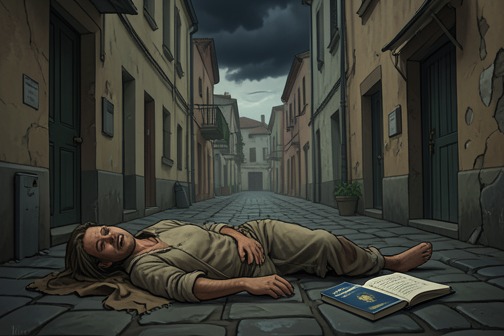
[Julian Carax](entity:character-recall-character-julian-carax-be183933964c)’s supposed return to [Barcelona](entity:location-recall-location-barcelona-c4abb0c424bd) ends, in the first account, with his death and an anonymous burial; a later reconstruction reveals that the body was [Miquel Moliner](entity:character-recall-character-miquel-moliner-6b3d2e9d9089)’s and that officials knowingly registered it under Carax’s name. The discrepancy makes the episode a turning point in the search for Carax: its few surviving documents appear to settle his fate, while the hidden history behind them demonstrates how an imposed identity can outlast the truth.
## The Reported Death
[Nuria Monfort](entity:character-recall-character-a3f0c940cf66) tells [Daniel Sempere](entity:character-recall-character-daniel-sempere-0696c584b499) that in the summer of 1936, shortly after the outbreak of the war, an employee at the municipal morgue contacted her publishing firm. The body, she says, had been found in an alley in the [Raval](entity:location-recall-location-2dac5c5405f4), dressed in rags and carrying a gunshot wound near the heart. A copy of [The Shadow of the Wind](entity:object-recall-object-the-shadow-of-the-wind-812d422ba692) and a passport were found with it. The passport indicated that Carax had crossed the French border about a month earlier, but no one knew where he had been since.
The evidence seemed to establish a clear sequence: Carax had returned to Barcelona, died there, and been identified through his papers. His father refused to claim the body, saying he had no son. After two days without a claimant, Carax was buried in a common grave at [Montjuic](entity:location-recall-location-7a322a000210) Cemetery. [Nuria](entity:character-recall-character-nuria-2fe21833825c) could not visit the grave because its location was unknown to her. The morgue employee had kept the book found in the dead man’s jacket; that surviving object prompted him to contact the publishers and brought the news to Nuria.
## A Death Made Official
Years later, an inquiry into the morgue records complicates Nuria’s account without making her report unreasonable: the records had been manipulated. Don Manuel, an employee who had been present, recalled that the body arrived in September 1936, rather than the summer date Nuria remembered. The police said it had been found in the Raval shortly before dawn and brought to the morgue by midmorning. Its only possessions were a book and a passport identifying the dead man as Julian [Fortuny](entity:character-recall-character-fortuny-b3b9bd73b7a5) Carax, born in Barcelona in [1900](entity:time-recall-time-1900-a6b17cfe5ca2).
The passport bore a stamp from the border post at La Junquera, recording Carax’s entry into Spain about a month earlier. It also led the authorities to Fortuny, who came to identify the body that evening. Don Manuel believed the fatal gunshot had been fired at close range. He also remembered that, after Fortuny left, a third policeman approached the corpse, kept the passport, and ordered that the body be sent to Montjuic for burial in a common grave at daybreak.
The policeman’s authority overrode the identification rules. When Don Manuel protested that the dead man’s identity was uncertain and that the body had already been dead for at least a day, the officer threatened him. He declared that the man was whoever he said he was, signed the registration form, and closed the case. Don Manuel later encountered the same signature on numerous death certificates for unidentified bodies. The incident thus connects Carax’s supposed death to a larger practice of turning uncertain wartime deaths into administratively fixed identities.
## The Body Was Miquel Moliner
The later account reveals that the man buried as Carax was Miquel Moliner. After Miquel was killed, an unidentified van removed the bodies of the dead policemen and those present were warned to forget what had happened. Miquel’s body was left in an alley in the Raval twelve hours later, so that his death would not be connected to the police officers’ deaths. By the time it reached the morgue, it had been dead for two days.
Miquel had left his own papers at home. The only identification available was a disfigured passport in Carax’s name, together with a copy of The Shadow of the Wind. The police therefore concluded that the dead man was Carax. When Fumero came to the morgue, Fortuny was summoned to identify the body. He had not seen Carax for two days and, on recognizing the dead man as someone who had visited him only a week earlier asking after Carax, began to scream and left. The police treated his reaction as confirmation. Fumero, who recognized Miquel, signed the forensic report identifying him as Carax and ordered immediate burial in a common grave at Montjuic.
## Documents, Memory, and Consequence
The two accounts share the same material clues—the passport, the book, the journey across the border, and the burial at Montjuic—but assign them different meanings. In Nuria’s account, they are the remains of a mystery: the evidence that Carax came home and died, with no known grave for his friend to mourn. In the later reconstruction, the same objects are instruments of misidentification, and the official record is shown to have been signed by a man who knew it was false.
The episode’s truth emerges through records and testimony that survive unevenly: a morgue employee’s recollection, a passport, the book found on the body, and a report signed under coercive authority. The false registration conceals Miquel’s death and sustains the belief that Carax died in Barcelona. It also shows why the distinction between a person and the name on a document matters in the novel: the identity entered into the record governs what can be known, while the people who remember the dead must reconstruct what the record erased.
Event 15
Federico Flavia's arrest and beating
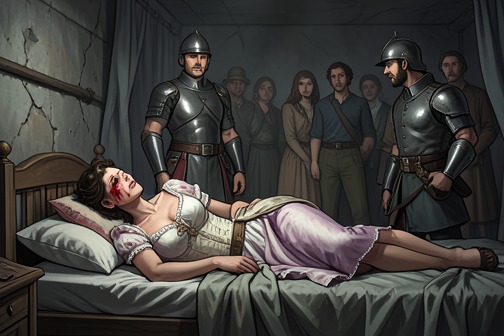
Federico Flavia’s arrest and beating turn an account of an alleged public scandal into a demonstration of institutional cruelty. The beloved watchmaker is arrested while performing in feminine costume, then, because Inspector Fumero intervenes, is placed overnight in a cell with violent prisoners. By morning he has been returned to his doorstep injured and without his costume belongings; the attack prompts the people at the bookshop to confront the ease with which authorities and ordinary onlookers punish someone for being different.
## Causes and Background
The episode reaches the bookshop through Don Anacleto, who presents it as a report assembled from information obtained near police headquarters. He says Federico was arrested in the early hours by two undercover members of the [Crime Squad](entity:organization-recall-organization-crime-squad-1fdeff50455a) while performing at a venue on Calle Escudillers. The audience included boys who had left a religious hospice, and complaints from some of their mothers framed the performance as a public scandal. A tabloid reporter soon arrived, turning the incident into sensational news. The arrest thus begins not with a serious offense described in the account, but with public exposure, moral disapproval, and the press’s appetite for a lurid story.
Don Anacleto adds that Federico, using the stage name “Lady of the Curls,” had been arrested in similar circumstances on two earlier occasions. His account distinguishes those previous arrests from the escalation that followed this one: the officers took Federico to the police station on Via Layetana, where Fumero was on duty. The appearance of the inspector changes the stakes. What might otherwise have ended in humiliation and a few slaps becomes a night in a dangerous cell, ordered as a punitive lesson.
## The Arrest and Fumero’s Intervention
Fumero is described as having returned from a raid on an illegal betting and beetle-racing establishment on Calle Vigatans. After speaking with the mother of one of the boys and with Pepet Guardiola, whom the report identifies as the alleged organizer of the escapade, he decides to take charge of Federico’s case. Don Anacleto says the inspector had been drinking heavily. Fumero then directs the sergeant on duty to place Federico in a common cell in the station’s lower basement, where he will spend the night among thugs and roughnecks.
The choice of cell is the decisive act in the episode. Don Anacleto describes it as notorious for poor conditions and dangerous company, and says that placing an ordinary citizen there is treated by inmates as a welcome disruption to prison routine. Federico is not merely detained: Fumero makes the prospect of violence part of the punishment. Fermin recognizes the inspector’s name with a shudder, a brief reaction that connects this abuse to the wider fear surrounding Fumero without diverting attention from Federico’s immediate ordeal.
## Federico’s Character and the Night in Custody
Don Anacleto’s portrait of Federico sharpens the injustice of what follows. He presents him as gentle, devout, and generous: even a fly that enters his shop is allowed to escape rather than being killed. Federico is a skilled repairer of watches and sewing machines, and a well-liked neighbor whose occasional night performances are known even to those who disapprove of them. The account does not suggest that his private life harms anyone; instead, his vulnerability lies in the contrast between his kindness and the hostility directed at his difference.
During the night, the other prisoners assault Federico and taunt him, while the rest of the cell joins in the humiliation. The episode’s report makes clear that he is left to face violence after Fumero deliberately places him in that setting. The scene shifts the meaning of the arrest: the state’s custody does not protect him from harm but supplies the conditions in which others can inflict it. Federico’s status as a respected local tradesman offers no shield once he has been marked as an acceptable target.
## Return Home and Public Response
Federico lives with his elderly, deaf mother, La Pepita, who has no idea what has happened during the night. Halfway through the morning, a gray police van leaves him at his own doorstep. He is covered in blood, his dress is torn, his wig and collection of costume jewelry are gone, and his face bears cuts and bruises. The baker’s son finds him crouched in the doorway, trembling and crying. These concrete remnants of the night make the consequences unmistakable: the police have returned Federico to his neighborhood, but not safely or with his dignity intact.
The account produces a stunned silence at the bookshop. Merceditas cries, then insists that Federico has a good heart and minds his own business; she sees no reason his performances should matter to anyone else. Fermin rejects her description of the perpetrators as simply evil. He argues that cruelty can also arise from unthinking conformity: people convinced they are doing right may attack anyone they regard as different, whether the difference concerns language, religion, nationality, skin color, or leisure. His response turns Federico’s story into a broader indictment of sanctimonious prejudice, while keeping the focus on the specific harm done to a neighbor who had been known for his kindness.
## Significance
The episode links press sensationalism, moral policing, and physical abuse in a single chain. A complaint and a lurid newspaper account make Federico’s performance visible as a scandal; Fumero uses that public judgment to justify a punitive detention; the cell then becomes the setting for the violence that leaves Federico frightened and injured. The sequence shows how a person can be made vulnerable not through any evidence of harm to others, but through the combined power of accusation, official discretion, and social contempt.
Its final contrast is between Federico’s quiet generosity and the confident cruelty inflicted in the name of order. The neighbors’ grief and Fermin’s distinction between deliberate evil and unthinking bigotry do not undo what happened, but they refuse the official framing of Federico as the source of the scandal. The real outrage, the episode suggests, lies in the punishment of difference and in the authorities’ part in making that punishment possible.
Event 16
Daniel discovers clues about Penelope in Fortuny's old home
[Daniel discovers clues about Penelope in Fortuny's old home](entity:event-recall-event-734d2c8a6851), where a concealed key, a garden photograph, and a long-preserved letter connect the abandoned rooms to Julian and Penelope's past. The discovery changes the meaning of the house's locked spaces: what first seems like a repository of neglect becomes a broken archive of affection, separation, and information kept from Julian.
## The abandoned home and its locked room
The home announces its history through neglect. When [Daniel](entity:character-recall-character-daniel-ff434f340c88) pushes open the front door, he finds a dark corridor, dust and grime, broken tiles, and footprints leading into the apartment. The prints matter because they disturb the impression that the house has simply been left to decay: someone has entered recently. Following them, Daniel reaches a locked room, while the caretaker, increasingly uneasy, urges him to leave.
In an unlocked bedroom, amid ordinary remnants of a former life, Daniel finds a carved wooden music box on the bedside table. Its mechanism will not play properly at first. When he lifts the cover, a gold key is lodged inside; removing it allows the music to resume. Daniel recognizes the tune by Ravel and realizes that the key may open the room the caretaker has warned him not to disturb. A household object thus serves both as concealment and as a practical route into the house's central secret.
## A room organized around absence
The key opens a room whose window looks onto the yard. Yellowed newspaper blocks the light, and Daniel tears it away to see inside. Crucifixes fill the room: suspended from strings, fixed to the walls, and marked across furniture, tiles, and mirrors. The footprints continue around a bare bed reduced to wires and worm-eaten wood. The room is not merely disused; its dense religious imagery and stripped furnishings make it a place shaped by anxiety and absence.
A roll-top desk beneath the window offers a more tangible record. Its drawers have been forced open and are empty, while the joins show that the desk has been opened recently. Yet Daniel finds notebooks inside. Their pages mix drawings, isolated words, mathematical exercises, quotations, and unfinished poems. Repeated sketches include a man made of flames, a figure that might be an angel or a reptile coiled around a cross, and a vast, fantastical house. These fragments reveal [Julian Carax](entity:character-recall-character-julian-carax-be183933964c)'s youthful drawing and writing, but do not explain the room or restore what its emptied drawers once contained.
## The photograph and the name on its back
A photograph slips from the final notebook as Daniel is about to return it. He recognizes the girl from another picture: here she is posed in a luxurious garden, with the house Daniel has seen in Carax's sketches visible beyond the treetops. He identifies it as [The White Friar](entity:location-recall-location-723bf13fbb95), on Avenida del Tibidabo. On the reverse, the short inscription reads, “Penelope, who loves you.” The photograph joins a face, a place, and a declaration of love in one object, giving Daniel direct evidence of Penelope's connection to Carax and the house that appears in his drawings.
Daniel pockets the photograph and asks the caretaker about a letter that arrived after Julian left for [Paris](entity:location-recall-location-657453741ed3). She admits that, rather than throwing it away as Julian's father had instructed, she kept it in the entrance-hall cabinet in case the Frenchwoman returned. The envelope remains among stopped watches, buttons, and obsolete coins: another private document preserved among the house's discarded remnants. Daniel takes it away and reads it later that night.
## Penelope's letter and the withheld message
The envelope is addressed to Julian Carax and bears an October [1919](entity:time-recall-time-1919-e95757725058) postmark. Its return address identifies [Penelope Aldaya](entity:character-recall-character-193e8fd6b78c) at Avenida del Tibidabo, 32, [Barcelona](entity:location-recall-location-barcelona-c4abb0c424bd). The old letter is written in blue ink on ochre paper and signed by Penelope. Its survival gives Daniel access to a voice that the locked room and the photograph alone could not supply.
Penelope writes that she learned through Jorge that Julian had left Barcelona to pursue his dreams. She had hoped to see him once more, but says that events did not unfold as they had planned. She expects Julian to think she failed to keep her promise and lacked courage. She also recalls trying to reach him through Miquel, only to be told that Julian wanted nothing more to do with her. Her questions about what Julian was told expose the gap between their beliefs: she imagines him leaving convinced she had betrayed him, while she insists that she loved him and wishes him happiness. The letter does not resolve every circumstance behind their separation, but it makes clear that Julian's departure was followed by a serious misunderstanding and that Penelope's attempt to communicate did not reach him.
## Evidence preserved against erasure
The clues form a chain of custody as important as their contents. The photograph lies among Carax's notebooks; the key is hidden inside a music box; the letter survives because the caretaker disobeys the order to discard it. Each object has been preserved in a different place, and each supplies what another lacks: the key gives access, the photograph connects Penelope to The White Friar, and the letter records her account of the separation. Daniel's discovery turns scattered keepsakes into a partial history, while the recently disturbed dust and forced desk drawers suggest that the house's past has not remained untouched.
The episode also makes the recovery of truth depend on private preservation rather than an official record. Later evidence about Carax's reported death demonstrates the danger of trusting documents at face value: the morgue's records identify a body through a passport and book, while a policeman threatens an employee who questions the identification and signs the registration himself. Against that manipulated public record, the photograph and letter offer intimate, incomplete testimony. Daniel's discovery does not make the past whole, but it gives him evidence with which to challenge the story that Julian and Penelope had simply chosen to abandon one another.