
The Institutional Cover-Up
The Wreck of the Titan, or FutilityThe evolving conflict between Rowland's truth and the steamship company's strategies to bury it.
increasing Bearing strength in each event
 decreasing
Bearing strength in each eventdecreasingThe Hundred Pound Offer
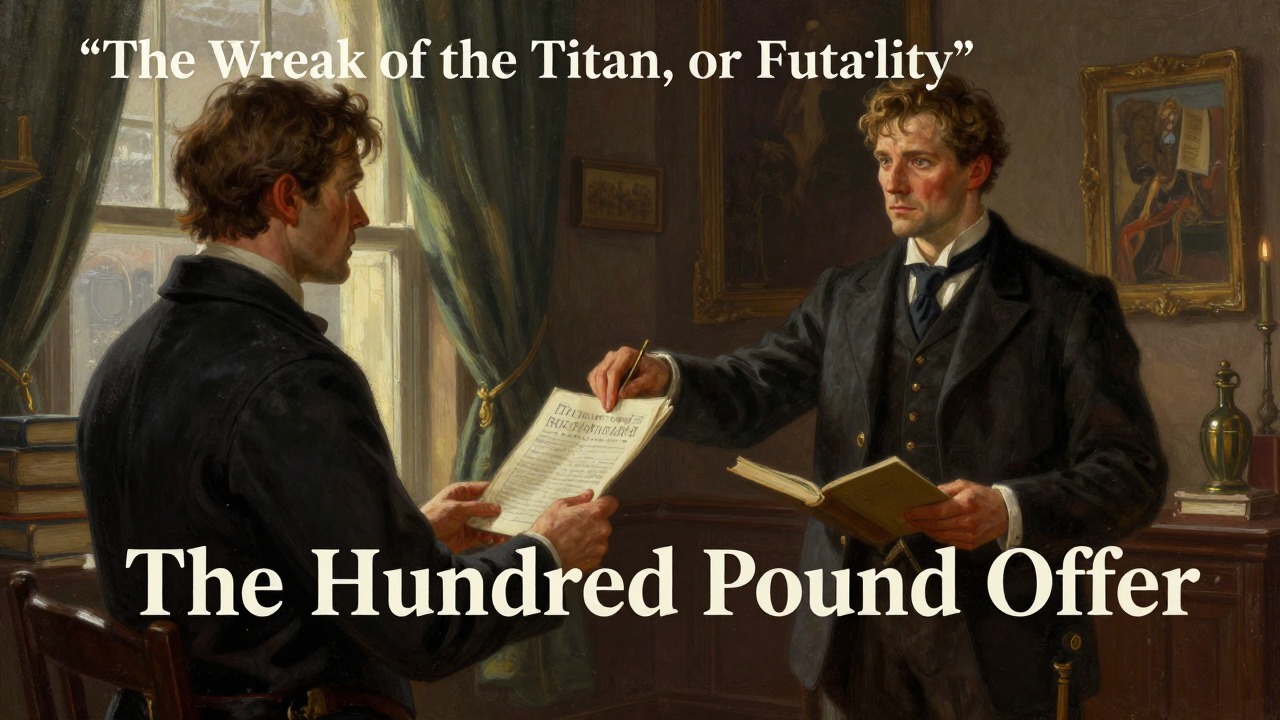
The Hundred Pound Offer
The Moment
Captain Bryce offers Rowland one hundred pounds for silence, then tries to hire him with a place on the bridge. Rowland refuses both, calling the collision wholesale murder.
Why It Matters
The offer is the company's first attempt to turn a witness into an accomplice. Its failure makes Rowland a marked man.
The conflict is now personal: the institution will try to destroy him.
The Drug Plan
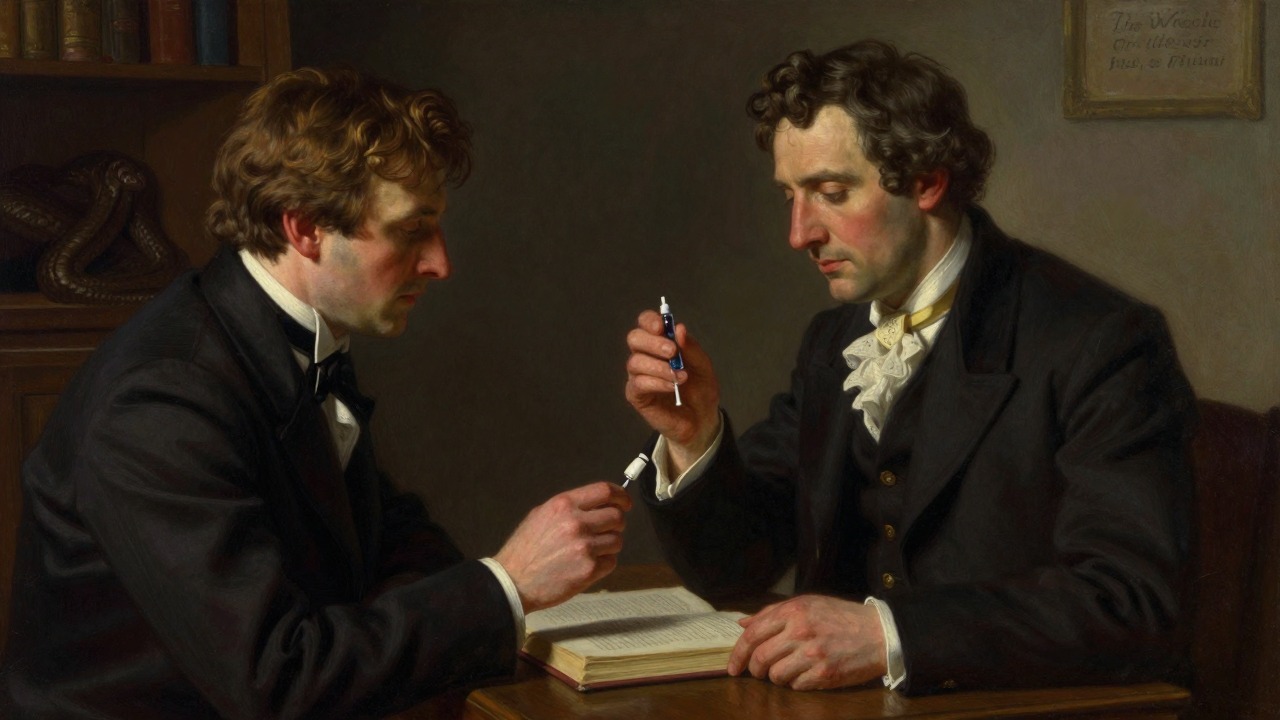
The Drug Plan
The Moment
The captain tells the first officer, "Fill him up and I'll see the surgeon, and study up on drugs." The plan is to make Rowland see snakes and ghosts so his testimony is worthless.
Why It Matters
The cover-up escalates from bribery to chemical assault. Rowland is drugged and placed on watch out of turn, so his ravings can be recorded.
This is the institution abusing its power over a single man's mind.
Temporary Banishment
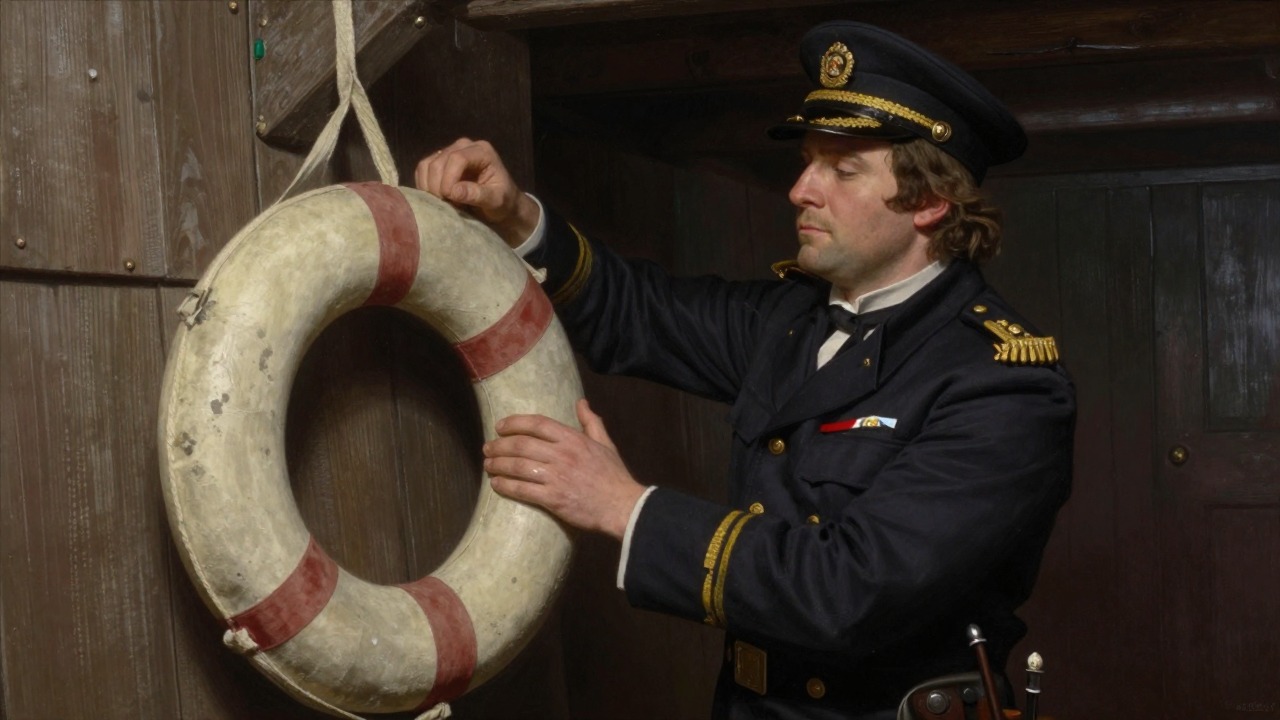
Temporary Banishment
The Moment
After Myra Selfridge accuses Rowland of attempted murder, Captain Bryce does not arrest him but keeps him out of sight in the 'tween-deck, painting life-buoys.
Why It Matters
The accusation is a convenient tool for the captain, but he does not believe it enough to make an arrest. He uses it to isolate Rowland.
The conflict now includes the false accusation spread by the passengers.
The Sworn Denial
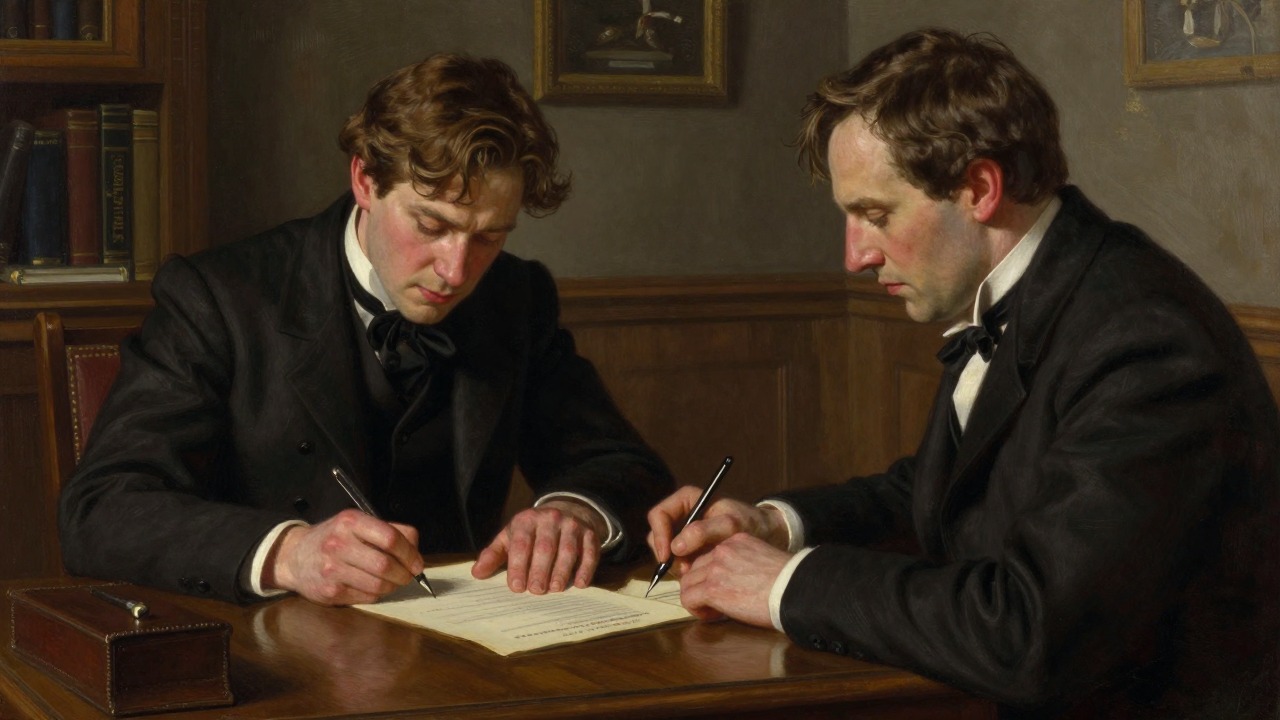
The Sworn Denial
The Moment
Captain Bryce signs an affidavit swearing that the voyage was uneventful. In Meyer's office, he and Austen echo each other's lies about Rowland's drunkenness.
Why It Matters
The institutional cover-up has become a legal fraud. But it is fragile, as Bryce's later slip shows.
The conflict is now being fought with documents and oaths rather than drugs.
Rowland's Moral Veto
Rowland's Moral Veto
The Moment
Meyer wants Rowland to swear that the Royal Age's lights were out. Rowland refuses and announces that the insurance will be paid because he will not testify.
Why It Matters
The conflict ends not with a courtroom ruling but with a moral veto. Rowland places the child's future above the company's punishment.
It is the only way to break the institutional machine without breaking an innocent life.
night of the Royal Age collision
the following day
after the complaint from Mrs. Selfridge
weeks later in London
at the height of the Lloyds dispute
