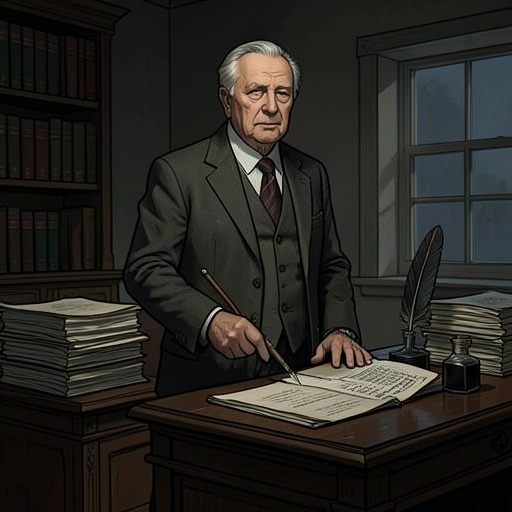
Harry Truman and Eddie Jacobson friendship and business partnership
TrumanHarry Truman and Eddie Jacobson’s friendship grew from a successful Army canteen into a civilian partnership that survived financial failure. They divided work according to their strengths, relied on one another without formal contracts, and remained close even after their store closed and its debts burdened Truman for years.
The Army Partnership
Truman and Jacobson became partners while serving at Camp Doniphan during the First World War. Truman had been assigned to run the regimental canteen, which sold everyday goods including candy, soft drinks, tobacco, cigarettes, shoelaces, and writing paper. He brought Jacobson, a former Kansas City clothing-store clerk, into the operation. Truman later acknowledged that Jacobson did much of the practical work of running it.
Their partnership took shape in daily routines as well as business. Each wrote letters to his sweetheart; when Jacobson went into town to replenish supplies, he mailed both men’s letters. Truman had brought a Stafford automobile to camp and had it stripped down for use as a truck. The two friends travelled together in it as it carried supplies around camp, making their business association a visible part of their shared Army life.
The canteen was financed by a two-dollar assessment on each man in the regiment, which provided $2,200 in starting capital. Its trade quickly expanded: Truman and Jacobson took in between $500 and $900 a day, and added a barbershop and tailor shop. After six months, the operation paid $10,000 in dividends. Its success made the partners popular and strengthened their confidence in working together. The business also made Jacobson known throughout camp, while Truman’s experience there helped turn their wartime collaboration into the basis for a later civilian venture.
Building Truman & Jacobson
A month before Truman married Bess Wallace in June 1919, he and Jacobson leased a store in downtown Kansas City. They had seen each other occasionally after the war, and decided to join forces again, expecting the canteen partnership to lead to success in retail. The choice was made quickly; the account also presents the new business as something Truman hoped would impress Bess and her mother.
Their store, Truman & Jacobson, opened at 104 West 12th Street, on the ground floor of the Glennon Hotel and across from the Muehlebach Hotel. The partners assigned themselves complementary roles: Truman kept the books, Jacobson handled buying, and they took turns serving customers. Jacobson brought twelve years of retail experience, while Truman took responsibility for the accounts and brought the venture a substantial investment.
They aimed to run a first-class men’s furnishing store, carrying well-known brands rather than suits or coats. Its stock included shirts, socks, ties, belts, underwear, and hats. The partners pooled their money and borrowed from a bank to remodel the premises and buy their initial inventory, which cost $35,000. Truman contributed $15,000, most of it raised by selling livestock and machinery from the Grandview farm. The family’s farming operation was then wound down: after Truman’s sister Mary Jane declined to continue running it without his participation, the family auctioned off much of its equipment and animals, and the land was rented to another farmer.
The store opened in late November 1919. Truman and Jacobson kept long hours, opening at eight in the morning and staying open until nine at night. The neighborhood’s busy hotels, visitors, and shops brought customers, and silk shirts were among the popular goods. Jacobson’s experience made him particularly suited to the merchandise that defined the business, while Truman presented himself in the shop as a neat, ready-to-serve proprietor. By the end of the year, the partners had sold $70,000 worth of goods.
Friendship Beyond the Shop
The store became a meeting place for Truman’s Army companions as well as a retail business. Former servicemen dropped in throughout the day; at times they crowded out ordinary customers. They turned to Truman for help with financial and legal matters, and he welcomed their presence. His loyalty extended beyond the shop: while still in France, he had lent money to men in his battery who lacked funds for leave, and former comrades continued to remember that assistance after the store opened.
The relationship rested on personal confidence rather than written safeguards. Jacobson’s wife, Bluma, later recalled that there were no signed agreements between the partners because they trusted one another, a trust that lasted throughout their lives. That recollection gives the partnership a dimension beyond the division of buying, bookkeeping, and customer service: their arrangement depended on the closeness they had established in the Army and carried into civilian life.
The friendship did not mean their households were equally close. Bluma later sensed distance between the Jacobsons and the Trumans, which she attributed to antisemitism among Bess Wallace’s relatives. She regarded the Wallaces as socially elevated and believed the Trumans could not comfortably bring Jewish friends into their home. The account also notes that Truman seldom brought friends to the house. This perceived boundary stood in contrast to the trust between the two men themselves, which endured through shared work and personal loyalty.
Failure and Lasting Obligation
Truman & Jacobson failed in 1922, with the business about $35,000 in debt. The partners discussed their choices and decided not to use bankruptcy to erase what they owed; instead, they would repay creditors as they could. Jacobson went on the road selling shirts and tried to meet his share of the obligation, but after three years he could no longer keep up and declared bankruptcy.
The store’s collapse did not end the friendship. Some time later, when the two met for lunch downtown, Truman noticed Jacobson’s worn suit, gave him money, and told him to buy new clothes. The gesture echoed the practical mutual support that had marked their earlier partnership, now offered when Jacobson was struggling rather than when the business was flourishing.
Truman continued paying on the haberdashery’s debts fifteen years after it closed. The obligation left him short of money for two decades, making the failed store a long personal consequence rather than a brief commercial setback. Yet the failure did not dissolve the bond: the partners’ original trust outlasted the enterprise, while the debt made the cost of their decision to honor creditors part of Truman’s life long after their shop had disappeared.