Harry S. Truman–Edward Jacobson friendship
TrumanThe friendship between Harry S. Truman and Edward Jacobson became politically consequential when Jacobson worked to arrange a meeting between Truman and Chaim Weizmann. Its importance lay in the combination of an established personal bond and a high-stakes request: Jacobson could approach the President not simply as a petitioner, but as a longtime friend with standing to appeal to Truman’s character. The episode shows friendship serving as a route into presidential decision-making, while also exposing the strain that arose when personal loyalty met the demands of public office.
A Personal Bond with Political Reach
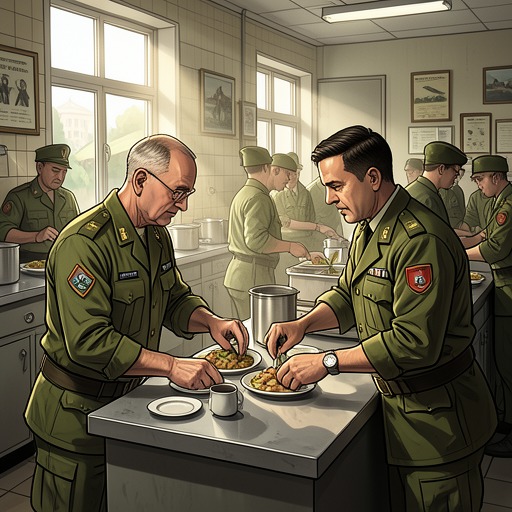
Truman and Jacobson’s connection preceded the White House. Their association included work together in an army canteen and a men’s clothing business, giving their friendship roots in shared experience outside national politics. That history mattered when Jacobson sought Truman’s attention on Weizmann’s behalf. The request did not arrive as an ordinary formal approach from a political organization; it came through a relationship in which Jacobson could address Truman personally and remind him of the person he had been throughout his life.
The surviving account makes the duration of the friendship part of the appeal itself. Jacobson invoked the years they had known one another and urged Truman to consider the course consistent with his own lifelong principles. The force of the intervention therefore depended not only on what Jacobson wanted, but on who was asking. Their bond gave him unusual access, yet it did not remove the political difficulty of the issue or guarantee that Truman would agree.
Pressure, Warning, and Strain
The approach unfolded amid pressure around Truman’s policy toward Palestine. The record identifies a call from Frank Goldman to Jacobson and a warning from Matt Connelly to Jacobson, placing the effort within a tense White House context rather than presenting it as a casual favor between friends. Truman’s reaction to Jacobson was itself remembered as a distinct moment; the account also notes that Jacobson took a drink. These details mark the encounter as emotionally charged, though they do not turn the friendship into a simple contest of personal wills.
Jacobson’s appeal drew on intimacy but also risked testing it. He spoke in terms of the friendship they had maintained over the years and appealed to Truman’s lifelong identity. The importance of that exchange is its directness: Jacobson could press the President in language grounded in their shared past, rather than relying solely on official channels. The account preserves Truman’s tension and reaction, but does not reduce his eventual response to friendship alone. The relationship opened a door; the decision remained Truman’s.
The Meeting with Weizmann
Jacobson’s effort succeeded in arranging a meeting between Truman and Weizmann. In the surrounding sequence, Truman addressed Congress on the international situation, and the subsequent account records that he and Weizmann reached an understanding. Jacobson’s role was thus not merely to express a view or convey a message: he helped create the occasion for a direct conversation between the President and the Zionist leader.
The meeting’s significance is sharpened by the distinction between access and outcome. Jacobson could use his personal standing to bring the two men together, but the resulting understanding belonged to Truman and Weizmann. The episode connects private friendship to public diplomacy without treating the two as interchangeable. A trusted friend could help shape who was heard and when; he could not make the President’s judgment for him.
Friendship as a Channel of Persuasion
The relationship illustrates a form of presidential influence that operates through personal trust as well as formal authority. Jacobson’s long connection with Truman gave his appeal a force that an impersonal request might not have had. At the same time, the warnings, Truman’s tension, and Jacobson’s own response make clear that closeness did not mean effortless agreement. Friendship could make a difficult approach possible precisely because it allowed candor, but candor carried the risk of discomfort and disagreement.
The episode’s lasting shape is therefore neither a story of private loyalty overriding public responsibility nor one of a friendship irrelevant to policy. Jacobson helped secure a meeting with Weizmann by appealing to a personal history and to Truman’s sense of himself; Truman then engaged with the issue as President. Their friendship mattered because it brought a consequential request within reach of the White House, while leaving the decision and its political meaning with Truman.