1815–1841
Solomon Young Heads West
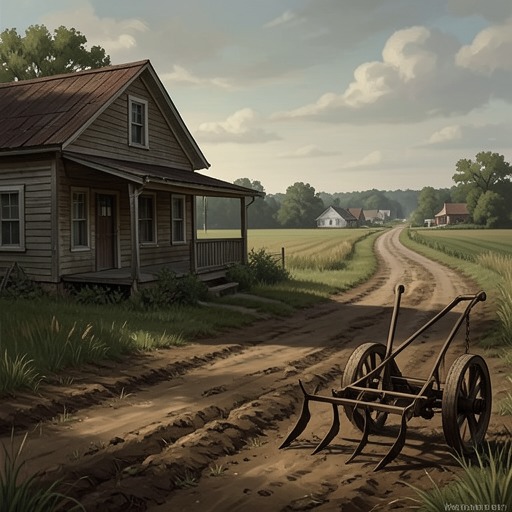
[Solomon Young](entity:character-recall-character-solomon-young-714ba4004f49) was born in [Kentucky](entity:location-recall-location-kentucky-cdc5c1d01274) in 1815 and grew up self-reliant after his mother died. In 1841 he and [Harriet Louisa Young](entity:character-recall-character-harriet-louisa-youn-e2af35a90048) left Kentucky with two small children, joining the migration into western [Missouri](entity:location-recall-location-missouri-a13afe2b2cd5).
The frontier promised fertile land but demanded hard work and resilience. The Youngs’ move began the family’s long attachment to [Jackson County](entity:location-recall-location-8b0827a973d0) and the countryside that would shape [Harry S. Truman](entity:character-recall-character-harry-s-truman-a94755353d6e).
About 1845–1846
The Truman Families Migrate
[Nancy Tyler Holmes](entity:character-recall-character-nancy-tyler-holmes-689dadfb0229) came west from [Kentucky](entity:location-recall-location-kentucky-cdc5c1d01274) with her children, including Mary Jane Holmes, who was pining for [Anderson Shipp Truman](entity:character-recall-character-anderson-shipp-trum-fa4e26c0abdd). Despite her mother’s disapproval, Mary Jane married him in Kentucky in 1846, and Anderson rode to [Missouri](entity:location-recall-location-missouri-a13afe2b2cd5) to seek her family’s blessing.
Mary Jane followed by steamboat, bringing with her the enslaved woman Hannah and Hannah’s child. The marriage joined the Truman and Holmes families in a border society where slavery, land, and kinship shaped daily life.
1844 onward
Solomon Claims Blue Ridge Land
After beginning on a rented farm near the [Missouri River](entity:location-recall-location-missouri-river-803f40a568d5), [Solomon Young](entity:character-recall-character-solomon-young-714ba4004f49) claimed eighty acres on Blue Ridge, paying the minimum public-land price. Harriet Louisa stayed with their children in a rough shelter while he rode to file the claim.
The family grew, and so did the farm. Young became a successful stockman and freighter, accumulating land and bringing home stories of arduous journeys across the plains; the brass telescope from those expeditions later became a treasured family object.
1831–1839
Conflict in Jackson County
The arrival of members of the [Church of Jesus Christ of Latter-day Saints](entity:organization-recall-organization-church-of-jesus-2200bb772134) intensified tensions in [Jackson County](entity:location-recall-location-8b0827a973d0). Their land purchases, antislavery views, and [Joseph Smith](entity:character-recall-character-joseph-smith-550057e1cec3)’s declaration that [Independence](entity:object-recall-object-independence-712807f2e4aa) would be their [City of Zion](entity:expression-recall-expression-city-of-zion-6fc70cbbece2) alarmed local settlers.
A mob destroyed their press and drove families from their homes. Governor [Lilburn W. Boggs](entity:character-recall-character-lilburn-w-boggs-d2e72af63a50) later ordered the Mormons expelled or “exterminated”; they left [Missouri](entity:location-recall-location-missouri-a13afe2b2cd5) in 1839, leaving a legacy of violence in the region.
1841–1850s
The Youngs Establish Their Farm
The Young family established itself on Blue Ridge, where rich prairie soil, timber, and grazing land rewarded Solomon’s skill with livestock. He acquired more acreage, built a substantial home and barn, and developed a trans-prairie freighting enterprise.
Harriet Louisa managed the home and children during his long absences. The farm became the foundation of the family’s prosperity and, decades later, the place where young Harry would form his earliest memories.
1854–1863
War Comes to the Border
The [Kansas](entity:location-recall-location-kansas-de2a58274d0b)-Nebraska Act reopened the slavery question and intensified conflict along the [Missouri](entity:location-recall-location-missouri-a13afe2b2cd5)-Kansas border. Raids, arson, murder, and reprisals made the region a civil war before the conflict began elsewhere in 1861.
The Young family had ties to the violence through Sarah Ann Young’s husband, [Jim Crow Chiles](entity:character-recall-character-jim-crow-chiles-ef93f65e5fc2), who rode with guerrillas. The [Lawrence Massacre](entity:event-recall-event-0ab996f8f1f7) and the burning of farms deepened the hatred between communities and left wounds that endured for generations.
August 1863
Order No. 11 Drives Families Out
After the [Lawrence Massacre](entity:event-recall-event-0ab996f8f1f7), Union commander [Thomas Ewing](entity:character-recall-character-thomas-ewing-43569cc6a2bb) issued [General Order No. 11](entity:rule-recall-rule-general-order-no-11-ea8873f437b3), requiring civilians in several [Missouri](entity:location-recall-location-missouri-a13afe2b2cd5) counties to leave their homes unless they lived near Union posts and could prove loyalty. Farms, crops, and buildings were destroyed as the region was depopulated.
The Youngs were allowed only one wagonload of possessions. Martha Ellen Young later remembered the family’s dusty exile toward [Kansas City](entity:location-recall-location-381bdb81ace1); the experience helped fix a lasting bitterness toward the Union forces among the family.
September 1873
Jim Crow Chiles Is Killed
[Jim Crow Chiles](entity:character-recall-character-jim-crow-chiles-ef93f65e5fc2)’s reputation for violence grew after the Civil War. In [Independence](entity:object-recall-object-independence-712807f2e4aa), he bullied townspeople and terrorized Black residents; deputy marshal [James Peacock](entity:character-recall-character-james-peacock-531c80c93770) finally confronted him outside the courthouse.
A gunfight left Chiles dead and his son Elijah fatally wounded. The tragedy shattered the Young family, and [Solomon Young](entity:character-recall-character-solomon-young-714ba4004f49) was said to have cursed his daughter Sarah Ann for marrying Chiles.
December 1881
Mattie and John Marry
Martha Ellen Young, called Mattie, married [John Anderson Truman](entity:character-recall-character-john-anderson-truma-3673c0a950db) at the Young home. They moved to Lamar, where John tried to build a livestock business, but the couple’s first child was stillborn.
Their second son, [Harry S. Truman](entity:character-recall-character-harry-s-truman-a94755353d6e), was born on May 8, 1884. The family soon moved back toward [Jackson County](entity:location-recall-location-8b0827a973d0), and the child spent most of his earliest years among the extended family on the Young farm.
1892–1893
Solomon Young’s Home Burns
[Solomon Young](entity:character-recall-character-solomon-young-714ba4004f49) died in 1892, when Harry was eight. Less than a year later, a fire destroyed the great Young house, leaving little behind except the brass telescope Solomon had given to Mattie.
The family built a smaller replacement home, but the old household of abundance and authority was gone. Harry later remembered his grandfather as a forceful, self-made man whose example made a boy feel he could amount to something.
1890s
The Boy Discovers Reading
The Trumans moved to [Independence](entity:object-recall-object-independence-712807f2e4aa) so Harry could attend school. His poor eyesight went unnoticed until his mother recognized that he could not see the fireworks; glasses transformed his view of the world and made him a conspicuous child.
Harry read widely, loved history, and practiced piano for hours. Quiet and shy among other children, he learned to observe people and teachers, while books and music became his private world and a lasting source of discipline.
1890s–1901
Bess Wallace Becomes His Ideal
At Sunday school, Harry met [Bess Wallace](entity:character-recall-character-bess-wallace-715cc1692ea1) and developed a lasting infatuation with her. She was confident, athletic, and socially prominent, while he was a serious, bookish boy who admired her from a distance.
He finished high school in 1901 without honors and hoped to attend West Point, but his eyesight barred him. The boy who had dreamed of becoming a general entered adulthood still uncertain of his path, though devoted to history, music, and Bess.
1901
John Truman Loses the Family Fortune
[John Anderson Truman](entity:character-recall-character-john-anderson-truma-3673c0a950db) speculated in wheat futures and lost nearly everything the family owned, including land and savings. The family sold its home and moved to [Kansas City](entity:location-recall-location-381bdb81ace1), where John took a night-watchman’s job.
Harry’s college plans ended. He worked at the Kansas City Star and then as a timekeeper on a railroad construction crew, where he encountered rough laborers and received his first public commendation. The financial collapse redirected his life from school and music toward work and family duty.
1905–1906
Harry Returns to the Farm
After jobs at two [Kansas City](entity:location-recall-location-381bdb81ace1) banks, Harry was called home when John’s farming ventures failed. He returned to Blue Ridge to help his father and support the family, accepting long days of plowing, planting, and livestock work.
Though he disliked parts of farm labor, he learned to manage crops, men, and money. Working beside his father brought them closer, and farming gave Harry a practical education that he later connected to his common sense and work habits.
1910–1913
Courtship Letters and Engagement
Harry renewed his connection with [Bess Wallace](entity:character-recall-character-bess-wallace-715cc1692ea1) in 1910 and traveled repeatedly from the farm to [Independence](entity:object-recall-object-independence-712807f2e4aa) to see her. Shy in person, he poured himself into long letters about farming, books, money, and his hopes for the future.
Bess initially rejected his proposal, but Harry persisted with humor and determination. In November 1913 she agreed that if she married, she would marry him; they became secretly engaged, giving Harry a new confidence and a reason to imagine a life beyond the farm.
1911–1917
The Farm and the Failed Mine
After John broke his leg, Harry took charge of the farm; then a calf broke Harry’s leg. Their shared work deepened their bond, and John made Harry a full partner when Vivian married and moved away.
Harry tried to escape poverty through a zinc mine in [Oklahoma](entity:location-recall-location-86e37a74e4ef) and later an oil venture, but both failed and left him in debt. He continued farming, yet knew that the farm was not his calling. The coming war would offer a different way to prove himself.
Spring 1917
Truman Organizes an Artillery Battery
Though beyond the draft age, visually impaired, and responsible for his mother and sister, Harry chose to join the National Guard after the [United States](entity:location-recall-location-united-states-2f533bc8d0b9) entered [World War I](entity:event-recall-event-world-war-i-f6ecad7962bb). He helped organize an artillery battery and was elected a first lieutenant.
The decision was a turning point: he left the farm and Bess to serve, believing the war was a duty and a chance to prove himself. His patriotic idealism was mixed with personal ambition and the conviction that he could not stand aside.
1917–early 1918
Training at Camp Doniphan
At [Camp Doniphan](entity:location-recall-location-camp-doniphan-62da754f5fbd) in [Oklahoma](entity:location-recall-location-86e37a74e4ef), Truman endured cold, dust, and demanding artillery instruction. He ran the regiment’s canteen with [Edward Jacobson](entity:character-recall-character-edward-jacobson-402fabdd9e49), whose business skill complemented Truman’s sociability, and the two became close friends.
Truman gained confidence as an officer and learned to command men fairly. His training included the French 75, field regulations, and the mathematics of artillery; he worried about failing but worked relentlessly and earned the respect of fellow officers.
July 1918
Captain Truman Takes Battery D
After training in [France](entity:location-recall-location-4f282e1af8a7), Truman learned that he had been promoted to captain and assigned to command Battery D, a rough, largely Irish Catholic unit. He feared the men would reject him, but quickly established discipline by demoting troublesome noncommissioned officers and insisting on fair treatment.
The battery became one of the regiment’s best. Truman’s approach was direct and personal: he would serve the men if they served him. His command gave him a sense of purpose and authority he had never known before.
August 29, 1918
The Battle of Who Run
During Battery D’s first German barrage in the [Vosges Mountains](entity:location-recall-location-d427928e6fac), confusion erupted in darkness and rain. A shell burst near Truman, his horse fell on him, and some men ran as panic spread through the battery.
Truman recovered and shouted the men back into order, furious and frightened but unwilling to abandon them. No one was killed in the episode. The men came to regard him as brave and lucky, and the incident became the jokingly named [Battle of Who Run](entity:expression-recall-expression-battle-of-who-run-bc00ec6e0e91).
September–October 1918
Battery D Enters the Argonne
After forced marches and mud-choked roads, Battery D reached the Meuse-Argonne front. Truman directed the battery through the opening barrage and ordered fire on a German battery threatening another American division, despite standing orders limiting his targets.
The artillerymen endured shelling, exhaustion, and the sight of dead American soldiers. Truman’s judgment under fire strengthened his men’s trust in him, while the scale of the offensive showed him the terrible cost of modern war.
November 11, 1918
The Armistice Ends the Fighting
Battery D fired its last barrage at 10:45 in the morning, fifteen minutes before the Armistice took effect. The silence after months of artillery fire felt almost deafening, and the men celebrated with the French troops nearby.
Truman was relieved and proud that his men had survived. He later described the war as the most intense experience of his life, while carrying home a deeper confidence in his ability to lead and a lasting sense of responsibility for those under his command.
1919
Truman Returns and Marries Bess
After leave in [Paris](entity:location-recall-location-paris-c02b439ce220) and the Riviera, Truman returned to the [United States](entity:location-recall-location-united-states-2f533bc8d0b9), seasick but eager to reach home. His regiment paraded through [Kansas City](entity:location-recall-location-381bdb81ace1) to a jubilant welcome, and the former captain came back with the loyalty of men who had served under him.
On June 28, he married [Bess Wallace](entity:character-recall-character-bess-wallace-715cc1692ea1) at [Trinity Episcopal Church](entity:location-recall-location-3a3c8874c87e) in [Independence](entity:object-recall-object-independence-712807f2e4aa). They began married life in her family’s house, while Truman and [Edward Jacobson](entity:character-recall-character-edward-jacobson-402fabdd9e49) opened a men’s furnishing store in Kansas City, hoping to turn their wartime partnership into a prosperous business.
1919–1922
The Haberdashery Fails
Truman & Jacobson opened on West 12th Street in late 1919, selling shirts, ties, and other men’s furnishings. The shop became a gathering place for Truman’s Army friends, and its first year seemed promising.
The postwar collapse in farm prices and the depression drained away customers. The partners borrowed to keep the business alive, but it failed in 1922 with substantial debts. Truman continued to repay creditors for years, a failure that left him financially vulnerable just as politics offered a new path.
1921–1922
The Pendergasts Recruit Truman
As the haberdashery weakened, [Jim Pendergast](entity:character-recall-character-jim-pendergast-1abc335c763a) and his father, [Michael Pendergast](entity:character-recall-character-michael-pendergast-2b2aa5f85dc7), approached Truman about running for eastern judge of [Jackson County](entity:location-recall-location-8b0827a973d0). They saw in the former farmer and war captain an honest, locally rooted candidate who could appeal to voters beyond [Kansas City](entity:location-recall-location-381bdb81ace1).
Truman accepted, grateful for the opportunity and aware that the political organization was rescuing him from business failure. He later credited Michael Pendergast as his political mentor, while understanding that the organization expected loyalty and patronage in return.
Summer 1922
The Klan Demands a Pledge
During his campaign for eastern judge, Truman briefly considered joining the [Ku Klux Klan](entity:organization-recall-organization-ku-klux-klan-459a96befb1c) after a friend urged him to do so. At a private meeting, a Klan organizer demanded that Truman promise never to hire Catholics.
Truman rejected the condition, citing his Catholic soldiers in [France](entity:location-recall-location-4f282e1af8a7) and insisting he would choose employees himself. The episode exposed an ugly accommodation to ambition, but his refusal to accept the Klan’s anti-Catholic terms helped preserve his standing with the Pendergasts and his former Battery D men.
August 1922
Truman Wins the Judgeship
Truman campaigned across the eastern district, often with help from his Army friends and local supporters. His speeches began awkwardly but improved as he learned to address crowds directly, particularly on better roads and honest county management.
A chaotic primary election ended with Truman defeating the Rabbit candidate by 279 votes. The victory made him a county judge in the administrative sense and began his public career, though the result depended on factional politics as well as his own appeal.
1923–1933
The County Court Rebuilds Roads
As eastern judge and later presiding judge, Truman worked with [Henry McElroy](entity:character-recall-character-henry-mcelroy-11442ba24313) to cut county debt, improve services, and modernize a road system that had often collapsed like pie crust. Truman learned every road and bridge and insisted that contracts be awarded and completed honestly.
He backed major bond issues and personally promoted a planned system of concrete roads, a new hospital, and public buildings. The work earned praise even from political opponents and gave Truman a reputation as an unusually capable administrator within a machine-dominated county government.
1929–1933
A Kidnapping Scare and Political Strain
As presiding judge, Truman faced the pressures of the Depression, job seekers, county finances, and an attempted kidnapping of six-year-old Margaret from school. The family’s fears deepened, while Truman carried the burden of balancing public responsibilities with private life.
He remained scrupulous about money and resisted opportunities to profit from county contracts. Yet his close association with the Pendergast organization made him vulnerable to suspicion, especially as the machine’s political reach grew and [Kansas City](entity:location-recall-location-381bdb81ace1)’s reputation for corruption worsened.
October 1932
Francis Wilson Dies
Truman hoped to become the Democratic nominee for governor, but [Tom Pendergast](entity:character-recall-character-3f25d27c3575) chose [Francis M. Wilson](entity:character-recall-character-m-350869db9039) instead. When Wilson died shortly before the election, Truman again sought the nomination, only to be passed over for [Guy B. Park](entity:character-recall-character-b-a1f7dbcefc2b).
The rejection left Truman uncertain of his future: he could not run again for county judge and had little private income. He retreated to [Excelsior Springs](entity:location-recall-location-ee89e8920bf8), wondering whether the political career he had built depended entirely on the Big Boss’s favor.
May 1934
Truman Enters the Senate Race
After missing out on a congressional race, Truman was unexpectedly asked to run for the [United States Senate](entity:organization-recall-organization-united-states-se-8f1ffd78883c) when other candidates declined. He was broke and politically dependent on the Pendergast organization, but agreed to serve the party and was given modest start-up funds.
The candidacy was an unlikely promotion for a former county judge with little national experience. Truman later acknowledged that the Pendergasts had rescued him from failure, yet he entered the race determined to be more than a machine’s decorative candidate.
1940
The Senate Campaign Against Stark
In his reelection campaign, Truman faced Governor [Lloyd C. Stark](entity:character-recall-character-lloyd-c-stark-d77dca036f7f), who had once received Truman’s help with the Pendergast organization but now attacked him as a machine tool. The campaign was nearly bankrupt, and the organization was weakened by the prosecution of its leaders.
Truman ran on his record and his support for Roosevelt’s [New Deal](entity:time-recall-time-new-deal-c46ccedff353), while speaking for military preparedness as war spread through [Europe](entity:location-recall-location-europe-90be8cc79c46). He won a narrow primary victory with crucial help from [Bennett Clark](entity:character-recall-character-bennett-clark-4bdd9ac1d548) and [Robert E. Hannegan](entity:character-recall-character-robert-e-hannegan-0539db2dddee), then defeated his Republican opponent in November.
January 1935
Truman Joins the Senate
Truman arrived in Washington as a freshman senator, little known and burdened by the label “Senator from Pendergast.” He worked hard on committees, studied railroad finance, and learned the Senate’s customs from older colleagues.
He supported [New Deal](entity:time-recall-time-new-deal-c46ccedff353) legislation but rarely spoke on the floor. His diligence and willingness to listen gradually earned respect, even from senators who distrusted his [Kansas City](entity:location-recall-location-381bdb81ace1) connections.
1941
The Truman Committee Is Born
Concerned by waste, shortages, and profiteering in defense construction, Truman proposed a special Senate committee to investigate the national defense program. The proposal survived fears that congressional scrutiny might delay rearmament, and the Senate established the committee with Truman as chairman.
He promised staff that the inquiry would be fair, fact-based, and free of grandstanding. The committee became a turning point in his career, giving the once-obscure senator a national reputation for careful investigation and practical oversight.
December 1941
The United States Enters World War II
Truman was in [Missouri](entity:location-recall-location-missouri-a13afe2b2cd5) when [Japan](entity:location-recall-location-japan-2b426de89e42) attacked [Pearl Harbor](entity:location-recall-location-8eb075bc762f). To return for Congress’s response, he arranged an improvised series of flights through the night and reached Washington in time for the declaration of war.
The attack transformed the committee’s task. Its investigations now sought to expose waste without weakening the war effort, while Truman’s sense of responsibility grew with the scale of the conflict.
1941–1943
The Committee Exposes Defense Failures
The [Truman Committee](entity:organization-recall-organization-truman-committee-a04d0e0ee66d) uncovered waste in military camps, cost-plus contracts, aircraft production, steel testing, and the supply of strategic materials. Truman insisted that witnesses be treated fairly while demanding clear answers from business executives and military officials.
The committee’s work helped improve procurement and public confidence in the war effort. Truman emerged as a skilled investigator, confronting corporate influence without claiming that every failure reflected deliberate disloyalty.
1943–1944
Truman Learns of the Secret Project
Truman learned that the [Hanford](entity:location-recall-location-13bbee825230) project was tied to a secret weapon but did not know its technical details. He respected [Henry L. Stimson](entity:character-recall-character-henry-l-stimson-405f18e0fdfb)’s refusal to let committee investigators into the site, though his repeated inquiries later irritated the Secretary of War.
In 1944, senior congressional leaders were secretly briefed on the atomic bomb, but Truman was excluded. The future Vice President thus remained unaware of a project that would soon become central to his presidency.
July 1944
The Vice-Presidential Convention Fight
At the Democratic National Convention, party leaders struggled to replace [Henry A. Wallace](entity:character-recall-character-henry-a-wallace-f8ede29e951a) while [Franklin Roosevelt](entity:character-recall-character-de30ccd3e28a) withheld a clear preference. Truman insisted he did not want the nomination and agreed to nominate [James F. Byrnes](entity:character-recall-character-james-f-byrnes-af3109cafbb2), believing Byrnes was Roosevelt’s choice.
As the convention’s maneuvering shifted, Roosevelt’s uncertain messages and the anti-Wallace coalition turned toward Truman. After an emotional final appeal from [Robert E. Hannegan](entity:character-recall-character-robert-e-hannegan-0539db2dddee), Truman accepted the nomination, still stunned by how quickly the decision had overtaken him.
Summer–November 1944
Truman Campaigns with Roosevelt
Truman campaigned across the country as Roosevelt’s running mate, stressing experienced leadership, victory in the war, and a durable peace. He remained uneasy about succeeding a President whose health was visibly failing, while his own public role required confidence and loyalty.
The ticket won a close election. Truman became Vice President, aware that the office could place him only a heartbeat away from the presidency and still fearful of what that responsibility would mean.
January–April 1945
The Vice President Is Kept Outside
During his eighty-two days as Vice President, Truman presided over the Senate, attended receptions, and maintained his familiar relationships on [Capitol Hill](entity:location-recall-location-07ccb837b262). Roosevelt was often absent, and Truman was given little information about diplomacy, the war’s end, or the atomic project.
He enjoyed the social life but worried about Roosevelt’s health and the burdens of the office. The gap between his constitutional position and his actual knowledge became painfully clear when he was summoned to the [White House](entity:location-recall-location-white-house-91db6c1cd9dd) on April 12.
April 12, 1945
Roosevelt Dies and Truman Succeeds
While Truman was at the Capitol, [Eleanor Roosevelt](entity:character-recall-character-eleanor-roosevelt-3d6b52f95d77) told him that [Franklin Roosevelt](entity:character-recall-character-de30ccd3e28a) had died. He was unable to speak and asked only whether there was anything he could do for her; she replied that he was the one now in trouble.
That evening Truman took the oath of office in the Cabinet Room, under a portrait of [Woodrow Wilson](entity:character-recall-character-woodrow-wilson-38391917f7db). He was suddenly responsible for a global war, a fragile peace, and a secret weapon he had not yet been fully told about.
April 13–16, 1945
A New President Faces the World
Truman’s first days were spent meeting the Cabinet, military chiefs, congressional leaders, and his old Senate friends. He asked for rapid reports, insisted on making decisions himself, and reached out to Congress rather than waiting for its leaders to come to him.
His first address to Congress was warmly received. He promised to carry forward Roosevelt’s ideals, prosecute the war, and seek a lasting peace, while privately feeling unprepared and overwhelmed by the responsibility.
April 1945
Truman Confronts Molotov
[Averell Harriman](entity:character-recall-character-averell-harriman-36ea34f484ce) briefed Truman on Soviet pressure in [Eastern Europe](entity:location-recall-location-eastern-europe-304a0e697562) and the failure to honor agreements over [Poland](entity:location-recall-location-poland-919a7f7f62ac). Truman said he was not afraid of the Russians and intended to be firm, while still hoping cooperation remained possible.
When [Vyacheslav Molotov](entity:character-recall-character-vyacheslav-molotov-30530d7467ff) visited Washington, Truman demanded that the Soviet government honor its [Yalta](entity:location-recall-location-yalta-c7645532b2a1) commitments. The meeting established a tougher tone in U.S.-Soviet relations, though Truman still believed he could deal personally with Stalin.
April 25, 1945
The Atomic Bomb Is Revealed
[Henry L. Stimson](entity:character-recall-character-henry-l-stimson-405f18e0fdfb) and General [Leslie Groves](entity:character-recall-character-5d57b95ea936) told Truman that the [United States](entity:location-recall-location-united-states-2f533bc8d0b9) was developing a weapon capable of destroying an entire city. Truman read the report and authorized a special committee to study its implications.
He now had to face both the military possibilities and the historic consequences of the bomb. The knowledge added another burden to an already crowded presidency, while leaving him to decide how the new weapon should be used.
May 1945
Victory in Europe
[Germany](entity:location-recall-location-germany-2e3723c2f347) surrendered unconditionally, ending the war in [Europe](entity:location-recall-location-europe-90be8cc79c46). Truman announced the victory on his sixty-first birthday, while warning that the Pacific war remained unfinished.
He celebrated with the country but quickly turned to the future: rebuilding Europe, handling relations with the [Soviet Union](entity:location-recall-location-soviet-union-6cec7d1fe3b4), and determining how to end the war against [Japan](entity:location-recall-location-japan-2b426de89e42) without an invasion that might cost immense numbers of lives.
July 16, 1945
The First Trinity Test
At [Potsdam](entity:location-recall-location-d1a1a7572934), Truman received word that the first atomic test in New [Mexico](entity:location-recall-location-mexico-6f79111cb935) had succeeded beyond expectations. The news visibly strengthened his confidence at the conference table, though the scale of the weapon and its future consequences troubled him.
He informed [Joseph Stalin](entity:character-recall-character-joseph-stalin-b2f2c907a5f9) that the [United States](entity:location-recall-location-united-states-2f533bc8d0b9) had a new weapon of unusual destructive force. Stalin appeared uncurious, but already knew far more about the project than Truman realized.
July–August 1945
The Potsdam Conference
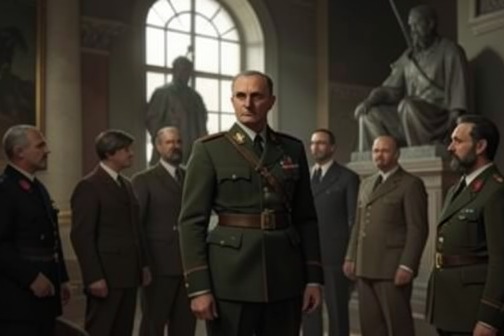
Truman met [Winston Churchill](entity:character-recall-character-winston-churchill-02719856506e) and [Joseph Stalin](entity:character-recall-character-joseph-stalin-b2f2c907a5f9) at [Potsdam](entity:location-recall-location-d1a1a7572934) to address [Germany](entity:location-recall-location-germany-2e3723c2f347), [Poland](entity:location-recall-location-poland-919a7f7f62ac), reparations, and the future of [Europe](entity:location-recall-location-europe-90be8cc79c46). He wanted decisions rather than speeches, while the Soviet leader insisted that the Allies could not escape the results of the war and the [Red Army](entity:organization-recall-organization-red-army-1d37cdb1d029)’s position on the ground.
The conference left Truman frustrated over [Eastern Europe](entity:location-recall-location-eastern-europe-304a0e697562) but secured Stalin’s promise to enter the war against [Japan](entity:location-recall-location-japan-2b426de89e42). Truman returned with little progress on a lasting settlement and growing awareness that wartime cooperation was giving way to conflict.
Summer 1945
The Decision to Use the Bomb
The [Interim Committee](entity:organization-recall-organization-interim-committe-33f6c7ef8dd2) and scientific advisers recommended using the atomic bomb against [Japan](entity:location-recall-location-japan-2b426de89e42) without warning, believing a dramatic shock might force surrender and avoid an invasion. Truman’s advisers saw no acceptable alternative that could end the war quickly.
Truman authorized the military operation, regarding the bomb as a weapon of war and hoping it would save American and Japanese lives. He also insisted that Kyoto be removed from the target list and later ordered that no further bombs be used without his express permission.
August 6–9, 1945
Hiroshima and Nagasaki
The [United States](entity:location-recall-location-united-states-2f533bc8d0b9) dropped atomic bombs on [Hiroshima](entity:location-recall-location-9c10c389a280) and [Nagasaki](entity:location-recall-location-0b02530a93e8). Truman learned of Hiroshima’s destruction aboard the U.S.S. Augusta and announced the weapon’s success to the crew, believing the war might now end rapidly.
The bombings caused enormous civilian casualties and opened the nuclear age. When [Japan](entity:location-recall-location-japan-2b426de89e42) still did not immediately surrender, Truman ordered that no further atomic weapon be used without his approval, and he wrestled with the destruction even as he defended the decision as necessary to end the war.
August 1945
Japan Surrenders
After the [Soviet Union](entity:location-recall-location-soviet-union-6cec7d1fe3b4) entered the war against [Japan](entity:location-recall-location-japan-2b426de89e42) and a second atomic bomb fell, Emperor [Hirohito](entity:character-recall-character-23d96014692e) decided that Japan must accept the [Potsdam](entity:location-recall-location-d1a1a7572934) terms. Truman agreed that the Emperor could remain, subject to the authority of the Allied occupation.
Japan announced its surrender on August 14. Truman addressed the nation and joined the celebrations outside the [White House](entity:location-recall-location-white-house-91db6c1cd9dd), while recognizing that victory brought a new burden: managing peace in a world transformed by nuclear weapons.
1945–1946
The Postwar Strike Wave
As wartime controls ended, strikes spread through the economy and workers demanded higher wages while employers resisted. Truman’s broad domestic program met resistance in Congress, and reconversion brought shortages, inflation, and uncertainty about whether the wartime economy could avoid another depression.
The crisis culminated in the 1946 railroad strike, when Truman threatened to draft striking workers into the Army. The settlement came before his address to Congress could take effect, but his willingness to use presidential power angered labor and alarmed liberals.
November 1946
The 1946 Election Defeat
Republicans swept the midterm elections, taking control of both houses of Congress. Truman’s popularity had fallen, and critics described him as a weak successor to Roosevelt while his domestic program stalled.
The defeat freed Truman from the illusion that ordinary cooperation would secure his agenda. He began to assert his own authority more directly, even as he faced labor conflict, corruption investigations, and a growing confrontation with the [Soviet Union](entity:location-recall-location-soviet-union-6cec7d1fe3b4).
March 1947
The Truman Doctrine
[Britain](entity:location-recall-location-cc30c45755f2) announced it could no longer sustain aid to [Greece](entity:location-recall-location-greece-6f5775f30806) and [Turkey](entity:location-recall-location-turkey-4db40a5e7c27). Truman concluded that the [United States](entity:location-recall-location-united-states-2f533bc8d0b9) had to support peoples resisting armed minorities or outside pressure, and he presented the case to Congress in a forceful address.
Congress approved the assistance. The policy became the [Truman Doctrine](entity:rule-recall-rule-truman-doctrine-e5658b76f5c9), a declaration that the United States would oppose Soviet expansion and a turning point in American foreign policy, though Truman continued to hope for peace and negotiation.
June 1947–1948
The Marshall Plan Begins
After [George C. Marshall](entity:character-recall-character-george-c-marshall-92f1b62ad906) returned from [Moscow](entity:location-recall-location-moscow-b59c72aac896) convinced that diplomacy alone would not revive [Europe](entity:location-recall-location-europe-90be8cc79c46), he proposed a coordinated recovery program with European nations taking the initiative. Truman backed the plan and helped build congressional support.
The [Marshall Plan](entity:rule-recall-rule-marshall-plan-86e8534ff2d3) offered massive American aid to restore European economies and resist political collapse. It became one of the central achievements of Truman’s presidency, and a practical complement to the [Truman Doctrine](entity:rule-recall-rule-truman-doctrine-e5658b76f5c9)’s political commitment.
June 1948
The Berlin Blockade Begins
The [Soviet Union](entity:location-recall-location-soviet-union-6cec7d1fe3b4) blockaded ground access to the Western sectors of [Berlin](entity:location-recall-location-berlin-54cb4a75d0f6), threatening the city’s population with shortages and possible expulsion. Truman rejected proposals to abandon Berlin or force a land convoy through Soviet lines.
He chose an airlift, committing the [United States](entity:location-recall-location-united-states-2f533bc8d0b9) to supply the city by air while avoiding direct military confrontation. The decision tested his resolve and made the Berlin crisis a defining contest of the early [Cold War](entity:expression-recall-expression-cold-war-07779d06530d).
July 1948
The 1948 Democratic Convention
At the Democratic convention, Truman’s civil-rights program provoked a revolt by southern delegates, who walked out and formed the States’ Rights [Democratic Party](entity:organization-recall-organization-f3064fec8d81). The [Progressive Party](entity:organization-recall-organization-progressive-part-3dc82b39b69d) also nominated [Henry Wallace](entity:character-recall-character-henry-wallace-d770d24c8ff9), splitting liberal support.
Truman accepted renomination and attacked the Republican-led Congress, announcing a special session to force action on domestic legislation. His speech revived the convention and gave his campaign a fighting spirit that few had expected.
September–November 1948
The Whistlestop Campaign
Truman crossed the country by rail, making hundreds of brief speeches from the rear platform. He attacked the 80th Congress, appealed directly to farmers and workers, and urged voters to support their own interests rather than trust the polls.
The crowds grew and his confidence never failed, even as commentators predicted defeat. Truman’s direct style, political stamina, and belief that ordinary people would decide the election made the campaign one of the most remarkable in American history.
November 2–5, 1948
Truman Wins Reelection
Despite nearly unanimous predictions of defeat, Truman won the election, carrying key Midwestern and Western states as well as the South outside the [Dixiecrat](entity:expression-recall-expression-dixiecrat-519e01b10836) breakaway. The result stunned pollsters, newspapers, and Republicans who had treated Dewey’s victory as certain.
Truman learned the returns while playing poker in [Kansas City](entity:location-recall-location-381bdb81ace1) and returned to Washington triumphant. The victory confirmed his faith in the voters and turned his lonely campaign into a personal vindication.
January 20, 1949
The Second Inauguration
Truman was inaugurated for a full term before a vast crowd in Washington. His speech looked outward, describing the conflict between free government and coercive rule and proposing a new program to share American technical knowledge with underdeveloped countries.
The address introduced the Point Four idea and established the internationalist tone of his second term. Truman now governed in his own right, no longer merely the accidental successor to [Franklin Roosevelt](entity:character-recall-character-de30ccd3e28a).
1949–1952
The White House Is Rebuilt
Engineers discovered that the [White House](entity:location-recall-location-white-house-91db6c1cd9dd)’s interior structure was close to collapse. Truman chose to preserve the exterior walls while completely rebuilding the interior, insisting the historic residence be made safe for generations.
The work forced the Trumans to live at [Blair House](entity:location-recall-location-blair-house-a9036f513203) for years. Truman followed the construction closely, treating the project as a responsibility to the presidency and the country’s history rather than a personal renovation.
May 1948
The United States Recognizes Israel
Truman’s concern for Jewish survivors of the [Holocaust](entity:time-recall-time-4a09dfd1dc11) and his conviction that [Palestine](entity:location-recall-location-palestine-d5e8fae9f5c4) could provide a homeland brought him into conflict with the State Department, which warned that partition could damage relations with Arab states and threaten access to oil.
After [Eddie Jacobson](entity:character-recall-character-eddie-jacobson-a2948a154560) appealed to him to meet [Chaim Weizmann](entity:character-recall-character-chaim-weizmann-356b0c6384f5), Truman reaffirmed his support for a Jewish state. On the day [Israel](entity:location-recall-location-e1a1566e26c9) declared independence, the [United States](entity:location-recall-location-united-states-2f533bc8d0b9) granted de facto recognition, a decision that deeply pleased Truman and became a lasting source of gratitude among Jewish Americans.
1947–1950
The Loyalty Program Takes Shape
As anti-Communist suspicion grew, Truman established a federal employee loyalty program, hoping to protect the government and head off partisan investigations. He remained wary of [J. Edgar Hoover](entity:character-recall-character-j-edgar-hoover-bd16526d3587) and the FBI, but political pressure pushed him toward a broad screening system.
The program investigated millions of employees and damaged the presumption of innocence by allowing dismissal on reasonable grounds for suspicion. Truman later recognized that it was a serious mistake, though at the time he believed he was responding to the climate of the era.
June 1948–May 1949
The Berlin Airlift Prevails
The [United States](entity:location-recall-location-united-states-2f533bc8d0b9) and [Britain](entity:location-recall-location-cc30c45755f2) supplied West [Berlin](entity:location-recall-location-berlin-54cb4a75d0f6) by air after the Soviet blockade cut ground access. Truman refused to abandon the city or risk a direct military clash, while the airlift expanded into an unprecedented logistical operation.
The blockade ended in May 1949 without the Allies leaving Berlin. The success strengthened Western confidence, demonstrated Truman’s resolve, and helped establish a lasting American presence in [Europe](entity:location-recall-location-europe-90be8cc79c46).
April 1949
The North Atlantic Alliance
Truman supported the [North Atlantic Treaty](entity:rule-recall-rule-39e77c1b9b50), committing the [United States](entity:location-recall-location-united-states-2f533bc8d0b9) to collective defense with Canada and Western European nations. The alliance marked a major departure from the country’s historic reluctance to enter peacetime military commitments.
The Senate ratified the treaty overwhelmingly. Truman regarded it as essential to peace and security, while critics worried that it would bind the United States to future conflicts.
1948–1950
The Hiss Case and Red Scare
[Whittaker Chambers](entity:character-recall-character-whittaker-chambers-79e96d5165f0) accused [Alger Hiss](entity:character-recall-character-alger-hiss-3246a5b80925) of having been a Communist and a spy. Hiss denied the charge but was eventually convicted of perjury, intensifying suspicions that Communists had penetrated the government.
[Joseph McCarthy](entity:character-recall-character-joseph-mccarthy-43c2522e4c83) exploited those fears with unsupported accusations, while Truman’s loyalty program gave the anti-Communist campaign official force. Truman resisted McCarthy’s methods but struggled to keep civil liberties and public security in balance.
June 25–30, 1950
The Korean War Begins
[North Korea](entity:location-recall-location-0f46a4c85224) invaded [South Korea](entity:location-recall-location-3cdcfaf4a171) across the [38th parallel](entity:location-recall-location-38th-parallel-29dae9956b5d). Truman saw the attack as a test of the United Nations and feared that allowing it to succeed would encourage further aggression.
After consulting advisers and securing Security Council action, he committed U.S. air and naval forces, then ground troops. He called the intervention a police action rather than a war, but knew the decision could lead to a wider conflict.
July–August 1950
American Forces Retreat to Pusan
Outnumbered and poorly prepared, American and South Korean forces fell back through extreme heat and monsoon rains. The early battles at [Osan](entity:location-recall-location-04a99716e8ff) and [Daejeon](entity:location-recall-location-56c7e05eec40) revealed the weakness of postwar military readiness and the ferocity of North Korean resistance.
The forces eventually held a shrinking defensive line around Pusan. Truman faced criticism at home but refused to abandon [South Korea](entity:location-recall-location-3cdcfaf4a171), insisting that aggression must be resisted even when the situation looked desperate.
September 15, 1950
The Incheon Landing
Truman approved [Douglas MacArthur](entity:character-recall-character-douglas-macarthur-2116cb43e8a4)’s risky plan for an amphibious landing at [Incheon](entity:location-recall-location-070d0873ad1d), despite the difficult tides and the Joint Chiefs’ doubts. The landing succeeded spectacularly, cutting North Korean supply lines and changing the direction of the war.
The victory restored confidence and made Truman feel the intervention had worked. U.N. forces retook [Seoul](entity:location-recall-location-5cf298ddc90c) and advanced toward the [38th parallel](entity:location-recall-location-38th-parallel-29dae9956b5d), raising the question of whether to stop or continue north.
October 15, 1950
Truman and MacArthur Meet
Truman flew to [Wake Island](entity:location-recall-location-6241f63a7872) to meet MacArthur and discuss the end of the war. MacArthur predicted the conflict would be over by Christmas and dismissed the likelihood of Chinese intervention.
The meeting was cordial and Truman left reassured, but the general’s certainty proved mistaken. Chinese forces soon entered the war, turning the apparent victory into a major crisis.
November 1950
The Chinese Counteroffensive
Chinese forces struck in overwhelming numbers, shattering the U.N. offensive and forcing a long retreat. [Seoul](entity:location-recall-location-5cf298ddc90c) fell again, and the Eighth Army and Marines faced brutal fighting in severe winter conditions.
Truman feared that a military disaster could widen into a world war. He refused to use atomic weapons or expand the conflict into [China](entity:location-recall-location-134e6ca3a450), choosing instead to limit the war and preserve civilian control over military decisions.
December 1950–spring 1951
Truman Limits the War
With Chinese troops driving U.N. forces south, Truman rejected proposals to bomb [China](entity:location-recall-location-134e6ca3a450) or use atomic weapons. He accepted the need to hold the line and seek an armistice rather than risk a wider war with the [Soviet Union](entity:location-recall-location-soviet-union-6cec7d1fe3b4).
[Matthew Ridgway](entity:character-recall-character-matthew-ridgway-520bc1724c1d) restored the Eighth Army’s discipline and confidence, then led it back north. Truman’s restraint proved costly in popularity but maintained the principle that military commanders could not set national policy on their own.
April 11, 1951
Truman Dismisses MacArthur
MacArthur publicly challenged the administration’s policy and appeared to threaten an expansion of the war. Truman concluded that the general’s insubordination could no longer be tolerated and relieved him of command.
The decision provoked a storm of public anger and a triumphant welcome for MacArthur, but senior military leaders supported Truman’s authority. The dismissal preserved civilian control of the armed forces, even as it sharply damaged Truman’s popularity.
April–June 1951
The MacArthur Hearings
MacArthur returned to the [United States](entity:location-recall-location-united-states-2f533bc8d0b9) and addressed Congress, receiving a huge public ovation. Senate hearings examined his dismissal and the administration’s conduct of the [Korean War](entity:event-recall-event-korean-war-23f6da046fae).
The hearings gave MacArthur a platform but also revealed the broad military support for Truman’s decision to restrict the conflict. Truman endured the public challenge without changing course, believing that civilian authority had to remain supreme.
April 1952
Truman Orders the Steel Seizure
Facing a threatened steel strike during the [Korean War](entity:event-recall-event-korean-war-23f6da046fae), Truman seized the steel mills by executive order, arguing that production was essential to national defense. He believed the industry was demanding an unjustified price increase and that a strike would endanger troops.
The Supreme Court ruled the seizure unconstitutional, rejecting Truman’s claim of inherent presidential power. The defeat clarified the limits of executive authority and became a landmark constitutional conflict.
March 1952
Truman Refuses Another Term
After years of war, political attacks, and exhausting responsibility, Truman decided not to seek reelection. He privately wrote that eight years in the presidency were enough and that no person should become indispensable to a democracy.
He supported Adlai Stevenson for the Democratic nomination but did not control the convention. Truman’s withdrawal marked his return to private life and his commitment to the two-term presidential tradition.
July 1953
The Korean Armistice
After Truman left office, an armistice ended the fighting in [Korea](entity:location-recall-location-korea-9147647abb66) with the peninsula still divided near the [38th parallel](entity:location-recall-location-38th-parallel-29dae9956b5d). The agreement came after years of casualties and difficult negotiations over prisoner repatriation.
Truman considered the defense of [South Korea](entity:location-recall-location-3cdcfaf4a171) a success in resisting aggression, though he knew the conflict had cost many lives and settled little. The armistice closed the most consuming military crisis of his presidency.
January 1953
Truman Returns to Independence
After Eisenhower’s inauguration, Truman returned to [Independence](entity:object-recall-object-independence-712807f2e4aa) without a pension, staff, or government office. He resumed life in the Wallace family home, delighted to be among familiar streets and old friends, but unsure how a former President should spend his time.
He began planning a presidential library and worked to preserve his papers. The transition from commander in chief to private citizen was both a relief and a new practical challenge.
1953–1956
The Truman Memoirs
Truman began writing his memoirs with the help of researchers and editors, assembling an immense record of papers, speeches, and recollections. He wanted the account to be accurate, but the work grew unwieldy and required years of cutting and revision.
The first volume appeared in 1955 and the second in 1956. The books helped renew public interest in his presidency and gave him a new source of income, though he found writing about himself uncomfortable and preferred history beyond his own life.
1957
The Truman Library Opens
Truman’s presidential library was dedicated on a donated site in [Independence](entity:object-recall-object-independence-712807f2e4aa). He had raised the money himself and worked to preserve the papers that recorded his years in office.
The library became his workplace and public home. He wanted students and citizens to learn about the presidency and history, and he spent much of his post-presidential life answering correspondence, meeting visitors, and shaping the archive.
June 1956
The Oxford Honor
Truman and Bess toured [Europe](entity:location-recall-location-europe-90be8cc79c46), meeting crowds who greeted the former President warmly. At Oxford University, Truman received an honorary degree and was praised as an ally whose directness and courage had mattered to the postwar world.
The honor fulfilled a dream he had never imagined as a [Missouri](entity:location-recall-location-missouri-a13afe2b2cd5) farm boy. The trip also showed how far his reputation had traveled beyond the [United States](entity:location-recall-location-united-states-2f533bc8d0b9), even as he remained most comfortable in his own plain, familiar manner.
Late 1950s–1960s
Truman’s Reputation Revives
As the years passed, Truman’s reputation rose. He received visitors, corresponded with former colleagues, and spoke publicly about the presidency, history, and the obligations of ordinary citizens.
He continued to oppose discrimination and supported measures such as [Medicare](entity:rule-recall-rule-medicare-cee6cc021526), while staying wary of political showmanship. His post-presidential life was modest, centered on Bess, Margaret, the library, books, and the friendships that had sustained him.
1960s–1972
Truman’s Last Years
Truman remained active well into old age, though his health gradually declined. He welcomed Margaret’s family, saw old friends, and continued to think of [Independence](entity:object-recall-object-independence-712807f2e4aa) as home, while his wife’s health also weakened.
The deaths of friends and contemporaries accumulated around him. He kept reading, receiving visitors, and living by the values that had shaped him, even as age narrowed his movements and made the once tireless morning walker increasingly frail.
December 1972
Harry S. Truman Dies
After a fall and a series of medical crises, Truman was hospitalized in [Kansas City](entity:location-recall-location-381bdb81ace1). His family stayed close as doctors treated lung congestion and other complications, but his condition worsened through Christmas.
[Harry S. Truman](entity:character-recall-character-harry-s-truman-a94755353d6e) died on December 26, 1972. He was buried in the courtyard of his library in [Independence](entity:object-recall-object-independence-712807f2e4aa), as he had wished, close to the institution he built to preserve the history of his presidency.