Lilith
UnforgivenLilith’s story turns an isolated teenager’s search for connection into a confrontation with a manufactured Hell. She begins amid wildfire smoke, school worries, and a life narrowed by poverty, finding companionship in music where she has found little of it in people. As her bond with Cam grows, her songs and the objects around them draw buried feeling to the surface. At the Colosseum, she finally remembers that she died by suicide after Cam rejected her, and that she made a deal with Lucifer to find him. Her last choice is not to let Cam suffer in her place: she tells him she wants to be wherever he is, and their declaration of love coincides with the collapse of Hell around them.
Identity and Circumstances
Lilith wakes coughing as smoke from the hills thickens the air during a wildfire season that seems never to end. The clock says midnight, but the curtains look gray with dawn, and a power outage adds to the disorientation. Her immediate concerns are recognizably mundane: a biology test in fourth period and the wrong textbook for American history. The contrast between the clock and the false-looking dawn gives her daily world an unsettling edge, while the tests make that world feel ordinary enough for her to accept.
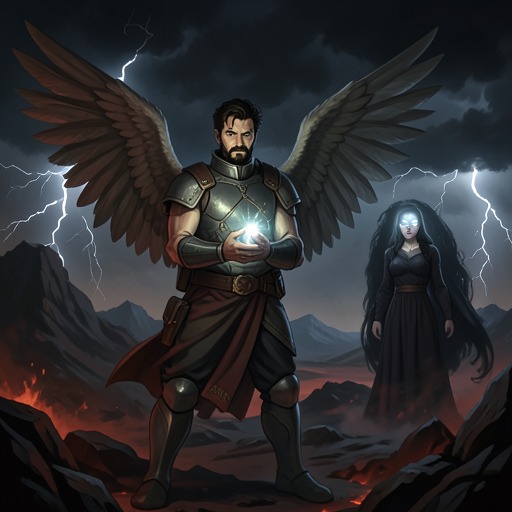
That ordinariness is part of Lucifer’s design. He tells Cam that Lilith believes herself to be a typically gloomy teenager enduring a typically gloomy high school experience, unaware of the larger pattern around her. In truth, Lucifer has trapped her in a sequence of Hells. Each time she dies in one, she returns to a place where she is made to remember Cam’s betrayal, before Lucifer sends her into another torment made specifically for her. He says that her anger and hatred keep her going. Lilith’s present life is therefore both a credible experience of teenage frustration and one episode in a recurring punishment whose history she cannot initially recall.
Her circumstances also include material hardship. The family has barely enough money for food, and Lilith cannot imagine affording a ticket to see the Four Horsemen, her favorite band. Her attachment to music grows in the space left by those limitations: she longs for someone who shares her taste, but has little reason to expect that kind of understanding from the people around her.
Music, Solitude, and Cam’s Return
Rattlesnake Creek is Lilith’s chosen refuge. She leaves her guitar case in the crook of a tree, settles among crisp orange leaves, and listens to the creek running through its cement bed. The place is not conventionally beautiful; she prefers it to textbook images of famous landscapes because she knows no one else who would call this grove of withered trees beautiful. Its value lies in being hers.
The guitar she takes from its case is a dark orange Martin 000-45 with a crack slanting down its body, discarded by someone on her street. Lilith cannot afford to be selective, but she also hears the flaw differently: to her, it makes the instrument sound richer. When she plays, she feels an invisible hand smoothing her rough edges and imagines the company of friends she does not have. Music is not merely an ambition or a future career in these scenes; it gives shape to an intimacy missing from her everyday life.
Cam’s reappearance puts that guarded solitude under pressure. When he says he plays guitar and that all they need is a drummer, Lilith does not turn around to welcome him. She sees him as the kind of boy who hurts girls who trust him and refuses to invite more hurt into her life. Her wariness is grounded in a history that she does not yet remember. Cam, by contrast, recognizes her from Canaan and sees the same expressive soul he loved there. He is relieved to find her in Lucifer’s Hell and wonders whether its torments have changed her. The difference between their knowledge matters: Cam approaches their meeting with the past present to him, while Lilith experiences him as a risky stranger.
Songwriting and Growing Attachment
A handwritten note signed by Cam makes the past press into Lilith’s present through a single word. Beside her favorite place at the creek, she finds an old, battered rolltop desk covered with iris petals. She has admired irises in pictures but has never seen them in person; the local florist stocks only basic flowers. The unexpected desk and blossoms are already an interruption in the familiar landscape, but the note affects her more deeply. Lilith cannot remember anyone using the word love with her. She wonders whether Cam wrote it casually, yet the word stirs something in her soul and leaves her uncomfortable with its force.
Unable to find Cam to ask what the note means, Lilith turns to her black notebook and lets the feeling become a song. This response echoes the role music plays at Rattlesnake Creek: when an emotion has no ready place in her relationships, she gives it a form through songwriting. Her music makes room for a past that she cannot consciously explain, without yet giving her the memory that would account for it.
The song Somebody’s Other Blues carries another change. Lilith wrote its lyrics while grim and lonely, using songwriting as the only therapy she could afford. At a celebration with Cam, Bruce, and newly gathered friends, she sees that the sadness that produced the song has helped lead to a happiness she could not have anticipated. She credits Cam with believing in her, and that support becomes a reason for her to believe in herself. Her response to him remains mixed: she notices that he can be forward and push her buttons, and that he has done things he should not have done. But she also sees that he makes her laugh, cares about Bruce, and makes her stomach churn in a way she welcomes. Her growing attachment does not erase her misgivings; she begins to hold both in view.
Performance and Belonging
Cam’s gesture of bringing the prom to Lilith respects her stated wish not to need a date in order to play at the Battle of the Bands. He explains that he would have liked the ordinary rituals of going with her, but creates a private version instead. When he addresses the rumors she may have heard, he says that his conversation with Luc concerned how much he liked her and his desire to have a chance with her. Lilith’s attention shifts from rumor to what she feels in the moment: she wants to kiss him, and that desire seems real to her even as other uncertainties remain.
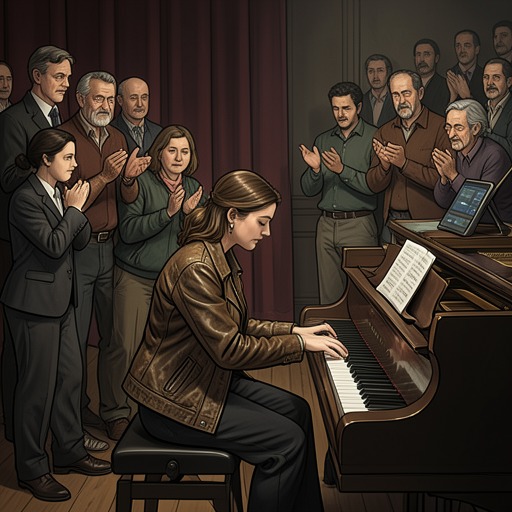
At the performance, Lilith faces the packed dance floor with her bandmates, a microphone, and the weight of her guitar across her chest. She counts in, begins with a slow, sad riff, and then drives into the song. Its sound matches what she had hoped it might someday become. Jean Rah and Luis are absorbed in the music; Cam plays across the stage while watching her and smiling. From the audience, Bruce and her mother Janet dance apart from the crowd, but with abandon. The performance gathers the relationships that had seemed out of reach at the creek into one scene: bandmates listen, Cam supports her, and her family shares in the music. Lilith turns away from the microphone to play, and experiences the moment as joy in herself, her band, and their sound.
Memory, Choice, and Significance
At the Colosseum, Lilith’s lost history returns with devastating clarity. She understands that the rumor at Trumbull about the girl Cam had driven to suicide was true: the girl was herself. She says she took her life because she loved Cam. When Cam insists that he was trying to spare her, Lilith answers that she had already made a deal, pointing to Lucifer. She had believed that finding Cam would let her win him back. The revelation changes the meaning of her present attachment: what had felt like an unexplained pull toward Cam belongs to an earlier love, rejection, death, and bargain.
Memory does not simply restore that earlier story unchanged. Lilith tells Cam he has changed and that he has given her so much over the past two weeks. When he reaches for her in the smoke, she refuses to let him take her place in Hell, saying that wherever he is, she wants to be. Cam tells her he loves her, and she answers in kind. As they embrace, the crater grows and the stage disintegrates; the audience shrieks while the walls of the new Colosseum shudder and collapse. Her choice is therefore made amid the destruction of the world that has contained their reunion, not after its danger has passed.
Lilith’s arc joins creative self-expression to recovered identity. The cracked guitar, the private songs, and the public performance mark different stages of her movement from imagined companionship toward actual connection. Yet her final declaration is not a simple surrender to romance: she rejects Cam’s attempt to bear her punishment in her place and chooses togetherness on her own terms. The Hell-cycle has been arranged around her memory of betrayal, but the recovered past does not dictate a return to uncomplicated innocence. Lilith can love Cam, recognize that he hurt her, and still decide what she wants now.