Diagnose en identiteit
UpDiagnosis and identity are held in tension throughout Emma’s experience: a psychiatric label can help describe and treat a pattern, yet it can also eclipse the person whose life it is meant to explain. Her eventual position is neither to deny illness nor to surrender her identity to it. She is someone who has a chronic condition, needs help at times, and remains more than the patient others are responsible for protecting.
Naming a Pattern, Not a Whole Person
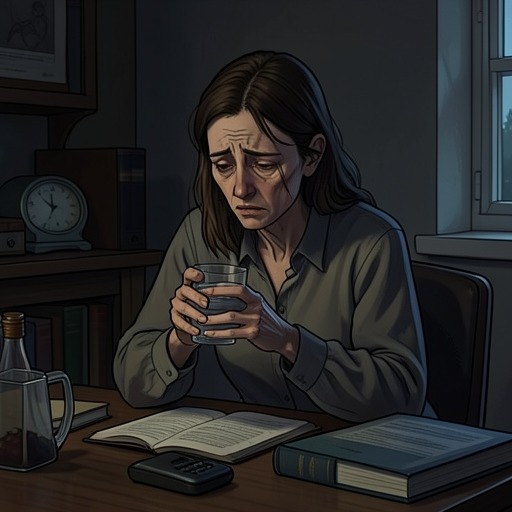
Emma’s account distinguishes the force of an experience from the language later used to classify it. During a severe depression, she describes the sudden conviction that she had to die as something that seemed to make everything clear. It crowded out ordinary feeling, including her response to hearing that Dokter Visser’s husband had died. The thought presented itself not as a plan she understood as suicide, but as an imperative: she imagined that removing herself would let her return to what she considered important, work and productivity. The episode shows how a diagnosis may name a recognizable pattern while failing, by itself, to convey how that pattern feels from within.
Emma’s imagery makes that gap vivid. When asked how she feels now, she reaches for the difference between looking at the moon as a pale spot in the sky and understanding it as a vast body moving through space. The lifting of a mental fog can feel like suddenly seeing reality as it is. But she also recognizes how hard such an explanation is to give a psychiatrist. The account sets lived experience beside clinical language without treating either as a complete substitute for the other.
The experience is not confined to a diagnosis or a single admission. At night in the PAAZ, Emma tries to resist not only thoughts and emotions but a memory that she says has followed her throughout her life. It returns with the feeling of depression draining her of energy until only fragments of the self remain, clinging to life and being pulled downward. Her reference to the depth beyond the balcony connects present distress to an older and recurring vulnerability. The image makes illness part of a life story, rather than an isolated episode that can simply be filed away.
The Patient Seen by Others
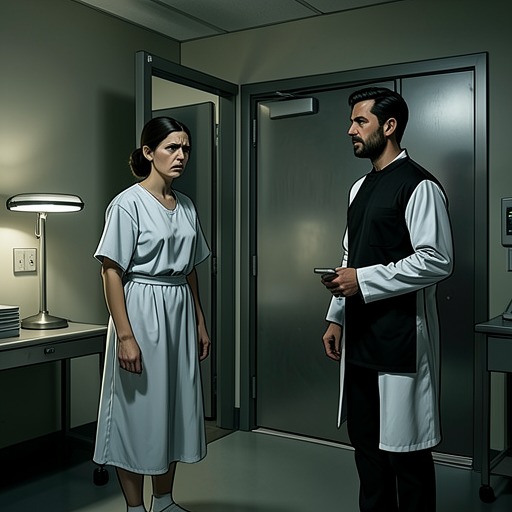
Identity also takes shape in other people’s judgments. A staff member contrasts Emma’s first admission, when her severe depression was visible in her withdrawal and near-silence, with her present appearance: she now seems so normal that staff can forget she has no leave privileges. Emma insists that she is normal, while the staff member says she seemed more thoughtful and cautious before. The exchange exposes a practical problem: appearance can make illness less legible, but seeming well does not itself establish that a patient is well or that restrictions can be ignored.
The social consequences extend beyond the ward. In a group discussion about work and shame, Emma recalls that during her first admission her colleagues did not know where she was. Her employer said she was at home with burnout, apparently to preserve the possibility that she might return soon; what began as an effort to help became awkward when her absence lasted five months. Emma initially resists describing this as stigma because she understands the employer’s intention as protective. The group leader makes a distinction between intention and effect: stigma can happen unconsciously when people avoid a difficult subject or discuss it without the person concerned. The alternative, he suggests, was to ask Emma what she wanted disclosed. The episode shows how a patient identity is managed not only in clinical settings but also through workplace explanations and decisions made in someone’s absence.
Emma also reflects on how a partner may respond to the seriousness of illness. Sergei had been asked by her psychiatrist to remove her stored medication, but resisted for more than three weeks, and it took two conversations with the psychiatrist before he did so. Emma experiences his reluctance as possibly meaning that he does not take her suffering seriously. Another patient offers a different interpretation: perhaps minimizing the danger is a form of self-protection, because acknowledging its full seriousness would mean facing the possibility of losing Emma. This is offered as a possibility, not established as Sergei’s motive. The exchange shows how illness can acquire different meanings for the person at risk and for someone close to her.
Diagnosis and the Work of Care
Emma’s clearest account of identity comes when she says that what happened is part of her past but is not what she is. She compares being a psychiatric patient to being a flu patient: illness demands care and attention she would rather spend elsewhere, but beyond that she is herself. A member of staff responds that the ward also sees her as Emma rather than simply as a patient, while acknowledging that her readmission is a reminder that she is ill and that this may need to be taken into account. Their exchange holds two truths together: recognition of the person should not erase the illness, and recognition of the illness should not reduce the person to it.
That balance becomes harder in the conversation about discharge. Rajid sees a patient for whom he feels responsible, someone he would like to cure and protect from danger, including danger she may pose to herself. Emma understands the weight of that responsibility, but says that she is also the person who has to live her life. She asks him to let her go, not because she expects the illness to disappear, but because she knows the cycle will continue. She anticipates hypomania, then depression, with only a few better days between them; medication may flatten the peaks, but her mood will keep changing. In her account, waiting for a brief period of stability would disguise rather than resolve the condition.
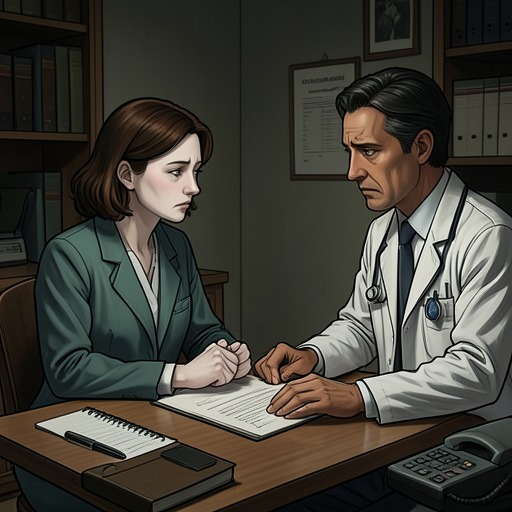
Rajid explains diagnosis as a practical tool for clinicians: a name lets them communicate, compare cases, investigate a set of symptoms and consider treatment. It says more about the current state of medical understanding than about the full identity of the person receiving it. The category could change if the boundaries between mania, depression and psychosis were understood differently. His explanation does not make diagnosis meaningless; it limits what diagnosis can claim. A label can organize care without serving as a final account of who Emma is.
Emma does not reject the need for help. She says that Rajid can intervene when she can no longer do so herself, and that this has helped her enormously. She has lived with manic depression for half her life and believes she can live with it, though not by remaining in the PAAZ indefinitely. The distinction is between support and cure: the ward can provide a place of intervention, but neither the institution nor Rajid can make her well once and for all. When she leaves, she describes herself as returning to life as an outpatient, not as someone whose diagnosis has been erased.
Living with an Unfinished Diagnosis
Emma’s account of symptoms resists a simple equation between unusual experience and identity. She says that delusions and hallucinations are sometimes a problem, but not always; depression is different because it is felt persistently and can seem eternal when it is present. Even when she senses depression in the background, she believes she may be able to manage it. Her phrase optimistic doomsayer captures that coexistence of expectation and bleak knowledge without pretending that optimism means recovery is assured.
Her conversation with Beatrice offers a parallel, though not an identical, account of suffering. Beatrice says she has lost her sense of God after starting medication and explains that she stopped taking the pills because she hoped that feeling would return; when it did not, she came back to the ward. Emma cannot claim to share the experience, but suggests that depression itself might have swallowed Beatrice’s capacity to feel belief, just as it can diminish laughter, happiness or love. She offers this as a possibility rather than a diagnosis of Beatrice’s spiritual life. The exchange underscores that people interpret illness through different parts of their lives, and that a clinical explanation need not exhaust what an experience means to the person living it.
The concept of diagnosis and identity therefore remains deliberately unresolved. Emma does not claim to be separate from illness in every sense: she acknowledges recurring depression, mood shifts, risk and the need for care. But neither does she accept that these facts make the patient role her whole self. The final movement toward outpatient life preserves that distinction. Leaving the PAAZ is not a cure or a denial of future difficulty; it is Emma’s assertion that care can accompany a life without defining all of it.