Mithras
UtopiaMithras is the name by which the Utopians collectively refer to the divine essence: the supreme creator and governor of the world as understood across their varied religions. Rather than identifying one universally agreed image or doctrine, the name makes room for religious difference while giving public worship a shared center.
Identity and Religious Conceptions
Utopian religion includes worship of the sun, the moon, and planets, as well as the veneration of people remembered for virtue or glory. The account distinguishes these practices from the belief held by the greater and wiser part of the population in one eternal, invisible, infinite, and incomprehensible Deity. This God is understood as pervading the universe through power and virtue, and as the source of the beginnings, changes, and ends of all things.
Across the different sects, the common conviction is that one supreme being made and governs the world. The Utopians call this being Mithras in their own language. They do not, however, agree about which particular god or object of worship is that supreme being: one sect may identify its own god with the source of all things, while another identifies a different object. Mithras thus names the shared divine principle without settling the differences among its worshippers.
Pluralism and Change
The account describes a gradual movement away from the island’s various superstitions toward the religion considered best and most widely accepted. That change is not represented as entirely smooth: misfortunes suffered by people who urged others to abandon particular forms of worship were interpreted as divine punishment. Such incidents made the worshippers wary of discarding the authority of the gods they had previously honored.
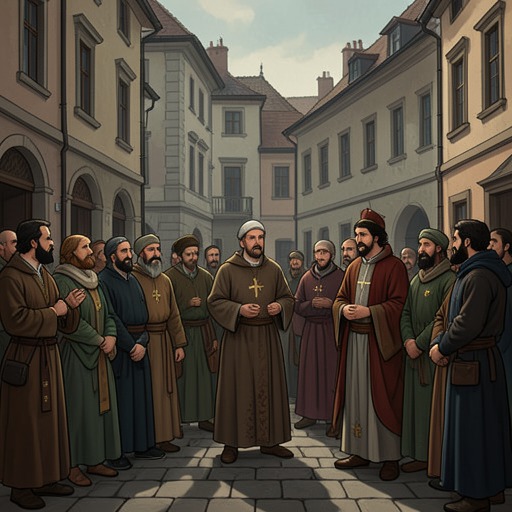
The arrival of Christian teaching introduces another dimension to this religious landscape. After hearing about Christ’s doctrine, way of life, miracles, and the steadfastness of the martyrs, many Utopians were inclined to accept Christianity and some received baptism. The account leaves open whether this response came from divine inspiration or from Christianity’s apparent affinity with communal property, a principle the Utopians valued. Their conversion occurs within a society where religious difference is already familiar, rather than replacing the account’s description of Mithras as the common name for the divine essence.
Public Worship
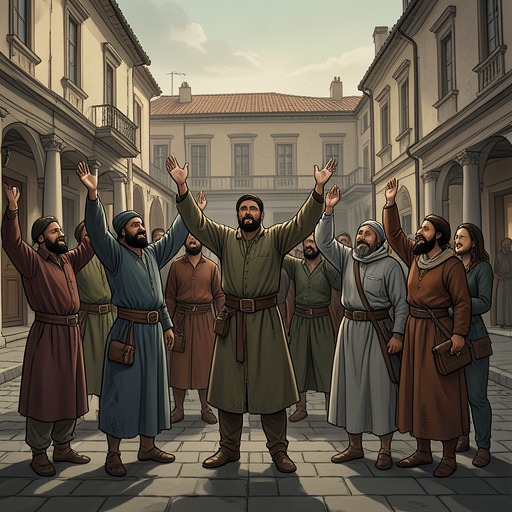
Mithras also makes shared religious observance possible. Utopian temples contain no images of God, leaving each person free to conceive the divine according to their own religion. The common name is used for the divine essence whatever worshippers otherwise believe it to be, and public prayers are composed so that members of the different sects can join without contradicting their particular convictions.
The prayers describe God as author and governor of the world and the source of the good people receive. Worshippers give thanks for living under what they hope is the best government and following what they hope is the truest religion, while asking to be shown a better way if they are mistaken. They also acknowledge that God may favor a variety of religions. In this form of worship, shared language does not erase uncertainty or enforce doctrinal uniformity; it allows a common assembly to express both hope and openness to correction.
Narrative Significance
Mithras is presented less as a character who acts within the narrative than as the theological name that makes Utopian religious plurality intelligible. The term holds together a belief in one governing divine power and a range of competing interpretations of that power. Its use in image-free temples and broadly applicable prayers gives that pluralism a public form, while the community’s willingness to consider other religions—including Christianity—shows that the shared name does not close the question of religious truth.