Peter Giles
UtopiaPeter Giles is Thomas More’s learned friend in Antwerp and the crucial intermediary between More’s diplomatic visit and Raphael Hythloday’s account of Utopia. His hospitality and curiosity bring Raphael into the conversation; his questions then help turn a meeting among friends into a debate about political service and the merits of unfamiliar institutions. He is not merely a facilitator: his admiration for Raphael, practical argument about public usefulness, and skepticism about Utopia give the dialogue several of its defining tensions.
Identity and Introduction
Peter Giles is described as born in Antwerp and of good standing in the town, though Thomas More judges that he deserves a higher rank. More presents him as learned, well-bred, modest, candid, and unusually kind to his friends. His conversation is pleasant and cheerfully innocent, and his company eases More’s longing for home during an absence of four months from his wife and children. This portrait establishes a relationship of personal affection as well as intellectual esteem: Peter is not simply a source of information, but a companion whose presence makes a distant diplomatic posting more bearable.
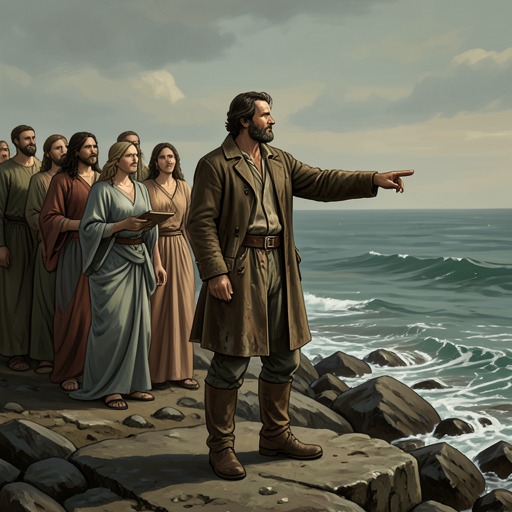
The introduction takes place after More has gone to Antwerp while negotiations with representatives of Charles V are paused. Returning from mass at the city’s principal church, More sees Peter talking with a weathered, bearded stranger whose loose cloak suggests to him a seaman. Peter greets More, draws him aside, and points out the stranger as someone he had been thinking of introducing. He explains that Raphael can give a remarkably full account of unknown countries, a subject he knows More wants to hear about. When More guesses that Raphael is a sailor, Peter corrects him: Raphael has travelled, he says, as a philosopher rather than as a seaman.
Bringing Raphael into the Dialogue
Peter’s introduction gives Raphael a history before Raphael begins telling it himself. He identifies him as Portuguese, learned in Greek and Latin, and devoted to philosophy; he recounts that Raphael divided his estate among his relatives, travelled with Amerigo Vespucci, and remained behind in the newly reached lands rather than returning with the expedition. Peter also relates Raphael’s later journey with five Castilians, his arrival in Ceylon and then Calicut, and his eventual return to his native country aboard Portuguese ships. These details frame the stranger’s authority as the product of both study and extensive travel, while Peter’s confident account shows that he already knows Raphael well enough to present his character and experience to More.
After the introductions, Raphael and More embrace, and Peter joins them at More’s house. The three sit on a green bank in the garden and begin talking. In this setting Peter’s role is active but not dominant: he establishes the company in which Raphael’s travel knowledge can be heard, then makes the questions and objections that steer that knowledge toward political argument.
Political Service and Disagreement
Once Raphael has spoken about the customs and governments he has encountered, Peter marvels that he does not enter a king’s service. He argues that Raphael’s learning and knowledge of people and affairs could entertain a ruler and benefit the public through examples and advice. In Peter’s view, such a position could also serve Raphael’s interests and allow him to help his friends. His appeal assumes that insight gained abroad can be put to practical use in government; it treats political counsel as a route to public benefit rather than simply as submission to power.
Raphael answers that he has already provided for his friends by sharing his estate while he was still young and healthy, and refuses to enslave himself to any king. Peter objects that he is proposing assistance, not slavery, and argues that service could make Raphael useful to both private friends and the public while improving his own situation. Raphael rejects the distinction as merely a change of wording and says he prefers to live as he chooses, a freedom few courtiers can claim. Peter’s practical case therefore meets a principled refusal: their exchange exposes the difference between entering political life to influence it and preserving independence from a ruler’s demands.
From Skepticism to the Utopian Account
Peter does not simply accept Raphael’s judgments about other societies. When Raphael maintains that Utopia is better governed than the societies familiar to his listeners, Peter questions the comparison. He argues that their own understanding is no worse and that older governments, developed through long experience and fortunate discoveries, may have acquired many conveniences. Raphael counters that Utopian histories describe towns older than those in Europe and that the islanders have shown greater industry and application, including in learning from shipwrecked visitors. Peter’s challenge gives Raphael occasion to explain why Utopia’s institutions, rather than its supposed antiquity or intelligence, deserve attention.
The debate reaches its turning point when Peter is struck by admiration for Raphael’s detailed knowledge of the nations he has visited and asks him to describe Utopia particularly and in order. He requests an account of its soil, rivers, towns, people, customs, constitution, and laws, insisting that they want to know what remains unfamiliar to them. Raphael agrees that he has carefully organized the material but warns that it will take time. Peter proposes that they dine first, after which they can continue at leisure. When the meal is over, More has the servants ensure that no one interrupts, and both Peter and More urge Raphael to keep his promise. Peter’s curiosity thus helps set the conditions for the extended island narrative.
Narrative Role and Limits of His Position
Peter’s part connects the book’s Antwerp frame to its central political conversation. He is the friend who recognizes Raphael’s value, the advocate who tests whether a traveller should put his knowledge at a ruler’s disposal, and the skeptical listener whose objections prompt Raphael to defend Utopia and describe it. In another exchange, Peter is also among those impressed when a cardinal’s proposal about vagabonds is accepted after a similar suggestion has first been dismissed; this episode belongs to Raphael’s account of a dinner-table discussion and further places Peter among listeners responsive to the contrast between argument and status.
Peter does not deliver the book’s final judgment on Utopia. After Raphael finishes his description, Thomas More’s narrative voice records serious reservations, especially about common property, the absence of money, and Utopian practices concerning war and religion. More ends by praising the constitution in general while declining to agree with everything Raphael has related; Peter is present in the conversation, but no concluding judgment of his own is reported. The distinction matters to Peter’s narrative function: he opens the way for Raphael’s case and presses it with genuine questions, while the dialogue remains unresolved rather than making Peter’s curiosity an endorsement of every Utopian institution.