Thomas More
UtopiaThomas More is both the historical author of Utopia and a dramatized participant in its frame narrative: a learned observer who urges public service, listens to Raphael Hythloday’s arguments, and closes the book without fully endorsing the society Raphael describes. His exchanges with Raphael stage a conflict between the hope of improving government through practical counsel and the fear that political institutions will corrupt or silence those who enter them.
Identity and Background
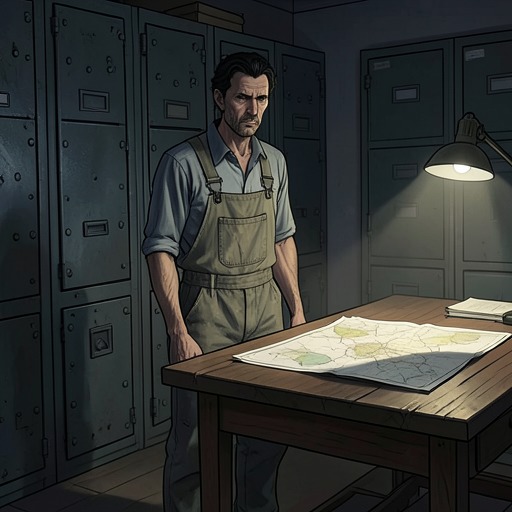
The introduction identifies More as the son of Sir John More, a justice of the King’s Bench, and places his birth in 1478 on Milk Street in London. He attended St. Anthony’s School (London) before entering the household of John Morton as a boy in the customary patron-client arrangement. Morton, then a powerful churchman and royal adviser, delighted in the young More’s quick wit and predicted that he would become an exceptional man.
At about nineteen, More was sent by Morton to Canterbury College (Oxford), where he studied Greek with William Grocyn and Thomas Linacre. He left Oxford in 1499 to study law at Lincoln’s Inn in London; Morton died the following year. The introduction thus gives More a background that joins humanist learning and legal education to early experience within a household shaped by political patronage.
More as Narrator and Participant
The dialogue places a fictionalized More within a diplomatic mission to Flanders on behalf of Henry VIII. He travels with Cuthbert Tunstal to meet representatives of Charles V at Bruges. When the commissioners return to Brussels to seek instructions, More goes to Antwerp, where Peter Giles’s company eases his longing for his wife and children during an absence of four months. After returning from mass at Antwerp’s principal church, he encounters Giles speaking with a weathered stranger: Raphael Hythloday. The introduction describes this passage as a deliberate slide from fact into fiction, making More’s narrated diplomatic setting the threshold to Raphael’s travel account and political argument.
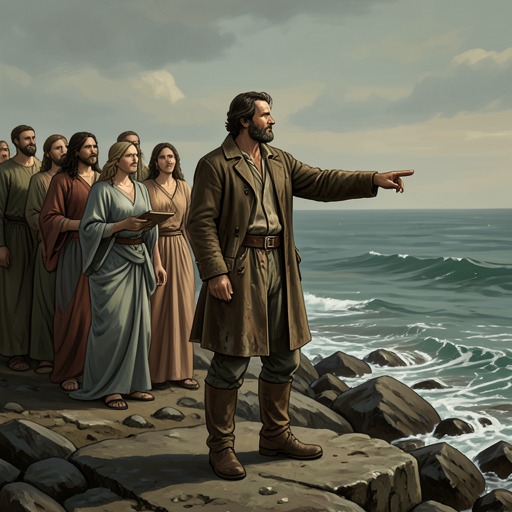
More’s role is not merely to introduce Raphael. He listens as Raphael recounts observations of distant societies, including the use of the magnetic compass, and asks him about the customs and laws of the Utopians. Raphael’s account becomes an extended debate because More and Giles challenge him to explain why a man with his knowledge does not enter a ruler’s service. More sees public counsel as a way to benefit both rulers and their people; Raphael considers service to princes a form of submission that would sacrifice his freedom without improving government.
The Case for Political Counsel
More argues that a learned and experienced adviser could influence a prince, whose decisions send consequences through the whole nation. He accepts that service may be personally difficult, but maintains that helping rulers undertake worthy actions is a proper aim for a good person. Drawing on Plato, he invokes the prospect of nations becoming happy when philosophers become kings or kings become philosophers. For More, Raphael’s refusal to advise rulers therefore leaves open a serious question: whether philosophers can fulfill their public responsibility while remaining outside power.
Raphael answers with the conditions he sees in princely courts. Rulers, he says, favor war and territorial acquisition over the arts of peace, while their advisers are often convinced of their own wisdom and invested in flattering the prince. More counters that counsel need not be an impractical demand for instant perfection. If accepted abuses cannot be removed, a person should still try to make the commonwealth as little unjust as possible, as someone aboard a storm-tossed ship should not abandon it merely because they cannot command the wind. This is More’s central alternative to Raphael’s withdrawal: adaptation to circumstances in the hope of limiting harm.
Raphael doubts that such accommodation is workable. In his account, a courtier must approve even deeply unjust policies or risk being treated as disloyal; remaining innocent would not prevent blame from attaching to him. More acknowledges the distance between abstract philosophical argument and political practice, but his disagreement with Raphael is not erased. Their exchange gives the book a sustained conflict over whether participation can serve the public good or merely implicates the adviser in the ruler’s actions.
Memory of John Morton
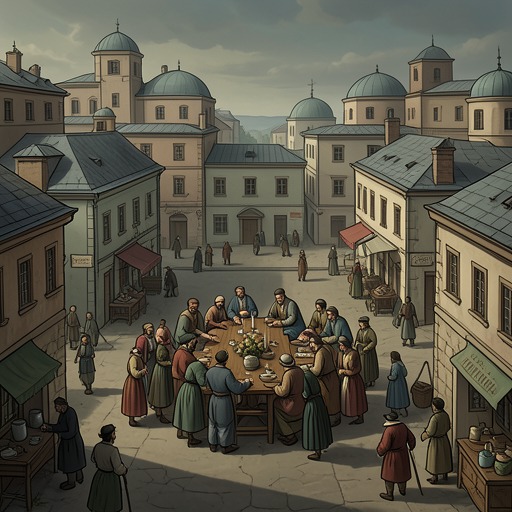
When Raphael recounts a dinner at Morton’s household, More responds personally. He says the story has made him imagine himself back in his own country and young again, recalling the cardinal in whose family he was brought up. He also tells Raphael that the account has made him more dear to him because it honors Morton’s memory. The episode ties More’s political debate to his own early dependence on a patron and gives his response to Raphael’s story the weight of remembered experience.
The dinner anecdote also supplies a pointed example of how advice is received according to its speaker. More’s proposal concerning thieves had been dismissed, while a proposal about vagabonds was taken up after Morton advanced it; those present then praised both proposals. A jester’s comments about providing for the poor and setting religious orders to work are first treated as amusement, but the company’s reactions expose its willingness to follow the cardinal’s lead. More recognizes the episode as evidence of the very courtly deference Raphael criticizes. Yet he still returns to his conviction that Raphael’s counsel could do good, so Morton’s household memory sharpens rather than settles their disagreement.
Closing Reservations and Narrative Significance
At the end of Raphael’s account, More does not simply ratify the Utopian system. He notes that aspects of its warfare, religion, and other practices strike him as absurd, and singles out common ownership without money as a foundation that would remove the forms of magnificence and status commonly treated as a nation’s ornaments. Because Raphael seems tired and might not welcome contradiction, More commends the constitution in general and takes him by the hand to supper, postponing a fuller examination. He concludes that he wishes many Utopian arrangements could be adopted by existing governments, while admitting that he cannot agree with everything Raphael has related.
This qualified ending defines More’s narrative function. He sustains the debate rather than resolving it: his belief in engaged, tactful counsel stands against Raphael’s account of courts that punish dissent, while his final reservations prevent Raphael’s ideal society from becoming an uncomplicated prescription. The movement from diplomatic fact to invented travel, from a remembered dinner to political argument, and finally to deferred judgment leaves the reader with both the force of Utopian criticism and the question of how far its proposals can be carried into ordinary government.