Raphael Hythloday and the Utopians
UtopiaRaphael Hythloday’s relationship with the Utopians is presented chiefly through his five years living among them: he knows their laws and institutions from sustained experience, and later makes that experience the basis of a challenge to European assumptions. His attachment to their society is strong, but the account he gives to Thomas More and Peter Giles ends not with agreement but with More’s courteous reservation, keeping the community both an object of admiration and a subject for debate.
Encounter and residence
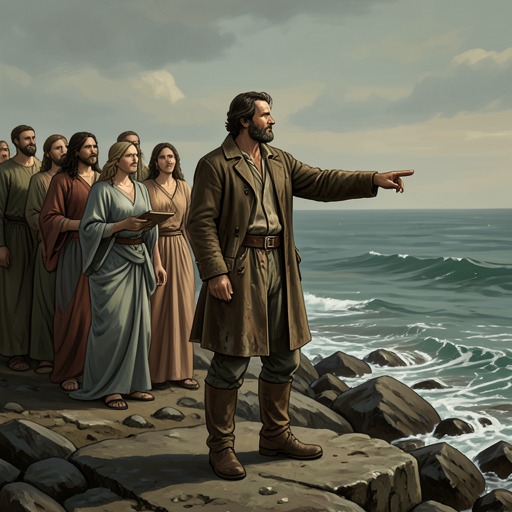
The book’s frame moves from reported fact into fiction with the finding of Raphael Hythloday, a traveler who had sailed with Amerigo Vespucci on three voyages to the newly discovered world. His travels establish how he came into contact with distant peoples; his later testimony identifies the more sustained bond at the center of this relation. Raphael says he lived under the Utopians’ laws and institutions for five years, long enough, he argues, to judge their arrangements from experience rather than hearsay.
That residence is not described as a brief visit or a passing observation. Raphael says he was so delighted with the Utopians that he would never have left them had he not wished to make the new world known to Europeans. His departure therefore gives the relationship a double character: he has left the society, but returns to it in conversation as its informed advocate and interpreter.
Eyewitness and advocate
When challenged with the claim that people could not live conveniently where everything was held in common, Raphael answers that his listeners lack a proper understanding of such a constitution. He invokes his five years among the Utopians as the basis for his confidence, and maintains that his experience would persuade them that he had never seen a people so well constituted. The relationship carries argumentative weight: his knowledge is offered against objections about labor, scarcity, disorder, and the authority of magistrates.
Raphael also contrasts the Utopians’ learning and practical life with those of the Europeans. He recounts how a shipwreck twelve hundred years earlier brought Romans and Egyptians to the island, and how the Utopians learned from those visitors and developed useful arts from their knowledge. In his telling, the Utopians’ capacity to learn from contact helps explain why they are better governed and happier, despite not being inferior in understanding or outward advantages. Their society is thus not presented merely as a place he has seen; it is evidence he uses to test the supposed superiority of his audience’s institutions.
The account given to More and Giles
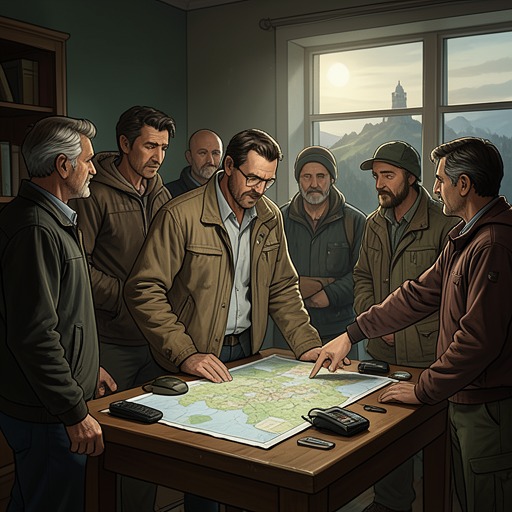
After Raphael’s defense of the commonwealth, Peter Giles asks him to describe the island in detail: its land, rivers, towns, people, manners, constitution, and laws. Thomas More joins the request. The three men go to dine, then return to the same place; More has his servants prevent interruptions, and both listeners press Raphael to keep his promise. The arrangement turns Raphael’s experience into an extended act of testimony, with More and Giles as attentive questioners rather than detached recipients of a short report.
Raphael pauses to collect his thoughts before beginning his description. The pause marks a shift from debate over whether such a society could work to a deliberate account of how the Utopians live. His readiness to speak, and the care with which he says he has organized his material, frame the ensuing description as knowledge he has brought back from residence among them.
Admiration and reservation
Raphael’s account gives the Utopians a forceful advocate, but it does not secure their customs the listeners’ unqualified approval. At the end, More reflects that several features seem absurd to him, including their conduct of war, religious beliefs, and especially their common ownership and lack of money. He does not challenge Raphael at once, partly because he sees that Raphael is tired and is uncertain how readily he would bear contradiction. Instead, More praises the constitution in general and takes Raphael to supper, postponing a fuller examination.
The relationship therefore remains intellectually open. Raphael’s long residence gives his praise the authority of an eyewitness, while More’s withheld objections prevent that authority from closing discussion. More later says that he cannot agree with everything Raphael has related, though there are many things in the commonwealth that he would rather see adopted than expects to see adopted. The Utopians reach the reader through this tension: as the society Raphael chose to inhabit and defend, and as a political example whose claims More admires without wholly endorsing.