Dirac Angestun Gesept
WaspDirac Angestun Gesept, also called the D.A.G. or the Sirian Freedom Party, is an imaginary resistance organization devised by James Mowry on Jaimec. Its founding paradox is central to its role: Mowry appoints himself its entire leadership while the supposed membership remains unaware that it belongs to any organization. The name becomes a practical instrument, giving a fictional movement enough public and bureaucratic presence to unsettle the Kaitempi and help Mowry conduct real operations.
Invention and Structure
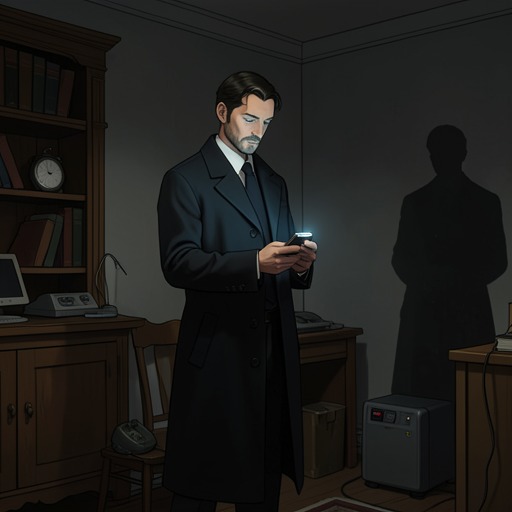
While lying in bed and waiting for sleep, Mowry mentally enrolls the secret opposition he imagines across Jaimec into a dreamed-up organization. He appoints himself president, secretary, treasurer, and field director for the planetary district. The arrangement is not a conventional underground party whose members have agreed to act together: Mowry does not consult them, and their ignorance does not trouble him. D.A.G. is designed as a structure imposed on scattered people from outside, not an association built through their consent.
That invention gives Mowry a political identity he can deploy while trying to pass as wholly Sirian. The name suggests an organized revolutionary movement, but its authority initially comes from its creator's ability to make others believe such a movement exists. The gap between the grand offices and the absent membership is not a flaw in the scheme; it is the feature that lets Mowry claim a conspiracy without needing an actual organization to coordinate or expose.
The party's declared purpose makes the fiction legible to the public and dangerous to the government. A printed sticker announces, in bold, easily readable type, “War makes wealth for the few, misery for the many.” It promises that D.A.G. will punish the beneficiaries of war and aid those who suffer from it. The slogan presents the imagined party as a vehicle for both retribution and relief, translating private discontent into the language of collective political action.
Public Appearance and Government Response
The sticker turns the name into something people can encounter without knowing who made it. As passengers board a bus, bystanders discuss the apparent stunt; one concludes that an illegal organization must be behind it, and another points out that the sticker identifies the Sirian Freedom Party. A different speaker has never heard of the party. That mixture of recognition and uncertainty captures D.A.G.'s useful public condition: its name is visible enough to provoke speculation, but its existence is not established enough for ordinary people to know what it is.
The authorities' response makes the imagined party consequential. When the government issues a registration requirement for organizations, Mowry sees that the state has created a trap around the name he invented. The law makes the movement's status a matter of grave danger: the relevant declaration treats it as treason punishable by death, leaving D.A.G. facing the choice of submitting to official scrutiny or being treated as a capital threat. The organization has no functioning membership to register, yet its name can still be summoned as evidence of a movement.
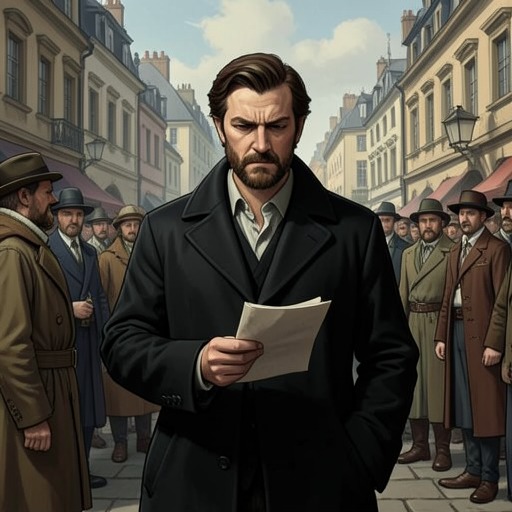
Mowry's response is to complete an official form for Dirac Angestun Gesept. He records its purpose as the destruction of the present government and the termination of the war against Terra. He takes satisfaction in filling it out neatly with government pen and ink. The gesture gives a phantom organization an unusually concrete trace: an invented party, entered into the state's own paperwork, now has an official description that can be used against it. Registration does not resolve the contradiction between the name and its nonexistent membership; it sharpens it.
The danger also falls on people who have never knowingly joined. Butin Arhava is described as a fully paid-up member in good standing, though nobody has told him. The Kaitempi can use that supposed affiliation as a means to trap him and draw him out. D.A.G.'s structure thus turns an abstract invention into personal risk: a person may be classified as a conspirator through a membership he has never chosen. The state's attempt to locate an organization gives Mowry's fiction leverage, while exposing the vulnerable people whom the fiction claims to represent.
A Name Used in Covert Operations
D.A.G. also gives Mowry a label for activity that must not be traced to Terran intervention. In a later exchange, he says he hopes to catch the leader of a D.A.G. cell quickly and quietly, warning that a large Kaitempi operation would frighten the rest away. The language supplies a plausible account of an organized local underground and a reason to keep the proposed action limited. Yet the earlier account of D.A.G.'s creation makes the phrase “cell leader” part of Mowry's constructed political world, not proof that a genuine party has formed.
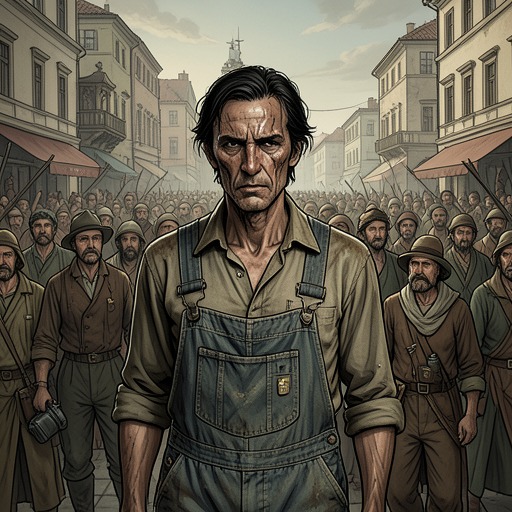
The name appears alongside Mowry's use of disguise and documents. At one point he puts on a wide belly-belt loaded with guilders and dresses in heavy clothes associated with a Sirian farmer. Elsewhere, he adds a platinum watch-fob and wrist-bangle holding an ornamental identity-disc, then carries papers identifying him as a colonel. These transformations do not establish D.A.G. as an actual organization; rather, they show the same operation of assumed identity at work around it. A role becomes useful when its outward signs persuade an audience, whether those signs are a party name, a uniformed status, or official papers.
The party's name also figures in the scale and ambiguity of Mowry's correspondence. He mails two hundred and twenty letters, and Butin Arhava is third on the list; the narrative then emphasizes the length of the list before repeating the full name, Dirac Angestun Gesept. The evidence establishes the size of the mailing and Butin's place within it, but not that every recipient knows of, or has joined, a real organization. The list makes the invented party appear expansive while preserving the central uncertainty about what its supposed members understand.
That uncertainty is protective as well as dangerous. Under questioning, the account that can emerge is only of an eccentric figure with an unusual accent and an inexhaustible supply of guilders. There is no mention of D.A.G. and no mention of Terran intervention. The separation matters: Mowry can use the party's existence as a public or operational explanation while keeping its supposed connection to outside interference out of what others might disclose.
Prison, Political Claims, and Afterlife
Mowry invokes D.A.G. again in a prison setting, telling a commandant that there is reason to suspect certain prisoners are members of a revolutionary army, namely Dirac Angestun Gesept. He identifies the escort as Kaitempi and looks to Skriva, who responds by displaying his credentials. The organization's name therefore enters an exchange about prisoner status and official authority. It gives Mowry a way to frame prisoners as politically significant, while the exchange depends on the visible recognition of the security force's authority and the proof offered by Skriva.
The name's final significance lies in how it outlives its creator's initial design. Later, people boast that they have long been secret leaders of D.A.G. and expect to be raised to power when Terran conquerors arrive. They promise that friends will be rewarded and foes punished. Their claims invert the original arrangement: Mowry had appointed himself the entire leadership of a party whose members did not know they belonged to it, while these later claimants present themselves as its established leaders. The novel does not make their boasts evidence that the organization ever operated as they describe it; instead, the contrast reveals how readily a political fiction can be appropriated by people seeking future power.
D.A.G. consequently works at several levels without becoming a stable institution. It gives discontent a slogan, gives the government a target to regulate, places an unwitting person such as Butin Arhava at risk, and gives Mowry a cover for actions he needs to keep quiet. Its repeated appearance moves it from the private invention in Mowry's bed to stickers, forms, lists, operational talk, prison claims, and promises of postwar authority. The organization is unreal in its founding, but its consequences are not: people and institutions act in response to the possibility that it exists.