Butin Arhava
WaspButin Arhava, known as Floppy Jowls, is a discreet intermediary in James Mowry’s dealings with a rough underworld clientele. He is introduced through practical actions rather than a background account: he retrieves a notebook and a gun, moves through the streets without drawing attention, and later meets Mowry to discuss a substantial sum. His value lies in his ability to pass among people who trust his reputation while keeping the business around him quiet.
Identity and Introduction
Arhava’s nickname precedes his formal introduction. He is sufficiently well known among hard-faced customers that they will accept, on trust, anyone known to him. The detail establishes a social credit that matters more than any formal authority: his recognition gives Mowry access to people who might otherwise be difficult to approach.
When he sits face to face with Mowry, Arhava supplies his full name: “My name is Arhava, Butin Arhava.” He pauses for a response, but Mowry gives none. The exchange is brief, and the silence keeps the introduction from becoming a warm acquaintance scene. Arhava’s identity is made clear, while the meeting remains governed by business and caution.
Streetcraft and the Gun
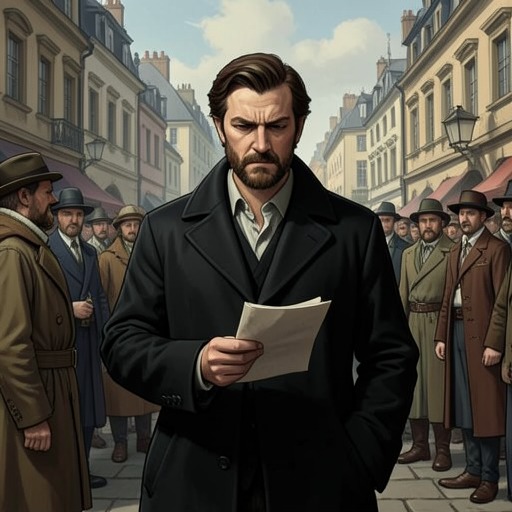
Arhava’s handling of the notebook and gun shows the same controlled practicality. After consulting the notebook, he retraces his steps across a vacant lot, drops it on top of the gun, then scoops up both in one swift motion and ambles onward. The action combines speed at the moment of collection with an outward show of ease. He does not hurry away or visibly react as though he has taken something he needs to conceal.
As he continues along the road, he turns into a narrower, dirtier street, crosses another road, and turns left. The narration stresses that he never behaves suspiciously or resorts to evasive tactics. His effectiveness depends not on a dramatic escape but on making his movements look unremarkable. In the surrounding operation, Mowry has taken trouble to find a willing gun-grabber; Arhava’s calm retrieval is one concrete part of that effort.
Dealings with Mowry
Money is discussed in a manner that makes discretion itself part of the transaction. When the sum is stated as “Twenty thousand guilders,” the other man fans his hands as though warding off an irritating fly and urges the speaker not to say it so loudly. The reaction gives the figure weight without explaining more than the scene supports: this is a large sum, and its open mention is unwelcome. Arhava’s milieu is one in which both trust and secrecy have practical value.
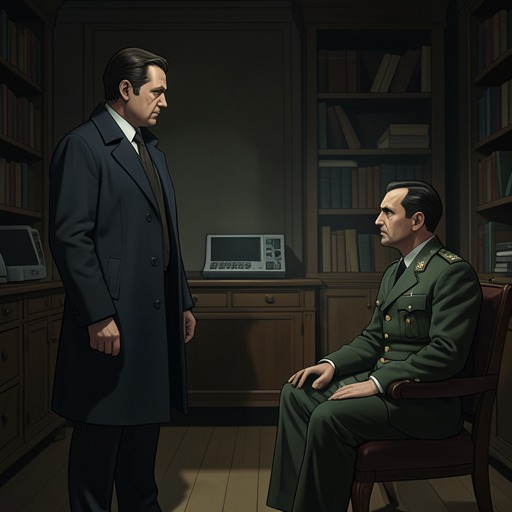
At a later meeting, Arhava and the others are seated at a far table, half concealed in dim light and positioned to watch the door. Arhava tells Mowry that they thought he was not coming. Mowry explains that a police raid in the street delayed him. The greeting shows that Arhava has been waiting for him and that the meeting has an expected purpose; the watch on the entrance and the police activity outside keep the encounter alert to interruption.
Narrative Role
Arhava’s appearances make the mechanics of Mowry’s clandestine work visible at street level. He is neither presented through an extended personal history nor given a stated political program. Instead, the narrative defines him through reputation, movement, money, and a guarded meeting. His habitual casualness contrasts with the gun he retrieves, the large sum under discussion, and the police raid that delays Mowry. That contrast makes Arhava’s composure a form of practical cover: the business is dangerous, but he conducts himself as though he has nowhere urgent to be.