Shinar–Komani
WatchmenShinar–Komani describes the changing political and military relationship between the people of Shinar and the Komani. It begins as an alliance sought by Shinarian rebels against imperial domination, but the Komani regard the planet less as a partner than as a strategic stepping-stone. As that imbalance becomes undeniable, Shinarian leaders reconsider their choices and eventually agree to cooperate with the Terrans against the very force they had invited.
An Alliance Against Imperial Rule
The relationship takes shape when Shinarian resistance leaders invite the Komani into Shinar as guests and allies. Merdon explains that the Komani are not acting as mercenaries hired by an outside power: the Shinarians deliberately brought them in to help fight the Terrans. This decision follows the failure of peaceful protest. Earlier demonstrations over the treatment of Shinarian farmers and the removal of vital nutrient processors had led to riots, civilian deaths, the murder of the Terran governor, the arrival of the Imperial Marines, and the landing of Komani warriors. What began as an economic and political grievance thus becomes an armed struggle involving several competing forces.
Merdon presents the alliance as a response to imperial violence. Some Shinarians had resisted through speeches, protests, and street demonstrations, but the Terran answer was force. The rebels therefore resolve to meet force with force and to continue fighting until the Terrans are no longer willing to pay the cost of holding Shinar. Their appeal to the Komani is part of this larger calculation: an external military ally can supply the strength that local resistance lacks. Merdon even asks Emil Vorgens to join the struggle, arguing that Vorgens’s own people once fought the Empire and that the alliance might become the beginning of a wider liberation movement.
The Komani Strategic Agenda
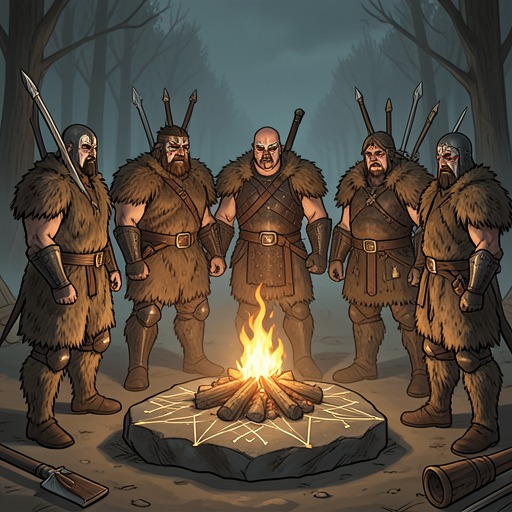
The alliance contains a fundamental contradiction from the start. The Shinarians understand the Komani presence as assistance in a war for self-determination, while the Komani understand Shinar as useful territory in a much larger campaign. Okatar Kang openly states that the Komani plan to leave Shinar after destroying the Terran forces and then strike elsewhere, closer to the heart of the Empire. Shinar’s liberation is promised, but it is also instrumental: the planet is to serve as a base from which a galactic war can be ignited.
Merdon recognizes the danger in this arrangement and objects that the Komani are using Shinar as a stepping-stone. Okatar does not deny the charge. He treats the Komani motive as irrelevant so long as their actions remove the Terrans from Shinar. That answer exposes the unequal structure of the alliance. Shinarian freedom is the rebels’ final objective; for Okatar, it is a useful consequence of Komani expansion. The two sides can fight the same enemy without sharing the same political future.
The conflict between those aims becomes sharper as the Komani gain power. Okatar paces his tent like a caged beast while his nobles watch, angered that Shinarian leaders are wavering after having welcomed the Komani. Later he declares that Shinar has, for practical purposes, already been conquered. The Komani raids have shown, in his view, that the Terrans will fight only to preserve themselves, not to defend the Shinarians. He therefore announces that Shinar belongs to the Komani and that resistance will be crushed. The language of alliance gives way to the language of occupation.
From Partnership to Coercion
The change is visible in the treatment of Shinarian political authority. Merdon tries to preserve a limited bargaining position by offering to compile a list of essential supplies for Okatar, while insisting that Shinar will not provide tribute. He emphasizes that the planet is poor and suggests that the Komani can find more substantial booty elsewhere in the Empire. The exchange is an attempt to convert an advancing conqueror back into a negotiating ally, but Okatar’s noncommittal acceptance leaves the power relationship unchanged.
The Komani also assert their own customary authority over prisoners. A Komani officer claims, in Okatar’s name, the Terrans sheltered by Sittas as prisoners. Elsewhere Okatar tells Vorgens that a prisoner who attempts escape has traditionally been executed. These claims place Komani custom against Shinarian sanctuary and Terran military authority, creating a conflict among competing systems of obligation. The Komani alliance consequently threatens not only Shinar’s political independence but also the local power to decide who may be protected and what justice means on Shinarian soil.
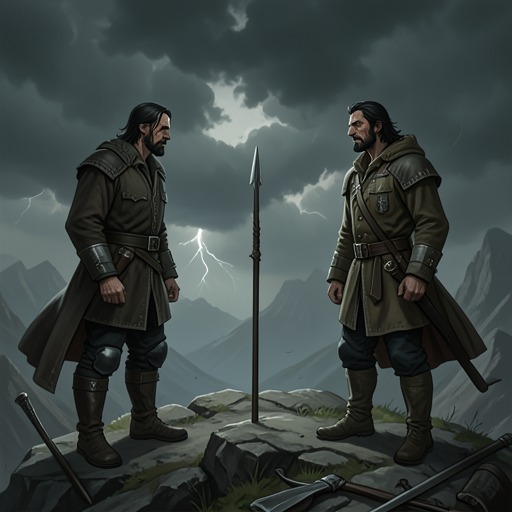
Vorgens becomes the point at which these competing claims are tested. He initially refuses Merdon’s invitation to abandon the Empire, explaining that he is a sworn officer of the Star Watch and cannot turn against the men with whom he has served. Yet his duty does not make him blind to the Komani danger. He tells the Shinarian leaders that the choice is between fighting alongside the Terrans against the Komani or allowing the Komani to take over Shinar and use it as the springboard for a galactic war. He can suggest that cooperation might strengthen the case for self-government, but he cannot guarantee that the Empire will honor such a promise.
Reversal and Shinarian–Terran Cooperation
The decisive reversal occurs when Shinarian leaders accept the need to work against the Komani. Clanthas tells Vorgens that he and the other leaders have taken the Watchman at his word and will help the Terrans in every possible way. The offer is not a restoration of trust in imperial rule; it is a strategic response to the Komani’s revealed intentions. The former enemies must cooperate because the new ally has become the more immediate threat.
Vorgens answers that the Terrans must reciprocate this trust. He orders Aikens to contact the garrison commanders in the four cities under Terran control and take weapons and other stocks from their arsenals to arm the local population. Aikens protests, but Vorgens insists that the plan be put into operation. The measure changes the relationship from imperial containment to conditional cooperation: Terran resources are placed in Shinarian hands because local resistance is necessary to defeat the Komani.
The practical value of that cooperation appears when Vorgens offers to send a squadron of vans and troop carriers to Katan within an hour. Merdon, acknowledging that he has been wrong about many things and especially about Vorgens, agrees to tell his people to follow the Watchman’s orders. He also asks to fight beside the Terrans. Vorgens responds without a speech, extending his hand; Merdon takes it, and the two go down together to the waiting people. The gesture does not erase the history between Shinar and the Empire, but it gives their temporary coalition a concrete form: shared command, shared risk, and a common enemy.
Political and Narrative Significance
Shinar–Komani is defined by the difference between liberation rhetoric and strategic possession. The Shinarians seek the freedom to govern themselves, whereas the Komani promise freedom only as a by-product of their advance against the Empire. Their alliance demonstrates how a subordinated people may invite outside force to escape imperial rule and then find that the invited force has its own plans for the territory. The relation therefore moves through three stages: partnership against a common enemy, recognition of concealed domination, and reluctant cooperation with the former oppressor.
The relationship also makes Shinarian agency central to the war. The Shinarians are not merely victims contested by the Terrans and Komani. They organize demonstrations, invite military assistance, negotiate supplies, refuse to accept tribute, reconsider their alliances, and finally choose whether to fight for their own world. That choice remains morally compromised because cooperation with the Terrans carries no guarantee of self-government. Nevertheless, the final alliance marks a recovery of political judgment: Shinar’s leaders stop treating the conflict as a simple contest between imperial rule and anti-imperial revolt and begin acting against the power most likely to destroy their independence altogether.