Shinar–Terran Empire
WatchmenShinar–Terran Empire describes the long, unstable relationship between Shinar and the Terran Empire: a relationship that begins in conquest and administrative incorporation, deepens through economic management and military control, and eventually produces both rebellion and the possibility of a different political settlement. Shinar is a populous agricultural world on the Empire’s frontier, while the Empire presents itself as the force that ended older domination and brought technological development. The central irony is that liberation from the Masters did not become self-government. Instead, Terran rule created a new dependency whose material remedies were experienced as another form of dispossession.
Conquest and Imperial Incorporation
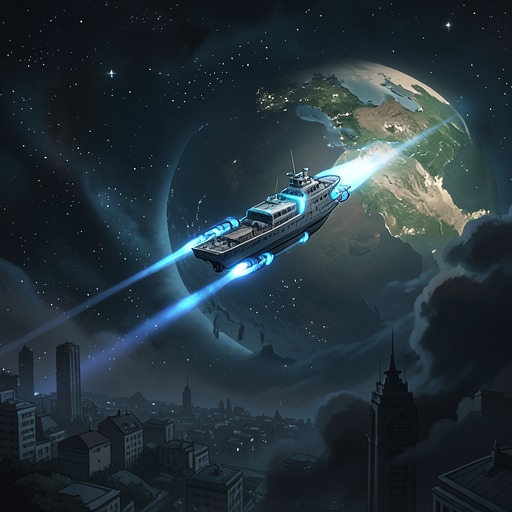
Shinar, known natively by that name and identified in Imperial records as Oran VI, lies near the territory of the Komani nation at the edge of the Terran Empire. It has three major continents, is eighty percent covered by sea, and possesses an Earth-normal atmosphere. Its estimated population is 3.4 billion, and its economy is primarily rural and agricultural, with an underdeveloped industrial base. The Empire places it under Imperial Development Plan 400R, priority 3C, making Shinar an object of planned administration rather than an autonomous political partner.
The historical basis of the relationship reaches back more than a century. Geoffrey Knowland, a Terran conqueror, defeated the Masters and established Terran rule over Shinar after the Galactic War. To many Terrans, this history represented liberation: the Empire had overthrown one ruling power and incorporated Shinar into a larger order. To Shinarians, however, the end of the Masters did not restore their own government. The planet was absorbed into the Empire, and the political transition left the population caught between gratitude for the destruction of the old regime and resentment toward the new one.
The contradiction is visible in the historical language used to justify both sides. Clanthas recalls that the Terran Geoffrey Knowland had argued that freedom required the intelligence and courage to stand independently and resist enslavement. Clanthas accepts the principle but turns it against the Terrans themselves, treating an Imperial maxim as an indictment of Imperial rule. The Empire’s own political vocabulary therefore becomes a resource for resistance: the conqueror’s doctrine of freedom survives, but its application exposes the gap between Terran ideals and Shinarian subordination.
Demography, Food, and Development
The rebellion’s deeper cause is not simply a sudden dislike of factories. Under the Masters, Shinar’s population had been held at roughly 500 million. The planet fed itself and supplied the worlds within fifteen light-years, remaining poor but economically balanced within the Masters’ domain. After the Terrans defeated the Masters and left Shinar to manage the consequences of liberation, the population began to expand rapidly. By the time Clanthas was the age of Merdon, Shinar had two billion people; in the present it has approximately three billion, with the Imperial estimate placing it still higher.
Population growth changed the meaning of Shinar’s traditional agricultural economy. The planet could still feed itself, but it was approaching the point at which food production would no longer keep pace with demand. Almost nothing remained for export, trade with neighboring worlds was collapsing, and Shinar was becoming economically bankrupt. The resentment directed at the Empire therefore arose from a material crisis as well as from national humiliation: Shinarians were becoming more crowded and poorer under an imperial system that had inherited, and failed to resolve, the consequences of rapid demographic change.
The Empire attempted to answer the crisis by installing nutrient-processing plants and converting agricultural land to industrial production. The policy might have multiplied food output and reopened trade, but its implementation displaced farmers from their own soil so that factories could be built. The governor issued a proclamation explaining the intended benefits, yet little effort was made to explain the transformation to the farmers themselves. They encountered the policy first as eviction, not as technological rescue. The conflict thus joined physical scarcity to a failure of political communication: an Imperial solution could be materially rational and still appear, from the ground, as an assault on livelihood and identity.
This failure also reveals the asymmetry of the relationship. The Empire could define the emergency in terms of production, trade, and the needs of neighboring planets that depended on Shinarian food. Shinarians experienced the same emergency through land, work, and the abrupt destruction of a familiar way of life. Even an intervention intended to prevent famine became evidence that the Empire valued administrative efficiency over consent. The resulting hostility was not merely opposition to modernization; it was resistance to modernization imposed by an authority that did not sufficiently recognize the social cost of changing an entire way of life overnight.
Rebellion and Imperial Force
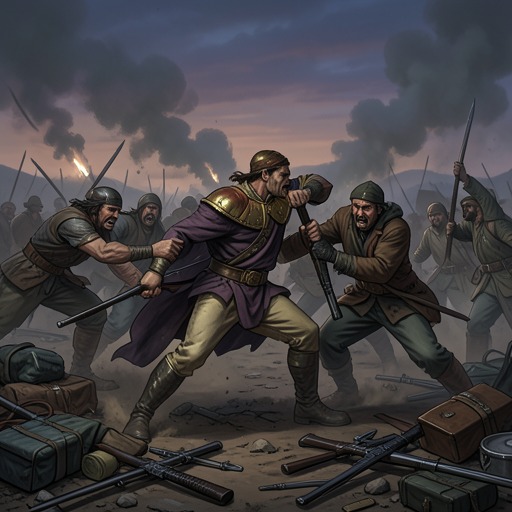
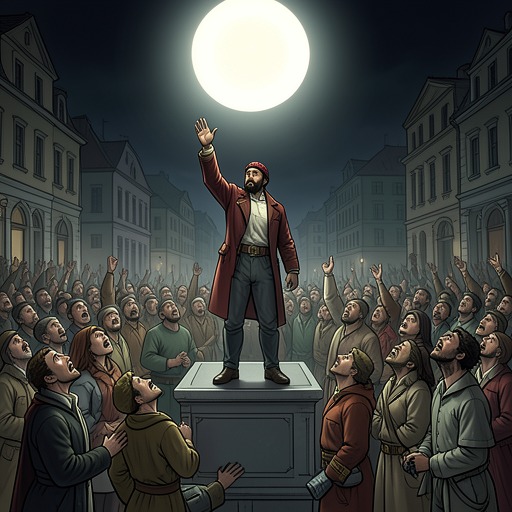
Clanthas’s response shows how economic grievance became organized political resistance. When farmers began arriving in Katan after being driven from their land, he did not quietly accept the situation. He organized them, held a demonstration in Katan, and arranged similar demonstrations in Shinar’s major cities. Some of the larger demonstrations became riots. Terran troops were called in, shots were fired, and unarmed civilians were killed. Violence escalated until the Terran governor was murdered, the Imperial Marines arrived, and Komani warriors landed on the planet.
The conflict consequently exceeded the original dispute over factories. Imperial policy helped trigger the uprising, but the uprising placed Shinar inside a wider struggle over the durability of the Terran Empire. Okatar Kang argues that the people of Shinar do not want the Empire and that the peoples of the galaxy have learned to hate Terran rule. In his interpretation, Terran power was itself acquired by taking the Empire from the Masters; the Komani could now repeat that historical reversal by taking it from the Terrans. A local rebellion thus becomes, in Okatar’s vision, the opening battle of a new interstellar upheaval.
The Terran response combines military suppression with an attempt to preserve Imperial legitimacy. The Empire sends forces to contain resistance, but its presence also confirms the rebels’ accusation that Shinar is governed by coercion. Okatar believes a small Mobile Force can be destroyed and that such a defeat will encourage other Komani clans to unite against the Terrans. His argument treats military vulnerability as political revelation: once the Empire can be humbled in battle, its subjects may no longer regard its authority as inevitable.
The relationship is therefore marked by a recurring contrast between Imperial order and anti-Imperial freedom. Terran officials see the crisis as one that threatens neighboring worlds, food supply, and the stability of the wider Empire. Shinarian rebels see those same priorities as proof that their planet is being managed for external purposes. The conflict cannot be settled by force alone because each side assigns a different meaning to security: for the Empire, security means preserving the interstellar system; for the rebels, it begins with the right to control Shinar’s land and political future.
From Independence to Cooperation
The relationship does not remain fixed at the opposition between absolute independence and permanent submission. Clanthas distinguishes Merdon’s dream of complete freedom from a more attainable form of freedom within the Empire. Most people, he explains, never believed total independence was possible, which is why Merdon’s followers were concentrated among the young. A different political imagination emerges when Terrans and Shinarians act together rather than as ruler and ruled.
That possibility is expressed in the recognition that resistance has taught Shinarians to think and act for themselves and to defend their homes without importing warriors from another land. The significance of this change lies in agency. Even if Shinar remains connected to the Empire, cooperation can no longer mean passive obedience; it must allow Shinarians to participate in their own defense and political decisions. The ideal relationship shifts from imperial command to partnership, from liberation delivered by an outside conqueror to freedom practiced by the people themselves.
The transformation is costly. Clanthas acknowledges the deaths produced by the rebellion and blames himself for the killing that has taken place. Yet those deaths are interpreted as having acquired meaning because they enabled a political possibility broader than Merdon’s purely separatist program. The struggle demonstrates that Terrans and Shinarians can work together while also proving that Shinarians can defend their homes independently. In this sense, the conflict undermines the assumptions that sustained imperial hierarchy: Shinarians are neither passive subjects awaiting guidance nor merely a population to be reorganized by Imperial planners.
Political and Narrative Significance
Shinar–Terran Empire is a relationship of hybridity as much as resistance. Terran principles, Terran institutions, and Terran technology are not simply rejected; they are seized, reassessed, and redirected by Shinarians. Clanthas uses a Terran freedom doctrine against Terran domination, while the possibility of Shinarian self-government develops within the very Imperial framework that originally denied it. The resulting political identity is neither uncomplicated assimilation nor complete separation. It is an argument that participation in a larger order can be legitimate only when the people within that order retain meaningful agency.
The book also gives the relationship a demographic and ecological foundation. Shinar’s crisis grows from the interaction of population, food production, land conversion, trade, and technological change. Imperial administrators recognize a real planetary problem, but their failure lies in treating a social transformation as an engineering task. The nutrient plants are not inherently the whole cause of rebellion; they are the visible trigger for accumulated resentment produced by overcrowding, impoverishment, dependency, and the memory of successive foreign rulers.
Technology elsewhere in the story sharpens this political contrast. The dueling machine can project thoughts and personality, isolate participants, monitor an entire duel, and make the rules reviewable; psychonic teleportation can move Hector between booths in an average of four picoseconds at a power cost comparable to a starship’s engines driving a mass equal to his weight. Such inventions show the Empire’s extraordinary capacity to reorganize distance, conflict, and human ability. But Shinar demonstrates that technical capacity does not guarantee political legitimacy. A system may possess the means to feed a planet, monitor violence, or cross space almost instantaneously and still fail if it cannot persuade people that its changes respect their lives.
The relationship’s decisive movement is therefore from conquest through crisis toward contested consent. The Terran Empire remains the power that defeated the Masters and connected Shinar to a wider civilization, but it is also the power whose policies displaced farmers, weakened local trade, and provoked armed resistance. Shinar’s emerging demand is not simply to exchange one master for another. It is to make freedom compatible with interstellar cooperation, so that the planet can remain connected to the Empire without remaining politically voiceless within it.