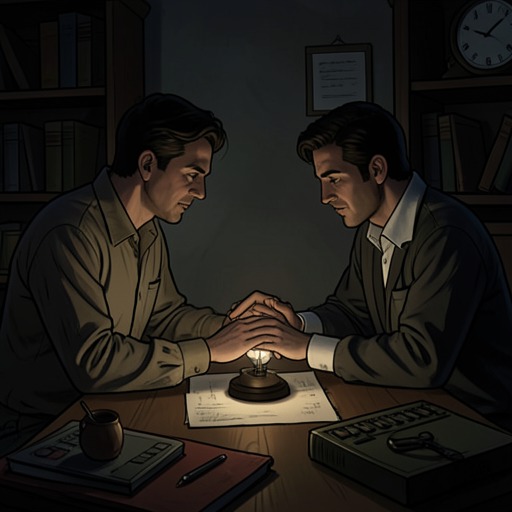
Henry Chinaski and Iris Duarte
WomenHenry Chinaski and Iris Duarte’s brief relationship offers a contrast to the conflict and instability that characterize other attachments in Henry’s life: they reconnect across a long distance, share an untroubled visit, and part with care but without a promise of permanence. Its emotional significance lies in that combination of warmth and limit. Henry admits that he cares for Iris, while recognizing that their connection is not love, and the pair leave the future open only long enough to acknowledge that they do not expect to meet again.
Meeting and First Visit
Iris enters Henry’s story at a party after one of his poetry readings. She is there with a boyfriend, but tells Henry she intends to leave with him; he points out that she is with someone else. The episode places their first encounter within the loose, socially crowded world surrounding Henry’s public readings, where attraction and existing commitments meet without much ceremony.
Later, Henry learns Iris’s name and that she is half Indian and works as a belly dancer. She says she has read three or four of his books, giving their meeting a connection to his writing as well as to physical attraction. Their first night together does not initially go smoothly, but the following morning brings a more satisfying intimacy, and they return to it after a quiet interval. The relationship begins in a casual setting, but the ease between them gives it more substance than a passing encounter.
Distance and Reunion
After Henry returns to Los Angeles, Iris calls and announces that she will fly down from Canada to see him. Her decision turns a brief meeting into a deliberate visit: she travels with one suitcase, passes through customs, and reunites with him at the airport. Henry watches her arrive and greets her with a kiss before driving her to his home.
The visit is domestic and uncomplicated. On Thanksgiving, Iris prepares the turkey; Bobby and Valerie come by for drinks but do not stay. Iris says she has not brought enough clothes and plans to shop with Valerie the next day, joking that she will buy shoes Henry will like. The scene gives the relationship an everyday rhythm, distinct from the dramatic, crowded circumstances of their first meeting.
A Quiet Interlude
For the rest of Iris’s stay, little happens beyond drinking, eating, sex, and long drives along the shore, with meals at seafood cafés. Henry says there are no arguments. He also sets writing aside, describing the pause as a time when it is best to get away from the typewriter. His reflections connect creative work and desire through the language of rest and availability, but the practical fact is simple: Iris’s visit interrupts his solitary routine without becoming a source of conflict.
Henry remembers the period as unusually civilized. He says the sex was good and there was laughter, and that neither of them made demands. He distinguishes their connection from the impersonal sexual culture he condemns: his account of the visit insists that it contained warmth and feeling, even though it was not a declaration of love. The contrast matters because it prevents his later conclusion—that the relationship has no lasting future—from reducing the time together to mere indifference.
Parting and Significance
When Iris’s visit ends, Henry drives her to Los Angeles International Airport for a morning flight. He feels no sadness at first, but considers the time they shared fulfilling and admits, plainly, that he cared. In the car, with Brahms playing on the radio, he asks whether he will see her again. Iris answers that she does not think so. Their exchange makes explicit what the visit has left unresolved: affection is present, but neither person offers a commitment that could turn it into a continuing relationship.
The goodbye briefly falters. Henry wants to kiss Iris but senses her reserve, and both seem unwell. Iris proposes checking in and then getting a drink before she flies away, framing the departure as something to make smooth and painless. Henry agrees, and the ending confirms that this is how they part. The relationship closes without a quarrel or a dramatic reconciliation; its defining movement is from an impulsive first encounter to a chosen reunion and finally to an honest, restrained separation.