Henry Chinaski–Nicole relationship
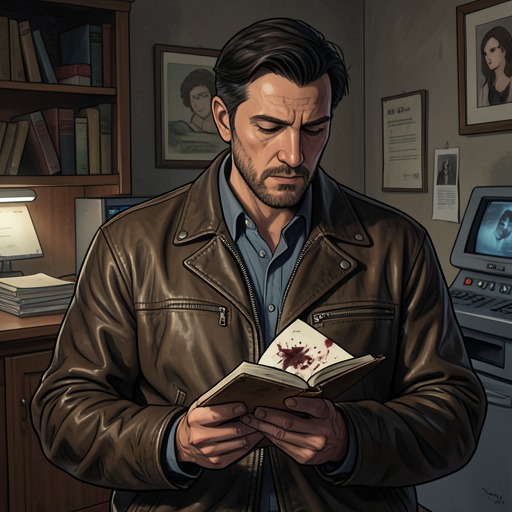
WomenThe Henry Chinaski–Nicole relationship is a secret, intermittent affair that exposes the gap between Henry’s casual account of intimacy and the disruption his choices bring into other people’s lives. Nicole first reaches him through letters praising his books; their conversations, drinking, and later meetings offer companionship and material he considers usable in his writing. But Henry pursues the connection without telling Lydia, resumes it after reconciling with her, and ultimately becomes the focus of Lydia’s violent confrontation at Nicole’s apartment.
Introduction and First Visit
Nicole lives only about a mile from Henry and begins writing to him after reading some of his books. She signs her letters with her name, and, after he answers one, invites him to visit. Henry goes over without telling Lydia. Nicole lives in a flat above a dry cleaner on Santa Monica Boulevard, reached by a street-level door and stairway. Their beginning is thus marked at once by Nicole’s literary interest and by Henry’s secrecy.
Nicole’s background gives their first meeting a distinct social and intellectual texture. She tells Henry that her family had lived in New York City: her father was a communist, and her mother had worked as a seamstress in a sweatshop, where she was regarded as the best worker at the front machine. Nicole is self-educated. She married a famous doctor, lived with him for ten years, and divorced him; she now receives $400 a month in alimony, which makes it difficult to afford the apartment she likes too much to leave. Her circumstances and history emerge through conversation rather than a formal introduction, as Henry listens and begins to regard her stories as possible material for stories or poems.
Nicole admires Henry’s writing, calling it raw and comparing its force to a sledgehammer while also recognizing humor and tenderness in it. Henry responds cautiously, but the exchange helps establish a bond grounded partly in the identity he has as a writer. He drinks with her, listens to her stories, and thinks of their afternoon as resembling a movie. That response makes Nicole more than a correspondent, though his awareness that she is impressing him also unsettles him.
Affection and an Unequal Attachment
On the veranda, Nicole talks about Huxley and Lawrence in Italy. Henry counters with his admiration for Knut Hamsun, and Nicole is astonished that he knows the writer before agreeing with him. They kiss. Henry recognizes that they will not immediately become lovers, but expects to return, and believes Nicole understands that expectation too. The first visit therefore ends not with a defined commitment but with an anticipated continuation.
After a later night of drinking, Henry blacks out and cannot remember arriving at Nicole’s. He wakes in her bed, notices a decorative letter N on the wall, and recognizes it as standing for Nicole. The morning proceeds into kissing and sexual intimacy. Henry frames his conduct to himself as a kind of private innocence toward Lydia, even though he has gone to Nicole’s without Lydia’s knowledge. His self-description and his actions pull in opposite directions: the language of imagined fidelity does not alter the fact that the affair is concealed.
The relationship becomes a repeated mid-afternoon routine. Henry visits Nicole two or three times a week; they drink wine, talk, and sometimes make love. He says he is not particularly interested in her and treats the visits as something to do. Yet the regularity of these meetings complicates that dismissal. Nicole is a continuing presence in his life, and their conversations provide both company and stories he considers adapting into writing.
Secrecy and Lydia’s Confrontation
Henry and Lydia reconcile the day after his first night with Nicole. When Lydia asks where he has been in the afternoons, he says he has gone to the supermarket, a statement that is technically true because he visits the supermarket before going to Nicole’s. His account conceals the destination by using an ordinary errand as cover. He eventually tells Lydia, while drunk, that he knows a woman named Nicole and where she lives, but minimizes the affair by saying that not much is happening.
The concealment breaks open after another fight with Lydia. Henry decides to stay the night at Nicole’s and walks toward her home carrying two six-packs of bottled beer and a pint of whiskey. Lydia runs up behind him outside Nicole’s building and takes the liquor bag. She smashes the beer bottles on the pavement, then breaks the whiskey bottle after accusing him of planning to drink and sleep with Nicole. The confrontation makes Henry’s drinking and sexual plans part of the same public scene, rather than separate private habits.
Lydia then runs upstairs and hits Nicole with her purse, shouting that Henry is her man and telling Nicole to stay away. Nicole is standing at the top of the stairs. Lydia leaves the building and runs into the street, while Henry asks Nicole for a broom and paper bag and sweeps up the broken glass. His immediate response is to think that Lydia has gone too far, to plan to buy more liquor, and to consider staying with Nicole. The practical cleanup and his plans to continue the night sit beside the seriousness of the confrontation without resolving it.
The Near-Collision and Aftermath
While Henry is bent over sweeping, Lydia returns in the Thing and drives up onto the sidewalk toward him at about 30 miles per hour. He leaps aside as the car passes, missing him by inches. Lydia drives to the end of the block, drops off the curb, continues up the street, turns at the next corner, and disappears. The encounter raises the stakes beyond jealousy and broken property: Henry is nearly struck, while Nicole’s home has become the scene of an escalating confrontation.
Henry goes back to collecting the glass and finds one beer bottle unbroken in the bag. As he is about to open it, Lydia snatches it from him and throws it through the glass at Nicole’s door, making a round hole without shattering the whole window. Nicole tells Henry to leave with Lydia before she kills everyone. He turns back down the stairs, gets into Lydia’s car, and rides away with her; neither speaks. The affair’s immediate outcome is not a clean break with either woman. Instead, Henry leaves Nicole’s with Lydia after a sequence of concealment, assault, and near-collision.
Significance and Limits of the Relationship
Nicole’s importance to Henry lies partly in the contrast between the intellectual attention she gives him and the casualness with which he describes his visits. She reads and praises his work, shares stories he considers worth using, and welcomes him into a recurring private routine. He, meanwhile, calls the relationship something to do and hides it behind supermarket trips. The affair shows how his literary self-image and his everyday conduct coexist: he can be attentive to a conversation as potential material while keeping the person who supplies it at a distance.
The episode also gives concrete form to the instability of Henry’s relationship with Lydia. He resumes the affair after they reconcile, while Lydia’s response is not withdrawal but an explosive intervention that makes Nicole a participant in their conflict. Henry characterizes Lydia as someone who reacts where he would become disgusted and withdraw; that contrast helps explain why the encounter becomes so physically and publicly charged, without making Henry’s secrecy disappear from its causes. The final silent departure with Lydia leaves the relationship with Nicole unresolved in the immediate scene. What is clear is the pattern: Henry seeks a second intimate connection without openly ending the first, and the consequences arrive at Nicole’s door in broken bottles, damaged glass, and a car that nearly hits him.