Henry Chinaski–Dee Dee Bronson relationship
WomenHenry Chinaski–Dee Dee Bronson relationship is a brief, consequential attachment formed while Chinaski is grieving Lydia Vance’s departure. Dee Dee offers affection, practical care, and a wish to help him write and recover; he accepts her closeness while remaining bound to Lydia. When Lydia returns, Dee Dee takes sleeping pills, and Chinaski ultimately leaves her after she attacks him. Their relationship is therefore neither a clean replacement romance nor a simple respite: it makes visible the cost of Chinaski’s divided attachment and the harm that follows when he treats another person’s devotion as compatible with his unresolved return to Lydia.
Background and Beginning
The relationship begins against a history of isolation and emotional withdrawal. At fifty, Chinaski describes having gone four years without a woman, having no women friends, and finding even a nonsexual relationship beyond his imagination. He has a daughter living with her mother, supports her, and recalls a short marriage that ended in divorce. The woman he says he loved most had died of alcoholism. That account makes his connection with Dee Dee a marked departure from the solitary life he has described, but not evidence that he has become ready for stable intimacy.
Chinaski’s attempt to become a writer is already shaped by fear and heavy drinking. After leaving a twelve-year job as a postal clerk, he works on his first novel through nights of whiskey, beer, cigars, typing, and classical music; he sets a ten-page goal but discovers the next morning that he has often written far more, much of which must later be revised or discarded. He completes the novel in twenty-one nights. This combination of ambition, fear, and alcohol forms the backdrop to his relationship with Dee Dee: writing is central to his self-conception, while drinking repeatedly governs how he handles distress.
When Lydia leaves, Chinaski calls Dee Dee. She asks whether he misses Lydia, and he admits that he does, describing himself as deeply distressed and unsure he will endure the loss. Dee Dee reassures him that she will help him get through it. Her support begins in response to his grief, not after it has passed; from the outset, the relationship is shadowed by the person he cannot stop missing.
Affection and Unequal Attachments
Dee Dee eventually tells Chinaski that she believes she has loved him for years. She recalls wanting him when she visited with Bernie and later with Jack, while he was absorbed in beer or his own concerns and did not notice her. Her admission gives the relationship a history of unreciprocated feeling before their immediate courtship. Chinaski, by contrast, has just turned to her as he struggles with Lydia’s departure. Their closeness begins with markedly different emotional timelines.
They spend an evening together, finish wine, and go to bed. Dee Dee offers to love him only partway if full love is too much for him, and he responds that this arrangement is preferable. The exchange captures both tenderness and limitation: she tries to adapt her offer to what she believes he can accept, while he welcomes a reduced promise rather than confronting what he can give in return.
Dee Dee’s care extends beyond the first night. She takes Chinaski to breakfast on the Sunset Strip, where he moves through a world of crowded restaurants and young, quietly talking patrons while continuing to think about Lydia. The good parts of his former relationship remain painful to him even in Dee Dee’s company. Later, she introduces him to a bar frequented by screenwriters and small-theater people. Chinaski resents the writers’ display of cleverness and superiority, contrasting their greater earnings with his own weekly income of sixty-five dollars. Even in a new relationship, he measures himself against other people and imagines a future in which Lydia will regret leaving him. Dee Dee’s companionship does not dislodge the grievance and ambition that organize his thoughts.
Chinaski nevertheless recognizes Dee Dee as someone who wants him to succeed in writing and to do well more generally. He imagines that they might someday travel together to Hawaii, a tentative possibility rather than a plan. Their week on Catalina Island is a period of shared life, but it does not resolve the underlying attachment: after they return to Los Angeles, they are together at his home when Lydia phones.
Lydia’s Return and the Crisis
The phone call changes the balance of the relationship. Chinaski and Dee Dee are lying naked on his bed when Lydia calls from elsewhere. Chinaski speaks with her, and Lydia says she is coming back and loves him. He tells her that he loves her too. The conversation takes place while Dee Dee is in the next room; after it ends, he returns to find her apparently asleep. Her arm feels limp, and he discovers that a bottle of sleeping pills that had been full is now empty. Dee Dee tells him that she does not care that he is going back to Lydia, but the overdose makes plain that his choice has immediate and serious consequences for her.
Dee Dee revives and asks Chinaski to take her home. He promises not to leave her alone that night, while acknowledging that he will eventually leave. The distinction is stark: his promise addresses an immediate danger, not a future together. His thought that Valentino would have kept both women turns the crisis into a wry reflection on possessing two relationships, but it does not undo the contradiction between Dee Dee’s need for security and his intention to return to Lydia.
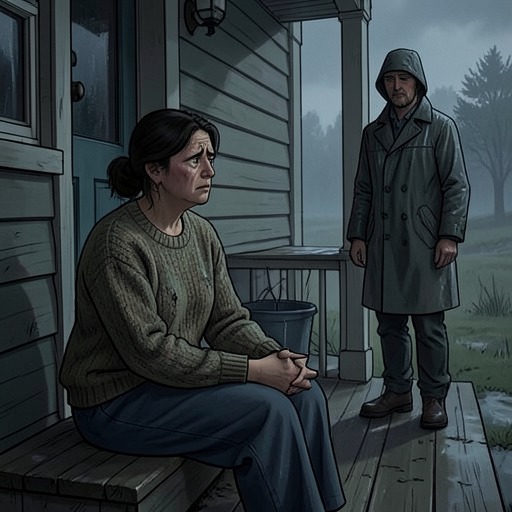
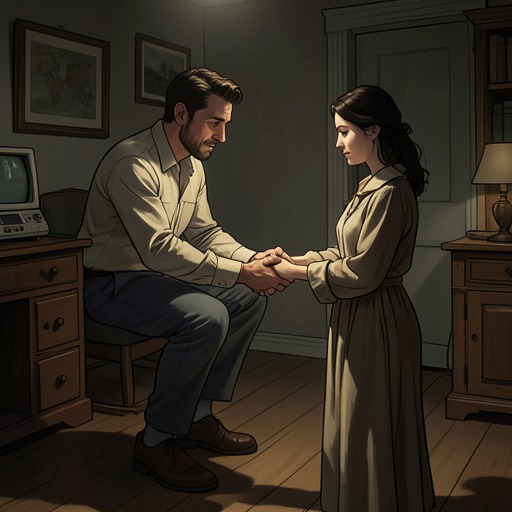
When Chinaski later visits Dee Dee, she says that she has missed him and that her pain has been severe. He says he came to make things easier and explains that he does not believe in outright cruelty. Dee Dee asks him to stay, promising that she would be a good partner to him. Chinaski says Lydia has a grip on him that he cannot explain. His account acknowledges the force of his attachment while leaving its effect on Dee Dee unchanged: she is asking for a relationship, and he is telling her that his loyalty lies elsewhere.
Separation and Wider Pattern
Chinaski says he cannot stay with Dee Dee. She responds by punching him repeatedly, and he leaves the room. The violence marks the relationship’s ending as a direct confrontation rather than a quiet mutual parting. The evidence presents Dee Dee’s attack and Chinaski’s departure, but does not establish a reconciliation or a durable future between them. The brief connection ends under the pressure of his return to Lydia and the emotional crisis that preceded it.
The episode belongs to a broader pattern in Chinaski’s relationships, in which alcohol becomes a ready response to both loss and relief. He describes drinking when something bad happens to forget, when something good happens to celebrate, and when nothing happens to make something happen. During his conflict with Lydia, he writes her a four-page letter, cuts his finger, signs the letter in blood, and mails it; after another confrontation ends with Lydia leaving, he searches empty bottles for what remains and buys more liquor when the shop opens. These details do not make Dee Dee’s crisis an effect of drinking alone, but they show how little space Chinaski leaves between emotional upheaval and the habits that intensify it.
His drinking also collides with practical consequences. Before a Houston poetry reading, he travels with a heavily bandaged leg and takes antibiotics for an infection; his doctor warns that drinking will counteract their benefit. Chinaski reads sober and answers an audience member’s question about his sobriety by pretending that Henry Chinaski could not attend and that he is Chinaski’s brother. The episode contrasts the public persona associated with drinking against an occasion when he performs without alcohol, while showing that his alcohol use persists even when illness makes abstention medically important.
The relationship with Dee Dee thus has a double significance. It shows a woman who has carried affection for Chinaski over years and who offers him care at a moment of acute loneliness; it also shows him accepting that care without becoming free of Lydia or making a reciprocal commitment. His divided loyalties are not merely an abstract romantic conflict: they lead to a crisis, a promise limited to one night, a plea to stay, and a physical rupture. The relationship ends without resolving the underlying pattern, leaving Chinaski’s capacity to accept intimacy constrained by the attachments and drinking that continue to govern his choices.