Lydia destroys Chinaski’s belongings
WomenLydia destroys Chinaski’s belongings in a rampage that makes jealousy physically visible: paintings are torn, books flung into the street, a front door shattered, and the old typewriter smashed against the pavement. The destruction follows Chinaski’s return from the harness races and gives material force to Lydia’s repeated demand that he stop telling her about other women. Yet the scene ends not with prosecution or retaliation, but with Chinaski’s refusal to press charges, because he fears that Lydia could lose her children.
The return to a wrecked home
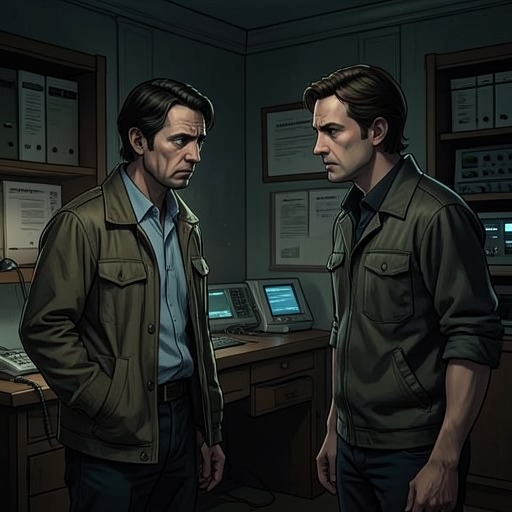
After sleeping through most of the afternoon, Chinaski drives to the harness races that night. He loses thirty-two dollars, returns in his Volkswagen, and finds his home brightly lit when he reaches the door. Inside, the damage is immediately legible: drawers have been ripped out and overturned, and the bedcovers lie on the floor. The disorder is not a vague sign of a quarrel; it has been carried through the rooms and into the objects that make up Chinaski’s working and domestic life.
The bookcase is empty of the books that had been there, including roughly twenty books Chinaski wrote himself. His typewriter, toaster, radio, and paintings are missing as well. The television remains, and Chinaski interprets its survival as pointed: Lydia knew he never watched it. Even before he sees her, he understands the emptied rooms as an act directed at him and at the things most closely associated with his writing and possessions.
Outside, Lydia’s car is there, but Lydia is not in it. Chinaski calls for her and searches up and down the street. He finds her feet sticking out from behind a small tree against an apartment-house wall. She stands with two shopping bags filled with his books and a portfolio of his paintings. His first response is to demand the return of the works, stressing that they belong to him. The encounter, which might have been a confrontation over missing property, becomes something more openly destructive as Lydia comes out screaming.
The destruction of books and paintings
Lydia takes the paintings from the portfolio, tears them into pieces, throws the fragments into the air, and stomps on them as they fall. Her cowgirl boots make the act concrete: the paintings are not merely taken away or damaged in transit, but deliberately reduced underfoot. She then pulls Chinaski’s books from the shopping bags and throws them across the street and lawn. The objects taken from the house are returned to view only to be scattered and ruined.
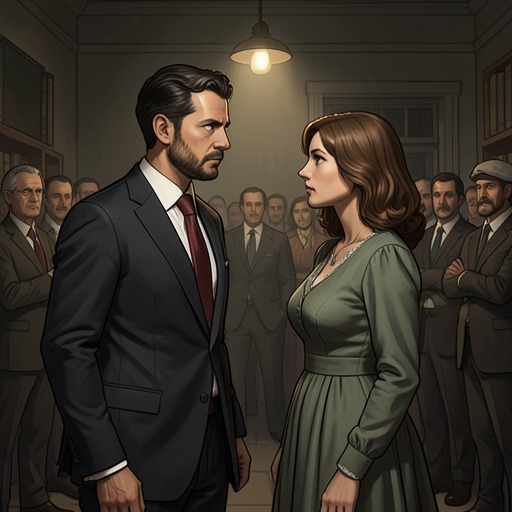
As she throws them, Lydia shouts, “Here are your paintings! Here are your books! AND DON'T TELL ME ABOUT YOUR WOMEN! DON'T TELL ME ABOUT YOUR WOMEN!” Her repetition joins the destruction to the grievance she names. The books and paintings are Chinaski’s, but the scene does not treat them only as property: they are the conspicuous targets through which Lydia stages her anger about his other women. The repeated command is the verbal refrain of the rampage, returning as the physical damage escalates.
Lydia runs down the court holding Chinaski’s latest book, The Selected Works of Henry Chinaski. She asks, “So you want your books back?” and answers by using the volume to smash pane after pane in the glass front door. The book that she has just thrown among the others becomes a tool for breaking into the house’s boundary. She keeps screaming that she does not want to hear about his women, while Chinaski stands and watches her break the glass. He thinks about where the police are, but does not stop her.
The typewriter and the escalation
The episode’s most emphatic destruction is reserved for the typewriter. Lydia runs down the walkway, turns left at the trash bin, and goes down the driveway of the neighboring apartment house. Behind a small bush are the typewriter, radio, and toaster that had disappeared from Chinaski’s home. She retrieves the typewriter and carries it into the middle of the street.
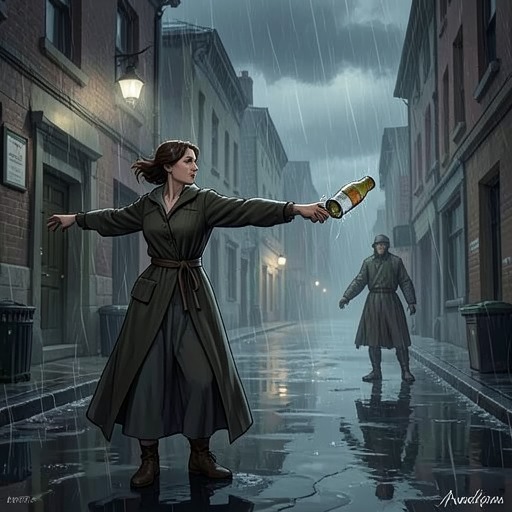
It is an old-fashioned, heavy standard machine. Lydia lifts it over her head with both hands and smashes it into the road; the platen and other parts fly off. She picks it up again, raises it, screams, “DON'T TELL ME ABOUT YOUR WOMEN!” and strikes it against the street a second time. The repeated blow makes this more than the removal of a useful possession: the machine’s weight and parts become visible as it is broken apart in public. In a scene already aimed at Chinaski’s books and paintings, the typewriter concentrates the attack on the equipment of his writing.
Lydia then jumps into her car and drives away. The sequence has moved from rummaging through the home, to destroying the books and paintings, to breaking the glass at Chinaski’s door, and finally to smashing the typewriter outside. That progression gives the rampage a clear physical course: what began as an emptied house ends with the writing machine in pieces in the street. The insistence on the same grievance accompanies each new stage, rather than fading after the first damage.
Police, restraint, and aftermath
A police cruiser arrives about fifteen seconds after Lydia drives off. Chinaski tells the officer that her car is an orange Volkswagen “Thing,” describing it as tank-like and giving the letters HZY as the closest clue he can remember to its license number. The police bring Lydia back. Chinaski hears her wailing in the back seat as they arrive, and an officer orders him to stand back before following him inside. The policeman steps on broken glass and shines his flashlight at the ceiling and its mouldings before asking whether Chinaski wants to press charges.
Chinaski says no. His explanation is specific: Lydia has children, and he does not want her to lose them; her ex-husband is trying to get the children from her. He asks the officer only to tell her that people are not supposed to behave this way. The officer writes Chinaski’s decision by hand in a small lined notebook, recording that Henry Chinaski will not press charges against Lydia Vance. The formal possibility of legal punishment is therefore present, but Chinaski chooses not to pursue it, even after seeing his belongings and the entrance to his home destroyed.
Significance
The scene makes the conflict over other women inseparable from damage to Chinaski’s material world. Lydia states her grievance directly and repeatedly, while the objects she attacks mark different parts of that world: paintings, published books, domestic appliances, and finally the typewriter. Her destruction of the latest book against the front-door panes collapses the distinction between his work and his home; the machine’s shattered parts extend that collapse into the street. The narrative lets the sequence of objects carry the escalation rather than reducing it to an argument alone.
Chinaski’s conduct also complicates the image of a simple contest between an aggressor and a victim. He calls for the police while the destruction is underway, but when given the chance to press charges he places Lydia’s children and her precarious custody situation ahead of retribution. His restraint does not undo the damage or resolve the jealousy expressed in Lydia’s repeated refrain. Instead, the episode closes on a consequential limit: the belongings have been wrecked, the police have documented his refusal to prosecute, and the relationship’s violence is left without a legal conclusion.