Chinaski writes his first novel
WomenChinaski writes his first novel in a period of upheaval: at about fifty, after quitting a twelve-year job as a postal clerk, he is trying to become a writer while frightened about the change and drinking more than before. The novel takes twenty-one nights to complete, but the account presents writing not as a clean break from hardship: it emerges from a punishing routine organized around alcohol, the typewriter, and work carried out until dawn.
Departure from Postal Work
Chinaski’s first novel belongs to a larger transition from wage work to writing. He has left the postal service after twelve years and is trying to establish himself as a writer. The change brings fear rather than immediate confidence; he says he was terrified and drinking more than ever. His former life remains a point of contrast even in later scenes, when waiting for time to pass recalls the hours at the post office.
Writing also sits alongside material obligations and a difficult personal history. At fifty, Chinaski has a six-year-old daughter who lives with her mother, and he pays child support. He has been divorced, and the woman he describes as the only person he had loved has died. These circumstances do not explain the novel’s content, which the account does not disclose, but they establish the unsettled life surrounding its composition.
A Twenty-One-Night Routine
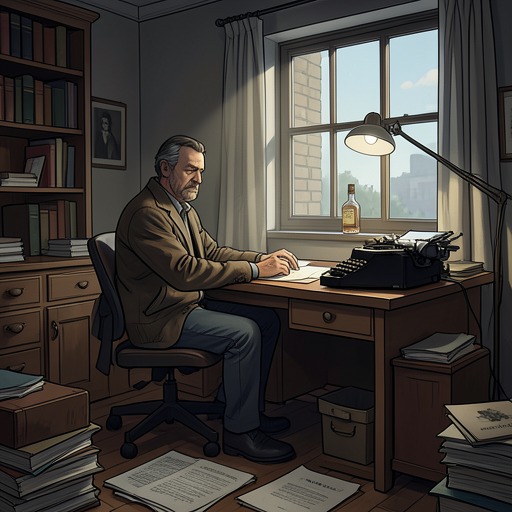
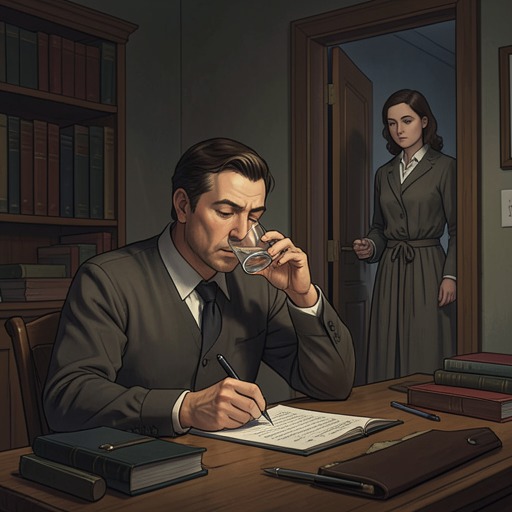
During the attempt, Chinaski drinks a pint of whiskey and two six-packs of beer each night. He smokes cheap cigars, types, and listens to classical music on the radio until dawn. He sets himself a target of ten pages a night, yet cannot tell how much he has written until the next morning. The routine combines a measurable quota with a deliberately uncertain result: the night’s work is assessed only after it is over.
In the morning, he vomits and then checks the pages left on the couch. The pile regularly exceeds his target, sometimes reaching seventeen, eighteen, twenty-three, or twenty-five pages. That apparent abundance is not the same as finished work: he says each night’s pages must be cleaned up or thrown away. The novel’s completion therefore depends both on the initial burst of typing and on subsequent selection and revision. After twenty-one nights, the first novel is written.
Writing, Drinking, and Discipline
The episode makes alcohol part of the practical conditions of composition, but it does not claim that drinking improves the work. Elsewhere, Chinaski rejects that idea directly: asked whether drinking has helped his writing, he answers, “No. I'm just an alcoholic who became a writer so that I would be able to stay in bed until noon.” The blunt answer complicates the image of the all-night writer. Drinking accompanies the work, while the later remark frames writing as a way to accommodate a life structured by alcoholism, not as proof that alcohol is a creative aid.
The demand for discipline recurs when Chinaski is trying to return to his typewriter after a relationship ends. He thinks, “Art takes discipline. Any asshole can chase a skirt.” The statement sets literary work against distraction, but the novel’s origin story shows a more compromised practice: discipline is present in the nightly page goal and the twenty-one-night span, even as the work is embedded in heavy drinking and followed by cleanup or rejection.
The Working Writer’s Public Life
Chinaski’s writing develops within a small, informal literary environment. At the time, he edits a little magazine, The Laxative Approach, with two co-editors; after its sheets are printed, the editors plan a party where guests will help collate and staple the magazine. This setting places his novel-writing alongside collective, low-budget literary work rather than apart from it. His later readings also bring writing into public view, though he says he hates them and notes that they help with rent and may sell books.
The contrast between the solitary nights of novel-writing and the practical demands of magazines and paid readings gives the episode its broader significance. Chinaski’s transition is not simply from one occupation to another: writing becomes both a craft requiring revision and a means of sustaining himself, while the old postal routine remains legible in his attention to hours and endurance. The novel’s twenty-one-night completion marks a real accomplishment, but the account leaves its literary result unspecified and keeps the emphasis on the rough, repetitive labor that produced it.