Chinaski visits William Keesing, who later dies
WomenChinaski visits William Keesing, who later dies, in a reunion that brings a long correspondence into the physical present and then ends in a sudden loss. A university reading trip to Illinois reunites Chinaski with Keesing, an ex-Marine, former prisoner, poet, and codeine user. Their quiet companionship offers a rare sense of plain, unforced affection; a week and a half after Chinaski returns to Los Angeles, Cecelia calls to tell him that Keesing is dead. The abruptness of the news exposes the distance between knowing that death is inevitable and being prepared for the death of someone loved.
Correspondence and the reunion
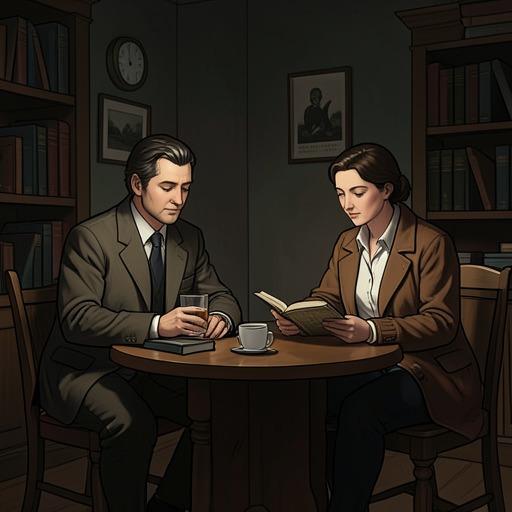
The visit begins with a history that predates the airport meeting by years. Chinaski had been writing to Keesing since 1966, after encountering his poems in Bull, a mimeographed magazine edited by Doug Fazzick. Their shared literary world is far from conventional literary respectability: Fazzick works in a rubber plant, Keesing is an ex-Marine who served time and depends on his wife, Cecelia, and Chinaski works eleven hours a night as a postal clerk. Chinaski recalls that he was then writing long, flamboyantly colored letters to many people, and that Keesing was one of the correspondents he sought out.
By the time of the visit, Keesing has obtained temporary teaching work at the university and picked up one or two degrees between drug busts. Chinaski warns that teaching can be dangerous for someone who wants to write, though Keesing gives his class plenty of Chinaski. The journey itself has mixed motives: Chinaski dislikes readings, but they help pay the rent, may sell books, and take him away from East Hollywood. The reunion is therefore both a work engagement and a meeting with a friend whose poems and letters have long belonged to his life.
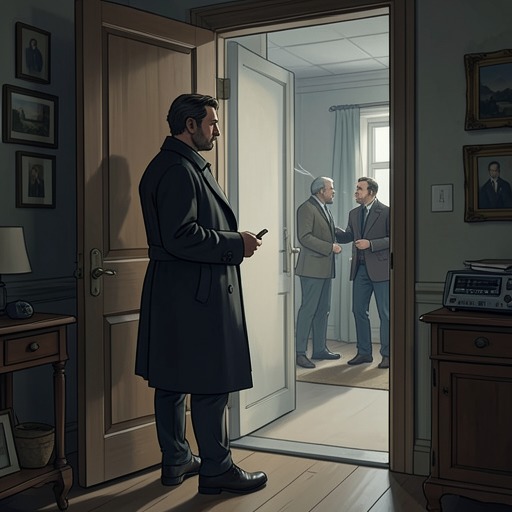
Keesing and Cecelia meet Chinaski at the airport, and the three go straight to the car with his baggage. Keesing’s first remark registers Chinaski’s appearance, which the narrator describes in detail: he wears his dead father’s oversized overcoat, trousers long enough to cover his shoes, unmatched stockings, and shoes worn down at the heels. He cuts his own hair, trims his beard with scissors every few weeks, avoids glasses despite poor eyesight, and bears the red face and nose of a drinker. The account makes the airport greeting an unvarnished introduction: Chinaski arrives looking as ill-kept and vulnerable as the skid-row figure he recognizes in himself.
A quiet friendship under strain
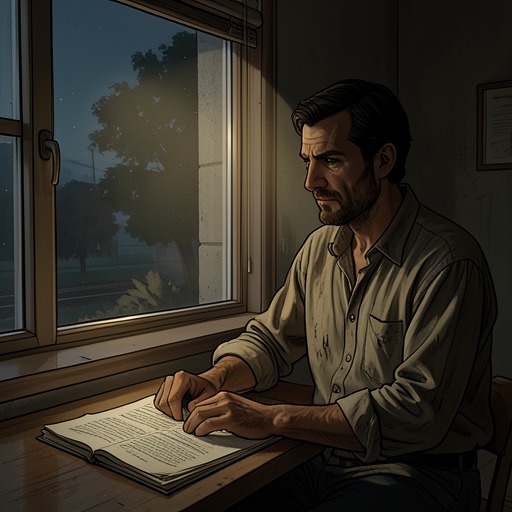
The visit’s intimacy is expressed less through conversation than through shared time. Chinaski and Keesing sit drinking beer as it grows dark and a high wind rises. They do not talk much. Chinaski is glad they have met; he finds little pretense in Keesing and feels fond of him. The judgment is affectionate but not idealized: Keesing is tired, physically compact, and understood as a man who has been through hardship. Their companionship rests on recognition rather than ceremony.
Keesing’s literary prospects provide another measure of the difference between public recognition and private regard. His poems have found an appreciative audience in Australia, but not in the United States; Chinaski can imagine that American readers might discover him someday, perhaps by the year 2000, but cannot promise it. The uncertainty shadows their beer-drinking conversation without displacing its warmth. Keesing may lack success at home, but he has Chinaski’s esteem, and the visit gives that esteem a concrete, shared form.
The evening also reveals the instability in Keesing’s home life. Cecelia calls to report that a tornado has passed over—or, more precisely, around—and the men take the news in stride. Keesing is due to teach, and Chinaski is due to read; both are employed, and the immediate arrangements hold. Around 12:30, Keesing packs his notebooks and other necessities into a backpack, takes his bicycle, and pedals to the university. Later, Cecelia asks whether he left all right and whether he seemed to be using drugs. Chinaski says that Keesing looked fine, had eaten, and seemed well enough. Cecelia still loves him, she explains, but cannot continue living through his addiction and its consequences.
The reading and the departure
Chinaski gives his university reading, receives his check, and leaves. Afterward, a small, select gathering is expected at Cecelia’s house, but Chinaski knows that the setting offers him little chance of pursuing the sexual opportunities he associates with such gatherings. He wakes alone. The bluntly stated expectation and anticlimax remain beside the more consequential details of the visit: his time with Keesing, the strain of Keesing’s marriage, and their unceremonious parting.
On the next morning, Keesing is sick again and has a one o’clock class. Before going, he tells Chinaski that Cecelia will drive him to the airport and asks for no heavy goodbyes. Chinaski answers simply. Keesing puts on his backpack and walks his bicycle out the door. The scene ends not with a declaration of impending danger but with an ordinary departure for work. Its plainness matters in retrospect: neither the men nor the narration mark this as a final farewell.
Death and its aftermath
About a week and a half after Chinaski returns to Los Angeles, Cecelia calls at night, sobbing. She says Keesing is dead and that Chinaski is the first person she has called. When he asks what happened, she reports that Keesing complained of feeling very ill, was taken to a hospital, and died within two hours. She expects people to suspect an overdose but insists that he did not overdose. She also says that, although she had been going to divorce him, she loved him.
Cecelia connects the visit to Keesing’s last days: after Chinaski left, Keesing talked about him repeatedly, and she says the visit meant a great deal to him. Chinaski believes her. The reunion thus becomes part of the bereavement itself—not a cure for Keesing’s illness or the conflicts in his marriage, but an encounter whose importance is confirmed only after his death. Chinaski calls Cecelia again that night, the following night, and once more after that, before the calls stop.
The episode places a general recognition of death beside the singular shock of losing Keesing. Chinaski reflects that Keesing was sick and unhappy but did not look like someone about to die; people can die unexpectedly even when death is familiar as an idea. The loss is especially hard because Keesing was, in Chinaski’s judgment, an exceptional and lovable person. After receiving the news, Chinaski pours himself a drink and observes how drinking can be used to meet every kind of circumstance: to forget bad events, celebrate good ones, or make something happen when nothing does. The gesture links this bereavement to his habitual drinking without making alcohol an answer to it. What remains is the contrast between the visit’s modest routines—beer, the bicycle, a class to teach—and the irreversible news that follows.