Colonia Las Flores
2666Colonia Las Flores is a neighborhood in Santa Teresa marked in the narrative by the discovery of a thirteen-year-old girl’s body and by an unresolved investigation into another woman’s death. Its appearances connect ordinary residential streets and improvised homes to abandoned or polluted margins of the city, while the cases show how identification and accountability can falter even when authorities formally investigate.
Setting in the expanding city
The critics’ drive across Santa Teresa places poorer neighborhoods among unpaved streets, scrap-built houses, vacant lots, industrial parks and the distant horizon of the maquiladoras. The city is described as expanding rapidly, with urban districts and industrial sites pressing against less developed areas. Colonia Las Flores belongs to this uneven urban landscape: its streets and lots are not separate from the industrial economy, but lie close to the waste and infrastructure associated with factory work.
One address in the colonia makes that connection concrete. Pedro Perez Ochoa lived in a small shack at the end of Calle Sayuca, built from adobe and discarded materials, a few yards from the EastWest maquiladora’s waste pipe. He had worked at the factory, but his employment file had disappeared. His home, his job, and the factory’s waste outlet thus occupy the same precarious setting, where workers and residents are present but poorly documented.
The first recorded killing
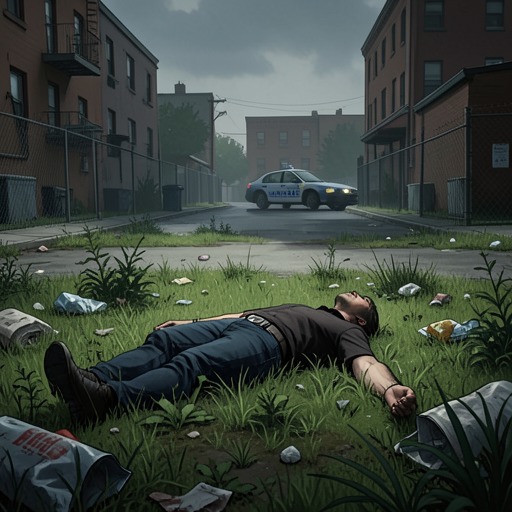
In January 1993, children playing in a vacant lot in Colonia Las Flores found the body of a girl dressed in a white long-sleeved shirt and an oversized yellow skirt. The lot lay between Calle Pelaez and Calle Hermanos Chacon, ending at a ditch behind the ruined walls of an abandoned dairy. Two women were kneeling nearby and praying. They told the arriving officer that they did not know the girl and that she was not from the neighborhood.
The girl was identified as Esperanza Gomez Saldana, aged thirteen. Her death became the first entry in the count of women killed in Santa Teresa in 1993. The account immediately complicates that starting point: women and girls may have died in 1992 without being found or entered on any list. Some were never identified; others may have been buried in unmarked desert graves or disposed of without a record. The chronology of the killings therefore begins not with certainty about the first death, but with the first one the city chose—or managed—to count.
Police brought Esperanza’s body to a station, where officers and a judge examined and photographed it. The police chief, Pedro Negrete, arrived and asked what the officials had concluded and whether they knew her identity. The body was then taken to the city hospital morgue for an autopsy. The medical examiner confirmed strangulation, but the investigation’s early procedural activity did not prevent the case from standing as the beginning of a larger sequence in which many victims remained unknown.
Rebeca’s murder and an absent suspect
A later killing associated with Colonia Las Flores involved Rebeca, whose friend found her at home after going to check on her. The friend initially saw nothing unusual in the small house. After discovering Rebeca in the bathroom, she called the police and the Red Cross, then returned and waited. The medics first moved the body and then, at the older medic’s direction, put it back where it had been found so the scene would not create trouble with the police. Their handling of the scene underscores how the immediate response was shaped by anxiety about procedure as well as by the discovery itself.
The medical examiner’s report the next morning gave strangulation as the cause of death. It noted that Rebeca had had sexual relations in the preceding hours, while leaving uncertain whether she had been raped. Police sought her lover, Pedro Perez Ochoa, but he had been gone for days by the time they located his residence. Neighbors described him as polite and generally clean-looking; investigators inferred that he had showered at Rebeca’s home. His file was missing from EastWest, where he had worked, and no arrest warrant was sent because police did not know where he was.
The search yielded objects rather than a suspect: sports magazines, a biography of Flores Magon, clothes, sandals, and three pictures of Mexican boxers cut from a magazine and pasted beside his mattress. The evidence establishes the contents of the shack and the failure to locate its former occupant, but does not establish that Perez Ochoa killed Rebeca. Her case and the earlier discovery of Esperanza’s body give the colonia a place within the book’s account of violence and unresolved investigations, without making either address a complete explanation for the killings.