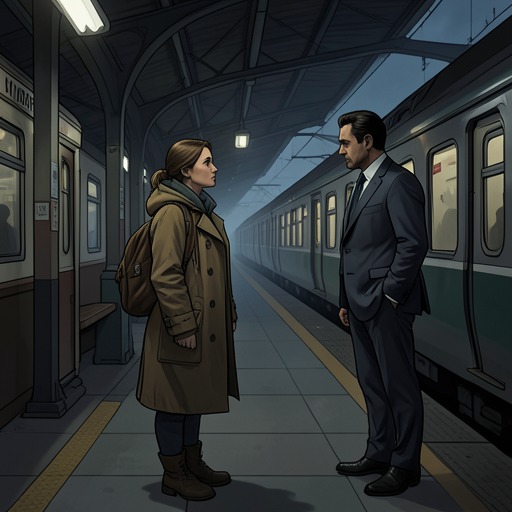
Lourdes
2666Lourdes is a temporary refuge in Lola’s passage through France: a railway station crowded with sick travelers, where she helps direct the desperate while living without a secure home. Its improvised first-aid rooms and morgue make the station a threshold between travel and survival, care and exhaustion; Lola eventually walks out of the town and tries to hitch a ride.
Setting and the station
After leaving San Sebastián by train, Lola passes through Bayonne, the Landes, Bayonne again, Pau, and Lourdes. In Lourdes, the railway station becomes more than a point of transit. Trains arrive from Italy and northern France, bringing people whose conditions range from paralysis and cerebral palsy to cancer, rashes, and blindness. Some are terminally ill; others are old or young, and their vulnerability gathers them into a single stream of passengers waiting for buses or queuing outside the station.
The station’s rooms have been repurposed to meet the influx: some serve as first-aid posts, others as resuscitation rooms, and one discreet room as an improvised morgue for those who do not survive the accelerated strain of the journey. The orderly function of railway travel is thus shadowed by emergency care and death. The station keeps people moving, but it also receives those whom movement has exhausted.
Lola among the travelers
Without knowing how she began, Lola helps the sick people as they leave the trains and make their way toward buses. Her work is unassigned and informal; she moves among them as though she were a nun in jeans, directing people who are desperate and in need of assistance. The role gives her a way to act amid the stream of suffering, even as her own life remains unmoored.
She moves back and forth through every part of the station, her blue eyes unblinking and her pace slowing under the accumulated weariness of her days. At night she sleeps in the town’s most modern building, a steel-and-glass structure, but not in an ordinary room: she enters the trash compartments through a tiny door and sleeps there. At other times, when the trains’ chaos subsides, she stays in the station bar, where old men buy her coffee and talk to her about films and crops. These small exchanges provide company without turning her wandering into a settled life.
The mistaken glimpse of Imma
One afternoon, Lola thinks she sees Imma step off a train from Madrid, accompanied by a group of disabled people. The woman resembles her friend in height, long black skirts, and a sorrowful Castilian face. Lola remains still as the woman passes and does not call out. The resemblance offers a momentary possibility of recognition, but the scene does not establish that Imma has actually arrived; Lola only thinks she sees her.
Five minutes later, Lola pushes her way out of the Lourdes station and leaves the town. She walks to the highway before trying to hitch a ride. The station has briefly given her work, shelter of the most precarious kind, and the appearance of a familiar face, but none of these holds her there. Lourdes marks a pause in her wandering, not its end.