San Sebastián
2666San Sebastián is a way station in Lola’s journey toward the poet confined at the asylum in Mondragón, but it becomes more than a point on a map. From a friend’s crowded household to a cheap boardinghouse, from the asylum’s guarded perimeter to a cemetery where she sleeps, the city and its outskirts arrange Lola’s life around access and exclusion. Its spaces offer shelter without settling her, and the route she follows eventually leads away from Spain and into France.
Arrival and the asylum
Lola leaves Oscar Amalfitano and their daughter Rosa under the stated pretext of visiting her favorite poet, who lives in the asylum near San Sebastián. She has spent the night explaining her plan while packing, promising to return soon. Amalfitano doubts the romantic history she tells about having met the poet at a party in Barcelona: he knows she first learned of the poet from a book he gave her. Still, he understands that she will eventually go to San Sebastián, gives her part of his savings, and asks her to return after a few months. Her departure turns the place into the destination of a pursuit that Amalfitano cannot redirect.
Lola travels with Imma, and their first visit is refused: the asylum’s guards will not admit them. They stay with Edurne, a Basque former ETA commando who has abandoned armed struggle and works almost full-time as a street educator. Edurne’s husband, Jon, is visibly unsettled by guests and does not welcome their presence for more than one night. The couple’s home is therefore only a brief refuge. Lola and Imma leave, take a cheap boardinghouse Edurne has recommended, and hitchhike back toward Mondragón.
At the asylum they are again kept outside. Their attention shifts to the grounds visible from beyond the boundary: roads of dirt and gravel, gray walls, the changing rises of the land, and the paths taken by patients and caretakers. They watch at a distance and try to commit the layout to memory, turning the prohibited visit into a study of the institution’s exterior. Sitting beside the road with cheese sandwiches from San Sebastián, they contemplate the shadows the asylum casts over its surroundings. The barrier does not end Lola’s visit; it changes looking into the substitute for entry.
A place to wait
On a third attempt, the women arrange access by presenting themselves in roles the asylum will accept: Imma claims to be a reporter from a Barcelona newspaper, while Lola says she is a poet. They are admitted and escorted through long blue-and-white corridors to a plain room. Lola finds the poet older-looking, with sunken eyes and thinner hair. The visit gives her the contact she has sought, but it does not resolve the distance between them; the institution’s corridors and supervision remain part of the encounter.
They return the following day, only to be told that the poet is on bedrest. The same refusal continues on subsequent days. When their money runs out, Imma decides to travel south to Madrid to ask her brother for a loan, while Lola stays behind, expecting Imma to return in a week. Alone, Lola writes long letters to Amalfitano about her days in San Sebastián and the area around the asylum. She visits the grounds daily and, clinging to the fence, imagines that she is making telepathic contact with the poet. At other times she reads in a clearing in the woods, picks flowers and grasses, and carries or drops the small bouquets by the railings. Waiting becomes a routine shaped by a boundary she cannot cross.
The boardinghouse and cemetery extend that provisional life. Lola spends nights alone there or in the open country near the line between the asylum and the world outside. On one night she sleeps in an empty cemetery niche; the following morning she feels fortunate to have water and a peaceful place near the asylum. Later, when Imma is still away and her money is gone, she continues to live between the cemetery, the road, and the institution. San Sebastián in this episode is not a secure home but a set of temporary places from which she can keep returning to the asylum.
Larrazabal and fragile shelter
A chance encounter with Larrazabal, a driver who has picked Lola up on the highway, gives her help without ending her precariousness. He meets her again at the cemetery, offers a place to stay, and lends her ten thousand pesetas. Lola records the encounter in a letter to Amalfitano, framing the unexpected friendship as a blessing when she is alone. Her circumstances remain uncertain, but the loan and Larrazabal’s offer give her immediate support.
In her final letter to Amalfitano, Lola describes a period in which Larrazabal takes her to the asylum, offers money without asking for anything in return, and looks for her when she disappears from his apartment. He buys her clothes and tells her about his family. He even proposes marriage, while accepting her reminder that she is already married. His care gives her a measure of practical shelter, but does not make her abandon her search or settle into the life he offers. She visits the asylum less often, now roughly once every three days, and looks through the fence without expecting to see the poet. The object of her attention remains, but the hope attached to it has ebbed.
Lola continues to move unpredictably among the cemetery, the asylum, her former boardinghouse, and places where San Sebastián’s transients gather. Larrazabal sometimes finds her at the train station or on a bench at La Concha. At his apartment he prepares breakfast and dinner, while Lola eats little during the day as she roams. When she decides to leave, she asks him for train money. He says he will give her what he has, but cannot help her go away never to be seen again. She nevertheless scrapes together enough for a ticket. His generosity has provided shelter, not a claim on her future.
Departure and narrative significance
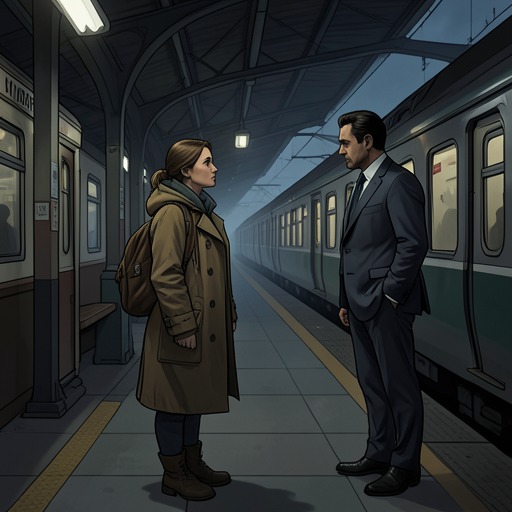
At noon one day, Lola takes a train to France. She spends time in Bayonne, travels to Landes, returns to Bayonne, and goes on to Pau and Lourdes. San Sebastián consequently serves as a hinge between her departure from Amalfitano’s household and a new period of wandering: the attempted visit to the poet brings her to the region, while the repeated closures of the asylum and the limits of her arrangements leave her mobile rather than settled.
The place’s significance lies in the contrast between proximity and access. Lola can return to the asylum, watch its patients from outside, and imagine communication across its fence, yet repeated visits do not grant her sustained contact with the poet. Meanwhile, the boardinghouse, cemetery, roads, and Larrazabal’s apartment make survival possible in fragments, without becoming a lasting home. San Sebastián gathers the episode’s central pattern into a geography: the desired destination is close enough to watch, but not to possess, and each temporary refuge makes another departure possible.