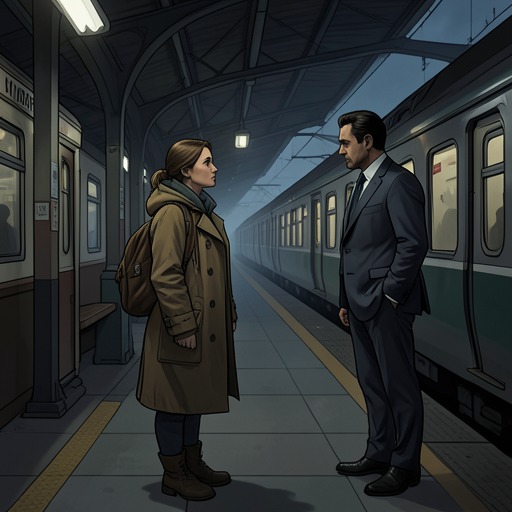
Mondragon asylum
2666Mondragon asylum is a psychiatric institution whose enclosing grounds and controlled access determine how Lola can approach the poet: first turned away, then admitted under assumed identities, and later left to watch from beyond the fence. For her, the asylum is not merely the setting of a visit but the boundary around a hoped-for escape. Its patients and paths remain visible, while the person she wants to reach stays subject to rules and interruptions she cannot overcome.
Grounds and access
Lola and Imma first travel to the asylum but are refused entry by guards whom Lola describes as priests disguised as security guards. On a second attempt, they again cannot get inside. Instead, they study the institution from outside: its gray walls, dirt and gravel roads, changing rises in the land, and the routes used by patients and caretakers. The boundary turns a visit into an exercise in watching and remembering. Their attention to paths and terrain hints at the practical problem of reaching the poet, while the view from outside offers no access to his private life.
The landscape around the grounds extends this experience of separation. Lola and Imma sit by the roadside after their second failed attempt, eating sandwiches and looking toward the asylum and its surroundings. On later visits Lola waits by the fence, sometimes watching the grounds and sometimes imagining that she can communicate with the poet telepathically. The fence is therefore both a physical limit and the position from which she sustains an uncertain connection.
A visit obtained by deception
For their third attempt, the women arrange an appointment. Imma presents herself as a reporter for a Barcelona newspaper, while Lola claims to be a poet. This time they are allowed in. A doctor or priest leads them through seemingly endless blue-and-white corridors to a plain room, where the poet is waiting. The contrast between the long institutional passage and the nondescript meeting room makes the encounter feel permitted but tightly contained.
Lola observes that the asylum staff seem proud to have the poet as a patient: they know him and greet him as he goes to the garden or receives his daily tranquilizers. The institution’s routines are visible in these ordinary movements, but they do not give Lola control over his circumstances. During their conversation she tells him that she believes he is imprisoned and wants to escape, and proposes that they leave for France with Imma’s help. Her detailed plan—to cross the mountains, reach Saint-Jean-de-Luz, and continue by train to Paris—arises from inside a place whose doors and visits are governed by others.
The fence as a viewpoint
The asylum remains the center of Lola’s days when the poet cannot be seen. After Imma leaves to seek a loan in Madrid, Lola stays behind and visits the grounds daily. She clings to the fence and imagines telepathic contact; elsewhere she finds clearings in the nearby woods, reads, and gathers small flowers and grasses. Her attention to the institution is persistent, but the view is fragmentary: walls, paths, patients at a distance, and the possibility that the poet is among them.
On one morning she sees a group of patients emerge from a slate outbuilding and disperse to park benches. She thinks she recognizes the poet in jeans and a tight white T-shirt, waves to him, and tries to make her gestures carry an urgent message across the grounds. She then watches a brief altercation involving him and other patients. Lola cannot intervene from her position outside; she eventually stops signaling and wonders whether the laughter she thinks she hears belongs to the poet or to her own madness. The scene leaves the boundary in place even as it complicates the distinction between observation and imagined contact.
Confinement and interrupted escape
Lola’s attempt to turn the asylum visit into a departure never becomes a completed escape. After their meeting, she and Imma return the next day, only to be told that the poet is on bedrest; the same answer recurs over the following days. Their money runs out, and Imma goes south to Madrid to ask her brother for a loan, while Lola remains near the asylum. The interruption separates the two women and replaces their shared plan with a solitary routine of waiting, letters, and visits to the fence.
The asylum’s role in the novel is thus defined by the difference between proximity and access. Lola can reach its roads, inspect its walls, enter its corridors once, and watch its patients from outside, yet she cannot decide when she will see the poet or secure his release. The place sustains both the practical limits of her plan and the hope that keeps her returning. Its gates and perimeter organize a narrative of attempted contact in which seeing someone is not the same as being able to reach him.