Lola returns to see Amalfitano and Rosa
2666Lola returns to see Amalfitano and Rosa seven years after leaving them, turning an absence that has lasted for years into a short, unsettled reunion. She finds her former family in Sant Cugat, tells Rosa she is her mother, and reveals to Amalfitano that she has AIDS and expects to die. Yet the return does not become a restoration: after five mornings together, Lola leaves to check on Benoit, her young son in France. The episode holds reunion and departure together, ending not with certainty about Lola’s future but with the image Amalfitano carries of her setting off alone.
The search and the reunion
Lola comes back two years after sending Amalfitano her last letter, seven years after abandoning him and Rosa. She spends three weeks asking at old addresses for their whereabouts. The search is marked by misrecognition and distance: some people do not know who she is or have forgotten her, others keep her at the doorway, and some offer her a drink she does not accept because she is intent on finding her family. At night she stays in a boardinghouse near Las Ramblas, among foreign workers in crowded rooms. The city has changed, though she cannot name what is different.
An ex-student of Amalfitano’s recognizes Lola and takes her in. On their second evening, he embraces her; she allows it briefly, then says something quietly to him, and he withdraws to a corner of the living room. They remain apart for hours. This encounter offers shelter but does not divert her from her search. In the following days, she and the ex-student make renewed efforts to locate Amalfitano.
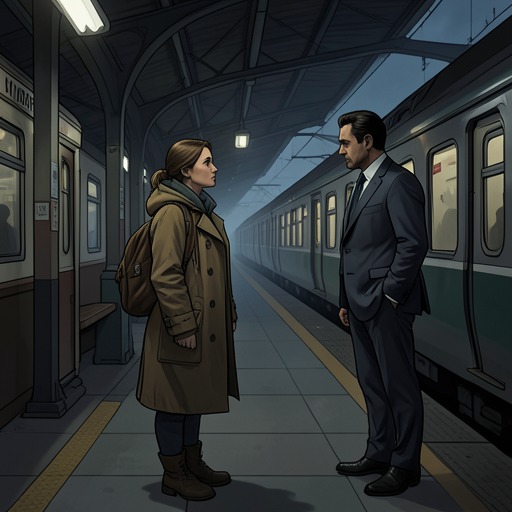
When Lola finally sees him, she recognizes him from a distance but notices that he has grown heavier and lost some of his hair. He is sitting beneath a larch, smoking and looking absent. She tells him he has changed; he recognizes her at once and replies that she has not. They leave together. Their exchange is brief, but its contrast captures the years between them: Lola has returned with the purpose of finding him, while for Amalfitano she remains recognizable despite the changes time has made to him.
Rosa and the disclosure
At the time of the reunion, Amalfitano lives in Sant Cugat and teaches philosophy at the Autonomous University of Barcelona. Rosa attends the local public elementary school, leaving in the morning and returning at five. Lola tells her that she is her mother. Rosa screams, embraces her, and almost immediately runs to hide in her bedroom. The response makes their relationship real in an instant, but also registers how difficult the sudden return is for a daughter who has lived apart from her mother.
That night, Lola tells Amalfitano she is very ill and will probably die; seeing Rosa once more was the reason she came. He offers to take her to a hospital, but Lola refuses, saying she trusts French doctors more than Spanish ones. Instead, she produces papers in French that state plainly that she has AIDS. Her disclosure changes the visit from a search for family into a meeting under the pressure of serious illness and anticipated death.
The next day, Amalfitano sees Lola and Rosa walking hand in hand near the station. He follows at a distance rather than interrupting them. When he gets home, they are watching television together. Later, after Rosa is asleep, he asks Lola about Benoit. Lola pauses to recall the boy’s features and gestures, then describes him as intelligent and sensitive, and says he was the first to understand that she would die. He recognized it by looking at her, she explains. Amalfitano reflects that such knowledge is terrible for a child; Lola answers that lying to children is worse. The exchange links the two children through Lola’s illness, while showing her insistence that they should not be shielded by falsehood.
A visit bounded by departure
On the fifth morning, with the medicine she brought from France nearly gone, Lola says she must leave. Benoit is little and needs her, she says, then qualifies the claim: perhaps he does not need her, but he is still little. She admits that she does not know who needs whom; what she knows is that she must go and see how he is. Her reason for leaving is not a rejection of Rosa or Amalfitano so much as an obligation to another child and another life that has continued elsewhere.
Amalfitano leaves a note and an envelope containing much of his savings, expecting Lola to have gone by the time he returns from work. Instead, she is still there, reading a book about Greece while the television plays silently. They eat together. After Rosa has gone to bed, Amalfitano takes her to her room and tucks her in; Lola waits in the living room with her suitcase packed. He urges her to stay the night, claiming that no trains to Barcelona are running. Lola tells him she is going to hitchhike, and he bows his head and lets her go. She kisses him on the cheek before leaving.
The following morning, Amalfitano gets up at six and turns on the radio to check whether a hitchhiker on a nearby highway has been murdered or raped. He hears nothing. The detail does not confirm what happens to Lola; it reveals instead the anxiety that follows her departure and the limits of what Amalfitano can know or do. Her exit remains open-ended.
The return’s unresolved shape
The reunion briefly restores contact among Lola, Amalfitano, and Rosa, but it does not undo the years of separation or settle Lola’s place between the family she left and the son she must return to. Rosa’s embrace and retreat, the walk with Lola near the station, and the quiet dinner are moments of renewed closeness; the packed suitcase and hitchhiking plan turn them back toward separation. Even Amalfitano’s offer of savings cannot change the decision she has made to leave.
The episode’s final force comes through Amalfitano’s later memory rather than a confirmed account of Lola’s journey. He remembers her as walking along a road out of Sant Cugat with her suitcase, while acknowledging that he did not actually see her go that way. What persists is an image of departure, not reliable knowledge of her destination or safety. In that sense, Lola’s return makes her briefly present without making her fully recoverable: she comes back to be seen by her daughter and former husband, and then disappears from their immediate lives once more.