Santa Teresa female serial killings
2666The Santa Teresa female serial killings are not presented as a single solved crime but as a widening pattern whose victims are counted unevenly, whose identities are sometimes lost, and whose investigation repeatedly stalls. The first officially counted case dates to January 1993, but the narrative stresses that women may have been killed before then, and that the true number may never be known. Across the cases, ordinary routes through the city—home from work, school, or a night out—meet weak infrastructure and failed institutional response.
Beginning of the Count
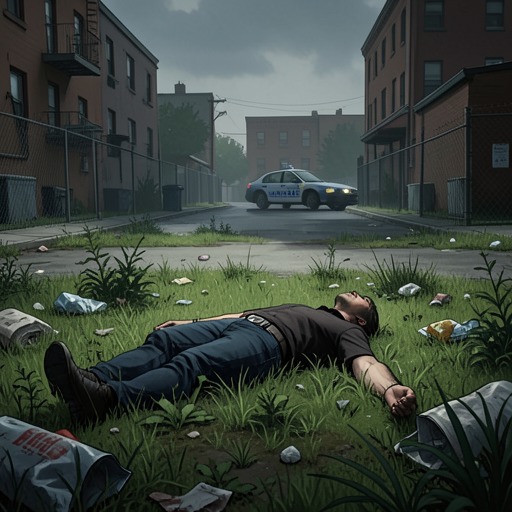
The first woman counted in 1993 was thirteen-year-old Esperanza Gomez Saldana. Children found her body in a vacant lot in Colonia Las Flores and alerted their parents; police arrived about half an hour after a mother called. Two women were kneeling nearby in prayer. They told an officer that they did not know the girl and believed she was not from the neighborhood. The setting already establishes a pattern of distance: the victim is physically present, but her identity and place in the community are unknown.
The narrative dates the beginning of the count to January 1993, while cautioning that this is an administrative beginning, not necessarily the beginning of the violence. Other girls and women may have died in 1992 without being listed, found, or identified. Some, the account suggests, could have been buried in unmarked desert graves or otherwise disappeared from any recoverable record. The list therefore marks what authorities could count, not the full extent of what happened.
Forensic Records and Uneven Identification
The first case demonstrates both the reach and the limits of official procedure. After the girl’s body was taken to a police station, a judge and several officers examined and photographed her; the police chief, Pedro Negrete, then conferred with them before the body was transferred to the city hospital morgue. The medical examination established that she had been strangled and raped, but the authorities initially did not know who she was. An orderly placed her in a freezer after the autopsy, while the case entered a system capable of recording physical findings but not yet restoring the victim’s identity.
Five days later, sixteen-year-old Luisa Celina Vazquez was found strangled in her home, where she lived with her partner, Marcos Sepulveda. Police arrested Sepulveda and his associate Ezequiel Romero; during an overnight interrogation, Romero confessed to an intimate relationship with Luisa Celina and said he had killed her after she ended it. Sepulveda was released two days later, while Romero remained in custody. Investigators then shifted their attention from resolving Luisa Celina’s murder to trying to connect Romero to Esperanza’s death. The transition shows how a confession in one case could become a route toward closing another, even though the evidence described does not establish that the two killings had the same perpetrator.
Expanding Cases and Missing Records
The murders did not fit a single geography or a single profile. In May 1993, an unidentified pregnant woman was found dead in a dump where refuse from nearby slums mingled with waste from maquiladoras. A manager at Multizone-West had reported the body. Company executives waited for police, and one examined the victim’s neck while an officer warned him not to touch her. The officer later accepted money from an executive. An autopsy found that the woman had been strangled and raped; she was about five months pregnant. Her identity remained unknown, and the suggestion that she was a migrant traveling north was an assumption rather than an identification.
Three days after that discovery, Guadalupe Rojas, a twenty-six-year-old worker at the File-Sis maquiladora, was shot outside her apartment building. Her boyfriend was arrested while trying to flee; investigators attributed the killing to jealousy. The contrast between the cases is sharp: Rojas was named and her suspected killer detained, while the pregnant woman remained an unidentified body, treated amid an apparent exchange between police and factory management. Together, the cases show how the record could alternate between a specific suspect and a conjecture about a victim’s migration, without resolving the broader pattern.
A Year-End Case Without a Pattern
The final recorded violent death of a woman in 1993 occurred on December 20, at home rather than in a vacant lot, dump, or desert. Felicidad Jimenez Jimenez, fifty, worked at the Multizone-West maquiladora. Neighbors found her at home, and her son, Ernesto Luis Castillo Jimenez, admitted killing her. He said he was the Penitent, a church desecrator; when questioned about his actions, he became incoherent and was transferred to the city hospital. After his release from the psychiatric hospital, he was taken to Santa Teresa prison, where he was talkative and repeatedly sought company. Police tried to connect him to other unsolved murders, but Juan de Dios Martinez doubted he was the Penitent and believed he had killed only his mother. The account closes the year’s list while stressing that the killings had not yet been proved to be related, and that the case against one mentally unstable son did not resolve the wider series.
Beyond the Count: A City of Routes and Gaps
The killings unfold in a city growing faster than its infrastructure. Santa Teresa stretches from unpaved western neighborhoods and neglected central plazas to wealthier eastern districts, abandoned factories in the north, and rail lines, shantytowns, and industrial warehouses to the south. Roads and highways connect the maquiladoras to residential areas, but some routes are poorly lit, unpaved, or without drainage; the city’s outskirts blur into vacant lots, garbage dumps, and desert. The geography does not identify a common killer, but it places women’s journeys through work and home within a landscape where distance, darkness, and inadequate services recur.
The novel also sets this local landscape inside a cross-border economy. Santa Teresa’s factories, migrant labor, and traffic in goods coexist with the border fence and Arizona beyond it. A visiting journalist crosses from the American town of El Adobe into Mexico through separate inspections, presenting the border as both a point of movement and a division between authorities. City residents describe factories, maquiladoras, a cocaine cartel, and rapid population growth alongside an urban infrastructure unable to keep pace. In this setting, the women’s deaths are neither detached from daily economic life nor explained by it: the narrative shows the routes and conditions around the crimes while leaving their larger pattern unresolved.
Public Attention and Institutional Delay
The killings enter public discussion in bursts rather than as a sustained emergency. In March, after reporter Isabel Urrea was shot outside her car, her station and newspaper covered the murder for three days before it was explained as a failed robbery, an act by a disturbed person or drug user, or the work of a Central American war veteran trying to reach the United States. No autopsy was performed, and the ballistic analysis was never made public; it was later lost while being transferred between the courts in Santa Teresa and Hermosillo. These explanations did not establish a connection to the wider killings, but the missing examination and lost evidence narrowed what could later be known.
The rhythm of attention is described more directly by Chucho Flores, who tells Oscar Fate that whenever the numbers rise, the murders briefly become news and conversation; then the story swells and recedes, and people return to work. He compares the killings to a brutal strike, a figure that makes the violence sound like an interruption to the city’s labor routine even as it exposes how readily that routine resumes. His account of Santa Teresa places factories, maquiladoras, a cocaine cartel, incoming workers and Central American immigrants beside wealth, poverty, bureaucracy and an infrastructure unable to support rapid population growth. For him, the city lacks time: the crisis unfolds within a place changing faster than its public systems can accommodate.
Misclassification, Delay, and Public Advocacy
As the count continued, official attention shifted among cases, and that shifting focus left investigations vulnerable to delay. When the Penitent seemed to have vanished and the inquiry had stalled, Juan de Dios Martinez was reassigned to armed robberies in Colonia Centeno and Colonia Podesta. Authorities said the Penitent investigation remained open, but the officers watching churches around the clock were redirected to what were considered more urgent matters. The decision did not formally close the case; in practice, it reduced the effort devoted to it, illustrating how limited police resources could make an unresolved investigation recede without being solved.
The same instability shaped public claims about responsibility. In May 1995, the American consul arranged for Rory Campuzano, an assistant to a sheriff from Huntsville, to review photographs of unidentified bodies found from November 1994 onward. None could be identified as the missing sheriff. Santa Teresa’s police chief treated the sheriff as a tourist among the many visitors passing through the city, while the consul ultimately agreed not to press the matter. The search produced no identification and no resolution, leaving the cross-border inquiry as another effort constrained by uncertainty and official reluctance to stir up the issue.
Women’s organizing made the recurring deaths harder to keep at the margins. After two women were found dead in July, the Women of Sonora for Democracy and Peace staged its first protests; its Santa Teresa branch had only three members at the time. By January 1996, the branch had grown to twenty activists and supporters and held a press conference about the degrading, inconsiderate treatment of victims’ relatives. The group displayed letters it planned to send to the state governor and the attorney general of the republic, but neither letter received a reply. The contrast between the organization’s growth and the unanswered appeals gives the public response its own measure: concern could gather strength without securing an answer from the authorities.
Cross-Border Investigation and the Limits of Identification
The murders also expose the difficulties of tracing people across a border that serves both as a route for movement and as a division between jurisdictions. In May 1995, after a sheriff from Huntsville had disappeared and reports placed his last known whereabouts in Santa Teresa, the American consul, Abraham Mitchell, visited the mayor and police chief. The police chief asked whether the sheriff had been in the city on official business or as a tourist; the consul answered that he was a tourist, and the chief pointed out that hundreds of tourists passed through. Mitchell ultimately agreed not to press the issue. As a courtesy, however, permission was granted for Rory Campuzano, an assistant to the sheriff, to review photographs of unidentified bodies found in Santa Teresa from November 1994 onward. None was identified as the missing sheriff. The review yielded no answer, while the decision not to stir up the matter left the disappearance unresolved.
Competing Explanations and a Public Name
The growing count did not produce a settled account of who was responsible. In January 1996, Klaus Haas addressed reporters from prison and asked how murders could continue if the killer—himself, as the authorities claimed—was behind bars. He pointed to matching knots in the ropes used to bind Michelle Requejo and Estrella Ruiz Sandoval, and said Estrella was the only dead woman who had had direct contact with him, through her interest in computers. His challenge placed the persistence of the killings against the official case: the accusation had not explained the continuing deaths. A novice crime reporter was sent from La Razón to cover Haas’s press conference, but Sergio Gonzalez, who had written about the case, declined his editor’s invitation to go to Santa Teresa and remained in Mexico City working on an article about contemporary Mexican and Latin American fiction.
Haas then named two men as the serial killers: Antonio and Daniel Uribe, sons of wealthy, cross-border business families and protégés of the drug trafficker Fabio Izquierdo, who worked for Estanislao Campuzano. He described a network joining money, transport, hotels, coffee shops, police, and drug traffickers. Antonio’s father, Pedro Uribe, owned more than a hundred cargo trucks carrying goods from maquiladoras in Hermosillo and Santa Teresa across the border every half hour or hour; his uncle, Joaquin Uribe, owned hotels in Sonora and Sinaloa and a chain of coffee shops in Santa Teresa. Haas said the men’s associates included other millionaires’ children, police officers, and traffickers, and concluded that they were the killers. The claim transformed the account from a pattern of unconnected deaths into a specific accusation, but it remained Haas’s allegation, voiced from prison rather than established in the passage as a judicial finding.
Misclassification, Delay, and Public Advocacy
As the count continued, official attention shifted among cases, leaving investigations vulnerable to delay. When the Penitent seemed to have vanished and the inquiry had stalled, Juan de Dios Martinez was reassigned to armed robberies in Colonia Centeno and Colonia Podesta. Authorities said the Penitent investigation remained open, but the officers watching churches around the clock were redirected to cases considered more urgent. The decision did not formally close the inquiry; in practice, it reduced the effort devoted to it, showing how limited police resources could make an unresolved case recede without solving it.
The same instability shaped efforts to establish responsibility across the border. In May 1995, the American consul, Abraham Mitchell, arranged for Rory Campuzano, an assistant to the sheriff from Huntsville, to review photographs of unidentified bodies found in Santa Teresa from November 1994 onward. None was identified as the missing sheriff. The police chief framed the sheriff as a tourist among the many visitors passing through the city, and Mitchell ultimately agreed not to press the matter. The review yielded no identification, leaving the cross-border inquiry unresolved.
Women’s organizing made the recurring deaths harder to keep at the margins. After two women were found dead in July, Women of Sonora for Democracy and Peace staged its first protests; its Santa Teresa branch then had only three members. By January 1996, the branch had grown to twenty activists and supporters and held a press conference about the degrading treatment of victims’ relatives. The group displayed letters intended for the state governor and the attorney general of the republic, but neither received a reply. Its growth registered rising public concern without securing an official answer.
Accusations and the Limits of a Solution
The competing explanations sharpened in January 1996, when Klaus Haas convened reporters from prison and asked how women could still be murdered if the authorities’ supposed killer was already behind bars. He pointed to identical knots in the ropes used to bind Michelle Requejo and Estrella Ruiz Sandoval, adding that Estrella was the only victim who had had direct contact with him, through her interest in computers. The press conference made the continuing deaths a direct challenge to the official accusation. La Razón sent a novice crime reporter to Santa Teresa, while Sergio Gonzalez, who had written about the case, declined his editor’s invitation to go and stayed in Mexico City to work on an article about contemporary Mexican and Latin American fiction.
Haas named Antonio and Daniel Uribe as the serial killers and described their connections to wealthy business families, police officers, and traffickers. He identified them as protégés of Fabio Izquierdo, who worked for Estanislao Campuzano. Antonio’s father, Pedro Uribe, owned more than one hundred cargo trucks carrying goods from maquiladoras in Hermosillo and Santa Teresa across the border every half hour or hour; his brother, Joaquin Uribe, owned hotels in Sonora and Sinaloa and a chain of coffee shops in Santa Teresa. Haas said Antonio and Daniel moved among other millionaires’ children, police, and traffickers, and concluded that they were responsible for the killings. This named accusation supplied a possible network where the record had repeatedly left gaps, but the account presents it as Haas’s claim from prison, not as a judicial finding that settled the series.
The City, the Border, and the Recurring Count
The killings are set within a city expanding faster than its streets and services can accommodate. In the west, unpaved roads run among makeshift houses; the neglected center gives way eastward to wealthier neighborhoods, while the north holds abandoned factories and the south rail lines, shantytowns, and industrial warehouses. Beyond the maquiladoras, the city’s edges open onto vacant lots, garbage dumps, and desert. This geography supplies no single explanation for the crimes, but it repeatedly places women’s journeys through work and home beside poorly served, isolated spaces.
The city’s growth is also bound to cross-border movement. A journalist entering from El Adobe passes through separate American and Mexican inspections, with the long fence visible between them. Residents describe Santa Teresa as a place of factories, maquiladoras, cartel activity, migration, and rapid population growth, but also of infrastructure unable to keep pace. The killings take place amid these ordinary economic and civic conditions; the narrative shows the routes and pressures surrounding them without reducing the violence to a single cause.
Public attention rises and falls with the reported numbers. Chucho Flores tells Oscar Fate that the killings briefly become news and conversation when the count increases, then the story recedes and people return to work. His comparison of the murders to a strike links the interruption of daily labor to the public’s quick return to routine. The recurrence is not only in the deaths but in this cycle of notice and forgetting, as the city continues to expand while its institutions struggle to respond.
Accusations and the Limits of a Solution
The competing explanations sharpened in January 1996, when Klaus Haas convened reporters from prison and asked how murders could continue if the authorities’ supposed killer was already behind bars. He pointed to identical knots in the ropes used to bind Michelle Requejo and Estrella Ruiz Sandoval, and said Estrella was the only dead woman who had had direct contact with him, through her interest in computers. The press conference turned the continuing deaths into a challenge to the official accusation. La Razón sent a novice crime reporter to Santa Teresa, while Sergio Gonzalez, who had written about the case, declined his editor’s invitation to go and stayed in Mexico City to work on an article about contemporary Mexican and Latin American fiction.
Haas named Antonio and Daniel Uribe as the serial killers and described their connections to wealthy business families, police officers, and traffickers. He identified them as protégés of Fabio Izquierdo, who worked for Estanislao Campuzano. Antonio’s father, Pedro Uribe, owned more than one hundred cargo trucks carrying goods from maquiladoras in Hermosillo and Santa Teresa across the border every half hour or hour; his brother, Joaquin Uribe, owned hotels in Sonora and Sinaloa and a chain of coffee shops in Santa Teresa. Haas said the brothers moved among other millionaires’ children, police, and traffickers, and concluded that they were responsible for the killings. The accusation offered a named network where the record had repeatedly left gaps, but it remained Haas’s claim from prison, not a judicial finding that settled the series.
Public Attention and Institutional Delay
The killings enter public discussion in bursts rather than as a sustained emergency. In March, after reporter Isabel Urrea was shot outside her car, her station and newspaper covered the murder for three days before explanations circulated that it had been a frustrated robbery, the work of a disturbed person or drug user, or an act by a Central American war veteran trying to reach the United States. None of these theories established a link to the wider killings. No autopsy was performed, at the family’s request, and the ballistic analysis was never made public; later, it was lost in transit between the courts of Santa Teresa and Hermosillo. The missing examination and lost evidence narrowed what could be known about the killing even as public explanations multiplied.
Chucho Flores describes the recurring cycle to Oscar Fate: when the numbers rise, the murders become news and conversation again; the story grows, then recedes, and people return to work. He compares the killings to a brutal strike, an image that casts them as an interruption to the city’s labor routine while exposing how readily that routine resumes. His portrait of Santa Teresa sets factories and maquiladoras beside a cocaine cartel, incoming workers and Central American immigrants, wealth and poverty, bureaucracy, and infrastructure unable to support rapid population growth. The city has money and work, yet lacks time to keep pace with its own expansion; the murders persist within that mismatch, while attention to them ebbs.
Competing Explanations and a Named Accusation
The killings never settle into a single, publicly verified explanation. In January 1996, Klaus Haas convened reporters from prison and asked how murders could continue if the authorities’ alleged killer—Haas himself—was already behind bars. He pointed to matching knots in the ropes used to bind Michelle Requejo and Estrella Ruiz Sandoval, and said Estrella was the only victim who had had direct contact with him, through her interest in computers. His challenge made the continuing deaths a test of the official accusation. La Razón sent a novice crime reporter to Santa Teresa; Sergio Gonzalez, who had written about the case, declined his editor’s invitation and stayed in Mexico City to work on an article about new Mexican and Latin American fiction.
At the same press conference, Haas named Antonio and Daniel Uribe as the serial killers, describing connections that joined wealthy business families, police, and traffickers. He said the brothers were protégés of Fabio Izquierdo, who worked for Estanislao Campuzano. Their family networks also crossed the border through commerce: Antonio’s father, Pedro Uribe, owned more than a hundred cargo trucks transporting goods from maquiladoras in Hermosillo and Santa Teresa, with trucks crossing every half hour or hour. Antonio’s uncle, Joaquin Uribe, owned hotels in Sonora and Sinaloa and a chain of coffee shops in Santa Teresa. Haas said the brothers’ associates included other millionaires’ children, police officers, and traffickers, and declared them responsible for the killings. The accusation supplied names and a network where the investigations had left uncertainty, but it remained a claim made by Haas from prison, not a judicial finding that resolved the series.
Accusations and the Limits of a Solution
The killings never settle into a single, publicly verified explanation. In January 1996, Klaus Haas convened reporters at the prison and asked how women could still be murdered if the authorities’ alleged killer—Haas himself—was behind bars. He pointed to identical knots in the ropes used to bind Michelle Requejo and Estrella Ruiz Sandoval, and said Estrella was the only victim who had had direct contact with him, through her interest in computers. His challenge made the continuing deaths a test of the official accusation. La Razón sent a novice crime reporter to Santa Teresa; Sergio Gonzalez, who had written about the case, declined his editor’s invitation to go and stayed in Mexico City to work on an article about new Mexican and Latin American fiction.
At the same press conference, Haas named Antonio and Daniel Uribe as the serial killers, describing connections that joined wealthy business families, police, and traffickers. He said the brothers were protégés of Fabio Izquierdo, who worked for Estanislao Campuzano. Their family networks also crossed the border through commerce: Antonio’s father, Pedro Uribe, owned more than one hundred cargo trucks transporting goods from maquiladoras in Hermosillo and Santa Teresa, with trucks crossing every half hour or hour. Antonio’s uncle, Joaquin Uribe, owned hotels in Sonora and Sinaloa and a chain of coffee shops in Santa Teresa. Haas said the brothers’ associates included other millionaires’ children, police officers, and traffickers, and accused them of responsibility for the killings. The allegation supplied names and a network where investigations had left uncertainty, but remained a claim made by Haas from prison, not a judicial finding that resolved the series.