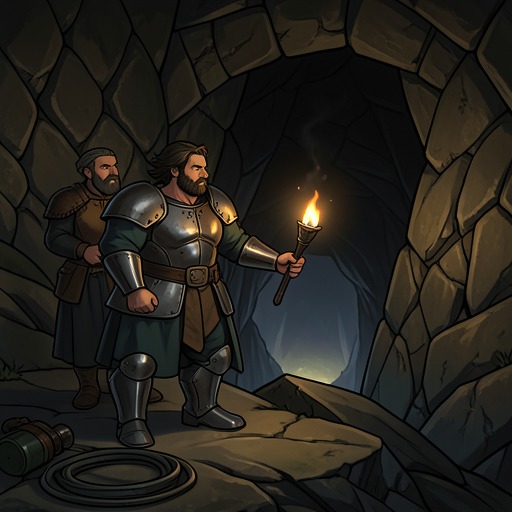
Aeneas's Meeting with Dido in the Underworld
AeneidAeneas's Meeting with Dido in the Underworld is the poem's most concentrated confrontation between duty and abandoned love. Within the Mournful Fields, among the spirits consumed by unhappy passion, Aeneas encounters Dido newly dead and still bearing the wound that ended her life. His tears, prayers, and late repentance cannot restore communication. Dido's refusal to answer and her departure toward Sichaeus transform their earthly separation into an eternal one, while forcing Aeneas to confront the human cost of the destiny he continues to serve.
Setting and Circumstances
The meeting takes place in the Mournful Fields of the Underworld, a region named for the lovers who inhabit it. The setting gathers together souls marked by passion and loss, placing Dido within a community defined not by the political world she ruled but by the emotional catastrophe that followed her union with Aeneas. The encounter therefore occurs outside ordinary human time: the living Trojan hero can enter the realm of the dead, but he cannot reverse what death has fixed.
Dido appears among these spirits “fresh from her wound,” with her bosom still bathed in blood. The physical mark preserves the violence of her death and prevents the Underworld from becoming a place of painless abstraction. Her body remains legible through injury even after life has ended. The wound also links this scene to the consequences of Aeneas's departure from Carthage: the past has not been erased by his voyage, and the visible sign of Dido's death stands before him as an accusation that requires no spoken charge.
Recognition and Appeal
Aeneas at first barely recognizes Dido. His uncertainty resembles the difficulty of seeing a faint moon through the darkness, a comparison that makes recognition an effort rather than an immediate certainty. The queen whom he knew in life has become a shadow, yet the emotional force of the encounter returns as soon as he understands whom he sees. His first movement is toward her with tears, and he addresses her as an unhappy queen, combining tenderness with an acknowledgment of the ruin that surrounds her.
His appeal is both personal and belated. He tries to move her mind with tears, prayers, and love that has come too late to repair the damage. The passage presents no successful defense and no reciprocal conversation; instead, the emotional energy flows almost entirely from Aeneas toward a silent figure who has already crossed beyond his reach. He asks her to stay and listen, describing the meeting as the last interview that fate permits. Even this language confirms the power that governs them: Aeneas's desire for explanation or reconciliation is limited by the same fate that once drove him away from Carthage.
The scene's tragedy lies in the mismatch between speech and response. Aeneas can still speak, remember, regret, and plead, but Dido does not grant him the ordinary human exchange through which guilt might be answered or forgiven. His eloquence therefore becomes a sign of helplessness. The more earnestly he attempts to recover the bond, the more clearly the scene reveals that the bond has been broken beyond persuasion.
Dido's Silence and Departure
Dido looks at Aeneas with disdain and turns away to avoid his hated sight. Her movement is a decisive action, not a passive disappearance. She refuses both his explanation and his emotional claim upon her. The Underworld encounter thus gives her a final form of agency: in life, her relationship with Aeneas ended through his departure and her consequent death; in death, she controls the terms of their last meeting by denying him an answer.
Dido then seeks Sichaeus through the shadowy grove. Sichaeus is the figure who had answered all her cares and equaled all her love, so her return to him establishes a sharp contrast with her relationship with Aeneas. Aeneas's presence evokes regret, pleading, and disdain; Sichaeus represents the love she chooses to rejoin. The movement does not merely remove Dido from the scene. It redirects her loyalty, showing that the emotional order damaged by Aeneas's departure is restored, however incompletely, through reunion with her former husband.
Aeneas pays some pious tears as Dido leaves. His grief is genuine, but it arrives after the irreversible consequences of his choice. The tears acknowledge suffering without changing its outcome. Dido's silence consequently becomes the scene's final statement: no apology from the living can compel the dead to resume a relationship that death, betrayal, and memory have already transformed.
Consequences and Narrative Significance
The encounter converts Dido's death from a distant consequence into an immediate moral presence. Aeneas must carry forward not only the mission associated with his Trojan people but also the image of Dido's wounded and silent shade. The scene does not cancel his obligation to destiny, yet it prevents that obligation from appearing emotionally costless. His future is measured against the suffering left behind in Carthage.
The episode also reverses the expected power relationship between the two figures. In the living world, Aeneas was the departing hero and Dido the abandoned queen; in the Underworld, he is the visitor who seeks permission to speak, while Dido possesses the power to withhold recognition in return. The living hero's journey into the realm of the dead gives him access to Dido but not mastery over her. His descent promises knowledge, yet this particular knowledge is received as grief rather than consolation.
As an action within the larger descent into the Underworld, the meeting forms a tragic counterpoint to the other dead whom Aeneas encounters. The dead can reveal history, destiny, or the consequences of mortality, but Dido reveals the intimate price of heroic purpose. Her retreat toward Sichaeus closes the episode without reconciliation and leaves the reader with a divided image of Aeneas: he is capable of compassion and remorse, yet those virtues cannot undo the harm produced by his departure. The meeting's lasting significance lies in that unresolved tension between public destiny and private devastation.