Founding of Acesta
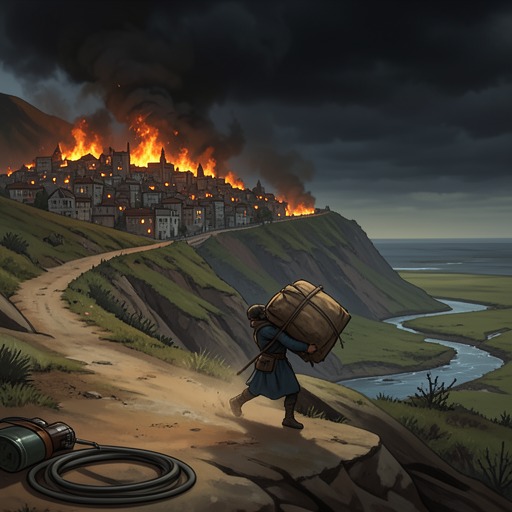
AeneidThe Founding of Acesta marks a crucial division within the Trojan exile. After four ships are consumed by fire, Aeneas must decide whether to remain in Sicily or risk the sea in pursuit of Italy. The settlement of Acesta answers the immediate needs of the worn, the aged, and the battle-shy without abandoning the larger mission: some Trojans receive a permanent home, while Aeneas and the chosen company continue toward the future ordained for Rome.
Causes and Background
The foundation begins in uncertainty rather than triumph. The loss of four ships leaves the fleet diminished, and Aeneas’s heart is divided between two possible courses: residence in Sicily, where safety and rest are available, or another hazardous voyage toward the promised Italy. The crisis is therefore both practical and spiritual. The Trojans have already endured displacement and repeated danger, yet their destination remains binding; staying might preserve the survivors, but it might also mean forgetting their fate.
Nautes, described as old, wise, experienced in portents, and inspired by Pallas, supplies the counsel that turns hesitation into policy. He recognizes that not every member of the company can withstand another campaign or another stretch of sea. His recommendation is to build a common town for the vulnerable and fearful, naming it Acesta after Acestes. The proposal joins humane accommodation to political order: the expedition is divided, but not simply abandoned, and the new community remains connected to the Trojan cause through its name and founder.
The Decision to Found the City
Nautes’s reasoning encourages Aeneas, but it also disturbs him further, because accepting the proposal makes the cost of the mission unmistakable. Aeneas does not treat the settlement as an easy escape from duty. His doubts continue until, at dead of night, the shade of Anchises descends to his sleeping eyes. The appearance of his dead father gives the decision a personal and divine authority, converting an anxious calculation into a command rooted in memory, ancestry, and heaven’s intent.
After the vision, Aeneas worships the household gods and Vesta with cakes and incense before acting. He then reveals the vision and the gods’ purpose to his friends and royal host, together with his own plan. The sequence matters: counsel first opens the possibility of settlement, the father’s apparition confirms the direction, and ritual publicly authorizes the response. Acesta is thus founded through deliberation, revelation, and ceremony rather than through improvised flight.
What Happens in Acesta
The Trojans immediately separate those who will remain from the company able to continue. The city is intended as a common town, not merely a temporary camp, and its name preserves the connection with Acestes. Those left behind include the people whose age, exhaustion, or fear makes the onward journey and the coming struggle too demanding. In this sense, the foundation protects a human remainder of the migration: the Trojan people are not reduced to the most mobile warriors and sailors.
The settlement receives material form through labor. The prince designs the city with the plow, and lots distribute individual dwellings. The act of measuring and allotting land changes the Trojans’ condition from wandering to civic inhabitation. Their past is also built into the urban plan: one part bears a name derived from Ilium, another from Troy. The new city therefore becomes a mapped memory, carrying the destroyed homeland into a fresh Sicilian community rather than allowing exile to erase it.
Departure and Consequences
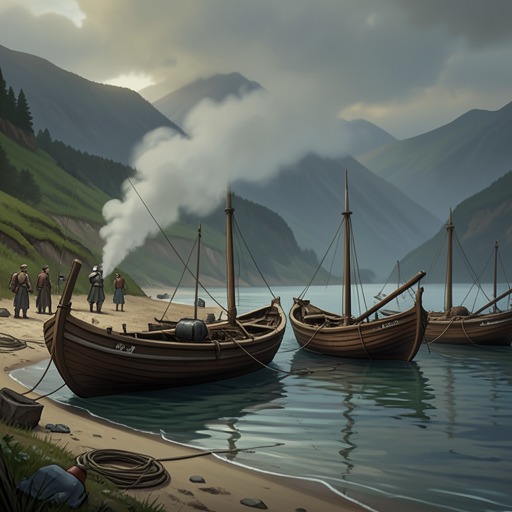
The founding of Acesta permits Aeneas to resume the voyage without treating the weaker members of his people as expendable. The fleet is reduced by the fire, but the remaining Trojans renew their oars, banks, and cables, many of which have been half consumed. Ships and city are repaired together: Acesta stabilizes the people who cannot proceed, while the surviving fleet is refitted for the sea and for Italy.
The event consequently produces two forms of continuity. One is local and agricultural, expressed in the plow, the allotted homes, and the civic name Acesta. The other is migratory and imperial, expressed in Aeneas’s departure toward Italy. The settlement does not replace the promised destination; it makes the continuation of the larger journey possible by giving the divided company different but legitimate futures.
Historical and Thematic Significance
Acesta stands at the intersection of compassion and destiny. Aeneas’s mission is often defined by forward movement, yet this episode insists that a people cannot be carried toward the future without deciding what to do with those who cannot keep pace. The foundation turns weakness into a reason for institution-building rather than a cause for exclusion. At the same time, the city’s names from Ilium and Troy show that founding is not pure beginning: it is a political form of remembrance.
The wider poem later presents the Roman future as a divinely sanctioned succession of Italian names and imperial power, including the rise of Rome and the Julian line. Against that expansive horizon, Acesta is a smaller and more immediate foundation, but its logic is already visible: fate becomes history through settlement, land distribution, inherited names, and the disciplined continuation of a chosen mission. The scene’s value shift is from divided uncertainty to organized purpose. Aeneas does not resolve the crisis by choosing between mercy and destiny; he preserves both by founding Acesta and then sailing onward.