Death of Turnus
AeneidDeath of Turnus is the climactic act of violence that ends the war between Aeneas and Turnus. Turnus has been defeated, but the scene does not make his death a simple or immediate triumph: Aeneas first hesitates before a pleading enemy, then recognizes the stolen Belt of Pallas and turns grief into retributive fury. The killing therefore closes the personal duel, answers the death of Pallas, and makes the poem’s promised political future possible through the destruction of its last armed obstacle.
Causes and Background
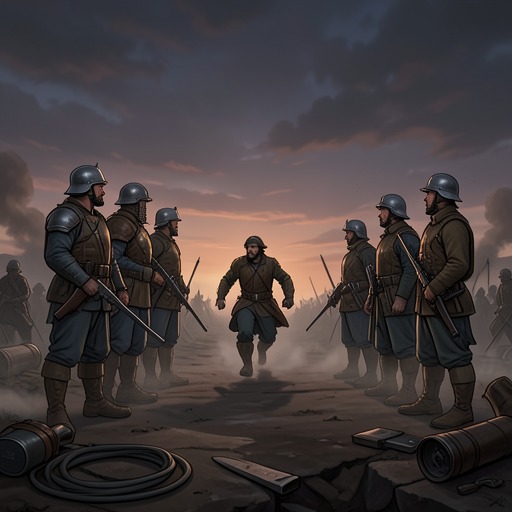
The death occurs within a conflict already framed as a question of legitimate settlement rather than an isolated quarrel. Suppliants sent from Laurentum approach Aeneas with olive branches and ask for a truce, appealing to his clemency. Their request is too just to be denied, and Aeneas condemns the severity of the fate that has drawn the Latian state into causeless quarrels against an unoffending man. The language gives the approaching peace a moral basis: the war is not merely exhausted but exposed as a disorder that must be corrected.
Aeneas later sends to the Latian king to end the rage of arms and ratify peace. When the agreement is publicly completed, solemn vows are sworn on both sides and the required holy rites are performed. This ritual scene establishes a formal expectation of reconciliation, yet the narrative reserves the final settlement until the personal contest with Turnus is resolved. Peace exists as a sworn political intention, while Turnus’s survival continues to embody the unresolved violence that threatens to make that intention provisional.
The Final Combat
The decisive blow comes from Aeneas’s lance. Turnus’s sevenfold shield cannot protect him, nor can the coat of mail beneath his arms; the weapon pierces through both and carries death into the body of the defeated prince. The physical details strip away the defensive magnificence associated with Turnus’s rank. Armor, shields, and martial prestige fail together, reducing the final encounter to the irreversible consequence of Aeneas’s weapon.
Turnus falls with his eyes raised and his arms extended. His posture changes the scene from a contest between equals into an appeal made by a man already brought low. He openly acknowledges that his death is deserved and submits to what the gods and Aeneas’s fortune grant him. He asks the victor to use his advantage rather than prolong the struggle, recognizing that Aeneas has won both the conquest and the royal bride. Turnus also argues that fighting a surrendered man would be mean and ignoble, placing the moral character of the victor under pressure at the precise moment when physical victory is secure.
Aeneas is prepared to strike but restrains his hand. He stands in deep suspense, looking at Turnus while compassion increasingly takes possession of his soul. The pause is essential to the event’s meaning: the poem presents mercy as a real possibility, not as an emotion absent from the victor. Aeneas’s authority is tested after the battlefield decision has already been made, and the question becomes whether the defeated enemy will be allowed to live under the terms of surrender.
The Belt of Pallas and the Reversal
The hesitation ends when Aeneas casts down a casual glance and sees the golden belt shining at Turnus’s side. It is the fatal spoil that Turnus tore from the dying Pallas and wore in triumph. The object transforms the visual field of the scene. Aeneas no longer sees only a suppliant prince; he sees the material sign of Pallas’s death and of Turnus’s earlier triumph over a fallen youth. The belt makes the past present at the instant of judgment.
Recognition produces a sudden reversal from compassion to wrath. Aeneas cries out against Turnus’s claim to grace, and flames are described as flashing from his eyes while he speaks. The imagery gives visible form to the return of anger, but the anger is not presented as random: it is attached to the remembered violence against Pallas and to the fact that Turnus has made that violence part of his own display. The belt functions as evidence, memorial, and provocation at once.
The scene also binds private grief to public justice. Aeneas’s killing is not merely the satisfaction of personal anger, because Pallas’s death belongs to the alliance and the war that brought the two champions together. Yet it is equally not detached legal execution. The final act emerges from the collision between Aeneas’s compassion for the defeated and his obligation to answer the death represented by the golden belt. The poem leaves that collision visible rather than smoothing it into an uncomplicated moral victory.
The Killing and Its Consequences
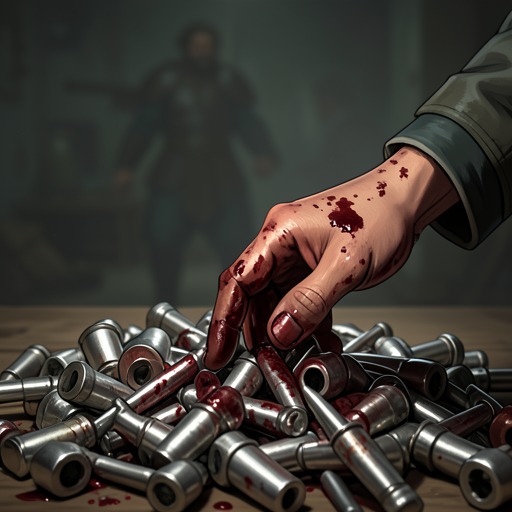
Aeneas raises his arm high and, at the word, drives the shining sword deep into Turnus’s breast. Blood streams over his arms. The final movement is swift after the long hesitation: the sword converts recognition into death, and Turnus’s body becomes the point at which the competing claims of mercy, honor, vengeance, and settlement are decided. The death ends the duel in the most literal sense, but its meaning extends beyond the two men because Turnus’s defeat removes the central champion capable of sustaining armed resistance.
Turnus’s death also completes the sequence by which Aeneas’s future is purchased at the cost of another claimant’s life. Turnus had named the royal wife as part of Aeneas’s victory, so the killing clears the path to the marriage and the political union implied by the peace negotiations. The event thus joins the personal and collective levels of the poem: a single sword stroke concludes an antagonistic relationship while enabling the postwar order promised to the Trojans and Latins.
Narrative and Thematic Significance
As the ending of the main conflict, Death of Turnus fulfills the poem’s movement from wandering and war toward settlement. The preceding appeals to truce and the solemn public vows show that peace is imaginable and institutionally expressible; the final killing shows that such peace remains dependent on the resolution of embodied hostility. Political reconciliation cannot simply erase the injuries accumulated during the war. It requires a final act that is at once sanctioned by victory and shadowed by the possibility that mercy might have prevailed.
The event’s strongest dramatic force lies in its value shift. Turnus moves from armed defender to wounded suppliant; Aeneas moves from imminent executioner to hesitant merciful victor, then back to an agent of wrath when the belt of Pallas reactivates the wound of the war. The conclusion therefore offers no extended aftermath in which the victor explains or revises his choice. It ends at the instant of the sword’s penetration and the streaming blood, leaving the reader with the unresolved tension between the peace that Aeneas is destined to establish and the fury through which that peace is finally secured.