Death of Pallas
AeneidDeath of Pallas is the central battlefield tragedy of the conflict between Turnus and the forces allied with Aeneas. Pallas, the young Arcadian leader, is killed after confronting Turnus in single combat; Turnus then desecrates the body and takes its shining, gold-inlaid belt. The death is therefore both a military defeat and a moral provocation: it destroys a promising ally, humiliates his companions, and places a portable sign of the crime in the hands of the man who committed it.
Battlefield Crisis and Pallas’s Resolve
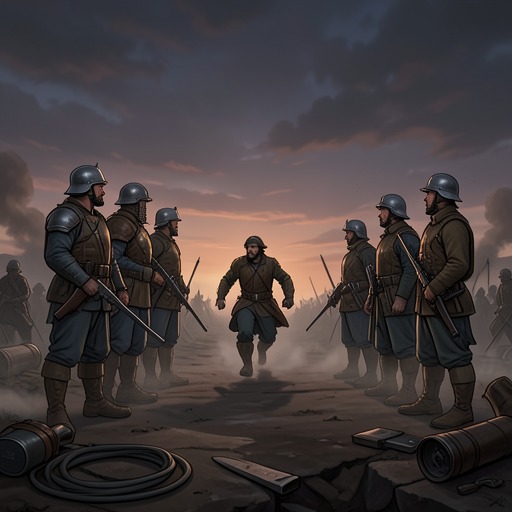
The episode grows out of a moment of disorder among the Arcadians. Their mounted warriors abandon their horses and, unaccustomed to fighting on foot, scatter in shameful flight. Pallas sees both halves of the catastrophe at once: enemies are pursuing his men, while his own friends are being driven before the enemy. He responds with the resources still available to a commander whose force is breaking apart, mixing threats with prayers in an effort to restore courage and discipline.
Pallas’s intervention gives the scene its tragic concentration. He does not remain behind the fleeing troops or wait for assistance; he moves toward the danger when the army around him is losing cohesion. His courage is joined to an awareness of the crisis, since his words attempt to bind frightened soldiers to a common purpose even as the battlefield makes their defeat visible. The episode thus presents him as a leader whose last act is simultaneously command, resistance, and exposure to overwhelming danger.
The Single Combat with Turnus
Turnus enters the confrontation by leaping lightly from his chariot. His movement contrasts with the helpless scattering of the Arcadians: where they are displaced by the collapse of their cavalry position, he chooses the ground and advances toward the meeting with Pallas. The encounter becomes a test of personal valor under divine sanction. The god permits the fatal combat while turning his sight away from the Latian fields, a withdrawal that gives the impending death an atmosphere of sanctioned inevitability without removing the human agents from responsibility.
Pallas attacks first. He throws his spear with full force and immediately draws his shining falchion. The spear fails to decide the contest: it only grazes Turnus along the shoulder joint. The near success makes the reversal sharper, because Pallas’s weapon reaches his opponent but does not penetrate far enough to end the fight. Turnus answers with greater effect. His spear passes through folded brass and tough bull hides, pierces Pallas’s corslet, and reaches his heart. The defensive layers that should have preserved the young warrior become a measured record of their own failure.
Pallas’s death is rendered through physical details rather than abstract announcement. He vainly tugs at the broken wood of the spear; his soul issues with his vital blood; his falling arms strike against his body; and his bloody teeth bite the ground. The sequence moves from resistance to bodily collapse, making the loss irreversible while preserving the violence of the struggle. Pallas is not merely declared defeated: the reader sees the exact moment in which a living fighter becomes a corpse on the field.
Turnus’s Desecration and the Belt
After killing Pallas, Turnus stands over the corpse and addresses the Arcadians. He orders them to carry a message to their master and declares that, as the sire deserved, he is sending the son. The statement converts the death into a deliberate communication. Turnus does not treat Pallas as an anonymous casualty of war; he frames the killing as an answer directed to the father and makes the young man’s body the medium of that answer.
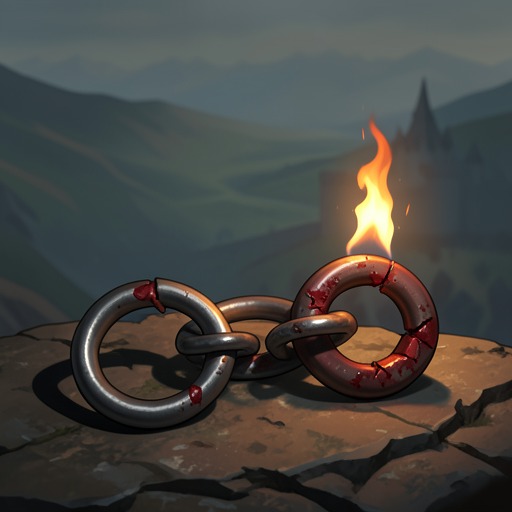
Turnus then says that he gives the lifeless body, unasked, to rest below, and he reinforces the insult by trampling the corpse with his left foot and spurning it. The action violates the dignity ordinarily associated with a fallen warrior and turns victory into humiliation. His seizure of the shining belt, inlaid with gold, completes the transformation of the body into a trophy. The belt is a material remnant of Pallas’s identity, but in Turnus’s possession it becomes an emblem of appropriation: the victor carries away a visible token of the life he has just destroyed.
The belt also gives the episode a continuing afterlife. Pallas’s death might otherwise remain one violent incident among many in the war; the stolen object preserves it as a recognizable grievance. Turnus’s victory is therefore inseparable from the manner in which he displays and possesses its sign. The battlefield act acquires a moral and narrative weight greater than the immediate tactical result.
News, Witness, and Consequence
The news eventually reaches Aeneas through direct witnesses rather than uncertain rumor. This distinction matters because it turns Pallas’s death into established knowledge, not a story distorted by distance or fear. The messengers report that Pallas is dead and that his friends stand on the brink of ruin. Their report joins personal bereavement to military emergency: the loss of the young leader has weakened the Arcadian force at the same moment that its survivors need protection.
The testimony also creates a chain between the battlefield and the absent hero. Pallas’s companions have witnessed the event, carried its certainty away from the field, and brought its consequences to Aeneas. Through them, the death becomes a demand for response. The episode’s emotional force consequently depends not only on the killing itself but on its transmission: grief is made actionable when the truth reaches the commander who must interpret and answer it.
Tragic Reversal and Narrative Significance
The event follows the structure of a sharp reversal. Pallas begins as the figure attempting to arrest collective flight, and his courage appears to offer a possible recovery of Arcadian order. His spear even reaches Turnus, suggesting for an instant that resolve may overcome the imbalance of the encounter. That possibility collapses when Turnus’s spear penetrates armor and heart. The champion who tries to save his friends becomes the body around which their defeat is defined.
The tragedy is intensified by the unequal relation between promise and outcome. Pallas is associated with command, youth, and the defense of his companions, yet the scene gives him no compensating victory or dignified withdrawal. His last effort is brave but unsuccessful; his body is not honored by his killer; and the object taken from him carries his humiliation forward. Turnus, by contrast, emerges from the encounter with both a battlefield triumph and a trophy, but the very excess of his conduct makes the victory morally unstable.
Death of Pallas therefore links combat to memory, ethics, and future retaliation. The killing changes the war from a sequence of public clashes into a conflict marked by a specific wound and a specific sign. Pallas’s body represents the immediate cost of the battle; the belt represents the preserved evidence of that cost; and the witnessed report ensures that neither can disappear into the general confusion of war. The episode’s decisive significance lies in this conversion of violence into obligation: Turnus wins the encounter, but his treatment of Pallas makes the victory the foundation of a later judgment.