Death of Camilla
AeneidDeath of Camilla is the decisive killing of the Volscian warrior in the midst of the Italian war. Camilla has ridden through the fighting with extraordinary courage and an active appetite for danger, but her attention is drawn toward the richly armed Chloreus, and that moment of attraction gives Aruns the opportunity to strike unseen. Her death turns personal valor into battlefield catastrophe: the armies’ gaze follows the weapon, Camilla falls despite trying to remove it, and the balance of the battle changes as her enemies recover their nerve.
Camilla in the Battle
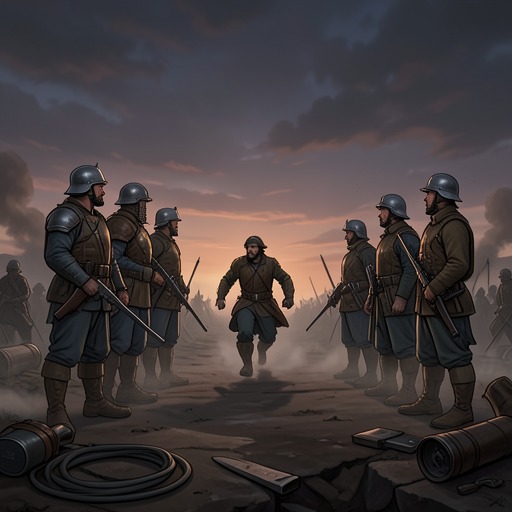
Camilla is presented as a warrior who moves through combat with a force that makes ordinary descriptions of bravery seem inadequate. She rides resistlessly through the war, unafraid in danger and openly pleased by the violence of battle. The scene therefore establishes her not as a passive casualty but as an active combatant whose speed, confidence, and appetite for glory shape the fighting around her. Her presence gives courage and momentum to her side, while the opposing forces must respond to the pressure created by her advance.
That martial identity is also connected with the larger heroic world of the poem. Earlier episodes remember Ripheus and Iph’itas fighting at the side of the Trojans, one famous for valor and the other honored for age; elsewhere the narrative preserves the heroic ancestry of Teucer, and it recalls the story of Daedalus escaping the Cretan shore on jointed wings. These allusions place Camilla’s final combat within a tradition that joins inherited fame, daring action, and extraordinary human achievement. Yet the same heroic tradition is shadowed by mortality: renown does not protect the body that earns it.
The Ambush and the Fatal Attraction
Aruns is the agent of the killing, and the poem marks him as a man already doomed even while he prepares his attack. He tests his arts in order to murder the Volscian maiden without being seen, bending his winding course this way and that as he seeks a safe position from which to betray her. His method is the opposite of Camilla’s style. She is visible, rapid, and direct; he is concealed, calculating, and dependent on evasion. The encounter thus sets open heroism against hidden violence rather than presenting the death as a fair contest between equal movements.
The immediate object of Camilla’s attention is Chloreus, the priest of Cybele. From a distance he shines amid the fighting in Phrygian arms, and his appearance is elaborated through costly details: a horse beneath him, garments distinguished by needlework, golden buckles, and an arrangement that makes the whole figure conspicuous. Camilla sees him with ardent eyes and becomes eager for so rich a prize. Her motive is partly personal ambition and partly the thought that the captured arms might enrich the temple with trophies. The scene gives her desire a ritual and public dimension, but it also shows how the pursuit of distinction briefly displaces her awareness of the surrounding danger.
The Spear and the Fall
Aruns finally releases his weapon when Camilla is exposed by her pursuit. The spear’s flight attracts the attention of both armies: each side turns its eyes toward Camilla as the javelin whistles through the air. The sound transforms a concealed act into a common spectacle, but recognition comes too late to save her. Aruns has achieved precisely the kind of attack he sought—an unseen murder followed by a retreat toward safety—while Camilla’s fame makes her fall visible to everyone.
The wound does not produce an immediate, effortless collapse. Camilla seizes the javelin with her dying hands and tries to wrench it free, but the weapon remains wedged in her breast. She draws away the wood, while the steel point stays embedded. That gesture concentrates the physical reality of the death: her strength persists after the fatal blow, yet it can no longer reverse the damage. The warrior who has dominated the battlefield is reduced to struggling against a weapon that has entered her own body, and the attempt to remove it only confirms the irreversibility of the wound.
Opis and Retribution
After Camilla is struck, the narrative introduces the beautiful Opis, who flies to a marble tomb associated with Dercennus, an ancient king who once ruled in Latium. From that height she seeks the traitor Aruns and soon catches sight of him in his shining armor. The elevated position changes the shape of the pursuit. Aruns had relied on concealment while Camilla lived; once she has fallen, Opis becomes the watcher who identifies the murderer. The marble tomb and the ruined warrior’s fate place the killing within a landscape already marked by old power and death.
The contrast is sharp. Aruns imagines that a hidden attack will secure his survival, but the narrative describes him as doomed even before his stratagem is completed. Camilla’s death therefore does not simply reward stealth with victory. It initiates a counter-movement in which the concealed killer becomes visible to another power. The scene’s justice is delayed rather than absent: the successful ambush carries the seed of retribution within it.
Consequences and Epic Significance
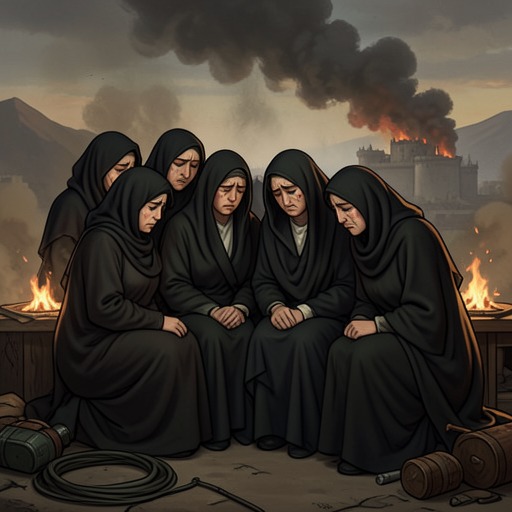
Camilla’s fall has consequences beyond her individual body. The surrounding battle has been organized partly by her momentum, and the sight of her being struck changes the emotional and military atmosphere. Her enemies, who had faced a warrior capable of riding resistlessly through danger, can now press forward; her own side loses the figure whose presence embodied aggressive confidence. The death is consequently a battlefield reversal, not an isolated duel. A single spear breaks a pattern of dominance and permits the opposing forces to imagine success.
The episode also gives the poem a tragic structure. Camilla’s defining virtues—courage, speed, appetite for combat, and desire for a splendid trophy—are inseparable from the circumstance that destroys her. Her attention to Chloreus is not an arbitrary interruption of character but the fatal extension of her heroic code: she wants the prize, the glory, and perhaps the sacred display of captured arms. The same pursuit that expresses her identity opens the line of attack. Her death thus combines an internal vulnerability with external violence, allowing the reversal to feel both dramatically prepared and brutally unfair.
Across the wider epic, heroic memory repeatedly preserves races, ancestors, sacred groves, priests, temples, and warriors whose names survive through narration. Camilla’s death belongs to that same economy of fame. She is defeated, but her manner of fighting and the concentrated violence of her end make her impossible to reduce to a mere casualty. The armies watch her fall; Opis watches the traitor; and the poem itself turns both acts of watching into remembrance. Her death marks the point at which martial brilliance meets the limits imposed by war, while also showing how the loss of one exceptional defender can redirect the fate of an entire conflict.