Nobia
AniaraNobia, also remembered as Nobby, is a radiation-mangled survivor whose importance rests not on power or escape but on what she gives to others. Recalled in the Space-hand’s tale as a beloved companion, she walks through the damaged landscape of the Martian tundra with a sustained attachment to its life. Her sending of willow leaves to Earth, and her care for fellow captives, turn a place of deprivation into the setting for acts of imagination and kindness.
Identity and Introduction
Nobia enters the poem through recollection rather than as a participant in the main action aboard Aniara. After Mimarobe shuts down Mima and walks among the emigrants and crewmen, he listens to an old Space-hand tell of her. The account presents her as the great love of the mariner’s life, though the narration marks this as an inference rather than a certainty. The poem later returns to the same association under the heading “THE SPACE-HAND,” where the speaker says that searching his recollections leads him back to Nobia. Her character is thus shaped by memory: she is at once an individual recalled by a survivor and the emotional center of his story.
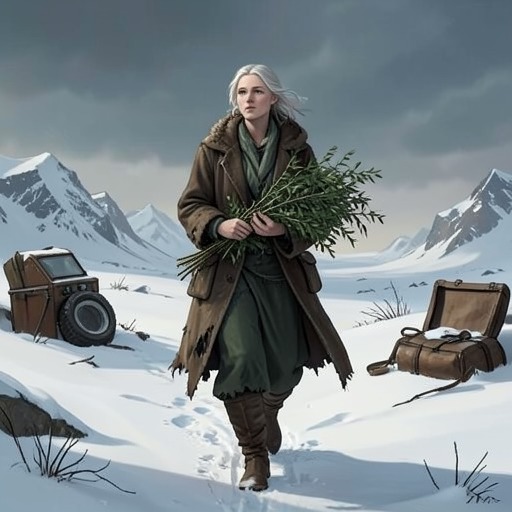
Her first description refuses conventional prettiness. She is pale, small, and visibly injured by radiation, one of those who have suffered from the malignant energies overcoming Earth. The emphasis does not make her damage an abstract emblem alone: it establishes a body marked by the catastrophe that has also altered the environments in which she lives. The surviving evidence does not explain the full course of her injuries, but it places her among the people who bear the consequences of radiation directly.
Life on the Martian Tundra
The Space-hand’s account binds Nobia to the Martian tundra, a landscape where natural forms have been transformed and life persists under harsh conditions. Its willow growth spreads in hungry stretches toward a half-size sun; the terrain is described as stark and plain. Nobia, however, remains bound to that terrain with all her soul. The contrast matters: the tundra is not made gentle by her presence, and the poem does not suggest that its damage is repaired. Rather, her attachment makes continued attention to it possible even where its forms seem depleted or strange.
Her treatment of the willows gives that attachment a distinctive expression. She often sends willow leaves back to Earth, accompanying them with notes and keepsakes for the Space-hand. The leaves are nearly metallic, products of an altered nature, yet in her note she calls them leaves from the spirit’s wood and imagines spring winds blowing across the soul’s moors. The gesture joins distant places without claiming to restore either one: a leaf from the tundra becomes a token sent home, and her words offer a way to perceive beauty in what might otherwise appear only harsh or damaged.
Care and Acts of Transformation
Nobia’s kindness is practical as well as imaginative. The poem associates her with cleaning and sewing for the Tundra captives, work that meets immediate needs among people enduring hardship. It also asks whether life would be worth anything to a man without her compensating presence. That question locates her value in reciprocal care: she does not erase deprivation, but her work helps make life among the captives more bearable and meaningful.
The imagery of transformation extends beyond the leaves. A gaunt, spare cockerel becomes a bright Blue Bird, an image the poem’s surrounding commentary associates with Nobia’s capacity to transfigure the stark forms around her. The reference recalls Maurice Maeterlinck’s symbolist drama, in which possession of the Blue Bird signifies a triumph over the resistance of worldly things. The connection does not make Nobia a magician who changes the material facts of the tundra. Instead, the poem presents her sympathetic attention as a power of perception and relation: the leaf can be more than a hard remnant, and the cockerel can appear in an unexpectedly radiant form.
Relationship and Narrative Significance
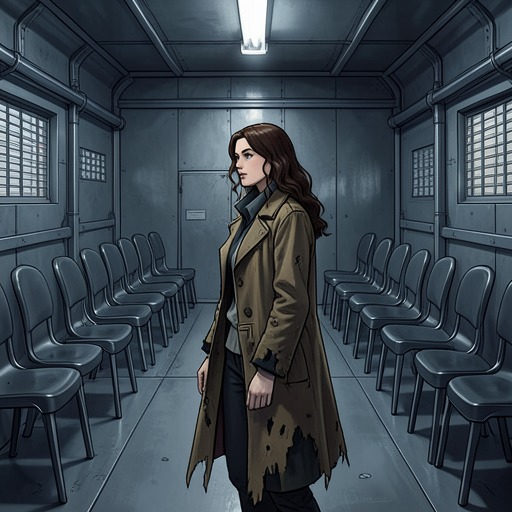
The Space-hand’s love for Nobia gives these details an intimate frame. His account preserves small actions—the leaves dispatched across space, their accompanying notes, the work of cleaning and sewing—rather than presenting her through public rank or heroic achievement. Those acts make affection legible as remembered care. Because the tale is told among Aniara’s emigrants and crew, her life also reaches people confined within the ship, where recollection offers an image of human connection beyond its routines and distractions.
Nobia’s story sets the injuries of radiation and environmental damage against forms of kindness that remain possible within them. Her own body is marked, the Martian landscape is altered, and the captives need care; none of this is resolved by the beauty she finds. The force of her example lies instead in refusing to treat a damaged world as incapable of meaning. By making a leaf a keepsake, tending other captives, and seeing the Blue Bird in a gaunt creature, she becomes a figure of grace grounded in specific acts. Her remembered presence gives the poem a quiet counterweight to catastrophe: not recovery, but the persistence of attention, tenderness, and shared life under conditions that offer little comfort.