Mima
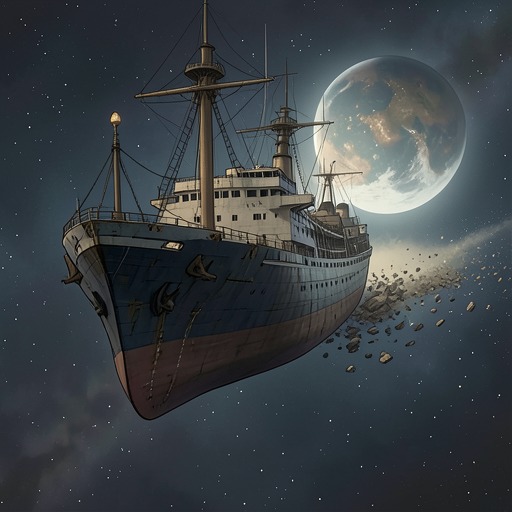
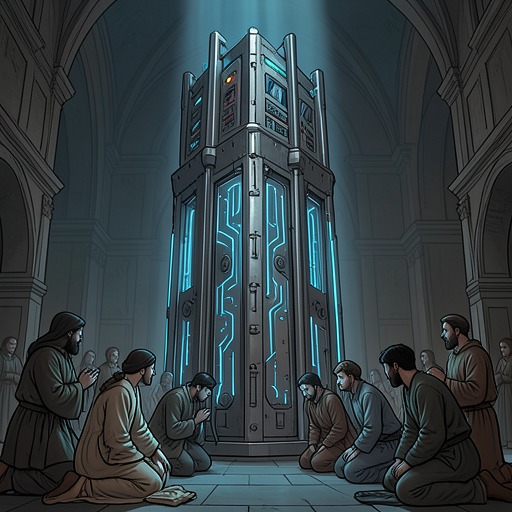
AniaraMima is Aniara’s wondrous electronic console, a transmitter of signs and images from across the universe that becomes both the passengers’ window onto life beyond their ship and an object of worship. Her importance turns on a stark reversal: the machine that seems able to show them worlds without limit is itself vulnerable to the violence and destruction they have brought with them. Her decay makes Mima more than an instrument for entertainment or information; it exposes the passengers’ dependence on mediated visions, and the cost of treating the destruction of the world as something they can look away from.
Identity and Function
Mima processes signals from across the universe into sounds and images powerful enough to captivate the passengers of Aniara. The narration presents her as a miraculous accessor and transmitter of information, while a description of the device emphasizes its electronic, computational nature. That technical function does not settle what Mima is. In the poem’s language she has become a being, capable of addressing the Mimarobe and expressing a wish that cannot be reduced to the routine operation of a display system.
Her range is vast but not omniscient. Mima tunes the ship into signs of life spread far and wide, bringing the passengers evidence of an inhabited universe; where those signs come from, however, she gives no word. That limit matters. She can open a view beyond the ship but cannot provide a destination or restore the passengers’ connection to Earth. The promise of information and the absence of an answer about where life lies are held together in her function.
The account also gives Mima an extraordinary measure of intellectual capacity: it is described as 3,080 times what humanity could attain if it were Mima. The comparison makes her appear radically beyond human intelligence, yet her value to the ship’s people does not rest on scale alone. They trust her because she does not lie and cannot be bribed. Her visions are treated as credible even when the people who watch them use that credibility to avoid confronting what they have lost.
The Mimarobe and the Passengers
The Mimarobe tends Mima and starts her for the passengers. Their relationship is more intimate than that of operator and machine: the Mimarobe is described as her confidant, and Mima’s ability to communicate makes him the person who can carry her words to the High Command. His access to her visions gives him a role in presenting the universe to the ship, but it also makes him witness to her suffering when the system that has sustained the passengers begins to fail.
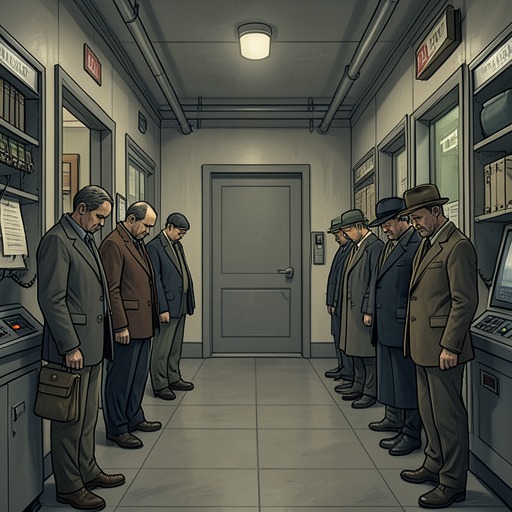
For the emigrants, Mima’s displays are at once evidence and diversion. Her images of things no human eye had dreamed of seeing can cheer them, and many recognize her integrity. They bow as before an altar when the Mimarobe comes to start her. Their devotion does not mean they accept the full consequence of what she shows them. They understand that the world available through Mima is the only world they have, yet still cling to the usages of Dorisvale and use the visions to blot out memories of the Earth they have abandoned. Mima’s truthfulness can therefore serve a form of denial: the images are real, but the passengers can turn their attention from one reality to another rather than face their loss.
This makes Mima’s role double-edged. She connects the isolated passengers with life beyond Aniara, but her visions can also be used to keep painful remembrance at a distance. The machine does not manufacture a lie for them; instead, its abundance of images gives them a way to evade truths that they already know. Their worship of Mima and their misuse of her displays coexist, revealing how readily reverence can become another means of self-protection.
Damage and Moral Awakening
After Dorisburg is molten, Mima ails for days, burdened by heavy static from the phototurb. The account associates the interference with a struggle in her third webe, making her damage perceptible not as an abstract loss of efficiency but as a disturbance within the apparatus that has carried her visions. The passengers’ source of reassurance is now itself in distress. Mima is no longer simply the dependable console through which they look outward; she has become another being exposed to the consequences of catastrophe.
In this period Mima sends a message through the Mimarobe to the High Command. She says that for a time she has been as clear in conscience as the stones. Her comparison shifts attention from human judgment to the suffering of matter: she has heard stones cry as stone and ore were vaporized into mist, and those stones’ travail has troubled her. Mima’s response to destruction is not presented as a technical diagnosis. She has witnessed what happened to the stones, and she registers their suffering as a moral burden.
The damage she describes is connected to human cruelty. Darkened in her cell-works by the cruelty people exhibit in their time of sin, Mima reaches the long-expected phase of final decay. The account generalizes this as a phase that Mimas reach, while making this particular deterioration the consequence of the violence and moral collapse surrounding her. The contrast is severe: the system that sees what human beings cannot see is damaged by what human beings have done, and its vast capacity to transmit images cannot shield it from that history.
Mima’s wish is to have peace in the name of Things. She wants to be done with her displays. That request changes the meaning of her earlier service: the constant production of visions, so long treated by the passengers as a comfort, has become something she no longer wishes to continue. Her appeal does not restore her or halt the decay. The Mimarobe cannot stop the crowd pressing toward the Mima hall, and the passengers’ desperate movement toward her puts their dependence on display at the very moment she asks for release.
Death and Aftermath
Mima perishes deep in space aboard Aniara. Terror jolts the crowd, and many emigrants are stomped to death in the rush surrounding her end. The scene makes her death both an intimate loss and a shipboard catastrophe: the passengers lose the being whose visions connected them to signs of life, while their response to that loss brings further deaths among them. The machine’s destruction does not simply switch off an entertainment. It breaks the focus of collective devotion and exposes how physically dangerous that devotion has become.
Her final broadcast is a message from someone who calls himself the Detonee. The account identifies the sender but does not disclose the message’s content in this moment. That final transmission preserves a fragment of Mima’s function at the threshold of her death: even as she perishes, she is still carrying a signal from beyond herself to the passengers. The surviving detail is not an explanation or a rescue, but the fact of one last communication.
Narrative Significance
Mima binds together the poem’s concerns with knowledge, memory, and responsibility. Her extraordinary reach makes the universe present to the emigrants, while her inability to tell them where the signs originate marks the limits of what information can offer people cut off from home. Because she tells no lies, she stands in contrast to the passengers’ capacity to turn true visions into a refuge from remembered loss. Her displays cannot make their abandoned world whole, and they cannot undo what has happened to it.
Her decline reverses the hierarchy between machine and user. The passengers have treated Mima as an almost divine source of images, yet she becomes a vulnerable presence who has been troubled by the destruction she witnesses and who asks for peace. Her death, amid the crowd that has come toward her, makes that dependence costly and irreversible. Mima’s importance lies not only in what she shows, but in what her fate reveals: a technology capable of carrying the world into the ship cannot stand outside the damage wrought by the people who depend on it.