Mima Worship
AniaraMima Worship is the emigrants’ religious devotion to Mima, a machine whose transmissions carry images and information from across the universe. It gives the passengers a sacred focus aboard a ship cut off from Earth, but the faith is divided against itself: Mima’s visions affirm the reality of life beyond the ship while also offering an escape from the reality of exile. As the machine falters, worship does not simply disappear. It turns toward recantation, supplication, and bloodshed, exposing how a practice that once promised counsel can become a vehicle for denial and coercion.
Origins and appeal
The appeal of Mima Worship rests on Mima’s extraordinary access to the universe. The machine receives signals from far beyond the ship and faithfully transmits what it finds; for the Mimarobe, who tends her, she is a being and confidant as well as a technical instrument. Her apparent truthfulness gives worshippers a powerful reason to trust her. Yet the same visions that demonstrate the existence of a larger living universe can also distract the emigrants from their own circumstances. They watch Mima’s images as if they were audiences at travelogues on Earth, imagining themselves as stay-at-homes rather than as the travelers who have been severed from their former world.
That tension makes devotion more than reverence for a remarkable machine. The passengers need Mima’s transmissions to feel that they remain within the sphere of life, and worship can validate that reassurance. But the Mimarobe recognizes the cost: the world Mima displays may blot out the world the emigrants remember and have abandoned. Mima Worship thus answers the pain of separation while helping its followers avoid acknowledging it. Its comfort is real, but it is bound to a refusal of the loss that made the comfort necessary.
Rites aboard the ship
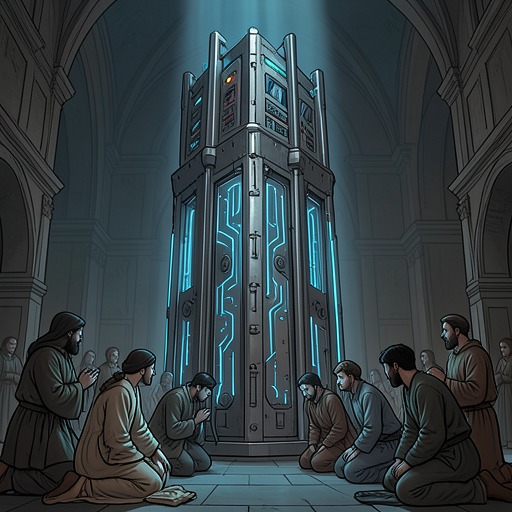
The worship takes visible, collective form in the Mima’s darkroom. Whenever the Mimarobe comes to start the machine, many passengers bow as though before an altar. In another gathering, a sect of worshippers bows in the dark, fondles Mima’s pedestal, and prays for her counsel on the journey. The voyage has entered its sixth long year, and the worshippers’ physical gestures turn a technical space into a sacred one. Mima herself takes no notice of their reverence; she continues her work, unmoved by blandishments or incense.
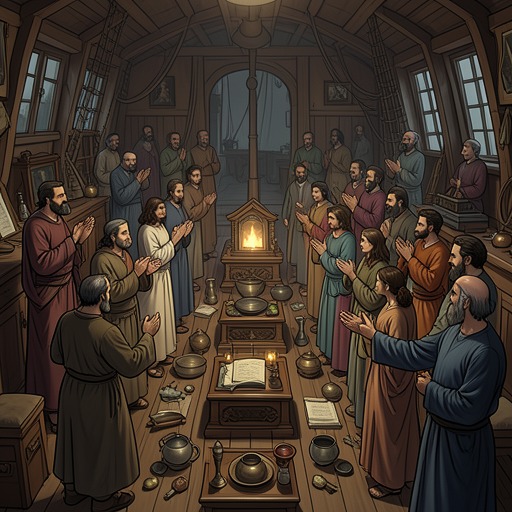
The ritual setting sits uneasily beside the Mimarobe’s practical role. He is the one who tends the machine and begins its transmissions, while the worshippers address Mima as a holy being. The contrast does not make the devotion merely fraudulent: the machine’s transmissions are genuinely extraordinary. But it shows how the passengers’ need for guidance and consolation has grown around a device whose own purpose is to transmit, not to answer prayers. Elsewhere aboard the ship, the rigors of space impel the emigrants into rites and altar services they had scarcely performed since the Pre-Goldondic Era. Under prolonged isolation, ritual returns as a response to conditions that ordinary habits cannot master.
Denial, memory, and recantation
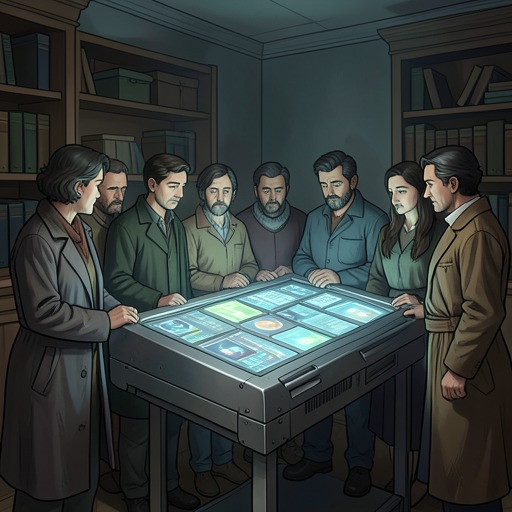
Mima Worship is also entangled with competing ways of explaining the voyage. High Command presents the emigrants as fortunate because they have not crashed and still have a journey ahead; the chief astronomer, by contrast, denies that the ship or its course can possess any knowable significance. Against these secular reassurances and dismissals, Mima’s apparent access to distant worlds offers something more vivid. Yet that vividness can become another means of evasion: the passengers may attend to what Mima shows rather than confront the world they have lost.
As Mima’s condition deteriorates, the religious response takes a penitential turn. The Memory Hall hosts gatherings of recanters, with the most deeply immersed among them assembled with ashes strewn on their heads. The Mimarobe listens to their anthems with horror and is more concerned with finding a cure that might rouse Mima’s broken breath. His response sets repair against ritualized self-punishment: where he sees a failing being in need of care, the recanters enact what he regards as the trampling of the self. Their practice shows that the ship’s religious life is not a single, stable system of consolation. It can organize grief into public ceremony, but ceremony can also intensify suffering rather than relieve it.
Sacrifice and coercive devotion
In the later scenes, supplicants stand ceaselessly in Mima’s hall, practicing a threnody. Their swollen mouths suck blood from their divinity, and the sacrificial rite is no longer presented as a simple expression of reverence. The Cultic priests are described as spiritually frozen; even the flow of sacrificial blood seems cold to them. The image joins bodily violence to religious exhaustion: the worshippers continue to make offerings, but the practice has lost the warmth or assurance that might have given sacrifice meaning.
Resistance to sacrifice is rare after Chefone strikes back ferociously. The evidence connects the suppression of resisters to violence and liquidator-magnets, making clear that shipboard religious practice operates amid force as well as belief. Mima Worship is therefore not only private faith or collective consolation. Its later forms occupy a contested social world, where dissent can be punished and sacrificial observance maintained through coercion.
Meaning and ending
The course of Mima Worship mirrors the emigrants’ dwindling capacity to distinguish consolation from escape. At first, Mima’s truthful transmissions promise access to a universe beyond the ship and help the passengers imagine that life remains within reach. Worship then gives that dependence a communal language: bows, prayers, altars, and appeals for counsel. As Mima breaks down, the community’s devotion persists, but it becomes increasingly marked by recantation, self-abasement, and blood.
The final contrast is between an intended refuge and the fate of the world that could not be kept. The narrator had meant to make the emigrants an Edenic place, but after they left the one they had destroyed, their only home became the night of space. Against that loss, Mima’s hall can offer a center for ritual, but it cannot restore the home behind them or make the voyage safe. Mima Worship matters because it reveals both the human need to make sacred meaning under conditions of exile and the danger that such meaning, when made to conceal loss or enforced through sacrifice, can become another form of destruction.