Stella Raphael and Charlie Raphael’s mother-son relationship
AsylumStella Raphael and Charlie Raphael’s mother-son relationship is the fragile emotional center of Stella’s return to family life after leaving home. Their reunion briefly offers her the prospect of a sustainable normality; later, during Charlie’s drowning, her dissociated passivity makes that bond the site of an irreversible catastrophe. The contrast is stark: Stella longs to restore her son’s trust, but when he needs her most, she cannot act.
Separation and Reunion
While Charlie Raphael stayed with Brenda, Stella had not yet seen him, though she telephoned every day. She understood that leaving without preparing him had made him feel abandoned. In her view, he might first have thought the separation was his fault, then, after Max Raphael and Brenda gave his bewilderment a shape, begun to blame Stella for his unhappiness. She believed he wanted to come home, to love his mother and know that she loved him. Brenda obstructed contact, even telling Stella that Charlie was not there when Stella knew she was lying. The calls reveal Stella’s concern for the emotional meaning of her departure, while also showing how little control she has over the way her son is being told to understand it.
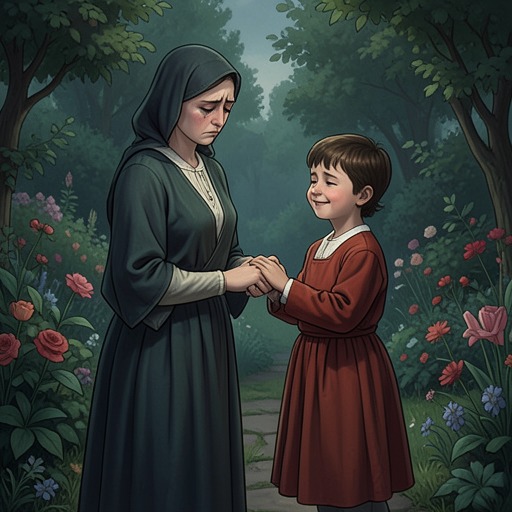
When Charlie was ready to return, Stella and Max Raphael drove to meet his train. Stella feared Max might want a divorce, but did not raise the subject: she wanted a haven and time to heal after losing Edgar Stark, and knew the shock had not yet given way to its full pain. Charlie was nervous as he stepped off the train. On the platform, with Brenda and Max present, Stella crouched and took his hands; Charlie then fell into her arms and kissed her on the lips. Brenda’s lifted eyebrow, exchanged with Max, registered disapproval, but the physical welcome between mother and son mattered more to Stella. She and Charlie walked to the car hand in hand, ahead of Max and Brenda. Stella felt a great weight lift and believed that if she and Charlie were all right, some semblance of ordinary life could continue. In that moment, their reunion seemed to her a refuge from the judgment and domestic tension around them.
The Work of Repair
The reunion did not settle the family’s future, but Stella tried to rebuild closeness through small acts of attention. Later, while she was chopping an onion, Charlie approached quietly, without making a sound or turning on a light. When Stella turned and saw his face pucker, she hurried to take him in her arms and reassured him that they were already friends. Her response is immediate and affectionate: she treats his uncertainty not as a challenge but as a request for connection. The scene gives their relationship an everyday intimacy distinct from the public, scrutinized welcome at the station.
The next day, Stella watched the unsettled sky over the valley and felt, for the first time in months, something that might be hope. That night she suggested that Max look for work in London, but he said he intended to stay at Cledwyn for at least two more years. Her hope and her wish to move on did not amount to a settled family reconciliation; the exchange instead places her renewed feeling beside an unresolved difference with Max. Charlie’s presence had made a normal life seem possible to her, but that possibility remained dependent on circumstances beyond the mother-son bond itself.
The Drowning
During a group outing, Stella and Charlie left the other adults and children and went over a hill toward a pool. Charlie went down the steep slope to the water, where weeds crowded the shallows; Stella followed and sat some distance back. As rain began, Charlie called out that he thought there were newts. Stella was experiencing one of the black waves that overtook her: the ground seemed to undulate, her vision was obscured, and numbness followed. She lit a cigarette and watched as Charlie tried to catch something in the shallows.
When Charlie lost his balance and struggled in deeper water, his shouting eventually brought Stella to her feet. Yet she did not call out or go to him. In the rain and wind, she watched him flail, turn her head away, and repeatedly bring the cigarette to her lips. She saw his head break the surface and an arm claw at the air before he went under again. The narration presents her movements as tight, separate, and controlled, set against Charlie’s increasingly urgent struggle. The scene therefore places the mother’s physical presence beside her failure to respond: she is close enough to see what is happening, but her actions remain narrowed to the repetitive gesture of smoking.
Aftermath and Significance
At the police station, Stella could not explain why she had not shouted when Charlie was in trouble. In the days that followed, the sympathy of the people around her disappeared. Hugh Griffin insisted that he had found Charlie screaming in the water while Stella stood smoking and made no attempt to help. He also argued that an alarm might have saved Charlie, though that claim was later disputed because of the distance between the hilltop and the pool. What horrified people most, the account emphasizes, was not simply the disputed question of whether rescue was possible but that Stella had made no noise and had not moved. They recast her from a mother whose child had died into someone they called unnatural, evil, or mad.
Stella was charged with manslaughter and remanded. Numb and detached, she watched herself being moved and questioned repeatedly without giving the answers others sought. Her estrangement from her own actions and from the woman undergoing interrogation gives the aftermath a different register from the affectionate reunion: the earlier confidence that mother and son could recover a shared life has been replaced by public judgment and Stella’s own dissociation. Charlie’s death does not erase the tenderness of their reunion or the kitchen embrace, but it makes those moments painfully incomplete. Their relationship is defined at once by Stella’s evident desire to be loved by her son and by the fatal failure of care at the moment when he was drowning.