Henri Bonnet
Henri Bonnet is a French farmer who, together with his brother Jean-Marie, offers a brief but crucial respite to Robbie Turner and the corporals Mace and Nettle during the desperate retreat to Dunkirk in 1940. Their encounter, set in a barn on the Bonnet farm, is a pocket of decency and shared humanity in the midst of a collapsing world, and it deepens Turner's understanding of the war's cost and his own shame at the retreat.
Identity and Background
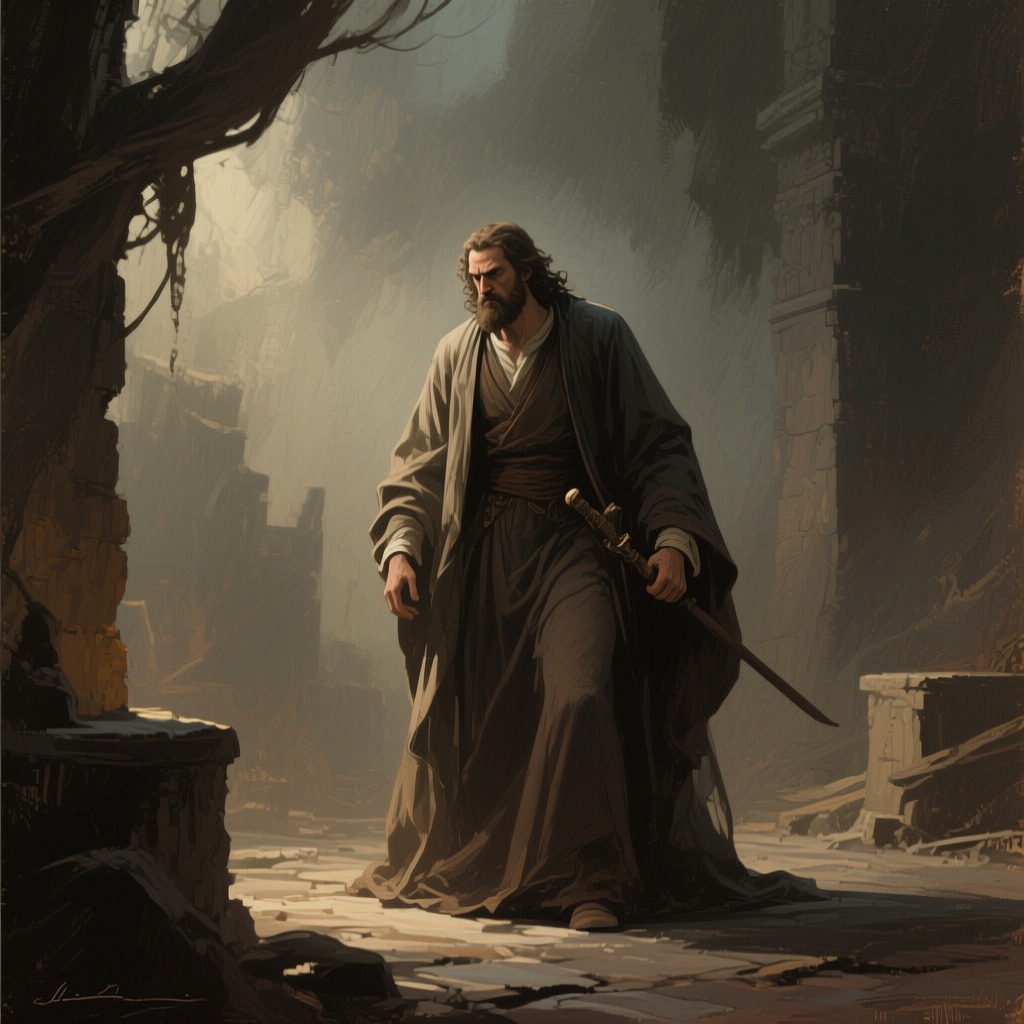
Henri Bonnet is a short, stocky man in his fifties, a farmer who wears glasses—a detail that Corporal Nettle finds incongruous. He and his brother Jean-Marie live on a farm in northern France with their elderly mother, who is eighty-three and losing her mind. The brothers have a history with war: their eldest brother, Paul, was killed near Verdun in 1915 by a direct shell hit that left nothing to bury. Henri and Jean-Marie survived the Great War without a scratch, but their mother has never recovered. She hates all soldiers—French, English, Belgian, German—and the brothers worry that when the Germans arrive, she will attack them with a pitchfork and be shot.
The Encounter in the Barn
When Turner, Mace, and Nettle arrive at the farm, the old woman tries to drive them away, warning that her sons are "animals" who will tear them to shreds. Turner insists on staying, and the brothers soon appear in the barn entrance, carrying what look like clubs or shotguns. The tension dissolves when they reveal they are holding baguettes and a canvas bag of food. Henri and Jean-Marie have brought olives, cheese, pâté, tomatoes, ham, and wine. They admire the makeshift table and mattresses Mace has arranged, and the five men share a meal. Henri explains that they drove to a hamlet near Arras to look for a young cousin and her children, but found the place destroyed and deserted. On the way, they had to drag a dozen dead English soldiers off the road to avoid running over them. Henri was sick in the cab afterward. The brothers spent the night in a wood, listening to artillery pounding Arras, and drove back by a longer route to avoid passing the bodies again.
The Weight of Witness
Henri's account of the dead soldiers, delivered through Turner's translation, takes almost an hour. The brothers are exhausted and haunted by what they have seen. Turner, who has his own haunting image—a child's leg in a tree—chooses not to add to the horror. Henri and Jean-Marie are constrained and seem in no mood to get drunk; they have driven into the heart of a battle zone and returned with nothing but the memory of mutilated bodies. When Turner says the British will be back, Henri and Jean-Marie nod politely, but the promise rings hollow. Henri's final words to Turner are a lament: "All that fighting we did twenty-five years ago. All those dead. Now the Germans back in France. In two days they'll be here, taking everything we have. Who would have believed it?"
Significance
Henri Bonnet represents the ordinary French civilian caught between two wars, whose generosity to fleeing soldiers is a quiet act of defiance against the catastrophe unfolding around him. His story—the search for a missing cousin, the horror of clearing dead men from the road, the fear for his mother's safety—mirrors Turner's own journey and deepens the novel's meditation on the cost of war. The meal in the barn, with its goose liver pâté and wine, is a fleeting moment of civilization before the final push to the coast, and Henri's weary disbelief at the return of German armies underscores the tragic repetition of history.