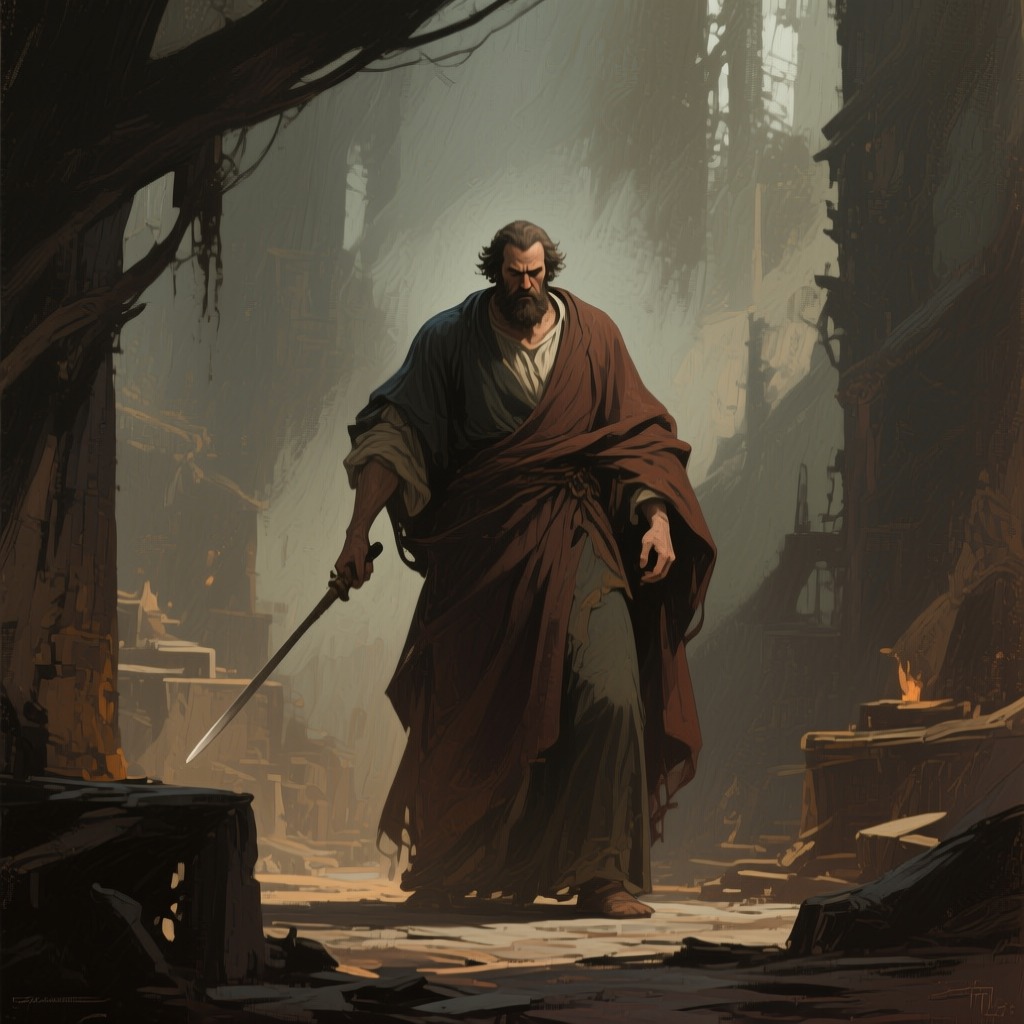
The Library
The Library in the Tallis household is far more than a repository of books; it is the novel's emotional and moral epicenter, the stage on which the most consequential acts of love, misunderstanding, and accusation are played out. Within its walls, the fates of Robbie Turner, Cecilia Tallis, and Briony Tallis are irrevocably sealed, transforming a room of quiet learning into a chamber of memory, guilt, and the desperate hope for atonement.
Identity and Setting
The Library is a large, high-ceilinged room in the Tallis family home, furnished with a tooled leather desk, a green-glass desk lamp, and shelves that line the walls. It is a space of intellectual refuge, where Jack Tallis, the patriarch, often sits with a book on his lap, his presence imposing order and allowing freedom. The room contains a collection of books that includes complete sets of Jane Austen, Dickens, and Conrad, as well as a treatise on the hydraulics of Versailles by an eighteenth-century Dane. It is also where Robbie Turner, the cleaning lady's son, has been given access to the family's literary wealth, a symbol of his ambiguous position between servant and scholar. The Library's thick door and stubborn silence create a world apart, capable of muffling the sounds of the household and allowing private dramas to unfold unseen.
Key Events: The Vase, the Letter, and the Library Encounter
The Library is the site of two of the novel's most critical sequences. The first is the aftermath of the vase-breaking incident at the Triton fountain. After Cecilia Tallis retrieves the broken pieces of the Meissen vase from the fountain, she brings it to the Library to dry and repair it on a table by a south-facing window. It is here that she later confronts Robbie, who has come to the house to apologize. The second, and far more consequential, event occurs when Robbie, having mistakenly delivered an obscene draft of his letter instead of an innocuous apology, follows Cecilia into the darkened Library. In the gloom, illuminated only by the green-glass desk lamp, they confess their love for one another. Their conversation, initially stilted and full of misunderstanding, gives way to a passionate, consensual physical encounter against the bookshelves. This moment of profound intimacy is shattered when Briony Tallis, having read Robbie's obscene letter and believing herself to be her sister's protector, pushes open the Library door and witnesses the embrace. She interprets the scene not as a union of lovers but as an attack, a brutal confirmation of her worst fears about Robbie. This misreading, born of her childish imagination and the shock of the letter, sets the entire tragedy in motion.
Relationships and Conflict
The Library becomes a crucible for the novel's central relationships. It is the space where Robbie and Cecilia's long-suppressed feelings finally erupt, transforming their childhood friendship into a passionate, adult love. The room's intimacy—the deep shadow, the corner where the shelves meet at right angles—provides the privacy they need to shed their former selves and become strangers on intimate terms. For Briony, the Library is the scene of her most destructive act. Her interruption is not a neutral observation but a deliberate intervention, driven by her disgust at the letter and her desire to protect her sister. The Library thus becomes the physical location where Briony's fantasy of villainy and heroism collides with the complex reality of adult desire, a collision that will have devastating consequences. Later, the Library is also where the police conduct their first formal interview with Briony, and where she demonstrates the precise location of Robbie's supposed attack on Cecilia, wedging herself into the corner to show how her sister was positioned.
Change and Ending
The Library's role shifts dramatically over the course of the novel. In 1935, it is a place of both revelation and ruin. By 1999, when Briony returns to the Tallis house, now converted into Tilney's Hotel, the Library has been stripped of its books and shelves. The room is used for the birthday party performance of The Trials of Arabella, a final, ironic echo of the play that was meant to be performed in the same space sixty-four years earlier. The physical transformation of the Library—from a private, book-lined sanctuary to a public, empty event space—mirrors the erosion of memory and the impossibility of returning to the past. The room that once held the secret of Robbie and Cecilia's love now holds only the hollow applause of a family reunion, a testament to the irrecoverable nature of time and the stories that have been lost or rewritten.
Thematic Significance
The Library embodies the novel's central themes of interpretation, misreading, and the power of storytelling. It is a space where texts—both literal books and the 'texts' of human behavior—are read and misread. Robbie's letter, the obscene draft that Briony reads, is a text that is fatally misinterpreted. The scene in the Library is itself a 'text' that Briony reads through the lens of her own prejudices and fears, producing a false narrative that has the force of law. The Library, therefore, is not just a setting but a symbol of the act of interpretation itself, a place where the line between truth and fiction, between love and violence, is tragically blurred. It is the room where the novel's central crime—the crime of a false story—is committed, and from which all subsequent attempts at atonement must begin.