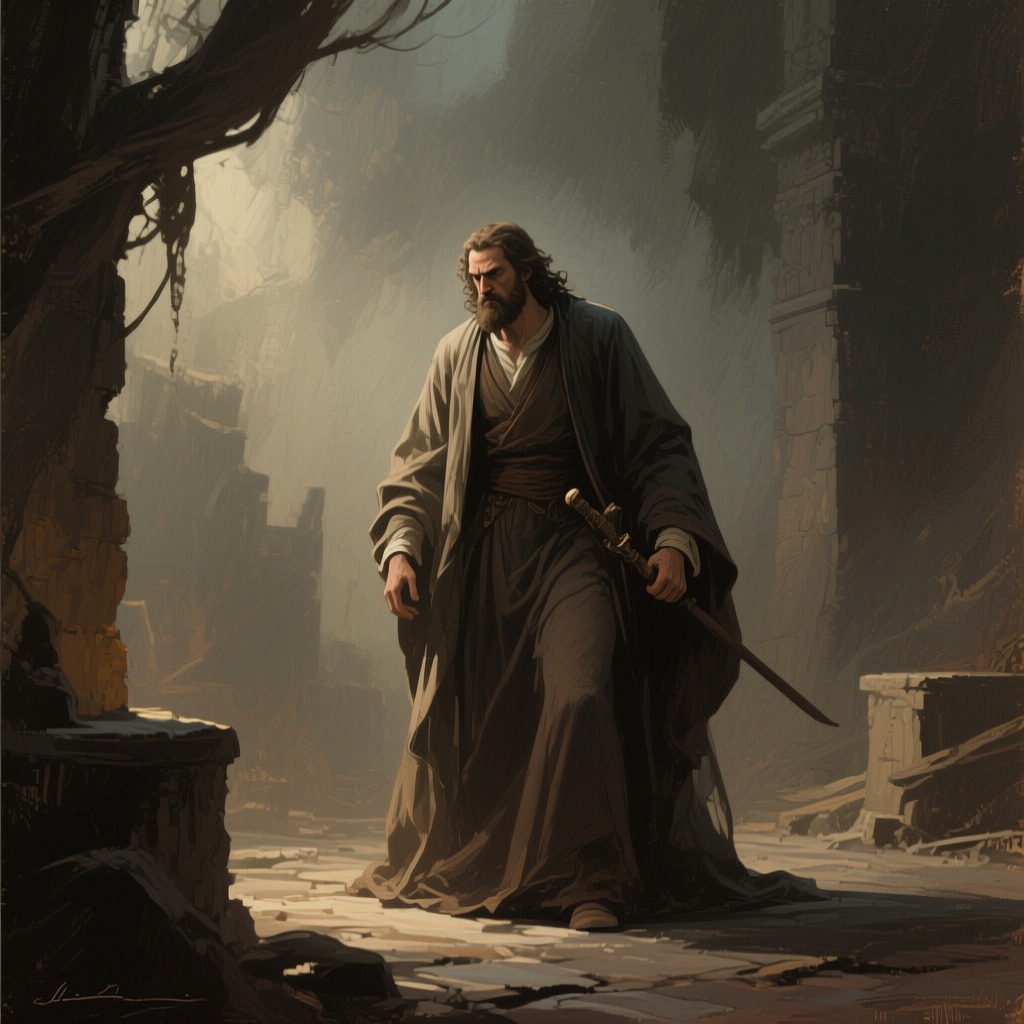
Jean-Marie Bonnet
Jean-Marie Bonnet is a French farmer who, together with his brother Henri, provides a crucial moment of hospitality and human connection for Robbie Turner and the corporals Mace and Nettle during their desperate retreat to Dunkirk in 1940. The encounter, set in a barn on the Bonnet farm, offers the exhausted soldiers not only food and wine but also a stark glimpse into the civilian experience of military defeat, the lingering trauma of the Great War, and the shame of a second German invasion. Jean-Marie and his brother represent the ordinary French people caught between armies, their generosity a poignant counterpoint to the surrounding chaos and brutality.
Identity and Background
Jean-Marie Bonnet is a short, stocky farmer in his fifties, who, along with his brother Henri, works the land in northern France. He is introduced to the reader through his actions during the chaotic retreat of the British Expeditionary Force. The brothers own a flatbed farm truck, which they have used in a desperate and failed attempt to find a young cousin and her children near Arras, a town that was the site of a great battle. This journey exposed them to the full horror of the war: they saw farmhouses burning, and were forced to drag the bodies of a dozen dead English soldiers from the road to avoid running them over. The experience was so traumatic that Henri was sick in the cab of the lorry, and Jean-Marie, who was driving, panicked and drove into a ditch. They had to borrow two horses from a farmer to pull the Renault free, a task that took two hours. The brothers' lives are also shaped by the legacy of the Great War; their eldest brother, Paul, was killed near Verdun in 1915 by a direct hit from a shell, leaving nothing to bury but his helmet. Their mother, now eighty-three and losing her mind, has hated all soldiers ever since, making no distinction between French, English, Belgian, or German, a fact that deeply worries her sons.
Encounter with the Soldiers
Jean-Marie and Henri first appear to the three British soldiers as a potential threat. After the soldiers have settled in the barn, the brothers approach in the fading light, each holding what appears to be a club or shotgun. The soldiers, already wary, reach for their weapons. However, the brothers' intent is peaceful. The one who speaks, Henri, reveals that what they are holding are not weapons but a French loaf and a canvas bag. They have brought baguettes, olives, cheese, pâté, tomatoes, ham, and wine, offering a feast to the exhausted men. The brothers sit with the soldiers at the makeshift table Corporal Mace has constructed, and they raise their glasses in toasts to the French and British armies and to the crushing of Germany. Despite their generosity, their manner is constrained, and they seem in no mood to get drunk. They are still haunted by the mutilated bodies they saw on the road, a horror that has left them unable to sleep. Jean-Marie confirms the rumor that the British are leaving, and when Robbie Turner says they will be back, Jean-Marie's reply is a simple, weary statement of fact: "So it's true what they're saying. You're leaving."
The Weight of History and Defeat
The encounter with the Bonnet brothers forces Robbie Turner to confront the full ignominy of the retreat. When Henri Bonnet speaks of the futility of their past sacrifice—"All that fighting we did twenty-five years ago. All those dead. Now the Germans back in France. In two days they'll be here, taking everything we have. Who would have believed it?"—Turner feels a deep sense of shame. His promise to return and throw the Germans out is made with even less conviction than before. The brothers' presence serves as a living link to the previous war, a conflict that was supposed to end all wars, and their quiet despair underscores the catastrophic failure of the current campaign. The brothers' own history is one of survival and loss; they came through the Great War without a scratch, but their elder brother did not. Their mother's senile obsession with hating all soldiers is a direct consequence of that loss, a wound that has never healed. The soldiers, in turn, offer what little they have: Corporal Nettle gives the brothers two cartons of cigarettes, a gift from the stores that were destroyed to keep them from the enemy.
Significance and Aftermath
Jean-Marie Bonnet, along with his brother, represents the civilian face of a nation under occupation. Their hospitality is a brief, luminous moment of shared humanity in the midst of a rout, a reminder of the ordinary life that has been shattered by war. The brothers' story—their failed rescue mission, their encounter with the dead, their fear for their mother—provides a crucial perspective on the scale of the disaster, one that the soldiers, focused on their own survival, can only partially grasp. The encounter also deepens Robbie Turner's psychological burden, adding the weight of a broken promise to his physical exhaustion and the haunting image of the leg in the tree. The Bonnet brothers are left behind, their fate uncertain, as the soldiers continue their march toward the coast. Their quiet dignity and the simple, profound act of sharing a meal with strangers stand in stark contrast to the industrial-scale violence that has driven them all to this point.