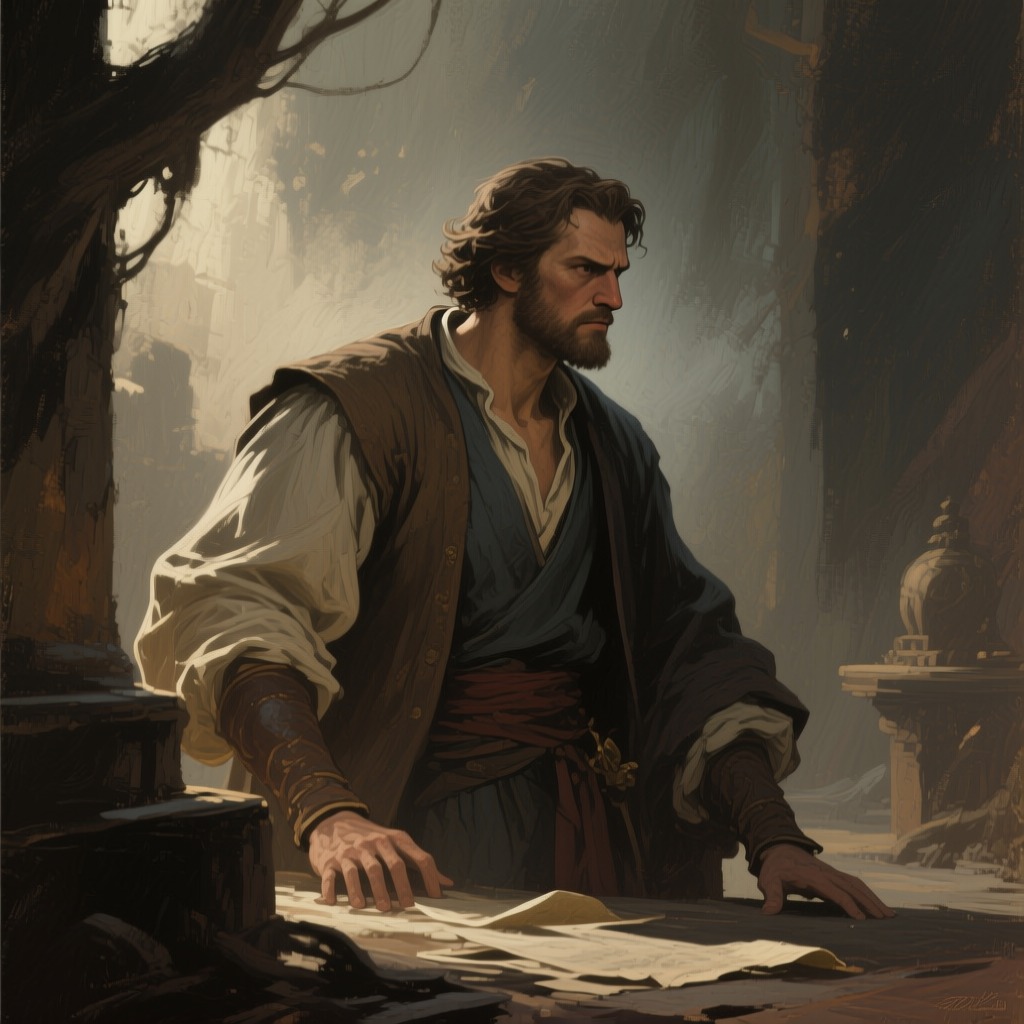
Leon Tallis
Leon Tallis, the elder son of Jack and Emily Tallis, is introduced as a figure of effortless charm and profound passivity. He is the beloved brother whose homecoming Briony's play is designed to celebrate, and the catalyst for the novel's central catastrophe. His defining characteristic is a serene, almost willful refusal to engage with anything unpleasant, a trait that makes him both a soothing presence and a deeply irresponsible one.
Identity and Introduction
Leon is first seen through Briony's adoring eyes: she imagines his "big, good-natured face" buckling in grief at her play, or overhearing him boast about her to friends. He is the object of her intense, possessive love, the brother whose admiration she craves. When he arrives at Tallis House, he is described as having a "pure gift of avoiding responsibility," a quality that has allowed him to drift through life. He works at a private bank, lives for weekends and his rowing eight, and is content with a life of pleasant surfaces. His sister Cecilia reflects that his "equanimity was bottomless, as was his lack of ambition." He is a man who has never been stung by unhappiness, and his conversation is a stream of anecdotes in which everyone is "a good egg" or "a decent sort."
Role in the Catastrophe
Leon's first act of consequence is to invite Robbie Turner to dinner without consulting Cecilia, overriding her objections with a teasing remark about Robbie's social class. This invitation, made in ignorance of the tension between them, forces Robbie and Cecilia into a confrontation that culminates in the library scene. Later, when Briony makes her accusation by the lake, Leon does not question her. He accepts her story without hesitation, and it is he who telephones their father to report the "worse" news, his voice lowered and his manner grim. He never challenges the official version of events, and his silence is a form of complicity. Cecilia later describes him as "a grinning, spineless idiot who went along with everyone else."
Relationships and Conflict
Leon's relationship with Cecilia is the most significant of his adult life. They share a childhood bond of teasing and affection, but their reunion is marked by a fundamental misunderstanding. Cecilia longs to confide in him about her feelings for Robbie, but she cannot, and Leon's bland optimism prevents him from seeing her distress. When she finally confronts him about the invitation, he is dismissive, and their brief quarrel reveals the gulf between them. He is equally blind to the suffering of his cousins, the Quincey twins, treating their misery as a minor inconvenience. His only genuine connection is with Paul Marshall, whose crude ambition and wealth he seems to admire without irony.
Change and Ending
Leon does not change. He remains the same charming, evasive figure throughout the novel. In the 1999 epilogue, he is described as an old man in a wheelchair, "curled and slumped to one side," with a napkin at his throat to catch spilled champagne. He has been married four times and has fathered many children, but his life has been one of dedicated avoidance. He never confronts his sister Briony about her lie, and he never seeks reconciliation with Cecilia. His final appearance is a portrait of physical decay, a fitting end for a man who spent his life refusing to grow up.
Thematic Significance
Leon embodies the novel's critique of the English upper classes' willful blindness. His refusal to see the truth, his preference for pleasant fictions, and his unquestioning acceptance of social hierarchy make him an accessory to the crime. He is the living proof that the tragedy could have been averted if anyone had been willing to look beyond surfaces. His life is a study in the moral cost of a comfortable, unexamined existence.